


Landing at Mactan Cebu International Airport and hoping to sleep on Panglao or in Tagbilaran the very same night is absolutely realistic, but it does require some planning. Cebu’s ferry piers sit across the bridge on Cebu Island, while the airport is on Mactan, and the popular fast ferries to Bohol run only during daytime and early evening. This guide walks you through the entire route from airport arrival to stepping off the ferry in Bohol, with real-world examples of schedules, travel times, typical costs, and the main risks to watch if you are attempting a same-day island transfer.
Get the latest updates straight to your inbox!
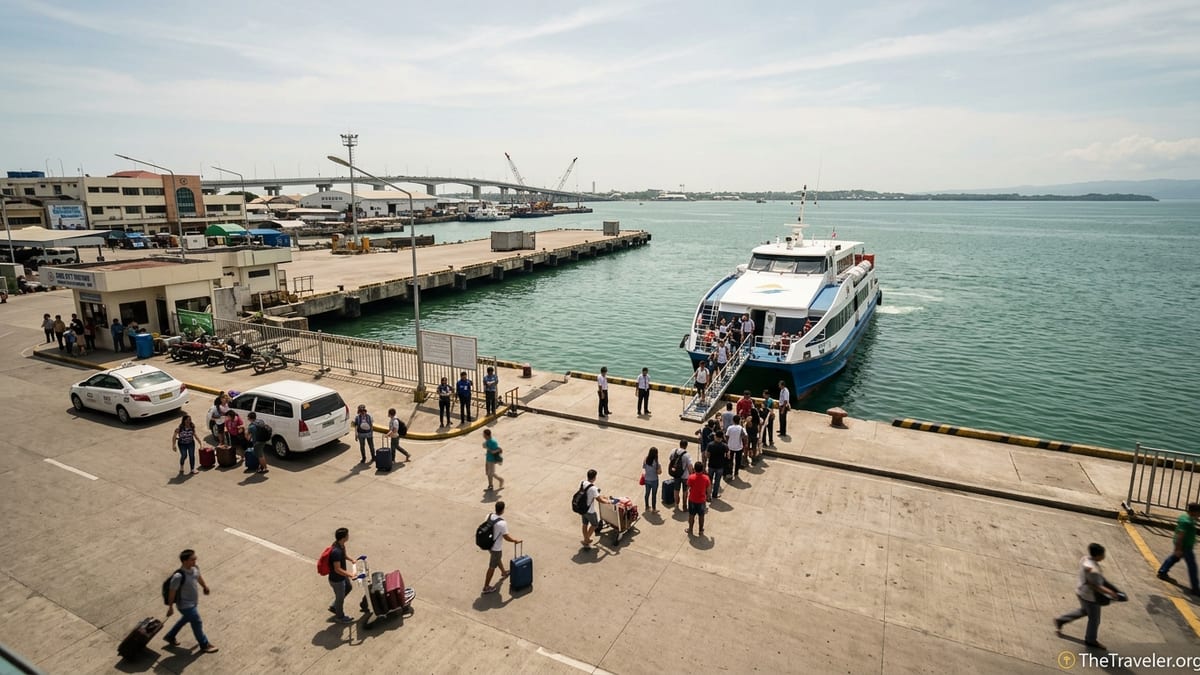
Understanding the Cebu to Bohol Ferry Route
The core route most travelers use is Cebu City Pier 1 to Tagbilaran City Port on Bohol Island. This is the main fast ferry corridor linking Cebu and Bohol, served primarily by OceanJet and SuperCat. The crossing usually takes around 2 hours on fast craft ferries, making it comfortably doable in the same day after a morning or early afternoon flight into Cebu, as long as you avoid very tight connections.
Schedules change frequently, but as of 2025 and early 2026, fast ferries from Cebu to Tagbilaran typically begin around 6:00 to 7:00 in the morning and run roughly every 1.5 to 2 hours until late afternoon, with many days’ last departures between about 5:00 pm and 6:00 pm. A realistic example: on a recent OceanJet schedule, Cebu to Tagbilaran runs included departures around 7:00 am, 11:00 am, 1:00 pm, and 3:20 pm, though exact times vary by season and demand.
There are also slower ferries and alternative routes, such as Cebu to Tubigon on Bohol’s northwest coast using companies like FastCat or Lite Ferries, which can be useful if you are heading to northern Bohol or if Tagbilaran fast ferries are full. However, for most travelers bound for Panglao Island resorts or Tagbilaran city hotels, the direct Cebu Pier 1 to Tagbilaran fast ferry remains the most straightforward choice.
Because fast ferry operators regularly adjust schedules, and sometimes cancel individual sailings at short notice due to weather or maintenance, it is important to use whatever schedule you see online as indicative rather than guaranteed. Treat it as a basis for planning your buffer times, but always reconfirm closer to travel and, ideally, again on the day itself at the ticket office or through the ferry company.
From Mactan Cebu Airport to the Ferry Piers
Mactan Cebu International Airport lies in Lapu Lapu City on Mactan Island, across the channel from Cebu City and the main ferry piers. To reach Cebu Pier 1, you must cross one of the bridges connecting Mactan to Cebu Island and then weave through city traffic to the port area. Travel time depends heavily on the time of day and local congestion. Typical real-world reports suggest 30 to 45 minutes by taxi in moderate traffic from the airport to near the North Reclamation Area, but this can stretch to an hour or more at rush hour or when there are events and road closures around the port.
The most convenient option for most visitors is a metered white taxi or an airport yellow taxi from the official taxi queue outside the arrivals terminal. In practice, many travelers pay somewhere around 350 to 550 Philippine pesos from the airport to the port area, depending on traffic and route. At busy times, some drivers may suggest a fixed fare; you can usually insist on using the meter or negotiate a reasonable price if the queue is long and you value certainty.
Budget-conscious travelers can also combine the MyBus airport shuttle and a short taxi ride. MyBus connects the airport to SM City Cebu mall on the Cebu City side for around a few dozen pesos. From SM City Cebu, a quick taxi ride to Pier 1 is often 10 to 20 minutes in light traffic, though again congestion around the pier area can cause delays. This combination is slower and slightly more complex but can save money if you are traveling solo and not in a hurry.
For families or those with bulky luggage, prebooked private transfers and ride-hailing apps such as Grab (when available) provide door-to-door simplicity. For example, a pre-arranged van from the airport directly to Pier 1 will usually cost more than a metered taxi but makes sense if three or four people are sharing. It also reduces the risk of losing time negotiating at the taxi rank or explaining your destination to multiple drivers who might not be keen on dealing with port traffic.
Choosing Between Tagbilaran and Panglao Arrivals
Historically, almost all Cebu to Bohol ferries arrived at Tagbilaran City Port, about 30 to 40 minutes by road from the main resort areas on Panglao Island. Many fast ferries still terminate at Tagbilaran, and for a large proportion of visitors this remains the most practical arrival point. Once you disembark, you can grab a metered taxi, book a van transfer, or take a tricycle to your Panglao accommodation, with prices varying by distance and negotiation.
A few operators and charter services have experimented with routes or add-on transfers that get you closer to Panglao, but as of mid 2026 the mainstream, regularly scheduled ferries from Cebu still predominantly use Tagbilaran. For a traveler staying at well-known Panglao resorts along Alona Beach, Danao, or Dumaluan, the normal pattern is Cebu Pier 1 to Tagbilaran by fast ferry, then a 30 to 50 minute land transfer depending on traffic.
Tagbilaran City itself is not just a transit point; some visitors choose to stay a first night there to break the journey, particularly if they arrive from Cebu in the late afternoon. Hotels near Tagbilaran Port range from simple guesthouses to solid midrange business hotels, and staying one night in the city can remove the stress of trying to reach Panglao after dark, especially if traveling with children or large bags.
If a direct or bundled Panglao transfer is particularly important, it is worth checking whether your hotel or resort offers its own port pickup service. Many midrange and upscale properties on Panglao will dispatch a car or van to meet you at Tagbilaran for a pre-agreed price. This arrangement can save time, reduce haggling, and is helpful if your ferry is delayed and you arrive later than expected.
Ferry Tickets, Classes, and Luggage Rules
Fast ferries such as OceanJet and SuperCat typically offer several seating classes: open-air, tourist or economy air-conditioned, and business class. Recent traveler reports suggest one-way fares from Cebu to Tagbilaran for tourist or economy class often fall somewhere around 800 to 1,000 pesos for adults, with business class costing more. Prices vary by operator, time of year, promotions, and whether you book online or on-site, so treat these as ballpark figures rather than fixed rates.
Buying tickets online ahead of time can be helpful, especially in high season around Christmas, Easter, or long weekends, when ferries can sell out. However, online tickets usually still require you to check in at the company booth at Pier 1, have your ticket printed or validated, and pay any terminal fees. Many experienced travelers with flexible itineraries still prefer to buy tickets at the pier, arriving at least an hour before departure to secure a seat and handle formalities.
Luggage policies on the Cebu to Bohol route are relatively forgiving, but there are limits. A common pattern is that the base ticket allows a cabin bag and one or two checked pieces up to a certain combined weight, after which excess baggage fees apply. In reality, enforcement at check in can vary. For example, travelers with large backpacks and a smaller daypack are often waved through, while those with multiple large suitcases may be asked to pay extra per kilo. It is wise to pack valuables and essentials in a small carry-on that you can keep with you, since checked suitcases are stacked in open racks near the bow or stern.
When boarding, porters will often offer to handle your luggage for a tip. This can be genuinely useful if you have multiple heavy bags, but it is not compulsory. Tips are usually modest by international standards, often around 50 to 100 pesos per bag, though you should agree in advance if the porter insists on setting a price. Be aware that at busy times bags might be stacked several layers deep near the ferry entrance, so when you disembark it can take extra time for crew and porters to pull your bags out from the bottom of the pile.
Timing Your Same-Day Transfer: Realistic Scenarios
The most common question is whether it is safe to book a Cebu to Bohol ferry on the same day you land at Mactan Cebu International Airport. In many cases the answer is yes, but the key is to build a realistic buffer. A useful way to think about this is to add up the likely times for each step: immigration and baggage claim, reaching the pier, checking in for the ferry, and boarding.
For an international flight arriving around 11:15 am, for example, a typical traveler might clear immigration and collect checked luggage within 45 to 75 minutes, depending on how many flights land at the same time. That would put you out of the terminal between roughly 12:00 noon and 12:30 pm. A taxi ride to Cebu Pier 1 might then take 40 to 60 minutes in midday traffic, getting you to the port between about 12:40 pm and 1:30 pm.
Because ferry companies generally advise passengers to arrive at least 45 to 60 minutes before departure, a same-day connection from that 11:15 am flight would be comfortable for a ferry leaving at 3:00 pm or 3:20 pm, but uncomfortably tight for anything earlier than about 2:00 pm. This is exactly the kind of example seasoned travelers in online forums point to when they recommend aiming for a mid-afternoon sailing rather than gambling on an early afternoon boat.
If you have a domestic flight landing earlier in the morning, such as around 8:00 or 9:00 am, then catching late morning or early afternoon ferries becomes much more realistic. On the other hand, if your flight is scheduled to arrive in Cebu after about 4:00 pm, it is risky to rely on making the last fast ferry to Tagbilaran that same evening. In that scenario, it is usually wiser to spend the night in Cebu City or near the airport and take an early ferry the next morning.
Risks, Delays, and How to Build a Safety Margin
Several factors can disrupt a same-day transfer from Cebu airport to Bohol by ferry: flight delays, heavy traffic between Mactan and Cebu City, ferry schedule changes, and weather-related cancellations. The Cebu region is particularly affected by storms and low-pressure systems during the typhoon season, roughly from June to November, though disruptions can happen at other times as well. When sea conditions deteriorate, fast ferries are often the first services suspended for safety reasons, while some slower, larger vessels may continue running.
A practical rule of thumb many experienced travelers follow is never to plan a critical onward flight or international departure on the same day as a fast ferry crossing. In other words, it is one thing to risk missing a hotel night in Bohol if your ferry is canceled; it is another to risk missing a long-haul flight out of Cebu because you assumed the returning ferry would run on time. If you have a flight in Cebu the next day, coming back from Bohol a full day in advance and staying near the airport greatly reduces stress.
When it comes to the outbound direction, from Cebu to Bohol, the risk is mostly financial and emotional rather than catastrophic. If your incoming flight is delayed and you miss your planned ferry, you can often switch to a later sailing on the same or another operator, sometimes with a rebooking fee, sometimes by buying a new ticket entirely. However, if you land late in the afternoon and there are no more ferries that day, you may need to find a last-minute hotel in Cebu.
To protect your budget, consider travel insurance that covers missed connections and transport delays, and keep all your boarding passes, ferry tickets, and receipts. At the planning stage, avoid chaining multiple tight legs together. For example, if you are trying to go from an international arrival in Cebu directly to a same-day island-hopping tour in Panglao that departs at 2:00 pm, the cumulative risk of delay at each step is high. A more prudent plan would be to travel to Bohol the day before and schedule tours for the second day.
Practical Tips for a Smooth Airport to Ferry Experience
A few simple habits can make the airport-to-ferry journey much smoother. First, travel with printed and digital copies of your ferry booking and know which pier and terminal you need. Cebu’s port area has several piers and various shipping lines; most fast ferries to Tagbilaran use Pier 1, but schedules, terminal assignments, and operator booths can change. Having the exact pier and company name ready on your phone makes conversations with taxi drivers and port security quicker and clearer.
Second, keep some small-denomination pesos handy before you leave the airport. You will likely need cash for taxi fares, porters, small snacks, and any terminal fees. Some ferry companies and ticketing agents accept credit cards or digital payments, but payment terminals occasionally go offline. Having a mix of 20, 50, and 100 peso notes is especially useful for paying tips without overpaying simply because you lacked change.
Third, pack a small “ferry kit” in your carry-on. This can include a light jacket or scarf for strong air conditioning in the cabin, motion sickness tablets if you are prone to seasickness, a power bank, and noise-cancelling earphones if you want to nap. The open-air and economy cabins can be noisy, with announcements, onboard movies, and conversation. Having a jacket also comes in handy if rain or wind picks up while boarding or disembarking.
Finally, always budget a little extra time at both ends of the ferry ride for luggage handling. On busy sailings, it can take 15 to 30 minutes after docking before everyone has collected their checked bags and cleared the gangway, especially if you are seated at the rear of the vessel. If you pre-arranged a pickup in Tagbilaran or Panglao, let your driver know the ferry number and scheduled arrival time, but also warn them that disembarkation can take longer when the boat is full.
The Takeaway
Transferring from Mactan Cebu International Airport to Bohol by ferry on the same day is entirely feasible and, for many travelers, a memorable part of their Philippine island journey. The key is to think in terms of buffers and worst-case scenarios rather than best-case ones. Allow realistic time for immigration, baggage claim, and crossing the bridge to Cebu City; target a mid-afternoon ferry rather than chasing the earliest possible departure; and be prepared with a backup plan in case of delays or cancellations.
If your inbound flight is scheduled before midday, you can normally reach Panglao or Tagbilaran in time for dinner, provided you choose a sensible ferry departure and arrange your transfers in advance. If your flight lands later in the day, especially after about 4:00 pm, accepting an overnight in Cebu and sailing the following morning will reduce stress and make the journey more enjoyable. By combining up-to-date ferry schedules, realistic travel times, and a bit of flexibility, you can turn what might seem like a complicated island hop into a smooth and straightforward transfer across the Bohol Sea.
FAQ
Q1. Can I travel from Cebu Mactan airport to Bohol by ferry on the same day I land?
Yes, in many cases you can, especially if your flight lands in Cebu before midday. With a typical 30 to 60 minute taxi ride to Cebu Pier 1 and ferries running through the afternoon, you can usually catch a mid-afternoon fast ferry to Tagbilaran and arrive in Bohol before evening. However, always build at least a couple of hours of buffer time in case of flight delays or heavy traffic.
Q2. How long does it take to get from Cebu airport to the ferry pier?
From Mactan Cebu International Airport to Cebu Pier 1, the journey usually takes around 30 to 45 minutes by taxi in moderate traffic, but it can stretch to an hour or more during rush hour or if there are events and roadworks near the port. If you use the MyBus shuttle to SM City Cebu plus a taxi, allow at least an hour in total, not including waiting time for buses and cabs.
Q3. How early should I arrive at the pier before my ferry to Bohol?
Arriving at least 45 to 60 minutes before your scheduled departure is a good rule of thumb. This gives you time to find the correct ticket office, print or validate online bookings, pay any terminal fees, check in your luggage, and move through security. During peak travel seasons like Christmas, Holy Week, and long weekends, arriving even earlier can help you avoid long lines.
Q4. Do I need to book my Cebu to Bohol ferry ticket in advance?
You do not always need to book in advance, but it is strongly recommended during busy months or if your connection window is tight. Online booking with major operators like OceanJet and SuperCat allows you to secure a seat on a specific departure, though you will still need to check in at the pier. If you prefer flexibility and are traveling in low season, you can usually buy tickets on the day at the port ticket counters.
Q5. What happens if my flight is delayed and I miss my ferry?
If your flight delay causes you to miss a specific ferry departure, you may be able to rebook to a later sailing on the same day, subject to seat availability and any rebooking fees. If there are no later ferries, you will likely need to stay overnight in Cebu and take an early ferry the next morning. Travel insurance that covers missed connections can help recover some of the extra costs for hotels and new tickets.
Q6. Are there ferries from Cebu to Panglao Island, or only to Tagbilaran?
Most regular scheduled ferries from Cebu currently arrive at Tagbilaran City Port on Bohol. From there, you continue by road to Panglao Island, which usually takes about 30 to 50 minutes depending on traffic and the exact location of your resort. Some hotels offer private or bundled transfers, but direct scheduled ferries to Panglao are not the standard option as of mid 2026.
Q7. How much does the Cebu to Tagbilaran ferry cost?
Typical one-way fares on fast ferries between Cebu and Tagbilaran are often in the range of about 800 to 1,000 pesos for standard air-conditioned or tourist class, with business class costing more. Prices vary by operator, seat class, and season, and can change with fuel costs and promotions, so always check current fares when you book.
Q8. What are the luggage rules on the Cebu to Bohol ferries?
Ferry companies usually allow a reasonable amount of luggage included in the ticket, such as a cabin bag and one or two checked pieces up to a specified weight limit, with extra fees for excess kilos. In practice, rules are applied with some flexibility, but very large or multiple heavy suitcases may incur additional charges. Checked bags are stacked in designated areas, so keep valuables, documents, and fragile items with you in a small carry-on.
Q9. Is the sea crossing between Cebu and Bohol rough?
In calm weather, the 2-hour crossing is generally smooth and straightforward. However, the Bohol Sea can become choppy during the rainy and typhoon seasons, especially from around June to November. Fast ferries may cancel or delay sailings if waves are too high or visibility is poor. If you are prone to seasickness, consider taking motion sickness medication before boarding and choose a seat near the middle of the vessel where movement is less pronounced.
Q10. Is it safer to stay a night in Cebu before going to Bohol?
Staying a night in Cebu is often the safer and more relaxed option if your flight arrives late in the afternoon or evening, or if you are particularly concerned about missing a connection. An overnight stop gives you flexibility to choose a convenient ferry the next morning and reduces the impact of any flight delays. Many travelers with tight long-haul flights out of Cebu also choose to return from Bohol to Cebu at least a day in advance and stay near the airport for the same reason.