


More news on this day
Singapore Changi Airport Group and DHL Global Forwarding have announced plans for a new dedicated coldchain healthcare logistics hub, positioning the airport for rising demand in temperature-controlled pharma and life sciences cargo across Asia Pacific.
Get the latest news straight to your inbox!
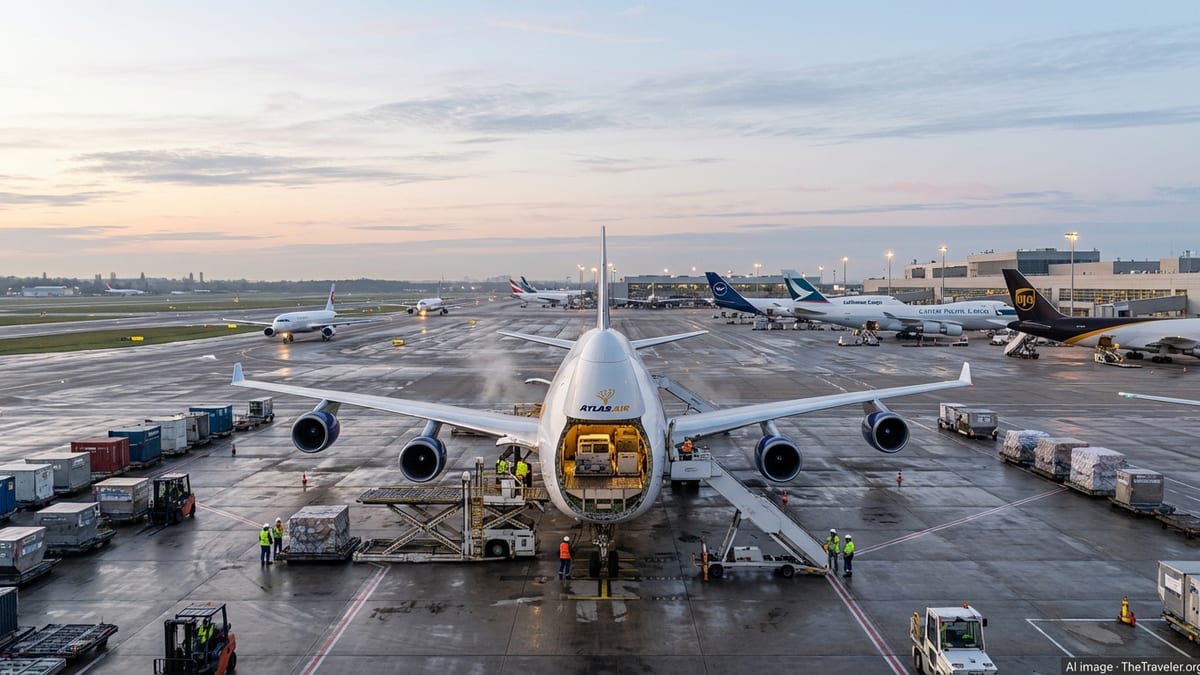
New DHL Singapore Coldchain Hub at Changi Nexus One
Publicly available information shows that DHL Global Forwarding Singapore will develop the DHL Singapore Coldchain Hub within Changi Nexus One, a new air logistics facility in the Changi Airfreight Centre. The 3,047 square metre site will be designed as a specialist healthcare logistics node with direct airside access, allowing shipments to move quickly between aircraft and temperature-controlled storage.
According to official material from Changi Airport Group, the hub is targeted for completion by the end of 2027 and will operate within the airport’s Free Trade Zone. This location is intended to support cross-docking and regional distribution, giving pharmaceutical manufacturers and healthcare suppliers faster access to key markets throughout Asia Pacific.
Reports indicate that the facility will be built to Good Distribution Practice standards, a benchmark widely used in the pharmaceutical industry to protect product quality during transport and storage. The project is described as part of a broader collaboration between the airport and major freight forwarders to strengthen specialist handling for high-value, sensitive cargo.
Expanded temperature-controlled capabilities for life sciences
Changi Airport Group’s announcement states that the DHL Singapore Coldchain Hub will feature GDP-qualified cold rooms supporting common healthcare temperature bands of 2 to 8 degrees Celsius and 15 to 25 degrees Celsius. Real-time temperature monitoring and dedicated coldchain infrastructure are expected to underpin what is described as an unbroken end to end cool chain for life sciences shipments.
The facility is planned to be integrated with temperature controlled transfer solutions on the airside, including specialised equipment to protect cargo while it is moved between aircraft, warehouses and onward transport. This builds on Changi’s existing coolchain ecosystem, which already includes more than 9,000 square metres of airside fronting temperature controlled handling space and an annual coolchain handling capacity reported at over 375,000 tonnes.
Material on Changi’s coldchain offering highlights the presence of multiple certified pharma handling facilities, such as SATS Coolport and dnata Coolchain, and a large community of IATA CEIV Pharma certified partners. By adding a dedicated DHL healthcare logistics site with direct apron connectivity, the airport is aiming to further differentiate its capabilities in handling time and temperature sensitive medicines, vaccines and biologics.
Responding to fast growing Asia Pacific healthcare demand
Industry outlooks cited in the joint announcement point to Asia Pacific as one of the fastest growing regions for pharmaceutical sales over the rest of the decade. IQVIA projections referenced by Changi Airport Group and DHL indicate that pharmaceutical sales in 12 key Asian markets, including China, Japan, India, South Korea and Singapore, are forecast to grow at a compound annual rate of about 3.7 percent between 2024 and 2029.
That expansion is expected to increase flows of biologics, specialty medicines and other advanced therapies that require tight temperature control and more resilient logistics networks. The new coldchain hub at Changi is being positioned as a direct response to this trend, enabling shippers to consolidate regional volumes at a single, well connected gateway with specialist capabilities.
Changi Airport already serves all of the world’s top airfreight forwarders and is home to major express, e commerce and freight airlines. Its role as an integrated cargo gateway, combined with Singapore’s position as a regional headquarters location for many pharmaceutical and biotech firms, is seen in published coverage as a key factor behind the decision to base DHL’s expanded healthcare facility at the airport.
Part of DHL’s multibillion euro Health Logistics strategy
The DHL Singapore Coldchain Hub is being launched against the backdrop of a global expansion of DHL Group’s healthcare logistics network. Company press releases report that DHL plans to invest around 2 billion euros through 2030 in a dedicated Health Logistics strategy, with funds allocated to GDP certified pharma hubs, temperature controlled vehicles and enhanced packaging technologies for multi temperature shipping lanes.
Earlier updates from DHL have highlighted an expanding Airfreight Cold Chain Network and the rollout of facilities and solutions tailored to life sciences clients, from biologics and vaccines to cell and gene therapies. The Changi project is presented as one of the strategic healthcare hubs in this network, reinforcing Singapore’s status within the group as a key node for innovation and regional connectivity.
By combining new infrastructure at Changi with DHL’s broader investments in technology, monitoring and specialised handling processes, the partners aim to offer pharmaceutical and healthcare customers greater visibility and control across their supply chains. Public information emphasises that the hub is expected to support more precise temperature management and faster response times for critical shipments.
Strengthening Singapore’s role as a regional healthcare logistics gateway
Changi Airport has spent the past decade developing what it describes as an integrated pharma and perishables ecosystem, supported by the Pharma@Changi community of airlines, handlers and freight forwarders. Brochures and promotional material show that this cluster focuses on shared standards, data visibility and training for staff handling sensitive medical products.
The new DHL Singapore Coldchain Hub is set to complement these efforts by adding another specialised node within the airport’s Free Trade Zone. With direct apron access at Changi Nexus One and connectivity to DHL’s global network, the facility is expected to facilitate regional consolidation, transshipment and last mile distribution for hospitals, clinics and distributors across Asia.
Observers of regional trade patterns note that Singapore’s strong regulatory framework, geographical position on major air corridors and extensive passenger and freighter connectivity have long supported its air cargo ambitions. The latest coldchain development suggests that healthcare logistics will continue to be a central pillar of Changi’s cargo strategy as pharmaceutical demand and supply chains evolve across the wider region.
https://www.changiairport.com/en/corporate/partnering-us/cargo-partners.html