


More news on this day
India is rolling out a new e-Group Visit Visa tailored to cruise and charter groups, aligning looser entry procedures for foreign tourists with a broader push to position the country as a major cruise hub in Asia.
Get the latest news straight to your inbox!
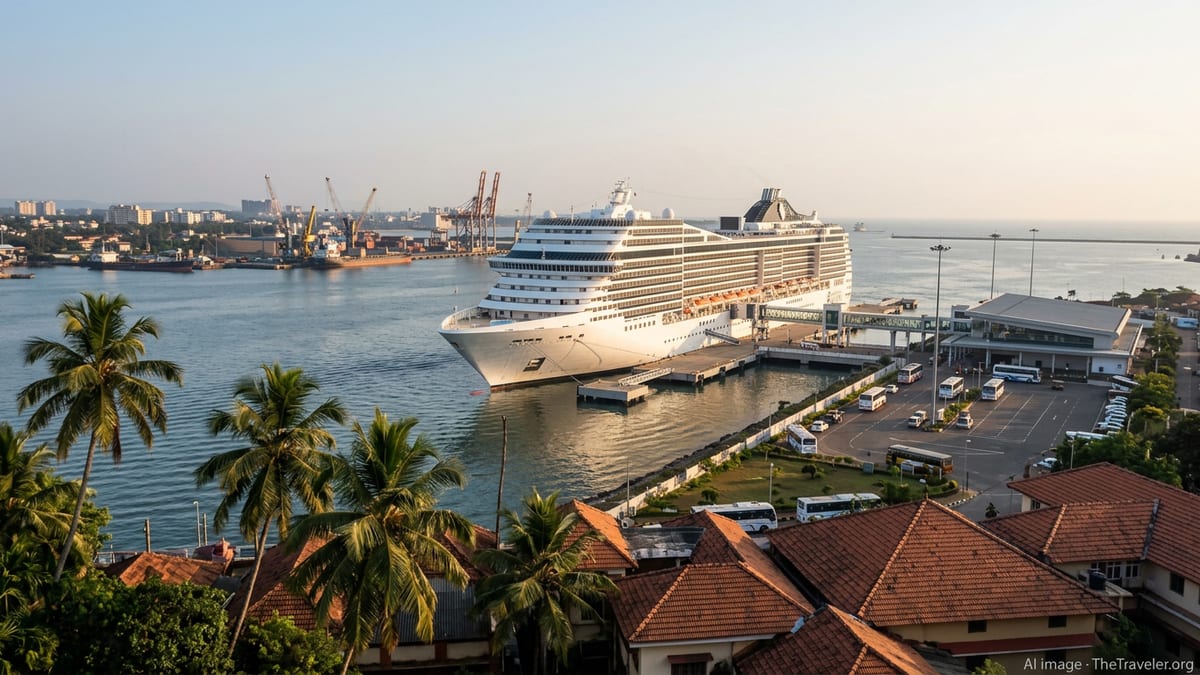
New E-Group Visit Visa Targets Cruise and Charter Segments
Publicly available policy documents indicate that India is adding an e-Group Visit Visa to its expanding electronic visa framework, designed for foreign tourists arriving as part of organized groups, including cruise passengers booked on chartered or scheduled itineraries. The move builds on existing tourist-visa subcategories for groups and cruise visitors within India’s broader visa policy, which already distinguishes between standard leisure travelers, group tourists and cruise tourism arrivals.
The e-Group Visit Visa is intended to digitize and streamline what has historically been handled through paper-based group tourist visas, reducing dependence on in-person processing at Indian missions abroad. By shifting formalities online for tour operators and cruise lines, the new category is expected to cut lead times and documentation hurdles for travelers who enter and exit India together as part of a pre-arranged program.
India’s existing electronic visa program has gradually expanded since its introduction in 2014 and now covers nationals of more than 160 countries under multiple subcategories such as e-Tourist, e-Business, e-Medical, e-Conference and student-related options. Official tourism reports describe liberalization and simplification of visa rules as an ongoing process tied to security, inbound tourism and investment priorities, with authorities frequently adding or refining e-visa types to respond to sector demands.
Within this context, the e-Group Visit Visa is emerging as the latest targeted instrument, focusing specifically on group arrivals whose travel is coordinated by licensed operators. This includes passengers on foreign cruise ships who may step ashore at several Indian ports in quick succession, as well as charter groups that begin and end their itineraries outside India but include one or more Indian calls.
Cruise Tourism Identified as High-Growth Priority
Government tourism and shipping reports consistently highlight cruise tourism as a high-potential segment for India, citing the country’s long coastline, diverse cultural destinations and growing middle class. Policy briefs prepared by the Ministry of Ports, Shipping and Waterways describe the cruise industry as a sector with “exponential growth” potential and outline a series of incentives tailored to attract more vessels and passengers.
These measures include giving cruise ships berthing priority over cargo vessels at major ports, rationalizing cruise tariffs, scrapping certain ousting charges and modernizing passenger terminals in cities such as Mumbai, Kochi, Chennai, Mormugao and Visakhapatnam. Single electronic landing cards valid for multiple ports on a given cruise itinerary have also been introduced, simplifying repeat embarkation and disembarkation formalities for travelers who call at several Indian ports during the same voyage.
Tourism ministry reports add that India is actively courting international cruise brands at global industry events and through dedicated promotion campaigns. Strategic documents frame cruise tourism as part of a wider ambition to develop “coastal and marine tourism” corridors, with homeporting, river cruises and expedition itineraries on the Ganges and Brahmaputra all identified as growth areas alongside sea-based itineraries touching India’s west and east coasts.
The e-Group Visit Visa fits into this broader ecosystem by addressing one of the most frequently cited operational barriers for cruise lines: visa complexity for passengers undertaking short port calls or multi-stop circuits that pass in and out of Indian waters in a matter of days.
Easier Entry Through Expanded E-Visa and Reduced Formalities
India’s electronic visa platform has long supported cruise arrivals through designated seaports, and tourism reports note that several seaports including Mumbai, Cochin, Mormugao, Chennai and New Mangalore are authorized entry points for travelers using e-visas. Policy updates have further exempted eligible cruise tourists on e-visas from biometric enrolment requirements at these ports, reducing processing time at gangways during high-volume arrivals.
According to published guidance for foreign visitors, travelers from eligible countries can apply for e-Tourist and related e-visa categories fully online, receive Electronic Travel Authorizations and present printed approvals at immigration checkpoints, where visas are stamped on arrival. Consular advisories emphasize that applicants must apply at least a few days before travel and that only the official Indian e-visa portal should be used, as there are no emergency surcharges or expedited fees provided by the government platform.
The shift toward an e-Group Visit Visa signals an effort to extend these digital efficiencies to organized group movements. For cruise and charter operators, a group-focused e-visa can reduce the need for passengers to apply individually for standard tourist e-visas, as long as they travel as part of a manifest submitted by the operator and follow identical entry and exit patterns. This structure is particularly suited to fly-cruise packages, themed voyages and chartered sailings that bring large numbers of first-time visitors to Indian ports.
Tourism policy documents suggest that easing entry through e-visas and on-arrival facilities is viewed as an essential component of plans to capture a greater share of the Asia-Pacific cruise market. For foreign tourists, the ability to clear immigration with simplified paperwork, especially when stepping off a ship for only a day or two, can be a deciding factor when choosing between itineraries that include or skip Indian ports.
Implications for International Travelers and Cruise Lines
The emerging e-Group Visit Visa framework is expected to have practical implications for both passengers and cruise companies planning itineraries in Indian waters. International travelers joining group cruises or charter programs will likely see more itineraries marketing India stops as “visa-light,” with operators handling much of the paperwork and travelers completing streamlined online steps compared with traditional consular visa processes.
For cruise lines and tour organizers, the new category offers a clearer regulatory path for designing India-inclusive routes that involve multiple coastal cities or islands within a short time frame. Combined with existing cabotage relaxations that allow foreign cruise ships to carry Indian passengers between domestic ports on certain legs, more flexible visa arrangements could encourage longer seasons on the Indian coast and expanded deployment of vessels accustomed to operating in the Mediterranean, Caribbean and Alaska.
Policy analysts note that simplified entry does not remove security and compliance obligations for operators. Group manifests, proof of onward travel and adherence to approved itineraries remain central to the system, and e-visa platforms continue to incorporate security vetting before Electronic Travel Authorizations are issued. However, processing much of this digitally, and in bulk for pre-formed groups, may reduce administrative friction for both carriers and port authorities.
As India continues to promote itself as a “holistic” tourism destination, combining heritage sites, beaches, wellness retreats and culinary experiences, cruise tourism is likely to feature more prominently in international marketing campaigns. The introduction of the e-Group Visit Visa aligns with that narrative, signaling that seaborne visitors, as well as independent land-based travelers, are now central to the country’s inbound tourism strategy.
How the E-Group Visit Visa Complements Existing Schemes
India’s visa framework already recognizes group and cruise tourism as distinct segments within its broader tourist-visa architecture. Earlier policy guidelines list specific subcategories for group tourists and for cruise tourism, outlining conditions under which foreign nationals may enter India as part of organized tours or onboard cruise ships that touch multiple Indian ports.
The new e-Group Visit Visa appears to be a digital evolution of these earlier paper-based categories, complementing rather than replacing individual e-Tourist Visas. Independent travelers are expected to continue using standard e-tourist channels, while group passengers whose experience is fully arranged by tour operators or cruise lines would primarily interface with the e-Group mechanism.
Tourism authorities have repeatedly described liberalization of visa rules as a gradual process, carried out in tandem with upgrades to port infrastructure, marketing initiatives and industry partnerships. Recent annual reports document the extension of e-visas to 167 nationalities, the designation of additional airports and seaports for e-visa entry and the adoption of single electronic landing cards valid across multiple Indian ports of call for cruise passengers.
In this environment, the e-Group Visit Visa serves as another incremental adjustment designed to align India’s border procedures with international cruise-industry practices, where group manifests, pre-clearance and electronic documentation are standard. For travelers considering an India-inclusive cruise, the changes point toward shorter queues at terminals and simpler pre-departure formalities, reinforcing India’s bid to capture a larger slice of global cruise traffic in the coming years.
Ministry of Home Affairs general visa policy guidelines
Ministry of Tourism Annual Report 2024-25
Press Information Bureau note on cruise industry initiatives