


More news on this day
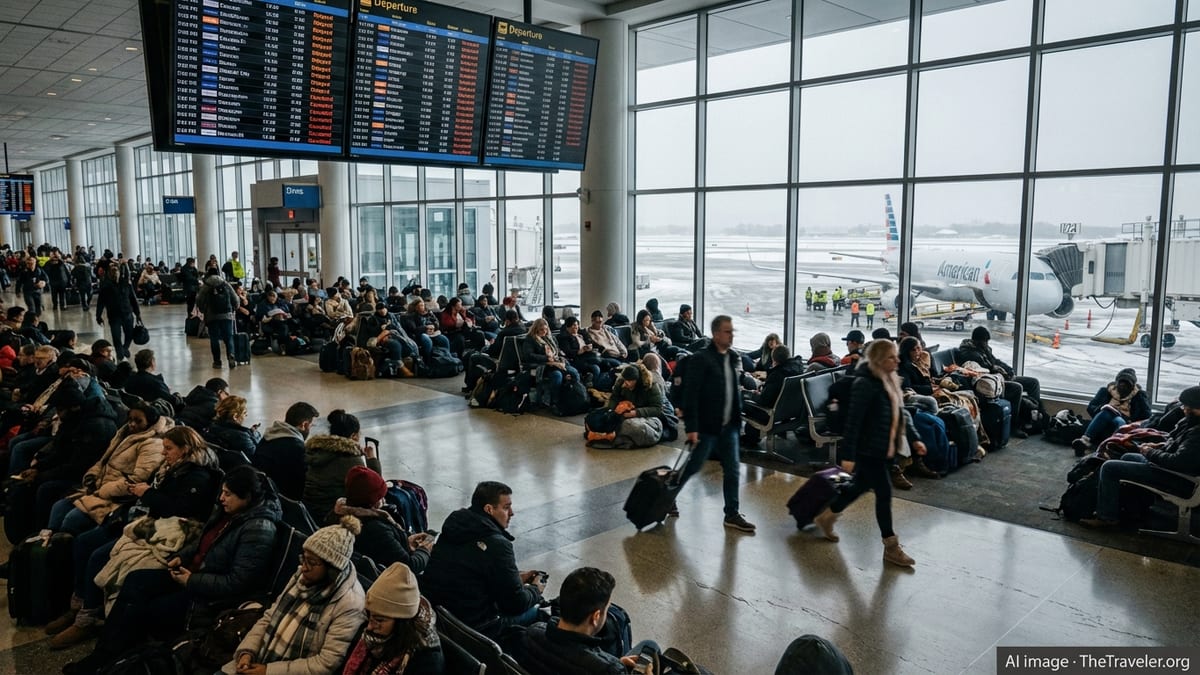
American Airlines passengers across the United States are facing significant disruption as a fresh wave of delays and cancellations at Charlotte Douglas International Airport ripples through one of the carrier’s busiest hubs.
Get the latest news straight to your inbox!
Hub Gridlock Intensifies at Charlotte Douglas
Operational data and traveler reports from the final weeks of June 2026 indicate mounting schedule problems at Charlotte Douglas International Airport, culminating in what observers describe as a pattern of rolling delays that has intensified into July. Tracking services and independent aviation coverage point to days when well over a hundred flights at the airport were either delayed or canceled, with American Airlines bearing the bulk of the strain as the dominant carrier at the hub.
Several recent analyses highlight episodes described as “meltdowns,” where Charlotte experienced more than 180 delays and multiple cancellations in a single day, affecting American Airlines and its regional affiliates in particular. On other days this month, public disruption summaries show Charlotte again appearing near the top of nationwide delay tallies, underscoring the vulnerability of the airport’s tightly scheduled afternoon and evening banks.
Available performance snapshots suggest that even when individual American Airlines flights depart on time, the broader operation at Charlotte is running with little margin, leaving the schedule exposed when weather, crew rotations or minor technical issues arise. The result for travelers has been a mix of moderate pushbacks, multi-hour holds on the ground and, in some cases, overnight disruptions.
Weather, Construction and Network Constraints Converge
Several factors appear to be converging to amplify the disruption at Charlotte. Meteorological summaries indicate that scattered thunderstorms have repeatedly moved across the Carolinas during late June, bringing lightning and low visibility at particularly sensitive points in the daily schedule. While such cells are often categorized as routine for the season, their timing during peak departure banks has forced extended ground stops and flow-control measures.
At the same time, federal aviation planning documents show ongoing and recently completed airfield projects at Charlotte, including the long-running decommissioning and rehabilitation of runway 5/23 and associated taxiway changes. These works are flagged in public reports as having the potential to reduce capacity and add to taxi congestion, especially when combined with busy hub periods and active weather.
Industry observers note that Charlotte’s airfield layout has long been considered challenging during irregular operations, with limited redundancy compared with some larger hubs. When one piece of that system is constrained, whether by construction, equipment outages or weather-driven runway configurations, the knock-on effect for departure and arrival rates can be significant.
American Airlines’ Operation Feels the Strain
Because Charlotte is a cornerstone of American Airlines’ east coast and transatlantic network, operational stress at the airport quickly translates into broader schedule complexity. A large share of the carrier’s domestic and regional flights through the hub are operated by partners such as PSA Airlines and Piedmont, which run highly banked schedules designed to feed connections to and from longer-haul services.
When those feeder flights are pushed back or held, missed connections cascade through the system. Publicly available accounts from recent days describe passengers misconnecting in Charlotte and being rebooked on later departures, in some cases losing full vacation days on leisure routes with limited weekly frequencies. On busier business routes, travelers report arriving many hours later than planned as aircraft and crews are repositioned.
American Airlines has already been adapting its Charlotte strategy in response to cost pressures and operational realities. Earlier in June, regional coverage highlighted that the airline was suspending some routes from Charlotte due to rising fuel costs, with passengers on affected flights being shifted to alternative services or offered refunds. The latest disruption adds a layer of complexity to those network changes, as remaining flights absorb more demand while also contending with irregular operations.
Passengers Face Long Lines and Limited Alternatives
For travelers on the ground, the operational strain at Charlotte has translated into long check-in and security lines, crowded concourses and last-minute gate changes. Firsthand accounts shared publicly in recent weeks describe passengers waiting through repeated rolling delays, sometimes receiving dozens of schedule updates before a flight ultimately departs or cancels.
Charlotte’s role as a dominant single-carrier hub limits convenient alternatives for many passengers caught in the disruption. With American Airlines controlling the majority of traffic, same-day rebooking on other airlines is often difficult, especially during peak summer travel weekends when load factors are high across the board. When large delay events occur, nearby hubs can also become saturated as rerouted travelers funnel through limited remaining capacity.
Consumer advocacy organizations point out that passengers affected by multi-hour delays or cancellations may be eligible for assistance or, in some cases, compensation under airline policies or applicable regulations, depending on the cause of the disruption. However, navigating those rules during a live irregular-operations event can be challenging, especially late at night when staffing and available hotel inventory are strained.
What Travelers Through Charlotte Should Expect Next
Looking ahead into early July, aviation planners caution that Charlotte is entering one of the busiest stretches of the summer travel season even as seasonal thunderstorm activity typically remains high. With airfield modifications still adjusting how traffic flows on the ground, any renewed bout of storms or air traffic control restrictions could again place pressure on American Airlines’ hub schedule.
Travel experts reviewing recent patterns suggest that passengers connecting through Charlotte in the coming days may want to build extra buffer time into itineraries, particularly for afternoon and evening departures. Booking longer layovers, choosing earlier flights where possible and closely monitoring app-based flight status updates are among the strategies frequently recommended in public guidance.
For American Airlines, stabilizing operations at Charlotte will likely remain a priority as the carrier manages fuel-related route decisions, regional partner performance and customer expectations during the peak season. How quickly the airline can restore a more predictable rhythm to its Charlotte hub could play a significant role in shaping traveler perceptions for the rest of the summer.