


More news on this day
China’s busiest airports in Beijing, Shanghai and Guangzhou are experiencing another turbulent spell in 2026, with publicly available aviation data indicating at least 2,760 delays and 63 cancellations so far this year across the country’s core domestic and regional network.
Get the latest news straight to your inbox!
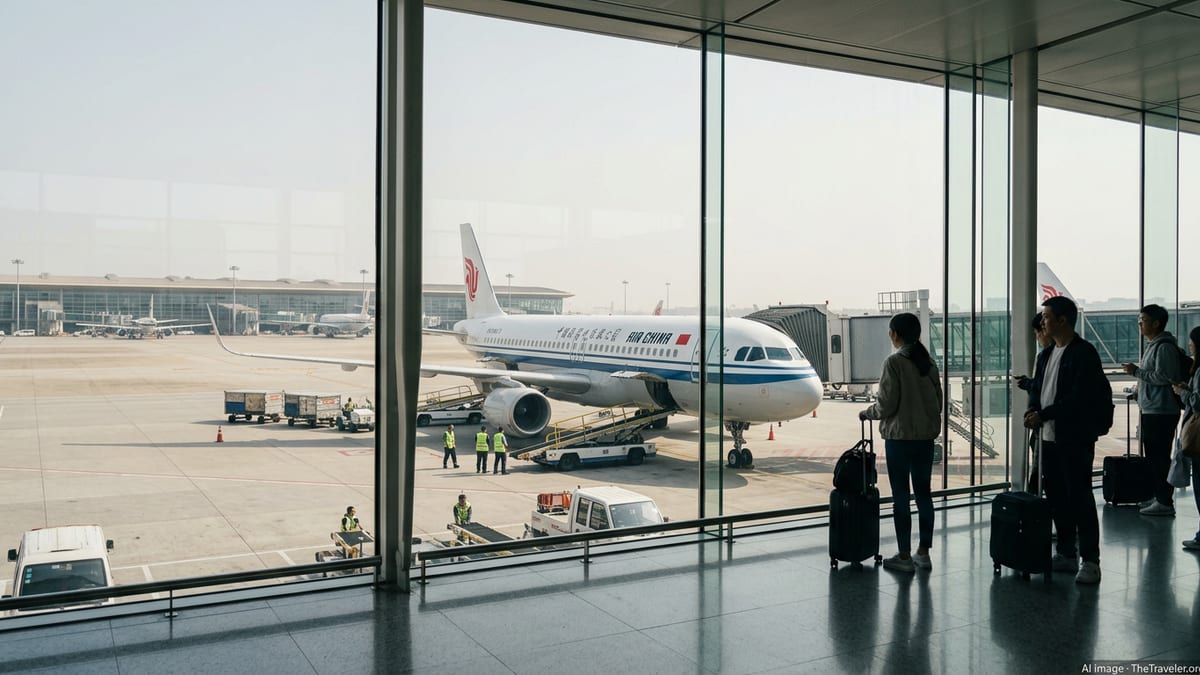
China’s Main Hubs Struggle With Rolling Disruptions
The disruption picture emerging from Beijing Capital and Daxing, Shanghai Pudong and Hongqiao, and Guangzhou Baiyun reflects a rolling pattern of delays rather than a single one-off incident. Aviation analytics platforms and flight-status trackers for services linking the three mega-hubs show repeated late departures, extended turnaround times and scattered cancellations throughout the peak summer travel period.
Domestic trunk routes such as Beijing to Shanghai and Beijing to Guangzhou, served by Air China, China Eastern, China Southern and Hainan Airlines among others, have been among the most affected. Recent performance data for several high-frequency flights on these routes shows on-time departure rates often below 50 percent, with average delays ranging from about 40 minutes to well over an hour.
Travel assistance and claims services tracking disruptions across Chinese carriers recently highlighted several thousand affected passengers on a single mid-June day, when nearly 2,700 flights involving the country’s largest airlines were reported as disrupted, many of them at Beijing, Shanghai and Guangzhou. While not all of those flights were canceled, the knock-on effect of late arrivals and crew dislocation has continued to ripple through schedules into July.
The cumulative impact across the first half of 2026 now points to at least 2,760 delayed services and 63 outright cancellations touching the three hubs, based on aggregated figures from public flight-statistics dashboards, airline advisories and passenger-facing disruption trackers.
Weather, Congested Skies and Operational Limits Drive Delays
The causes behind the widespread delays appear to be layered. Seasonal storms affecting eastern and southern China have repeatedly slowed operations at Shanghai and Guangzhou, with typhoon-related warnings prompting precautionary spacing of arrivals and departures and temporary ground stops. Social media and traveler forums in early July featured numerous accounts of flights arriving many hours late or being rescheduled at short notice as weather fronts moved across the coast.
At the same time, China’s tightly managed airspace and rising traffic volumes continue to constrain how quickly airlines can recover when operations are disrupted. Industry commentary in Chinese and international media has for years pointed to limited civilian airspace capacity as a structural factor behind delays, and 2026 has seen renewed discussion of how airspace restrictions and military activity can force rerouting and holding patterns around Beijing and Shanghai.
Operational limits on aircraft and crew utilization also play a role. Publicly available information from airline customer notices and travel-industry advisories indicates that some delays and cancellations this year have been attributed to crew duty-time limits and aircraft rotation issues, particularly when earlier sectors in the day have run significantly late. In a tightly timed domestic network built around rapid turnarounds, one heavily delayed flight can cascade into multiple late departures.
Airport infrastructure at the big three hubs is designed to handle high volumes, but peak-time congestion still leads to bottlenecks. Passenger reports of long taxi-out times in Beijing and Shanghai, as well as queues for takeoff slots around evening bank periods, suggest that runway and apron capacity is being stretched during busy waves, lengthening average delay times when conditions deteriorate.
Passengers Face Missed Connections and Last-Minute Changes
For travelers, the headline numbers of 2,760 delays and 63 cancellations translate into missed connections, disrupted itineraries and added costs. Accounts shared on travel forums in recent weeks describe missed long-haul connections in Shanghai after late-arriving domestic feeders, hurried hotel arrangements following nighttime cancellations, and last-minute rebooking onto high-speed rail when short-haul flights between Shanghai and Guangzhou or other cities were scrubbed.
Domestic passengers connecting through Beijing or Shanghai on separate tickets have been particularly exposed. Several travelers have described itineraries built around tight two- or three-hour layovers between domestic and international legs, only to see the first segment depart late and leave them scrambling at the transfer desk or having to purchase new onward tickets. The pattern reflects how even relatively modest average delays can pose a serious risk in complex, self-built itineraries.
For international visitors unfamiliar with China’s aviation rhythm, the disruptions can be especially disorienting. Recent discussions among travelers heading into Shanghai and Guangzhou highlight confusion around notification practices, with some reporting late-night schedule changes arriving by email or app only hours before departure. Others have mentioned difficulty obtaining clear, English-language explanations for cancellations at airport counters during busy periods.
The combination of high passenger volumes and rolling delays has also strained ground services at peak times. Travelers passing through Beijing and Shanghai in July have reported long lines at rebooking desks and information counters, as carriers attempt to reroute passengers onto later departures or alternate airports where possible.
Airlines Offer Waivers as Rail Emerges as Backup Option
In response to the ongoing irregular operations, several Chinese carriers have introduced limited-fee or no-fee change policies on selected routes and dates. Public customer notices from major airlines this summer describe temporary ticketing waivers for domestic flights touching Beijing and Shanghai during specific disruption windows, allowing passengers to switch to later dates or different flights within a set period without standard change penalties.
While such measures may soften the financial impact for affected travelers, they do not always solve capacity constraints. With many flights already operating near full during peak travel weeks, rebooking options can be scarce, especially for those who booked lower fare classes. As a result, some passengers have opted to cancel air segments altogether and shift to China’s extensive high-speed rail network for medium-range journeys between major cities.
Reports from traveler communities show increasing reliance on high-speed trains between Shanghai, Beijing and Guangzhou as a backup when flights are canceled or significantly delayed. Given journey times of around four and a half to six hours on key rail corridors, many travelers have judged rail to be a more predictable option under current conditions, especially for purely domestic travel or when time buffers are tight.
Travel advisors and consumer-rights organizations focused on air travel suggest that passengers facing repeated disruptions should keep careful records of delay durations, boarding passes and any written notices received from airlines, which may be required for insurance claims or compensation requests under applicable regulations or carrier policies.
What Travelers Should Do Now
With disruption indicators across Beijing, Shanghai and Guangzhou remaining elevated into mid-2026, prospective travelers are being urged by travel-industry commentators to take a more conservative approach when planning itineraries. Recommendations include building longer layover buffers, especially on self-connecting itineraries, and avoiding the tightest possible connections on the busiest trunk routes.
Monitoring tools have also become more important. Flight-tracking apps, airline mobile applications and airport status pages can provide near-real-time updates on gate changes, estimated departure times and cancellation notices. Given the pattern of late-evening cancellations observed on some domestic routes, travelers are increasingly advised to check status repeatedly in the 24 hours before departure and again a few hours before heading to the airport.
Those with flexible schedules may wish to consider traveling outside the heaviest peak days, when possible. Publicly available disruption data and anecdotal reports from frequent flyers point to higher delay rates around major holiday periods and weekends, when traffic volumes surge through the big three hubs. Choosing earlier departures in the day can also reduce exposure to knock-on delays that accumulate across an afternoon and evening schedule.
As China’s aviation sector continues its post-pandemic recovery and demand climbs, the struggle to keep flights running on time through Beijing, Shanghai and Guangzhou looks set to remain a central test for airlines and airport operators. For now, travelers heading through these key gateways in 2026 should plan for potential disruption, build in extra time and keep alternative options in mind.