


More news on this day
Thick smoke from hundreds of Canadian wildfires has drifted deep into the United States in mid-July 2026, triggering a fresh wave of air travel disruption that contributed to 4,896 flight delays and 126 cancellations across major US hubs as airlines, airports and passengers grappled with reduced visibility and hazardous air quality.
Get the latest news straight to your inbox!
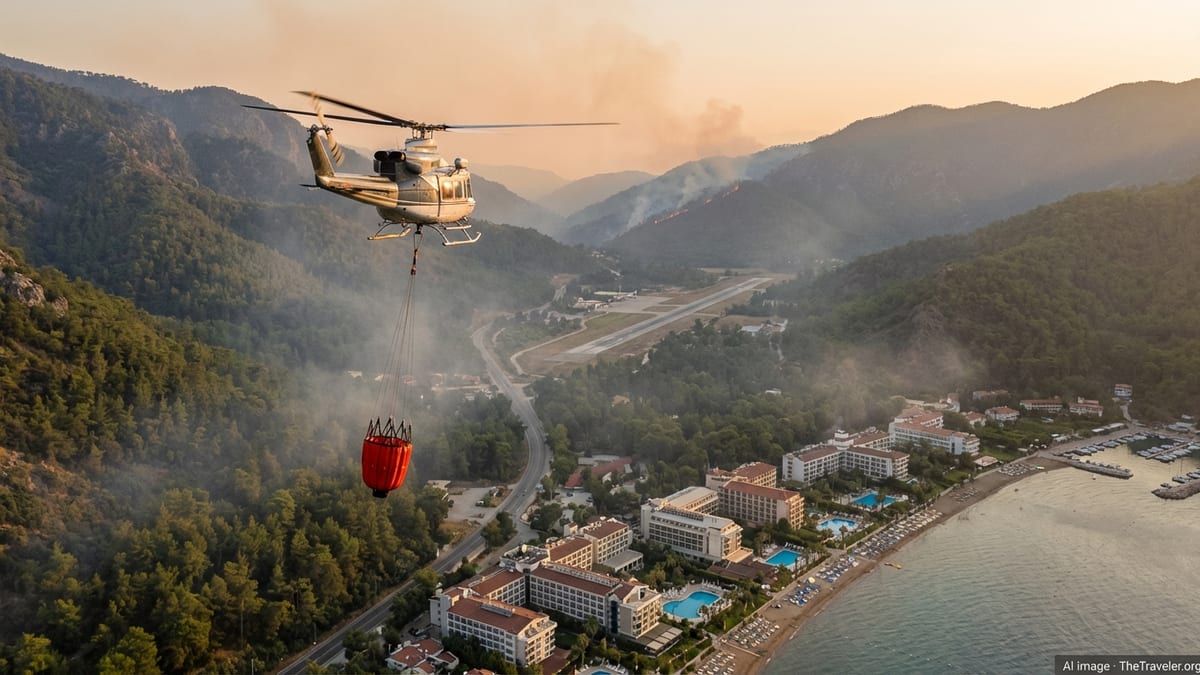
Smoke-Plagued Skies Slow a Busy Summer Travel Network
The latest plume of Canadian wildfire smoke, tracked between July 14 and 17 by satellite imagery and air quality monitors, pushed dense particulates across the US Midwest and Northeast just as the peak summer travel season reached one of its busiest stretches. Publicly available flight-tracking data for this period shows at least 4,896 delays and 126 cancellations across the US system, with disruption clustering around major connecting hubs including Chicago, Detroit, New York, Boston and Philadelphia.
Reports indicate that much of the turbulence in the schedule can be traced to visibility-related traffic management programs, as air traffic controllers slowed arrival and departure rates when smoke thickened near key airports. While only a fraction of the more than 20,000 daily US flights were cancelled outright, the compounding effect of rolling delays, aircraft reassignments and missed connections rippled throughout the network over several days.
This new wave of disruption came after an already difficult July for US aviation, marked by severe thunderstorms, heat-driven runway constraints and earlier holiday weekend bottlenecks. The added burden of wildfire smoke has underscored how closely the system is now tracking environmental volatility, with operational data showing that weather and air-quality phenomena are claiming a growing share of the causes behind late arrivals.
Major US Hubs Bear the Brunt of Reduced Visibility
According to published coverage and live tracking dashboards, airports across the Midwest and Northeast experienced the most acute smoke-related disruption. Chicago O’Hare and Midway reported waves of inbound and outbound delays as haze reduced visibility, while Detroit, Minneapolis and Milwaukee saw similar slowdowns as air traffic managers eased arrival spacing to maintain safe operating margins.
Farther east, New York’s three main airports, along with Boston Logan and Philadelphia International, were hit by a combination of deteriorating air quality and intermittent visibility drops that forced airlines to pad schedules and ground some aircraft temporarily. Passengers described departure boards dominated by yellow “delayed” status lines, with departure times repeatedly pushed back in small increments as conditions were reassessed.
Even where cancellations remained limited relative to total volume, the distribution of those 126 scrubbed flights mattered. With many of the lost services tied to hub-and-spoke carriers at O’Hare, Newark, JFK and Atlanta, knock-on effects spread into secondary markets. Travelers who initially expected short regional hops found themselves stranded overnight or rebooked through alternative hubs already strained by earlier delays.
Hazardous Air Quality Adds Health Risk to Operational Stress
Environmental and health agencies reported that the mid-July smoke event pushed fine-particulate readings into unhealthy or hazardous ranges for tens of millions of people across the United States. Cities such as Minneapolis, Milwaukee, Chicago, Detroit and Cleveland experienced hours of murky orange or gray skies, while air quality indices in parts of New York and New England spiked into levels associated with respiratory risk for sensitive groups and, at times, the general population.
Publicly available information shows that the smoke originated from hundreds of active fires across multiple Canadian provinces, with national wildfire coordination centers describing an above-average and highly active 2026 season. Hot, dry conditions allowed fires to grow rapidly, and upper-level winds steered the resulting smoke southward in long bands that overran the Great Lakes region and the Eastern Seaboard.
For aviation, the health dimension added another layer of complexity. Ground workers, including ramp crews and baggage handlers, were required in many locations to operate for extended periods in poor air quality, often with masks or respirators. In some airports, reports indicate that ground operations were slowed to limit outdoor exposure, which in turn extended aircraft turnaround times and contributed to the accumulation of delays as the day progressed.
Lessons From Earlier Smoke Events Shape Airline Response
Airlines and airports confronted a familiar yet evolving challenge. During previous large-scale Canadian wildfire smoke episodes in 2023 and 2025, visibility at New York and other East Coast airports deteriorated sharply, prompting temporary ground stops and the suspension of some arrivals. Those experiences helped carriers refine playbooks for when and how to apply schedule reductions, issue travel waivers and adjust crew and aircraft rotations when smoke settles over multiple hubs at once.
In 2026, these strategies appear to have focused on targeted cancellations rather than mass shutdowns. Available data from tracking and analytics platforms suggests that carriers concentrated cancellations on routes with multiple daily frequencies or on flights that would be most exposed to onward connectivity disruptions, while accepting a higher level of delays across the rest of the network. This approach aimed to preserve core connectivity while avoiding an uncontrollable backlog of stranded passengers and aircraft.
At the same time, publicly shared on-time performance statistics for the year already highlight how fragile that balance has become. Airlines have had to juggle smoke, convective storms, heat waves and infrastructure constraints at older hubs, with each event leaving aircraft and crews out of position for subsequent days. The 4,896 delays tied to the latest smoke incursion therefore landed on top of preexisting schedule stress, making recovery slower than headline numbers alone might suggest.
What Travelers Can Expect as Wildfire Seasons Intensify
For passengers planning trips through the remainder of the 2026 summer, the combination of active Canadian wildfires and a heavily booked US aviation system points to a heightened risk of schedule disruption whenever smoke plumes intersect major air corridors. Forecast products from meteorological and space agencies indicate that smoke transport events can develop quickly when winds align, sometimes leaving only a brief window for airlines to preemptively adjust schedules.
Travel risk analysts note that, in this environment, smoke and air quality can affect journeys even when departure and arrival cities sit outside the most visibly impacted areas. If a hub airport used for connections or aircraft rotations is shrouded in haze, disruptions can cascade into regions that are otherwise enjoying clear skies. The pattern observed during the 4,896 delays and 126 cancellations tied to this mid-July episode reflects that network-wide vulnerability.
As wildfire seasons trend longer and more intense across North America, industry observers increasingly view smoke-related delays as a recurring feature rather than an anomaly in aviation planning. That shift is already influencing how airlines model schedule resilience, how airports consider future infrastructure investments and how travelers think about routing, connection times and insurance for peak-season trips likely to intersect with the next cross-border haze event.