


More news on this day
Major Chinese aviation hubs have been grappling with a new wave of disruption, as severe summer storms and tight air traffic controls combine to trigger more than sixty flight cancellations and over two thousand delays across networks operated by China Eastern Airlines and China Southern Airlines.
Get the latest news straight to your inbox!
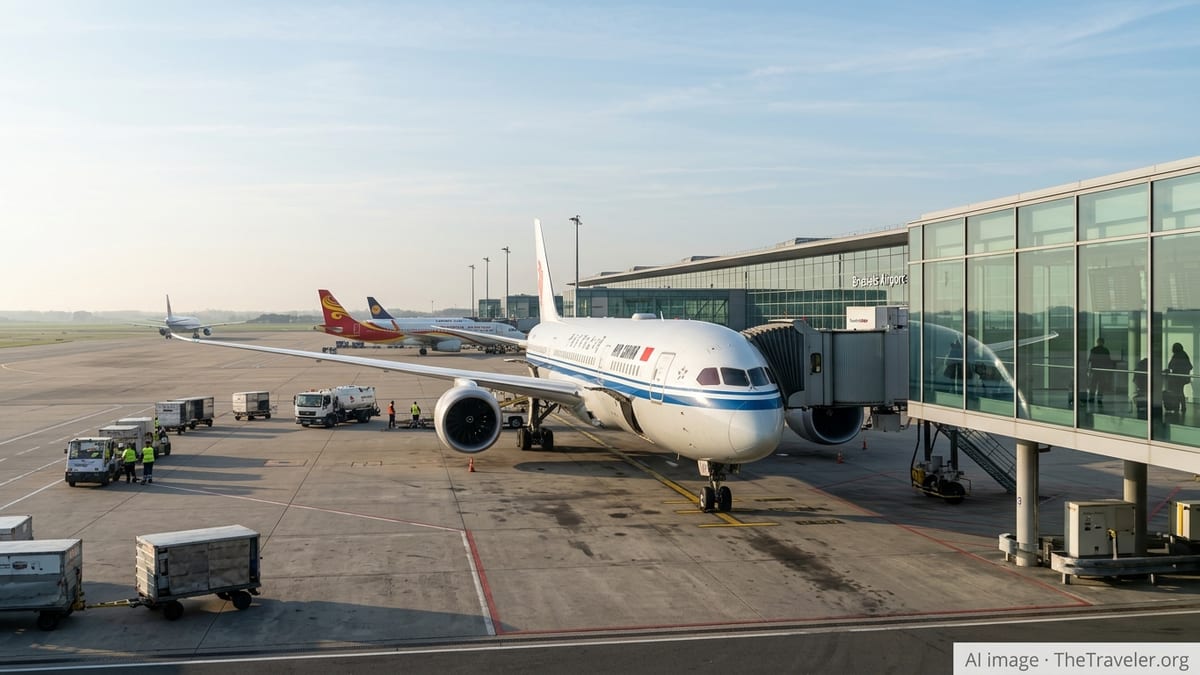
Weather Turbulence Hits Peak Summer Travel
The latest disruption has unfolded at the height of China’s busy summer travel period, when flight schedules are already operating near capacity. Publicly available flight-tracking data and domestic media coverage indicate that storms tracking across eastern and southern China have repeatedly forced ground stops, runway closures and rerouting measures at core hubs.
Reports from Chinese aviation data providers show that in recent days more than sixty flights operated by Chinese carriers have been cancelled nationwide, while delays have accumulated into the low thousands as aircraft and crew cycles fall out of sync. China Eastern and China Southern, which rely heavily on high-frequency shuttles between Shanghai, Beijing and Guangzhou, have been among the hardest hit as bottlenecks compound along their route networks.
Coverage focused on Shanghai, Beijing and Guangzhou highlights how quickly thunderstorms can overwhelm tightly choreographed operations. When convective cells park over a major hub, departure slots are sharply reduced, leaving airlines to choose between holding aircraft on the ground, diverting arrivals, or canceling rotations outright to prevent further knock-on chaos later in the day.
Shanghai, Beijing and Guangzhou Bear the Brunt
Shanghai’s twin airports, Pudong and Hongqiao, continue to feature prominently in disruption tallies. Recent domestic business reports described several hundred planned arrivals and departures being preemptively cancelled or rescheduled around the city as storm bands and strong winds swept across the Yangtze River Delta. That preemptive approach is reflected in schedule data showing concentrated cancellations over a short period, followed by continued waves of delays as normal operations slowly resume.
Further north, Beijing’s airports have also been dealing with a surge in delays. Aviation-focused outlets tracking day-of-operation performance note that Beijing Capital and Daxing together have recorded thousands of late departures and arrivals across all carriers in recent weeks, with some days seeing delay counts in the hundreds during peak hours. These disruptions tend to peak in the afternoon and evening as earlier weather events ripple forward through the schedule.
In southern China, Guangzhou and nearby hubs have reported similar patterns, with afternoon thunderstorms and temporary airspace restrictions forcing airlines to hold or reroute aircraft. For China Southern, which concentrates much of its domestic and regional network at Guangzhou, those interruptions translate into tight turnaround windows, missed connections and a higher risk of cancellations on lower-demand sectors.
China Eastern and China Southern Networks Under Strain
According to published coverage analyzing Asia’s interconnected aviation corridors, Chinese carriers have collectively logged well over two thousand delays across recent storm cycles, with China Eastern and China Southern together accounting for more than two thousand late departures and arrivals as their hub-and-spoke systems absorb the shock. A single weather event at a primary hub such as Shanghai Pudong can quickly ripple outward, leaving aircraft out of position for follow-on flights.
China Eastern’s dependence on dense shuttle routes between Shanghai and cities such as Beijing, Guangzhou, Xi’an and Chengdu means that once early-morning rotations are disrupted, crews and aircraft may not be available for later sectors. China Southern faces a similar challenge out of Guangzhou and Shenzhen, where high-frequency services to coastal and inland cities are especially vulnerable to afternoon storms and air traffic control flow restrictions.
Operational data and airline policy documents show that both carriers frame these disruptions within broader commitments to safety and regulatory compliance. Public passenger rights information indicates that when delays and cancellations occur for weather or airspace-control reasons, airlines adjust schedules, offer rebooking options, and in some cases provide meals or accommodation in line with Chinese civil aviation guidelines and their own conditions of carriage.
Travelers Confront Missed Connections and Long Waits
For passengers, the statistics translate into crowded terminals, lengthening queues at rebooking counters and missed onward connections on both domestic and international journeys. Reports from travel forums and consumer platforms describe travelers facing extended waits at Chinese hubs as they try to secure alternative flights, often while watching rolling updates on mobile apps and airport information screens.
Business travelers and long-haul passengers connecting through China’s major hubs appear particularly exposed when weather disruptions coincide with already tight connections. A cancellation on a short domestic leg into a hub can jeopardize an entire intercontinental itinerary, especially on routes that operate only once per day. Some travelers report opting for longer connection times or overnight stops in Shanghai, Beijing or Guangzhou as a buffer during the storm-prone months.
Airline-facing analyses recommend that passengers monitor their flight status closely in the 24 hours before departure and consider enabling app notifications for rapid updates. When large-scale disruptions occur, same-day telephone and online support channels can quickly become saturated, making early rebooking via digital self-service tools an important advantage.
Operational Outlook for the Remainder of Summer
Looking ahead, forecasts from China’s regional air traffic management authorities and meteorological agencies point to continued weather volatility through late July and into August, coinciding with the expected peak of the summer travel rush. Industry briefings anticipate that flight volumes in eastern China alone will climb several percentage points above earlier summer levels, leaving airlines and airports with less margin to absorb further disruptions.
Publicly available planning documents suggest that air traffic control centers are preparing for high-demand days by refining flow-management measures and coordinating more closely with major hubs to stagger departures during storm windows. Airlines including China Eastern and China Southern, meanwhile, appear to be leaning on schedule tweaks, tactical use of larger aircraft on key trunk routes, and selective consolidation of lightly booked flights in order to preserve capacity on their busiest corridors.
With more storms and hot-weather convection likely in the weeks ahead, observers expect irregular operations to remain a recurring feature of travel across Chinese hubs. For now, the combination of more than sixty cancellations and over two thousand delays underscores how vulnerable even mature, high-capacity aviation systems remain when severe weather collides with peak-season demand.