


More news on this day
Cleanup and investigation efforts are underway in Bensalem, Bucks County, after a CSX freight train derailed near the Neshaminy Falls regional rail station on Tuesday afternoon, disrupting service and prompting a brief shelter-in-place alert for nearby residents.
Get the latest news straight to your inbox!
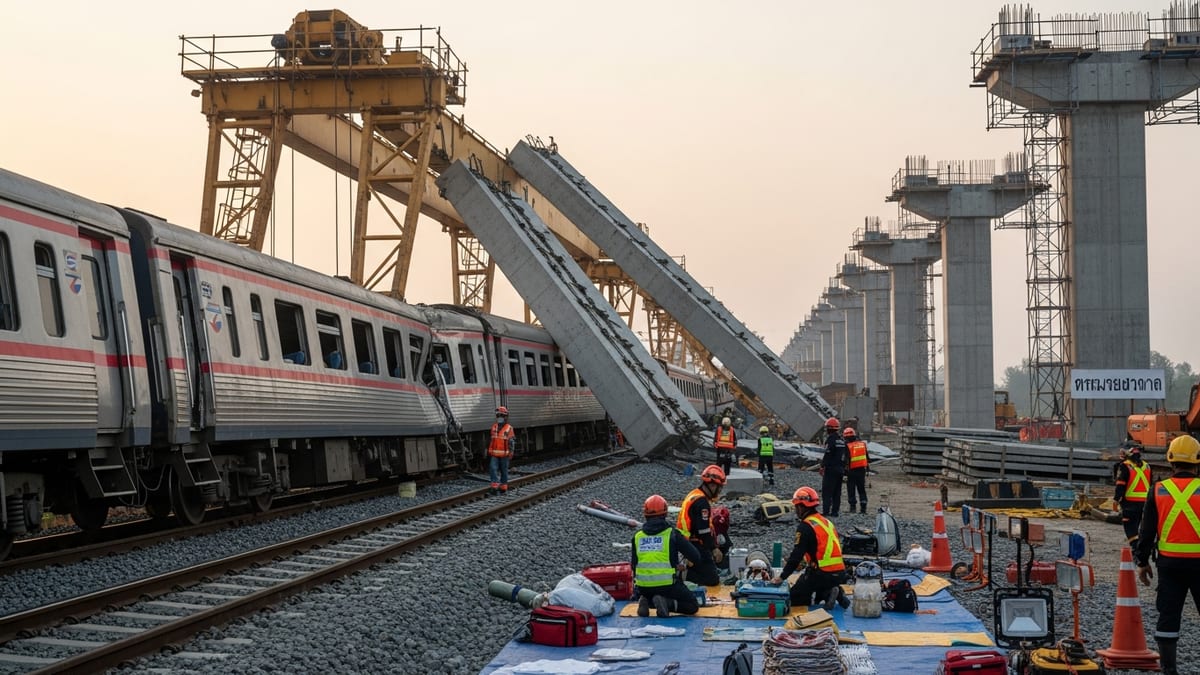
Derailment near Neshaminy Falls halts rail traffic
Publicly available information indicates that the derailment occurred shortly before 2 p.m. on June 30 between Street Road and the Neshaminy Falls station, in a busy rail corridor used by both freight and commuter services. Multiple freight cars left the tracks and came to rest at angles across the right-of-way, blocking the route through a densely developed section of Bensalem Township.
Early reports described between five and ten freight cars off the tracks, with some sources later describing more than a dozen affected cars along the train. The CSX consist was traveling eastbound through Bucks County when the derailment occurred, and images from the scene show several cars piled or leaning against one another alongside intact sections of the train.
Passenger service on SEPTA’s West Trenton Regional Rail line was suspended in the immediate aftermath, as crews assessed track conditions and the position of the derailed equipment. Replacement bus options and alternate routes were suggested to commuters while rail access through the corridor remained closed.
The incident added to an already busy travel period in the Philadelphia suburbs, with local roads carrying additional traffic as rail operations were temporarily interrupted around the derailment site.
No injuries or hazardous leaks reported
According to published coverage, there were no injuries reported among train crew or members of the public, despite the size of the derailment and the proximity to nearby homes and businesses. Video and photos shared from the scene showed emergency vehicles staged along local streets while responders surveyed the rail line.
Hazardous materials teams were deployed to identify the contents of the derailed cars and to check for potential leaks. Public statements and local reporting indicate that no release of hazardous substances was detected, easing immediate concerns for air and water quality in surrounding neighborhoods.
Residents in a defined area around the tracks were initially asked to shelter in place as a precaution while responders confirmed the condition of the train and its cargo. That alert was lifted after several hours once investigators and hazmat specialists determined that the derailed cars did not pose an ongoing chemical threat.
The absence of serious injuries or confirmed contamination stood in marked contrast to several recent high-profile derailments elsewhere in the United States, a point noted in regional coverage as officials emphasized that current evidence pointed to a contained incident.
Extensive cleanup and repairs led by CSX
Public information from local agencies indicates that CSX has assumed responsibility for clearing the site and restoring rail service. Wreck crews are using heavy equipment to stabilize, separate, and re-rail cars where possible, while preparing others to be cut up or removed by crane if they cannot be safely returned to the tracks.
The cleanup process involves more than simply moving damaged cars. Teams are expected to offload or secure cargo where needed, remove debris from the right-of-way, and inspect ballast and subgrade for damage caused by the derailment. Nearby utility lines, fences, and drainage structures are also being evaluated for any impact.
Track repair is likely to include replacing rail, ties, and fasteners along the affected section, followed by re-ballasting and tamping to restore proper alignment and stability. Only after detailed inspections and test runs will regular rail traffic be allowed to resume through the corridor.
Local reporting notes that the work is taking place in a constrained area bordered by residential streets and commercial properties, which may require temporary lane closures and traffic control as heavy machinery moves in and out of the site.
Investigation focuses on cause and rail infrastructure
The cause of the derailment remains under review, with publicly available statements indicating that the incident is under investigation by the railroad and relevant agencies. Investigators typically examine a combination of factors, including track condition, train speed, equipment performance, and recent maintenance records.
In similar freight derailments, analysis often begins with a close inspection of the rail and ties at the point where wheels first left the track. Fractured rail, misaligned track, or problems with switches can all contribute to loss of stability. Data from onboard recorders and dispatch systems can help establish the train’s speed, braking, and handling in the minutes leading up to the event.
Investigators are also expected to review information about the consist, such as the placement of loaded and empty cars, overall train length, and tonnage. Industry experts note that train makeup can influence how forces are distributed along the line of cars, particularly over curves, grades, or sections with prior maintenance concerns.
Findings from the investigation may take weeks or months to finalize, and any recommendations could feed into broader discussions about infrastructure investment, inspection protocols, and operational practices on heavily used freight corridors that share space with commuter services.
Regional context and traveler impact
The Bensalem derailment arrives at a time of heightened public attention to rail safety following several prominent incidents nationwide in recent years. Advocates have called for more rigorous inspection standards, expanded use of trackside detection technology, and additional funding for aging infrastructure, particularly where freight lines run close to residential neighborhoods.
For travelers in Bucks County and the greater Philadelphia region, the immediate impact centers on changes to commuting patterns. With the West Trenton line disrupted, riders are turning to alternative SEPTA routes, bus services, and personal vehicles, creating additional congestion on key roads near the derailment zone.
Local agencies are using social media and regional media outlets to share updates about the cleanup progress, rail service status, and recommended alternatives for commuters. As repairs advance and investigators complete their on-site work, timelines for partial and then full restoration of rail traffic are expected to become clearer.
Until that point, the derailment site in Bensalem will remain a focal point for both heavy machinery and policy discussion, as residents, travelers, and rail operators look for answers on how the incident occurred and what steps will be taken to reduce the risk of a repeat event along this important suburban corridor.