


Climate and weather patterns in Germany are changing in ways that matter directly for relocation planning, daily life, and long-term resilience. While the country still offers a predominantly temperate climate, hotter summers, more frequent extreme events, and marked regional contrasts are reshaping environmental risk profiles. Individuals and employers considering relocation to Germany increasingly need a nuanced understanding of local climate conditions and future climate pressures rather than relying on historic perceptions of a mild, predictable Central European climate.
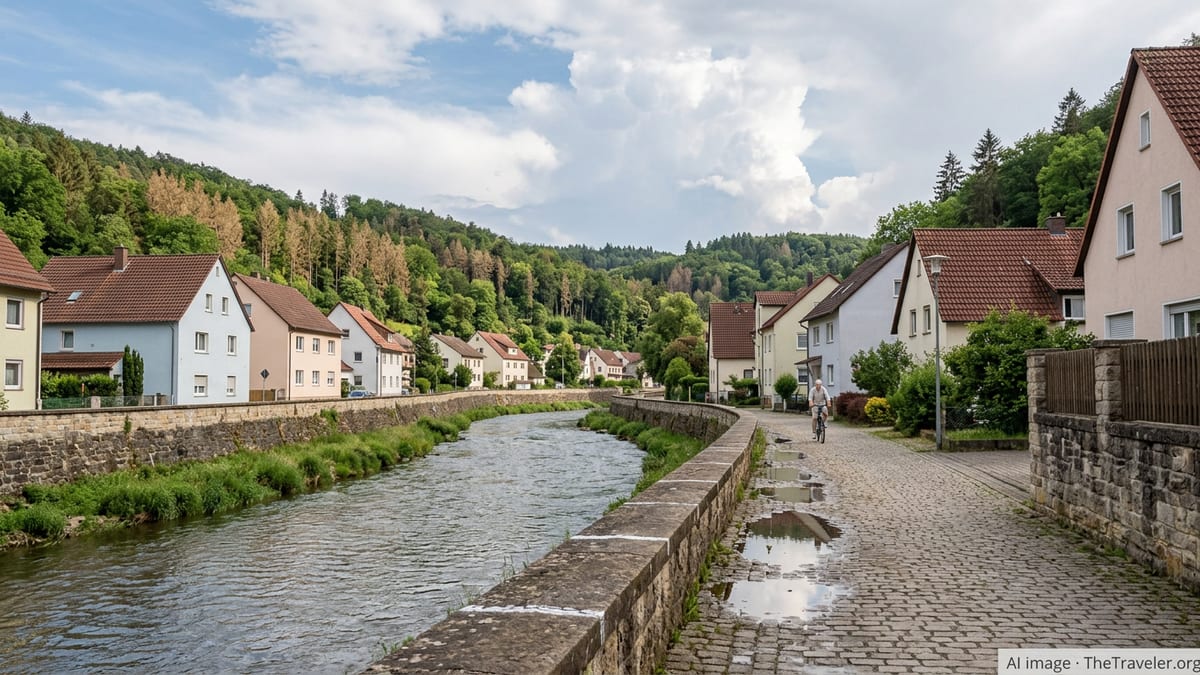
Germany’s Climate Profile and Regional Contrasts
Germany’s climate is broadly temperate, with relatively cool to mild winters and warm summers. However, the country spans several distinct climate zones that create meaningful differences between regions. Northern and western areas closer to the North Sea and Atlantic influence tend to have an oceanic climate with more moderate temperature swings and year-round precipitation. In contrast, much of central and eastern Germany experiences a more continental climate with hotter summers, colder winters, and greater variability in seasonal conditions.
Average annual precipitation in lowland northern regions typically ranges from roughly 500 to 750 millimeters, while upland and mountainous areas in central and southern Germany can receive between about 750 and more than 2,000 millimeters per year. This gradient results in wetter conditions in the central uplands and Alpine fringe, which influences flood risk, winter snow, and local microclimates. Temperatures also vary: January averages around freezing in many inland areas, while July averages are generally in the low 20s Celsius, with higher peaks during heatwaves.
Major metropolitan regions fall into different climate types that are relevant for relocation decisions. Cities like Berlin, Hamburg, Munich, and Leipzig are often categorized within warm humid continental conditions, while hubs such as Cologne, Frankfurt, Stuttgart, and Düsseldorf are more oceanic in character. These distinctions translate into different experiences of seasonal extremes, heating and cooling needs in housing, and outdoor comfort throughout the year.
For relocation planning, the key implication is that “German climate” is not uniform. Northern and western cities maintain more stable, wetter conditions, whereas inland and southern regions can be notably hotter in summer, colder in winter, and more exposed to certain extreme events such as heavy convective storms, intense rainfall, or episodic drought.
Warming Trend and Intensifying Heatwaves
Germany is warming measurably, and this warming is most apparent in summer heat. The 2010s and early 2020s include many of the hottest years on record nationally, and year-on-year variability now occurs on top of an upward temperature trend. Recent monitoring reports show more frequent hot days, especially those with maximum temperatures above 30 degrees Celsius, and longer heatwave durations in major urban centers.
Historic heat events in the 1990s and early 2000s are increasingly being surpassed or matched by recent summers. For example, previous assessments of heatwaves in cities such as Berlin, Frankfurt, Mannheim, Nuremberg, and Munich showed that single heatwave events could push daily maximum temperatures into the mid-30s Celsius range. Contemporary climate projections now indicate that such episodes are likely to occur more frequently within the lifetimes of people relocating today.
Forward-looking risk analyses suggest that, under plausible warming scenarios by mid to late century, many German cities could see the number of “extreme heat” days more than double. In practical terms, places that historically experienced roughly two weeks of significant heat in summer could face periods extending to several weeks or even two months of elevated temperatures by the end of the century. This is particularly relevant for regions of western and southern Germany and dense urban cores that develop pronounced urban heat island effects.
For prospective residents, this translates into increasing reliance on shading, ventilation, and, in some cases, air conditioning in homes and offices that were not originally designed for sustained heat. Heat stress risk is higher for older adults, young children, and individuals with underlying health conditions. Urban relocation choices should therefore account not only for average summer conditions but also for the likelihood of repeated, intense heatwaves over the coming decades.
Precipitation Variability, Flooding, and Storm Hazards
Germany’s precipitation pattern is changing less in total annual volume than in its intensity and distribution, with more frequent episodes of heavy rainfall and localized flooding. Several recent years have exhibited above-average precipitation at the national scale, even as certain regions simultaneously experienced drought stress. This apparent contradiction reflects a pattern in which rainfall is increasingly delivered through intense, short-duration events that can overwhelm drainage systems rather than through steady, moderate rains.
Flooding has become a central climate and weather challenge for Germany. The catastrophic floods in western Germany in July 2021 highlighted the vulnerability of river valleys and hillside communities to extreme rainfall. In some locations, rainfall volumes over a short period were the highest seen in many decades, leading to flash flooding, river overtopping, major infrastructure damage, and substantial loss of life. Subsequent events in 2024 again brought severe flooding to parts of western and southern Germany, including instances where more than 100 liters of rain per square meter fell within 24 hours, triggering river and urban floods.
These events underline two distinct flood risks relevant to relocation: large river floods and pluvial (surface) flooding from heavy downpours. River and valley communities along smaller tributaries as well as major rivers are susceptible when upstream catchments receive extreme rainfall. Urban areas with high levels of sealing and limited green space are exposed to surface water accumulation and rapid drainage overload during thunderstorms. While most neighborhoods do not experience catastrophic floods, properties in low-lying or valley locations, or near small watercourses that can swell quickly, now carry a perceptibly higher level of climate-related risk than in the past.
Storms and severe convective weather events also present localized hazards. Thunderstorms with intense rain, hail, and strong wind gusts have caused high losses in sectors such as insurance and can damage vehicles, roofs, and outdoor infrastructure. In many cases, these events are highly localized but can be repeated across broader regions in a given season. For individuals and companies, this means that comprehensive property insurance, careful site selection away from obvious floodplains, and attention to local drainage and building standards are increasingly important components of climate-aware relocation planning.
Drought, Water Stress, and Ecosystem Impacts
At the same time as Germany faces episodes of extreme rainfall and floods, it is experiencing recurrent drought and water stress, particularly in eastern and northeastern regions. Over recent years, multi-year droughts have affected large parts of the country, with some analyses indicating that in 2018, 2019, and 2022 substantial portions of German territory experienced soil moisture deficits and vegetation stress. In some years, up to several tens of percent of the land area have been classified as affected by drought conditions during peak summer months.
These droughts have visible impacts on forests, agriculture, and water bodies. Forests in parts of eastern and central Germany show increased tree mortality and pest sensitivity, with consequences for landscape aesthetics, wildfire potential, and regional economies. Rivers and lakes can reach low water levels during prolonged dry spells, affecting navigation, recreation, and occasionally cooling water availability for power stations or industrial sites. For residents, this can manifest as water use restrictions in some municipalities, brown or stressed vegetation, and higher wildfire warnings in certain forested regions.
Climate projections for Germany indicate that while annual precipitation totals may not decline dramatically nationwide, seasonal patterns are likely to intensify, with drier, hotter summers and wetter winters in many regions. This combination increases the probability of summer drought punctuated by heavy storms. Relocating households relying on private wells, agricultural or horticultural water, or living near forest fringes should factor in the potential for water scarcity and associated risks such as forest fires and smoke in particularly dry years.
For urban dwellers, water supply systems in major cities are generally robust, but constraints can arise in smaller municipalities, and water pricing or conservation campaigns may become more common. Garden and green space maintenance, as well as urban tree health, are increasingly sensitive to prolonged periods of low rainfall and high evapotranspiration, which can alter the visual and environmental character of neighborhoods over time.
Regional Comparisons and Localized Risk Patterns
Germany’s regional climate contrasts have practical implications for relocation choices, especially when balancing preferences for milder weather, lower flood risk, or reduced drought exposure. In broad terms, northern and northwestern Germany, including regions near the North Sea and some parts of the Lower Rhine, benefit from more oceanic moderation. Winters tend to be comparatively mild, and extreme heat is somewhat less intense than in inland or southern regions, though still increasing over time. However, these same areas can be wetter and more prone to frequent cloudy days and persistent rain systems.
Central and eastern states such as Saxony-Anhalt, Brandenburg, and parts of Saxony have shown stronger signals of drought and heat stress in recent years. Large agricultural plains and sandy soils can exacerbate water deficits, and summer heatwaves can feel especially pronounced due to limited maritime influence. Municipal adaptation planning in some of these areas is still developing, leaving variability in how well individual towns and smaller cities are prepared for compound threats such as joint heat and drought episodes or heavy rainfall on dry, compacted soils.
Southern Germany, including Bavaria and Baden-Württemberg, offers varied microclimates. Alpine and pre-Alpine regions receive high precipitation and experience colder, snowier winters, while lowland basins and river valleys can become heat hotspots in summer. These southern regions have also seen destructive flood events when heavy rainfall combines with saturated soils and complex topography. At the same time, mountainous areas face changing snow reliability, which affects winter landscape conditions and water storage patterns.
Urban agglomerations such as Berlin, Munich, Frankfurt, Cologne, and Stuttgart each combine these broader regional characteristics with strong urban heat island effects. Built-up areas with limited green coverage and high sealed surface share can record significantly higher nighttime temperatures than surrounding rural zones. In heatwaves, this raises thermal stress, especially in top-floor apartments and neighborhoods with older building stock lacking modern insulation or cooling. Prospective residents should therefore complement country-level assessments with neighborhood-level information on green space, local floodplains, and building characteristics.
Adaptation Measures and Resilience Considerations
Germany is progressively integrating climate adaptation into national, state, and municipal planning, but measures and resilience levels vary across regions and sectors. National climate adaptation strategies emphasize improved flood risk mapping, expansion of natural floodplains, reinforcement of river defenses, and upgraded early-warning systems for severe weather. Many regions affected by the 2021 floods, notably in western Germany, are updating their hazard assessments and revising building and reconstruction plans to better account for low-probability, high-impact events.
Cities are also advancing heat adaptation. Measures include expanding tree cover, creating or restoring urban parks and green corridors, installing shading structures in public spaces, using reflective or permeable materials in urban design, and piloting “cooling islands” during heatwaves. Some large cities are experimenting with water misting systems, temporary shading, and improved access to drinking fountains in public areas during hot periods. These local policies can significantly influence on-the-ground experience during summer extremes and vary widely among municipalities.
At building level, changes in climate are spurring adjustments in design and retrofitting strategies. Traditionally, many German buildings prioritized heat retention for long winters. Increasingly, attention is turning to passive cooling, external shading, insulated roofing, and ventilation that can handle prolonged heat events. New construction is often better adapted, while older multifamily housing blocks may require modernization to maintain thermal comfort in future summers.
For relocating individuals and organizations, resilience considerations include reviewing local flood maps and hazard zones, understanding municipal heat and storm response plans, and evaluating the climate-readiness of specific properties. Questions about basement flood protection, roof condition, shading, ventilation, and the presence of nearby green spaces are becoming as important as traditional concerns about insulation and heating efficiency. The degree to which local governments communicate risks and planned adaptation measures can be a useful signal of long-term climate governance capacity.
The Takeaway
Germany remains a country with a predominantly temperate climate, but the historic perception of reliably mild weather is no longer sufficient as a basis for relocation decisions. Warming temperatures, more frequent and intense heatwaves, episodes of heavy rainfall and flooding, and recurring droughts are reshaping environmental risk landscapes across regions. The combination of oceanic and continental climate influences, varied topography, and dense urbanization produces highly localized climate experiences that prospective residents need to understand at the level of both region and neighborhood.
Relocating to Germany now involves a strategic appraisal of climate and weather challenges alongside other practical considerations. Key questions include tolerance for hotter summers and urban heat, appetite for living near rivers or in valleys exposed to flood risk, preferences for wetter or drier regional climates, and expectations around municipal adaptation capacity. With climate change projected to continue over coming decades, people planning long-term stays should factor in not only current averages but also the trajectory of extremes and local resilience measures.
Well-informed choices about location within Germany, property characteristics, and engagement with local adaptation initiatives can substantially mitigate climate-related risks. For globally mobile individuals and corporate mobility programs, climate and weather analysis has become an essential component of a comprehensive relocation assessment for Germany.
FAQ
Q1. Is Germany’s climate still considered mild compared with other countries?
Germany’s climate remains temperate overall, but summers are hotter and extremes more frequent than in past decades, so conditions feel less consistently mild than they once did.
Q2. Which parts of Germany are generally warmest in summer?
Inland and southern regions, including parts of central and southern Germany and some river basins, typically experience the highest summer temperatures and more intense heatwaves.
Q3. Are floods a serious concern for people relocating to Germany?
Floods are a significant concern in certain river valleys, low-lying areas, and some urban districts, making local flood mapping and property siting important relocation due diligence steps.
Q4. How common are heatwaves in major German cities?
Heatwaves have become more frequent and longer, with major cities now experiencing multiple hot spells each decade, and projections indicating further increases over the coming decades.
Q5. Does Germany experience water shortages or droughts?
Yes, recurrent droughts affect parts of Germany, especially in eastern and northeastern regions, leading to soil moisture deficits, stressed vegetation, and localized water management challenges.
Q6. Are northern coastal areas less affected by extreme heat?
Northern and northwestern coastal regions benefit from maritime influence, which usually limits peak heat, although these areas are not immune to heatwaves and heavy rainfall events.
Q7. How is winter weather changing in Germany?
Winters are generally becoming milder on average, with fewer persistent cold spells in many regions, though cold snaps, snowfall, and icy conditions can still occur, especially in higher elevations.
Q8. What climate risks should families with children or older adults prioritize?
Families should pay special attention to heatwave frequency, nighttime temperatures, flood exposure of homes and schools, and the availability of green spaces and cooled public facilities.
Q9. Are German cities adapting their infrastructure to climate change?
Many cities are strengthening flood defenses, updating drainage, increasing urban greenery, and adjusting building and planning standards, although the level of adaptation varies between municipalities.
Q10. How far into the future should climate trends be considered for a relocation decision?
For multi-year or permanent moves, climate projections to mid-century are relevant, since many changes in heat, drought, and heavy rainfall are expected to intensify within that timeframe.