


More news on this day
Colombia is positioning its Caribbean coastline as a luxury nautical playground, with Cartagena, Santa Marta and neighboring ports investing in marinas, cruise facilities and marine services to capture a growing global market for upscale sailing and yacht tourism.
Get the latest news straight to your inbox!
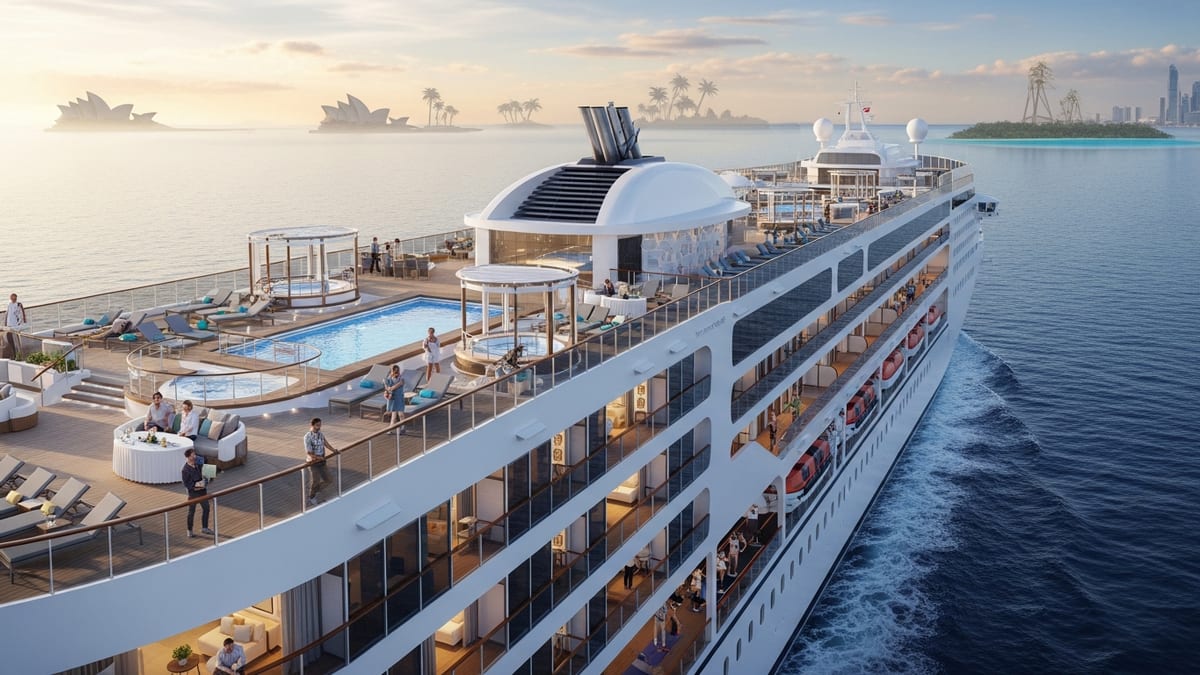
Caribbean Ports Pivot to High-End Nautical Tourism
Publicly available information shows that Colombia has placed marine and coastal tourism at the center of its wider ocean development strategy, seeking to turn its 3,882 kilometers of coastline into an engine of economic growth. National policy documents highlight nautical tourism as a priority area, linking port modernization, sustainable beach management and maritime services with higher-spending international visitors.
In this context, Cartagena and Santa Marta are emerging as flagship hubs. Both cities already receive conventional cruise calls and host established marinas, but recent initiatives signal a deliberate shift toward attracting luxury yachts, boutique cruise lines and charter operators. Investment guides for the Caribbean region describe tourism infrastructure, including marinas and coastal road links, as a platform for higher-value experiences that combine sailing with culture, gastronomy and nature.
Industry reports indicate that Colombia’s renewed focus on nautical tourism aligns with broader trends in the Caribbean, where pleasure craft and small-ship cruises are moving toward more diverse itineraries. For Colombia, the challenge is to offer the quality of services and safety standards expected by this segment while maintaining the natural appeal of its bays, islands and coastal national parks.
Santa Marta Builds Momentum as a Nautical Gateway
Santa Marta is rapidly consolidating its reputation as a nautical destination. Local coverage describes the city’s marina as a “nautical paradise” in the Colombian Caribbean, citing its modern berthing infrastructure, full-service facilities and strategic location between the historic center and nearby natural attractions. Reports note that the marina attracts thousands of visitors each year, including yacht owners, sailors and cruise passengers drawn by its sheltered bay and mountain backdrop.
Port and tourism authorities report strong recent growth in cruise activity to Santa Marta. Data published by the city’s port indicates that more than 20,000 cruise passengers arrived on 29 scheduled calls in 2025, a sharp increase compared with 2024. The 2025 to 2026 season is programmed to include 30 calls, with vessels from high-end lines such as Ponant, Silversea, Seabourn Cruises, Oceania Cruises, The Ritz-Carlton Yacht Collection and Azamara Cruises, underscoring the destination’s rising profile in the luxury segment.
At the same time, national agencies such as the maritime authority and the tourism ministry are coordinating to strengthen safety and offshore capabilities around Santa Marta. Official communications describe joint efforts to promote the city not only as a tourist port but also as a base for specialized maritime operations and regulated services. Seasonal safety campaigns and patrol strategies are designed to reassure both local operators and visiting yacht and cruise passengers.
Tourism promotion initiatives are tying this port growth to broader urban and cultural investments. On the occasion of Santa Marta’s recent 500th anniversary, national and city-level programs highlighted spending on tourism infrastructure, events and sustainable projects, with the goal of placing the destination more prominently on international travel maps and extending visitor stays beyond a single day in port.
Cartagena Upscales Its Offer for Yachts and Boutique Cruises
Cartagena, long established as Colombia’s main cruise gateway, is also sharpening its focus on higher-end nautical tourism. Logistics and maritime trend analyses identify Cartagena as a key Caribbean port for foreign visitors, and note that a growing share of travelers arrive by sea, whether on mainstream cruise ships, river-sea itineraries or private yachts. This has encouraged investment in port facilities, waterfront redevelopment and premium hospitality offerings.
One recent development reinforcing Cartagena’s luxury position is the opening of a Four Seasons property in the historic center, widely discussed in travel communities as the city’s first ultra-luxury global hotel brand. The arrival of such a flag is viewed by industry observers as a signal to yacht owners and affluent cruise guests that Cartagena can now match the service standards of other high-end Caribbean ports while offering UNESCO-listed architecture and a vibrant culinary scene.
Cartagena is also becoming a launch point for innovative river-sea itineraries. River cruise operators have begun offering programs on the Magdalena River that start or end in Cartagena, combining nights in the walled city with sailings through the country’s interior. Travel reports from early sailings highlight high crew-to-guest ratios and curated cultural excursions, indicating that these products are directed squarely at the luxury segment and help integrate Cartagena’s maritime and river tourism offerings.
Alongside these developments, a growing number of charter and yacht-rental companies offer private day trips from Cartagena to nearby island clusters such as the Rosario archipelago and the Barú peninsula. While many of these services target small groups and celebrations, their marketing emphasizes comfort, safety and personalized experiences, reflecting Cartagena’s ambition to be seen as a sophisticated yet relatively accessible yachting base.
Policy, Safety and Sustainability Underpin Growth
Colombia’s national institutions are working to ensure that the expansion of nautical tourism is coupled with safety and environmental safeguards. The country’s ocean and coastal policy framework calls for coordinated management of marine resources, support for sustainable maritime industries and the promotion of responsible coastal tourism. Related guidelines on tourist beaches underline the importance of organized use of coastal zones, environmental protection and visitor safety as the foundation for long-term growth.
Operationally, maritime authorities and the navy have rolled out security strategies during peak holiday periods, particularly along the Caribbean coast. Public communications describe initiatives that deploy coast guard units, aviation assets and patrols to monitor coastal waters and major rivers, with an emphasis on protecting passengers, small craft and tourism operators. Seasonal advisories in ports such as Santa Marta include recommendations for boat operators and visitors, reinforcing a safety-first culture in popular bays and beach areas.
At the port level, Colombia is also engaging with the global discussion on green and sustainable ports. Academic analyses note that Colombian terminals are increasingly expected to balance economic objectives with social and environmental responsibilities, including waste management, emissions control and community engagement. For nautical tourism, this translates into pressure on marinas and cruise terminals to upgrade infrastructure while minimizing their ecological footprint.
These policy and safety measures are critical for attracting luxury travelers, who are often highly sensitive to perceptions of risk and environmental impact. By foregrounding regulation, security and sustainability, Colombia is attempting to differentiate its nautical offer from less regulated destinations and appeal to operators whose brands depend on responsible tourism credentials.
Beyond Two Cities: A Wider Colombian Nautical Circuit
While Cartagena and Santa Marta are leading the transformation, experts view them as anchors of a broader Colombian nautical circuit. Investment documents for the Caribbean region mention complementary coastal infrastructure in other ports and towns, including marinas, boardwalks and coastal highways that improve connectivity between beach destinations and urban centers. This makes it easier for yacht itineraries and small-ship cruises to combine multiple Colombian calls in a single voyage.
North and south of these hubs, smaller seaside communities and nature reserves are drawing interest from divers, sailors and eco-tourists. Travel guides for the Santa Marta area highlight nearby attractions such as Tayrona National Natural Park and coastal villages, which are increasingly integrated into boat excursions and multi-day sailing routes. Similar patterns are emerging around Cartagena, where island chains and mangrove-fringed bays provide opportunities for snorkeling, kayaking and overnight anchorage experiences.
Regional tourism strategies point to the potential for Colombia to offer a distinct proposition compared with traditional Caribbean yachting centers. Rather than focusing solely on beaches and nightlife, the emerging Colombian model combines nautical experiences with biodiversity, indigenous and Afro-Caribbean heritage, and historic cities. As infrastructure and services improve, analysts expect more luxury operators to test new routes that link Cartagena, Santa Marta and lesser-known ports into a single, coherent maritime journey.