


The French Riviera still feels like a dream pulled straight from a cinema screen: pastel towns dropping into the sea, palm-lined promenades, and terrace tables that spill into golden evenings. Yet for many visitors, that dream frays quickly into gridlocked traffic, eye-watering bills, and beaches that feel more like a stadium crowd than a seaside escape. The problem is rarely the destination itself. More often, it is a handful of predictable mistakes that first-time and even repeat visitors make when exploring the Côte d’Azur. Knowing what those pitfalls look like in real life can transform your time between Nice, Antibes, Cannes, Monaco and beyond.
Get the latest updates straight to your inbox!
Underestimating Peak Season Crowds and Heat
One of the biggest shocks for first-time visitors is just how intense July and August can be on the French Riviera. Daytime temperatures along the coast often hover around 30 to 32 degrees Celsius in midsummer, and humidity on sheltered bays like Villefranche-sur-Mer makes it feel hotter. Travel writers and tourism boards now routinely advise that unless you are specifically coming for the Cannes Film Festival or Monaco Grand Prix in May, it is wiser to visit in late April, early June, or September. In high summer, beaches in Nice, Cannes, Antibes and Menton fill by mid-morning, and the coastal roads can seize up into long queues as soon as day-trippers from inland arrive.
On a typical August Saturday, the highway exits into Cannes or Antibes can back up for kilometres, with drivers spending 45 minutes simply trying to leave the motorway. Travelers who rent a car at Nice Côte d’Azur Airport for a short stay in Nice then attempt to “pop down” to Cannes for lunch are often stunned to find most of their day lost in traffic and in circles looking for parking. Local residents on travel forums advise that if you are set on a summer visit, you should flip the usual rhythm of the day: go to the beach early, retreat inland or into museums during the hottest and busiest hours, then return to the seafront later in the afternoon once crowds thin and the sun softens.
Another common miscalculation is assuming that restaurant and hotel availability follows the same pattern as less-trafficked regions of France. In practice, beach clubs in Cannes and Antibes, popular restaurants in the old towns, and midrange hotels along the Promenade des Anglais in Nice can sell out weeks in advance for weekend nights. Walk-ins at 8 p.m. in August often end up at the few places still accepting tables, which may be the ones relying on high prices and passing trade. Booking tables and key experiences a week or more ahead, especially for Fridays and Saturdays, is no longer just a nice-to-have but a basic survival strategy in peak season.
Overreliance on Cars and Misreading Distances
The Riviera looks compact on a map, which tempts many visitors to rent a car the moment they arrive. The reality is that traffic congestion, toll booths, and the challenge of parking in historic centres quickly erode any sense of freedom. Between Nice and Cannes, for example, the local TER trains normally cover the journey in roughly 40 minutes, with one-way tickets in 2026 priced in the single digits in euros for standard adult fares. By contrast, driving the same stretch at busy times can take well over an hour, with daily parking in central Cannes often approaching the price of the train ticket alone, before fuel and tolls.
Travelers also underestimate the strain of navigating steep village roads and tight parking garages after a long, hot day. Historic hill towns like Èze-village and Saint-Paul-de-Vence were not built for modern cars. Roads are narrow, parking spaces fill quickly, and rental cars regularly come back with scraped bumpers after awkward manoeuvres in cramped lots. Many locals now suggest reversing the usual logic: use the region’s rail network and coastal buses for the big-name destinations such as Monaco, Antibes and Cannes, and consider a short car rental only for rural inland days exploring places with scarce public transport.
Another frequent mistake is failing to understand how regional passes work. In the Alpes-Maritimes department, passes such as the Sud Azur Explore card, sold through regional transport partners, allow unlimited travel for several days on local TER trains, trams and buses between hubs like Nice, Monaco, Antibes, Cannes and Grasse. Visitors who hop between these towns over three or seven days often save a significant amount compared with buying single tickets, and they avoid wasting time at busy station ticket machines. Yet many travelers only discover these passes after spending far more on individual fares, or they confuse city tram tickets with regional train tickets and risk fines for being on the wrong fare.
This does not mean that renting a car is always a bad idea. For itineraries focused on the quieter western stretches toward Saint-Raphaël or on rural hinterland villages above Grasse, a vehicle can open up wonderful countryside. The key is to be realistic about your plans: avoid picking up the car on the same day you intend to explore Old Nice or Monaco, and choose hotels or apartments that clearly state they have on-site parking to avoid circling unfamiliar neighborhoods at night.
Misunderstanding Beach Culture, Costs and Safety
People arrive in Nice or Cannes with a mental image of soft, sandy beaches and are surprised to find large sections of the coast covered in rounded pebbles rather than sand. The famous urban beaches of Nice, stretching along the Promenade des Anglais, are almost entirely shingle, which can be uncomfortable without proper footwear or rented loungers. Travelers often attempt to save money by skipping the paid beach clubs on their first day, then end up renting deck chairs the next afternoon after a poor night’s sleep with sunburned backs and bruised feet. In 2026, standard rates at many midrange beach clubs run to several dozen euros per person for a full-day lounger and umbrella, with front-row chairs and weekend reservations higher.
In Cannes, where the sand is softer, another mistake lies in assuming hotel guests automatically gain access to the fronting private beaches. In reality, most of the prime beachfront stretches off La Croisette are run as separate businesses that charge hotel guests and outside visitors alike for chairs, cabanas and service. Local newspapers have reported repeated complaints about “delirious prices and abusive practices” at some restaurants and private beaches in Cannes, from minimum spends for front-row loungers to extra charges tacked on for towels. Travelers who do not study the pricing board at the entrance can receive a nasty surprise when the bill arrives for a family of four at the end of the afternoon.
On the free public beaches, the main risk is not financial but security. Beach theft on crowded Riviera shores remains one of the most common tourist crimes. Local media have described thieves walking the shore in swimsuits, scanning for bags left unattended while owners swim. Police in Nice have reported arrests of individuals caught in the act on the Promenade des Anglais after lifting phones and wallets from visitors’ towels while they were in the water. The pattern is simple: one person distracts by asking for a lighter or time, while an accomplice grabs a bag and blends into the crowd. Leaving passports, high-end watches and large amounts of cash on the beach is an invitation to trouble.
Alcohol and behaviour on the beach also catch some visitors off guard. French national rules and many local by-laws restrict obvious public drunkenness and the consumption of alcohol in certain public spaces. While enjoying a discreet bottle of rosé with a picnic on an evening beach is generally tolerated, turning the shoreline into a late-night party can bring police attention, particularly near residential areas. Noise can also lead to conflict with locals in coves like Villefranche-sur-Mer and Beaulieu, where sound carries easily up the hillside. Respecting quiet hours and packing up loud speakers before midnight will keep relations cordial and avoid fines.
Falling for Overcharging and Tourist-Focused Scams
Compared with some major world cities, the French Riviera is not heavily associated with aggressive street scams, but overcharging and subtle tricks do surface repeatedly in traveler reports. One of the most common issues involves taxis from Nice Airport and the main train station. The prefecture has set regulated flat fares on popular routes such as Nice Airport to central Nice, Cannes or Monaco, yet there are persistent stories of drivers quoting far higher “special” prices, claiming their meter is broken or refusing to give receipts. Tourists unfamiliar with the official rates, which are published by the authorities and airport information desks, only realize later that they have paid double what locals routinely spend for the same ride.
Restaurants and beach clubs present another set of pitfalls. In Cannes and other resort towns, some establishments post attractively priced set menus at the entrance, then present diners with a different menu once seated, or quietly add steep surcharges for bread, water and compulsory “service fees” even though service is officially included in French menu prices. There have also been isolated reports in Mediterranean destinations of venues keeping two menus with different prices, one for locals and another for foreign tourists, though this practice is easily challenged if spotted. The best protection is simple: ask to see a menu with prices before sitting down, confirm whether service is included, and query any unexpected line items on the bill right away while you are still in the restaurant.
On the beaches, prices for loungers, umbrellas and drinks can vary widely from one concession to the next, even along the same stretch of sand. Complaints in local press about certain private beaches in Cannes charging high minimum spends for front-row loungers or adding extra fees for simple services illustrate how opaque pricing can breed frustration. Visitors who simply follow a host to an available chair without asking about the tariff sometimes discover at checkout that they have crossed an invisible line between a standard area and a “premium” zone that costs significantly more. Always ask for the price of your exact chair and any minimum spend before settling in, and do not hesitate to move on if the answer is vague.
Beyond money, petty theft remains a concern in crowded tourist zones. In Nice, Cannes and Monaco, high-end watch thefts and opportunistic pickpocketing have been recorded, particularly around nightlife districts and busy summer events. Wearing a luxury watch on a packed promenade at 2 a.m. is an obvious risk that locals rarely take. Travelers who leave passports, extra bank cards and large sums of cash locked in their accommodation safe and carry only what they need for the day dramatically reduce the stakes if something does go wrong. Simple habits such as using a cross-body bag that zips fully, keeping your phone off the table’s edge, and avoiding leaving bags hanging on the backs of café chairs can make the difference between a carefree evening and hours at a police station.
Misreading Local Etiquette, Dining Habits and Costs
Cultural misunderstandings do not just cause awkward moments; they can also lead directly to higher bills and poorer experiences. One recurring confusion involves tipping. In France, service is legally included in menu prices, and there is no expectation to add the 15 to 20 percent that American diners might be used to. Local residents on Riviera forums regularly emphasise that leaving a small amount in coins or rounding up the bill is a courteous gesture for good service, not an obligation. Some tourist-oriented venues, however, may pressure foreigners into leaving large additional tips or print suggested percentages on card machines. Knowing that the staff are already paid via the service included helps you resist that pressure and decide what extra, if any, you want to leave.
Dining hours and reservation habits also trip up visitors. In resort towns, many restaurants close in the afternoon and reopen for dinner around 7 p.m., with locals often arriving after 8 p.m. Travelers who wander into Old Nice at 5:30 p.m. looking for a full restaurant dinner may find only snack bars and ice cream stands open. Conversely, those who arrive at 8 p.m. in July without a reservation at popular spots in Nice’s old town, Antibes or Cannes can encounter long waits or be turned away entirely. Booking your main meals at least a day ahead in high season, and planning a lighter, flexible lunch, aligns your rhythm more closely with local norms.
Another financial blind spot is underestimating how quickly “little extras” add up. Ordering bottled still water instead of asking for the free carafe d’eau, accepting every pre-dinner cocktail special, or defaulting to seafront venues where you pay a premium for views can quietly double your food budget. Inland neighborhoods just a few streets back from the promenades often have more modestly priced cafés that locals actually frequent. In Nice, for instance, walking a few minutes uphill from the Promenade des Anglais into districts like the Carré d’Or or Liberation can reveal bakeries and bistros where a three-course fixed-price lunch costs not much more than a single main course on the seafront.
Beach etiquette brings its own set of unspoken rules. On free public beaches, it is normal to set up your towel close to others in high season, but leaving loud speakers blaring, smoking directly upwind of tightly packed families, or shaking sandy towels over neighbours is frowned upon. In private beach clubs, dress codes are generally relaxed during the day, but arriving in dripping swimsuits at the indoor restaurant section or lying topless on restaurant banquettes is likely to draw a discreet reminder from staff. Adapting to these small expectations helps keep the atmosphere friendly and avoids the subtle tension that comes from behaving as if you are on a private island rather than a shared shoreline.
Overpacking, Overplanning and Ignoring the Inland Side
Many visitors arrive with a checklist of Riviera names: Nice, Cannes, Monaco, Saint-Tropez, Èze, Antibes, Menton. In a week, they try to cram all of them into their schedule, often allocating only half a day to each. The result is a blur of train platforms, quick photo stops and rushed meals. Travelers who adopt this approach frequently report feeling that they spent more time moving between places than actually being in them. Distances that look tiny on a map can still translate into an hour each way by train once you include waiting, walking between stations and historic centres, and the occasional delay.
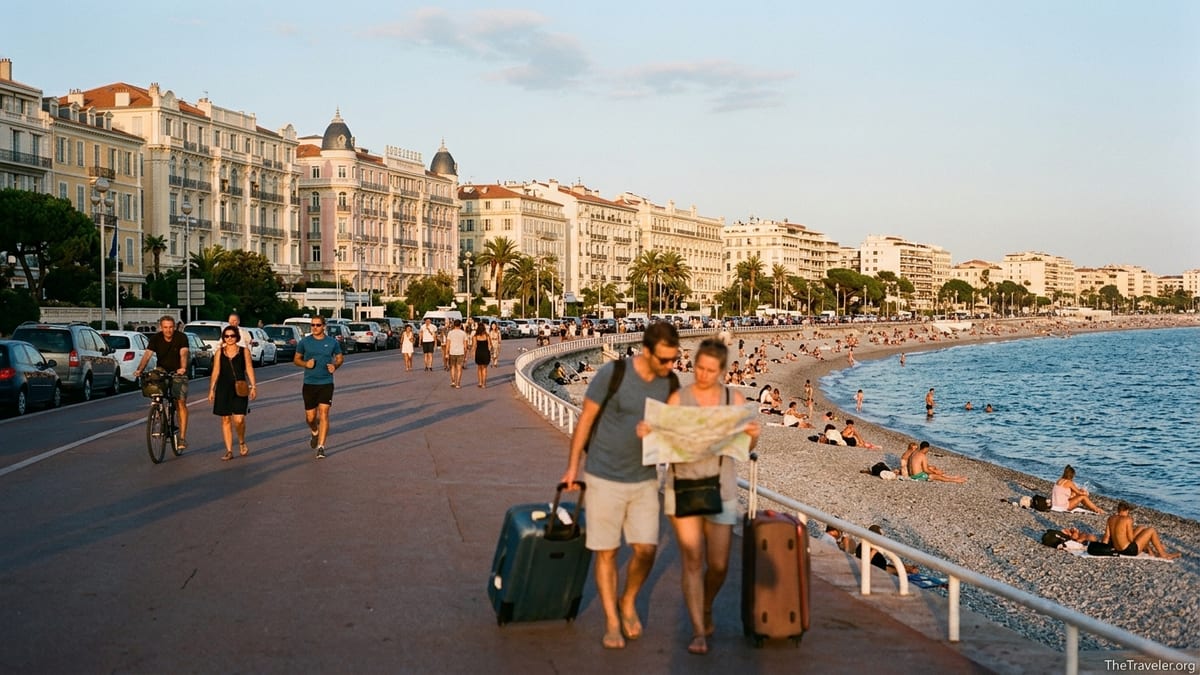
Overpacking luggage adds another layer of strain. Cobbled lanes in Old Nice or Antibes, staircases in traditional townhouses and compact hotel elevators are unforgiving of oversized suitcases. With summer temperatures and a beach lifestyle, you need far fewer heavy clothes than you might expect. A small rolling suitcase and a daypack are usually enough, especially if your accommodation offers laundry facilities. Travelers dragging two large checked bags each along the waterfront or through station underpasses are a common sight, and almost always look like they wish they had brought less.
Neglecting the inland side of the Riviera is perhaps the most regrettable omission. Focusing only on coastal hotspots misses the charm of perched villages like Mougins and Saint-Paul-de-Vence, or the perfume town of Grasse nestled in the hills. These places offer cooler evening air, quieter streets, and restaurants that cater more to residents and French visitors than to cruise ship schedules. A simple day trip by bus or train up to a hill village, or even a night or two in an inland guesthouse, can completely rebalance a trip that might otherwise feel like one long search for a free patch of sand.
Finally, rigid planning leaves no room for the serendipity the Riviera does so well. A weather shift might make a day of museum-hopping in Nice’s Cimiez district more appealing than baking on the beach, or a village market you stumble upon could be more memorable than the next town on your list. Building slack into your schedule, such as leaving one or two afternoons unplanned or reserving only cancellable tickets where possible, allows you to adapt to what you discover on the ground rather than forcing your trip to match a pre-trip fantasy.
The Takeaway
The French Riviera rewards those who approach it with informed realism rather than postcard expectations. The mistakes that most often sour a visit are straightforward: arriving in peak season without reservations, depending on a car for short coastal hops better served by trains, assuming beaches are uniformly cheap or free, neglecting basic precautions against theft, and either over-tipping or feeling pressured into inflated bills. Each of these has a practical, simple antidote once you understand how the region functions in real life.
By choosing your season carefully, leaning on public transport for the busy coastal spine, asking clear questions about prices up front, and aligning your habits with local dining and beach etiquette, you can sidestep the common frustrations that fill online complaint threads. That leaves space for what draws people here in the first place: morning swims in glassy coves, market lunches in sunlit squares, and evening walks along promenades where the light on the water really does look like something from the cinema. The Riviera has not lost its magic. It simply asks that visitors meet it on its own terms.
FAQ
Q1. Is it worth visiting the French Riviera in July or August, or should I avoid high season entirely?
It can still be worth it in July and August if you know what to expect. Beaches from Nice to Cannes will be crowded, daytime heat can be intense, and prices for hotels and beach clubs are at their highest. If you can only travel in high season, book accommodation and key restaurant reservations well in advance, avoid driving during peak daytime hours, and plan early-morning or late-afternoon beach time. If you prefer fewer crowds and lower prices, late April, May, June and September generally offer a better balance.
Q2. Do I really need a car on the French Riviera, or can I rely on trains and buses?
You do not need a car for the main coastal stretch between Menton, Monaco, Nice, Antibes and Cannes. Local TER trains and regional buses run frequently and are usually faster than driving once you factor in traffic and parking. Regional passes, such as those covering trains, trams and buses in the Alpes-Maritimes, can offer good value if you plan multiple day trips. A car becomes more useful if your itinerary focuses on inland villages or less connected coastal areas, but many visitors do perfectly well with public transport for an entire week based in Nice or Antibes.
Q3. How expensive are private beach clubs, and are they really necessary?
Private beach clubs typically charge from a few dozen euros per person for a lounger and umbrella for the day, with higher prices for front-row spots, weekends and high season. Food and drinks are extra and often priced above what you would pay at a café one or two streets back from the sea. They are not necessary, but they do offer comfort on pebble beaches like those in Nice and amenities such as showers and changing rooms. Many travelers mix days between free public beaches and an occasional paid beach club splurge.
Q4. Are taxis on the French Riviera safe, and how can I avoid being overcharged?
Licensed taxis are generally safe, but overcharging does occur, especially on popular routes from Nice Airport or the main train station. To avoid problems, use official taxi ranks, confirm whether the driver will use the meter or a fixed regulated fare before getting in, and ask for a printed receipt at the end of the journey. Knowing that there are official flat rates on some routes makes it easier to push back if someone quotes a suspiciously high figure. When possible, consider using trains or airport buses for predictable pricing.
Q5. How can I protect my belongings on busy Riviera beaches?
The simplest protection is to avoid bringing valuables to the beach. Leave passports, extra bank cards, luxury watches and large amounts of cash in your accommodation safe. On the sand, keep your bag zipped and within arm’s reach, and avoid leaving phones and wallets in plain sight while you swim. If you are in a group, take turns going into the water so someone always remains with your things. Small, inexpensive anti-theft gadgets like lightweight cable locks for bags can deter opportunistic thieves, but common sense is your best defence.
Q6. What is the tipping etiquette in restaurants and bars on the French Riviera?
Service is included in the menu prices in France, so there is no obligation to add a large tip. Locals commonly round up the bill or leave a few coins or a couple of euros per person when service is friendly. In more upscale restaurants, leaving roughly 5 to 10 percent as a discretionary gesture is appreciated but not expected. Be wary of pressure to leave much higher percentages typical of other countries, and check your receipt to ensure a separate “service” line has not been added without explanation.
Q7. Is it safe to walk around Nice, Cannes and Monaco at night?
The main tourist areas of Nice, Cannes and Monaco are generally safe at night, with plenty of people out on promenades and in restaurant districts. Normal big-city precautions still apply: keep an eye on your drinks, avoid displaying expensive jewellery in crowded nightlife zones, and stick to well-lit streets. Petty theft is more common than violent crime, so stay aware of your surroundings, especially at very late hours after festivals or big events when crowds are dense and people may be distracted.
Q8. How many bases should I choose for a week on the French Riviera?
For most visitors, one or two bases are enough for a week. Many choose to stay in Nice for the entire time, using it as a hub for day trips to Monaco, Villefranche-sur-Mer, Antibes and Cannes by train. Others split their stay between Nice and a smaller town such as Antibes or Menton to experience different atmospheres. Constantly changing hotels to tick off more towns usually leads to lost time and extra stress, so it is better to settle in and explore outward rather than move every day or two.
Q9. Are there dress codes I should know about for beaches, restaurants and casinos?
Beachwear is casual on the sand, but local norms still apply. Topless sunbathing is accepted on many beaches but not everywhere, and it is not appropriate in beach restaurants away from the loungers. For most restaurants, smart casual attire is fine, but very high-end venues in Cannes, Monaco or Saint-Tropez may expect closed shoes and long trousers in the evening. Casinos in Monaco often require smart dress and may refuse entry to visitors in beachwear or sports clothing, so check requirements before you go.
Q10. What is one mistake first-time visitors almost always make on the Riviera?
A very common mistake is trying to see too much in too little time, bouncing between Nice, Monaco, Cannes, Antibes and hill villages in rapid succession. This often leaves people exhausted and with only superficial memories of each place. Slowing down, choosing a couple of key bases, and allowing unplanned time for markets, swims and evening walks usually results in a far richer experience, even if you technically visit fewer towns.