


The French Riviera is synonymous with sun loungers, rosé buckets and star-studded beach clubs. Yet just a few steps away from the crowded sands you will find a very different Côte d’Azur: coastal paths where waves crash at your feet, medieval hill towns scented with jasmine, terraced vineyards, canyon rivers and Belle Époque promenades built for leisurely evening strolls. Whether you are basing yourself in Nice, Cannes, Antibes or Menton, it is remarkably easy to swap a day of bottle service for something deeper, quieter and often far more memorable.
Get the latest updates straight to your inbox!
Walk the Wild Coastal Paths
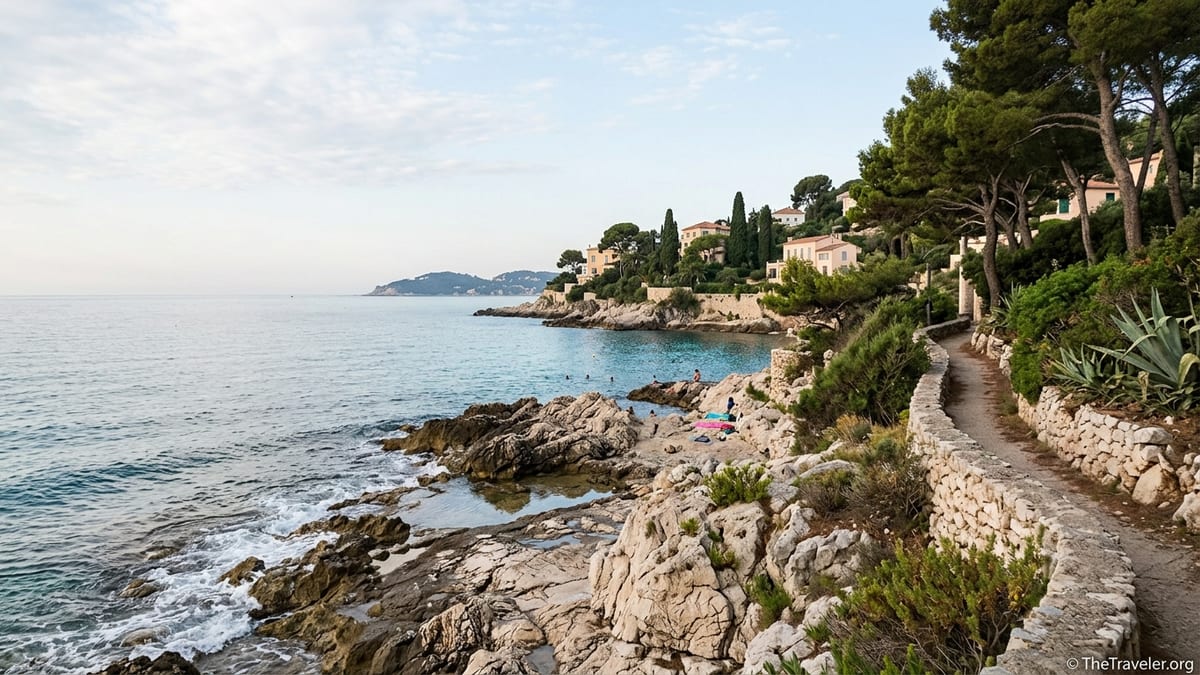
One of the simplest ways to escape the Riviera’s beach-club bubble is to follow the old customs-officer paths that trace the coastline. On the Saint-Jean-Cap-Ferrat peninsula, the Sentier du Littoral loops around rocky headlands, pine groves and hidden coves in about two and a half to three hours at an easy pace. Access is free, and you can join the trail from several stairways dropping down from the village or from Beaulieu-sur-Mer. Expect spray from the sea, uneven stone steps and occasionally narrow ledges, so proper walking shoes and a bottle of water are more useful here than designer sandals.
Cap d’Antibes offers a similarly dramatic circuit, starting near Plage de la Garoupe and winding past creamy-white villas, tiny chapels and viewpoints over the Lérins Islands. The walk is roughly five kilometers and usually takes around two hours with photo stops and a swim break in one of the sheltered coves. In high summer, starting by 8 a.m. keeps you ahead of the heat and the crowds, and afterward you can reward yourself with a late breakfast in old Antibes instead of another overpriced beach lounger.
Farther west, short segments of the Sentier du Littoral near Saint-Tropez feel remarkably untamed once you leave Pampelonne’s beach clubs behind. Locals lace up for early-morning walks between La Garoupe-style coves and more rugged, wind-blasted stretches where the only sounds are cicadas and waves. These paths are well signposted, but services are minimal, so treating them like coastal hikes rather than seaside strolls is the safest approach.
Practicalities are straightforward: most coastal paths are free, open year-round, and accessible from local bus stops or train stations such as Beaulieu-sur-Mer, Antibes or Juan-les-Pins. In summer there are occasional closures on very windy or high-fire-risk days, so it is worth checking with the local tourism office before heading out if conditions look extreme.
Lose Yourself in Atmospheric Old Towns
If you associate the French Riviera with glass towers and marinas, the backstreets of its old quarters will quickly change your mind. In Nice, trading the pebbly seafront for the tight lanes of Vieux Nice is one of the city’s great pleasures. Markets on Cours Saleya fill each morning with seasonal produce, flowers and local specialties such as socca, the chickpea pancake you can eat hot from the oven for the price of a coffee. Climbing the steps to Colline du Château, where a castle once stood, reveals sweeping views over the Baie des Anges and a surprisingly quiet park that feels far away from the beach bars below.
Antibes’ old town has a more intimate village feel, with ochre walls, blue shutters and a covered market that turns into a casual wine and tapas scene in the evening. A stroll along the fortified ramparts brings you to the Picasso Museum, housed in the 14th‑century Château Grimaldi. Even if you do not linger long inside, the terrace alone, looking over the sea and the city’s fishing quarter, is a reminder that the Riviera’s artistic reputation is rooted in real landscapes, not just social-media gloss.
East of Nice, Menton’s pastel facades climb steeply above a curve of sea, with lanes threaded between lemon trees and baroque church towers. This border town has long been quieter and more affordable than flashier neighbors, which makes it a strong base if you prefer evening promenades and gelato on the seafront to VIP ropes. In February the town explodes in color for its famed Lemon Festival, while in summer its shaded stairways and breezy cemetery terrace offer respite from the heat and crowds along the main esplanade.
Even Monaco, often reduced to a stereotype of yachts and casinos, has an older, slower quarter if you know where to look. The rocky headland of Monaco-Ville, known as “Le Rocher,” preserves a warren of lanes, the Prince’s Palace and views down into the tiny harbor. Visiting early in the morning or late in the day, when cruise ship groups have thinned, shows a principality that still remembers its history, not just its glamour.
Immerse Yourself in Gardens, Art and Villas
The Riviera’s golden age lives on not in beach clubs but in its gardens and Belle Époque villas. On Cap-Ferrat, Villa Ephrussi de Rothschild is perhaps the most famous example: a pink Italianate mansion filled with art and antiques, surrounded by themed gardens that look over both sides of the peninsula. Timed fountain shows set to music play several times per hour in the main French garden, but it is easy to find quieter corners among the stone pines and cypress avenues. Typical adult admission is in the range of a mid-priced restaurant main course, and combined tickets sometimes include entry to the nearby Greek-inspired Villa Kérylos in Beaulieu-sur-Mer.
Along the coast, a string of lesser-known gardens invites slow exploration. In Menton, the Val Rahmeh Botanical Garden mixes Mediterranean species with subtropical plants that thrive in the town’s mild microclimate. High stone walls, water basins and shaded paths make it a pleasant escape in mid-afternoon, when the beaches are at their busiest. Further inland above the town, other historic gardens occasionally open for tours during heritage weekends or festivals, so it is worth asking at the local tourism office if your visit coincides.
Art lovers can trade beach bars for museums that tell the Riviera’s creative story. In Antibes, the Picasso Museum displays works the artist created while staying in the town after the Second World War. In Nice, the Museum of Modern and Contemporary Art and the Matisse Museum in the leafy Cimiez district reveal how 20th‑century artists responded to the region’s intense light. Over in Menton, the Jean Cocteau collection is now displayed at the Bastion, a small 17th‑century fort on the harbor wall, after the newer waterfront museum closed following storm damage. It is a compact space, but the combination of avant‑garde drawings and stone ramparts above the sea is pure Riviera.
Many of these cultural sights are included on local city passes or regional discount cards that can be economical if you plan to visit several museums in a day. Even without a pass, admission prices are generally modest compared with the cost of a day at a high-end beach club, especially once you factor in the meals and drinks those venues often require.
Escape to Hilltop Villages and Vineyard Roads
Turn your back on the water and the Riviera rises quickly into hills dotted with fortified villages and terraced vines. In under an hour by bus from Nice, you can reach Èze, whose stone lanes cling to a promontory high above the sea. The climb to the Exotic Garden at the top rewards you with perhaps the most iconic panorama of the coast, framed by sculpted cacti and aloe plants. Visiting in the late afternoon, when day-trippers have left and the light softens, feels worlds away from the intense midday scene on the beaches below.
A little farther inland, villages such as Saint-Paul-de-Vence and Biot have long attracted artists and artisans. Saint-Paul’s ramparts encircle galleries, studios and quiet corners where you can still glimpse the rural valley that first drew painters here. Biot, historically known for glassmaking and pottery, remains a working village where glassblowers demonstrate their craft and cafes are filled as much with locals as visitors. Both can be reached by public bus from the coast, though a car gives more flexibility if you want to combine them with smaller, less connected hamlets nearby.
West of Cannes, the coastal strip gives way to a patchwork of vineyards and small wine estates in the hills around La Londe-les-Maures and the Côtes de Provence appellation. While the region’s pale rosé has become globally famous, many of the estates remain relaxed, family-run affairs where you can taste wines for the price of a coffee and buy a bottle to take back to your holiday apartment. Some vineyards offer short walking trails through the vines or simple picnic tables under the pines, particularly outside the busiest harvest weeks.
Even a half-day outing to one of these inland villages can reset your sense of the Riviera. Prices in village bistros are often more approachable than on the seafront, and the atmosphere is less about being seen and more about lingering over a carafe of local wine while old men play pétanque in the square. If you are traveling in high summer, consider planning inland trips for slightly cloudier or breezier days, as temperatures can climb quickly away from the moderating effect of the sea.
Trade Sun Loungers for Outdoor Adventure
For active travelers, the Riviera is a natural playground hiding in plain sight. Inland from Nice, a scattering of gorges and river valleys offers canyoning, rafting and hiking in seasons when the coastal heat can be intense. Outfitters based near towns such as Castellane run half-day or full-day trips that might include inflatable kayaking through the Verdon Gorge or rafting down clearer, shallower parts of local rivers. Many of these excursions accept beginners and provide all equipment, including wetsuits and safety gear, with prices broadly comparable to what you might spend on lunch and a couple of cocktails at an upscale beach club.
The Verdon Gorge itself, often called the “European Grand Canyon,” lies roughly two and a half hours’ drive from Nice, so it works best as a very long day trip or, ideally, an overnight stay. Once there, you can rent kayaks or pedal boats on Lake Sainte-Croix and paddle into the mouth of the canyon, where limestone cliffs rise steeply above turquoise water. During peak summer, it pays to arrive by mid-morning, as rental queues grow quickly and afternoon thunderstorms are more common. A simple self-service lunch from a lakeside snack bar and a swim from the pebble beaches make this an immersive day far removed from the Riviera’s coastal crowds.
Closer to the sea, low-key watersports such as stand-up paddleboarding, coastal kayaking and snorkeling are readily available but often overlooked by visitors intent on beach clubs. Around Cap d’Antibes, small operators rent boards and kayaks by the hour, allowing you to trace parts of the same coastline you might have walked earlier from a completely different angle. In calmer conditions, even beginners can paddle short sections close to shore, provided they are comfortable in the water and stay clear of boat channels and marked swimming areas.
If you prefer to keep your feet on solid ground, you will find signed hiking routes threading into the hills behind Nice, Cannes and Menton. A short bus ride from Nice, for example, brings you to trailheads in the Mercantour foothills, where routes lead through chestnut forests and terraced olive groves to viewpoints over both sea and Alps. These hikes require sturdy shoes, sun protection and water, but they offer a rewarding antidote to the tightly packed beaches below.
Experience Local Food Beyond the Beach Scene
Beach-club menus on the French Riviera tend to follow a familiar script: sushi platters, lobster pasta, luxury salads and sparklers in bottles of rosé. Step a few streets back from the sand, and you can eat in a way that feels more rooted in place and often far less costly. In Nice, small family-run bistros in neighborhoods like the Port and Libération serve traditional dishes such as daube niçoise, a slow-cooked beef stew, and stuffed vegetables known as petits farcis. A set lunch menu here might run to the price of a single cocktail on the beachfront, particularly if you choose the plat du jour and house wine.
Street food is another simple route to authenticity. In Nice, socca stands sell slices of chickpea pancake brushed with olive oil and dusted with pepper, typically for a few euros. In Menton and Ventimiglia across the Italian border, bakery windows fill with fougasse, pissaladière and other savory breads that make an easy picnic while you explore the old town or sit on a shaded bench facing the sea. In Antibes, ice-cream parlors compete to offer inventive flavors such as jasmine or orange blossom alongside classic chocolate and pistachio, drawing families long after the beach-club DJs have packed up.
Market culture runs deep across the Riviera. In Cannes, the Marché Forville is a morning ritual, with local growers setting up stalls piled high with tomatoes, peaches, herbs and fish from the nearby boats. Renting an apartment rather than a hotel room allows you to shop these markets, cook simply in the evenings and enjoy local wine on your balcony instead of in a marked-up bar. Even if you are staying in a hotel, filling a daypack with market fruit, cheese and bread turns a coastal walk or hilltop village visit into an easy, inexpensive feast.
For something more structured, many towns offer low-key cooking classes or tasting workshops that introduce regional olive oils, wines and cheeses. These experiences are usually capped at small groups and priced similarly to a mid-range restaurant dinner, but they leave you with skills and stories that last longer than a receipt for a daybed.
The Takeaway
The French Riviera’s beach clubs are not going anywhere, and if you enjoy a day of curated comfort by the water there is nothing wrong with indulging once. Yet to stop there is to miss the real depth of the Côte d’Azur, where fishermen’s paths, artist studios, canyon rivers and market stalls have shaped local life for generations. From dawn walks on wave-lashed coastal trails to twilight aperitifs in hilltop squares, the region rewards travelers who step beyond the velvet rope.
With reliable public transport, an abundance of free or low-cost outdoor activities and a web of villages within easy reach, you can design a Riviera trip in which the famous clubs are just one small accent rather than the entire story. Pack walking shoes alongside your sandals, plan at least a couple of days off the beach entirely, and leave space in your itinerary for a spur-of-the-moment detour inland or along the cliffs. In doing so, you will discover that the Riviera’s greatest luxury is not its cabanas or champagne, but the variety of experiences woven into such a compact stretch of coast.
FAQ
Q1. Is it easy to explore the French Riviera without renting a car?
Yes, the main coastal towns are linked by frequent regional trains and buses, which are usually affordable and reliable. For inland villages and places like the Verdon Gorge, a car or organized tour is more practical, but you can see a great deal of the coast itself using only public transport.
Q2. When is the best time to visit the Riviera if I want to avoid crowded beach clubs?
Late April to early June and late September to October offer warm, generally sunny weather with fewer crowds and more manageable prices. In these shoulder seasons, coastal paths and old towns feel livelier than in winter but far less congested than during the peak summer months of July and August.
Q3. What should I pack if I plan to hike the coastal paths?
Sturdy walking shoes or trail trainers, a hat, sunscreen, a refillable water bottle and light layers are usually sufficient for day hikes. Many paths are rocky and exposed, so sandals are not ideal, and carrying a small daypack for snacks and a basic first-aid kit is sensible.
Q4. Can I swim from the coves along the Sentier du Littoral?
In good weather, locals often swim from small coves and rocky platforms along the coastal paths, especially around Cap-Ferrat and Cap d’Antibes. Always check local safety signs, avoid entering the water in rough seas and be aware that access may involve steep, uneven steps without lifeguards or facilities.
Q5. Are museums and villas on the Riviera family-friendly?
Yes, many villas and museums welcome children and offer gardens or terraces where they can move around more freely. While some art spaces are quite focused and compact, places like Villa Ephrussi de Rothschild or the Matisse Museum combine indoor exhibits with outdoor areas that tend to keep younger visitors interested.
Q6. How expensive is it to eat away from the beach clubs?
Prices drop noticeably as you move a few streets inland or into less showy neighborhoods. Simple bistros and market stalls serve filling meals or snacks for the cost of a drink in a high-end beach venue, and fixed-price lunch menus often provide good value compared with dining directly on the seafront.
Q7. Can I visit hilltop villages like Èze and Saint-Paul-de-Vence by public transport?
Yes, both Èze and Saint-Paul-de-Vence are reachable by bus from Nice, with journeys typically taking under an hour depending on traffic. Services are less frequent in the evening and on Sundays, so it is wise to check the return timetable in advance or consider a taxi for late returns.
Q8. Is a day trip to the Verdon Gorge from Nice realistic?
It is technically possible but makes for a very long day, with several hours of driving each way. Many travelers choose to stay one night near the gorge or in a nearby village to allow time for kayaking, swimming or hiking without rushing, especially during the longer days of summer.
Q9. Are there options for travelers who are not confident swimmers?
You can still enjoy boat cruises, clifftop viewpoints, hill walks and cultural sights without entering the water. If you want to be on the sea, larger sightseeing boats and ferries offer stable platforms with life jackets and crew, which can feel more comfortable than small kayaks or paddleboards for non-swimmers.
Q10. How can I experience local culture in the evenings without going to clubs?
Promenade strolls, outdoor markets, open-air concerts and simple dinners in village squares are part of everyday life on the Riviera. Joining locals for an early-evening aperitif at a neighborhood bar, listening to buskers along the seafront or attending a small festival or fireworks display often gives a more authentic taste of local culture than any nightclub.