


Cannes shimmers in travel photos: palm trees along La Croisette, superyachts gliding past the Palais des Festivals, sunset rosé on the sand. On the ground, though, first-time visitors often discover a very different reality: overcrowded beaches, surprise charges on their hotel bill, and restaurant experiences that feel more stressful than glamorous. With a bit of planning and local savvy, most of these frustrations are completely avoidable. Here is a practical guide to the most common mistakes travelers make in Cannes, and how you can sidestep them to enjoy the city at its best.
Get the latest updates straight to your inbox!
Misunderstanding Cannes’ Beaches and Paying Far Too Much
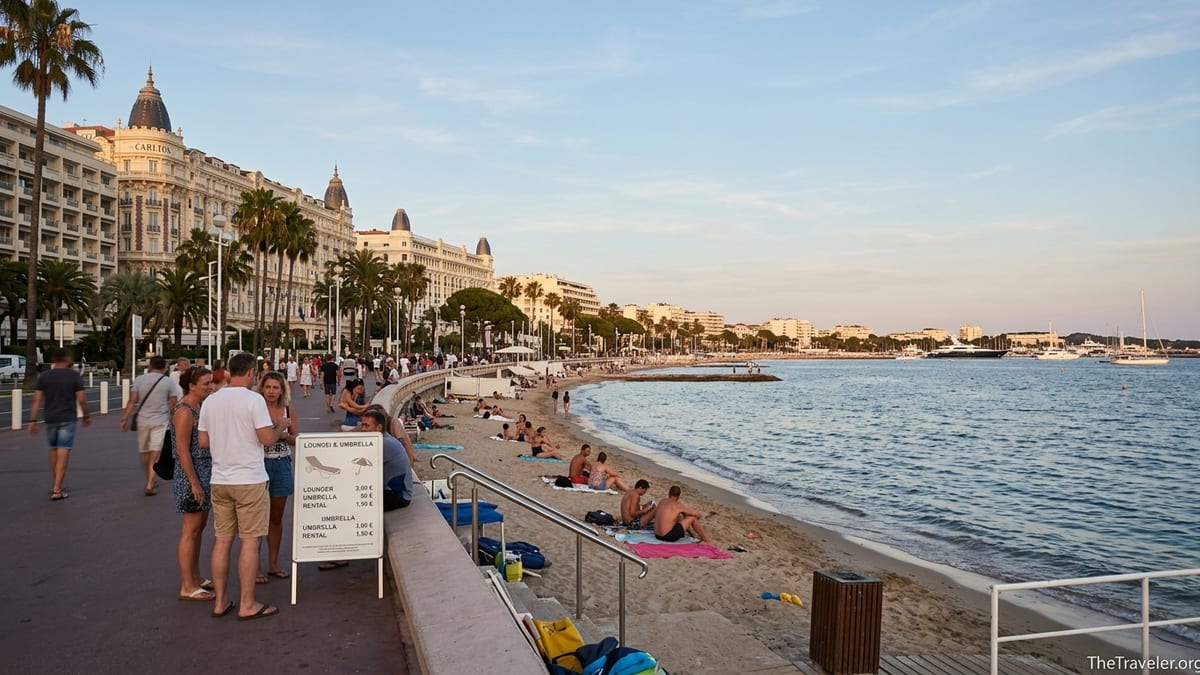
Many visitors arrive in Cannes assuming all of the city’s famous sandy stretches belong to their hotel or are automatically free to use. In reality, the coastline is a patchwork of public beaches and private beach clubs, particularly along La Croisette. Those immaculate rows of white loungers outside big-name hotels such as the Carlton, Martinez or Barrière Le Majestic are not included in your room price unless your hotel explicitly says so. In high season, a front-row sunbed at a Croisette beach club can easily cost the equivalent of a nice dinner per person, especially once you add a parasol and a few drinks.
A common mistake is to walk straight onto a glamorous-looking deckchair assuming it is complimentary for hotel guests, then be presented with a hefty bill or asked to move. A more budget-friendly strategy is to mix experiences: spend most days on one of the free public beaches such as Plage du Midi or the public stretches along La Croisette, then consciously splurge on a private beach day once or twice if that kind of pampering is important to you. Public beaches may be more crowded in July and August, but they offer the same warm Mediterranean water and a much more local atmosphere.
Another pitfall is underestimating how quickly sunbeds sell out. On peak summer weekends and during big events like the Cannes Film Festival, loungers at popular private clubs are often fully reserved by late morning. Travelers who show up at 2 p.m. expecting front-row space are frequently turned away or pushed to the very back. If you know you want a beach-club day in July, it is worth calling ahead or asking your hotel concierge to book a spot for the morning and plan the rest of your day around that reservation.
Finally, visitors sometimes get caught out by local beach rules and etiquette. Picnicking with a supermarket rotisserie chicken and glass bottles right in front of a high-end club, playing loud music on a crowded strip, or attempting topless sunbathing on the wrong stretch can generate friction with staff and other beachgoers. Cannes does have more relaxed public areas, as well as specific naturist zones on one of the offshore islands, but you are expected to adapt to the atmosphere of each beach. When in doubt, take your cues from the people around you.
Traveling in Peak Festival Season Without a Plan
Cannes is a working city that periodically turns into a global stage. During the Cannes Film Festival in May and other large conventions throughout the year, hotel prices spike sharply and availability can drop to almost nothing. A frequent mistake is to book flights for what looks like an “ordinary” spring or autumn week, then discover that every three-star hotel in town has doubled its usual rate because of a major trade show at the Palais des Festivals.
For example, a mid-range hotel that might charge a moderate nightly rate in early April can suddenly list rooms at several times that price for a few days during the festival period, with minimum-stay rules on top. Last-minute travelers who arrive assuming they can walk into a hotel and negotiate a decent rate often end up in a basic room on the city outskirts or in a neighboring town such as Mandelieu or Antibes, commuting back into Cannes by train. If your travel dates overlap with the film festival or big trade fairs, it is wise to secure accommodation months in advance or deliberately choose neighboring towns along the Côte d’Azur for better value.
Transport is another pressure point. During major events, the coastal trains that run between Nice, Antibes and Cannes are packed, and taxis can be both scarce and expensive late at night. Many visitors do not realize that ride-hailing services can be overwhelmed, with long waits and surge pricing. A simple solution is to avoid scheduling tight airport connections on arrival or departure days during festival weeks, and to build in extra time if you plan day trips. If you are flying into Nice, consider pre-booking a car transfer or checking the timetable of the regional trains in advance so you are not queuing at the ticket machines with hundreds of badge-wearing delegates.
Even sightseeing habits can suffer during these periods. Some travelers show up expecting to stroll casually past the red carpet at the Palais des Festivals for a photo, only to find access blocked by security, crowds and barriers. If your dream Cannes experience involves peaceful sunsets on less crowded beaches and easy restaurant reservations, you might prefer to avoid the festival calendar entirely and visit in shoulder seasons such as late September or early June, when the weather is still inviting but the city breathes more easily.
Underestimating Local Costs, From Tourist Tax to Restaurant Bills
Another common surprise in Cannes is the final price of things. One example is the tourist tax added per person, per night on accommodation bills. This city tax varies according to the official category of the property, and while it is not enormous per night, it adds up over a week-long stay. Travelers who only look at the nightly room rate when booking can be caught off guard when they see an extra line item at check-out. To avoid frustration, always read the small print when booking and mentally include that nightly tax in your budget.
Dining is another area where visitors can misjudge costs. It is easy to wander along La Croisette and sit down impulsively at a seafront restaurant directly on the promenade, only to realize later that a simple main course and a glass of wine there cost more than a full menu in the streets just a few blocks behind. Travelers sometimes order seafood platters or daily specials without checking the chalkboard or printed prices carefully, then are unsettled when a shared platter and a bottle of mid-range rosé comes to far more than expected. Before committing, it is perfectly acceptable in France to look over the menu outside and browse prices calmly.
Tipping norms also confuse many visitors. Service is usually included in the menu price in France, and locals tend to leave only small extra amounts in cash when they are particularly happy with the experience. In a busy bar or brasserie in Cannes, a couple might simply round up the bill or leave an additional modest tip. Some travelers, used to tipping 18 to 20 percent at home, automatically add the same here and significantly inflate their dining costs, while others feel pressured if a server returns with the card machine and not much change. Remember that a modest tip is appreciated, but you are not obligated to add a large percentage at every meal.
A final cost-related mistake is not clarifying what is included when booking excursions and activities. Boat trips to the Lérins Islands, for instance, can be sold as simple ferry tickets or as packaged experiences with lunch and beach-club access. Day-trippers sometimes book the cheapest option assuming sunbeds and food will be easy and affordable once they arrive, only to discover that beachfront loungers or set menus on the island are priced closer to what they might expect at a resort hotel. Asking in advance what is and is not included, and bringing water and snacks, helps avoid uncomfortable choices once you are already offshore.
Sticking Only to La Croisette and Missing the Real Cannes
Few visitors regret a walk along La Croisette. The palm-lined boulevard, luxury boutiques and iconic hotels are a big part of Cannes’ allure. The mistake is stopping there and assuming that polished strip is the whole city. Travelers who never venture into the narrow streets of Le Suquet, the old quarter that climbs the hill behind the port, often leave with the impression that Cannes is attractive but shallow. In reality, the city’s more human side reveals itself just a few minutes’ walk inland from the promenade.
For example, many locals do their daily shopping on and around rue Meynadier, a lively pedestrian street with small shops, food counters and bakeries where you can pick up a slice of pissaladière or a still-warm baguette at everyday prices. The Marché Forville, the covered market, is another place where you see a very different side of Cannes, especially in the morning when fishmongers, vegetable growers and cheesemakers set up stalls. Travelers who build in an early market visit and then climb up to the viewpoint near the church in Le Suquet for a panoramic view of the harbor come away with a much richer understanding of the city than those who only walk the luxury strip.
Another missed opportunity is ignoring the waterfront beyond the most photographed stretch. West of the Old Port, Plage du Midi and the beaches of La Bocca have a more relaxed, local feel. You might see families spreading out picnics, teenagers playing volleyball, and retirees taking a late-afternoon swim. Visitors who only experience the carefully curated beach clubs of La Croisette sometimes remark that Cannes feels like a place designed exclusively for well-heeled tourists. A bus ride or short walk to these other neighborhoods quickly challenges that impression.
Day trips are also part of the bigger picture. Because Cannes appears self-contained, some travelers spend their entire Riviera stay without ever leaving the town. Yet easy regional train and boat connections put places such as Antibes, Nice, Grasse and the islands of Sainte-Marguerite and Saint-Honorat within very straightforward reach. A simple half-day visit to the nearby islands, where pine trees frame clear water and low-key walking paths replace boutiques, often becomes a highlight of a trip that would otherwise have been dominated by storefronts and hotel terraces.
Mishandling Transport, Tickets and Getting Around
Cannes is compact enough that many visitors assume they can walk everywhere. While it is true that much of the center and La Croisette are pedestrian-friendly, underestimating distances and heat in summer can quickly lead to exhaustion. Travelers often book a hotel a little way up the hill or behind the station to save money, thinking it is an easy stroll to the beach, only to find themselves tackling a steep walk back after a long day in the sun. In July and August, even a ten or fifteen-minute incline can feel punishing in the afternoon. Checking the topography on a map before booking, and factoring in that you might want to use local buses or taxis for some journeys, can make your stay more comfortable.
Public transport itself comes with its own learning curve. Regional TER trains along the coast are efficient and popular for day trips, but buying the correct ticket and validating it before boarding can be confusing if you are new to French rail. Some travelers have reported fines elsewhere in France after forgetting to stamp paper tickets in the little yellow machines on the platform. Although digital tickets are becoming more common, it is still worth confirming whether your ticket needs to be validated or simply displayed on your phone. Inside Cannes, local buses and trams require valid tickets or passes as well, and inspectors do carry out spot checks, particularly on lines serving the seafront and main attractions.
Taxis and ride-hailing apps are another area of misunderstanding. Late at night, especially during festivals or when cruise ships are in town, demand can outstrip supply. Visitors who assume they can always summon a car instantly are sometimes stuck outside a restaurant on the western edge of town, watching prices rise on their apps without actually securing a ride. A simple workaround is to ask staff to call a local taxi company a little before you are ready to leave, or to time your dinner so you catch one of the later trains or buses back if you are staying in a nearby resort.
Finally, many people underestimate how pleasant and practical it is to move around Cannes by bicycle or on foot during the cooler parts of the day. Renting a bike to follow the waterfront west toward La Bocca or east toward smaller coves can save on transport costs and open up lesser-known corners. The key is to plan around the midday sun in summer, carry water, and remember that you are on holiday, not in a race from sight to sight.
Misreading Etiquette, Language and Dining Culture
France has its own rhythm and social codes, and Cannes is no exception. A frequent mistake is to assume that an entirely English-language approach is fine everywhere. In reality, a simple “bonjour” when you enter a shop, and “s’il vous plaît” and “merci” when you order, go a long way. Some travelers walk into smaller boutiques or market stalls along the lines of big-city shopping back home, browsing in silence and then abruptly asking questions in English. This can come across as brusque. Adopting a slower, more courteous style of interaction not only shows respect but often results in warmer service.
Dining habits are another adjustment. Visitors used to flexible meal times sometimes wander into restaurants at mid-afternoon expecting full service. In Cannes, as in much of France, many kitchens close between lunch and dinner, especially away from the main tourist strips. Travelers who skip breakfast and then go looking for a proper meal at 3:00 p.m. in the backstreets may end up frustrated, limited to snacks or takeaway from bakeries. Planning your main meals around local hours, and making dinner reservations for popular places in high season, helps ensure you are seated without long waits.
A related faux pas involves slow service. On a terrace overlooking the harbor, you might wait longer than you are used to for the bill or for your second drink. This is not necessarily a sign that you are being ignored. In French dining culture, lingering over a meal is normal, and servers do not automatically bring the check until you request it. Tapping your card or standing impatiently by the bar is rarely effective. Instead, catch your server’s eye, ask politely for “l’addition,” and expect the experience to take a little more time than it might at home.
Finally, dress codes can be more formal than some visitors assume. Strolling the promenade in swimwear or going straight from the beach to a more refined bar in flip-flops and a damp T-shirt may raise eyebrows, especially in establishments attached to luxury hotels. Carrying a light shirt or sundress to throw on, and a pair of simple sandals, will help you slip comfortably between beach and city life without feeling out of place.
Overlooking Safety Basics and Practical Details
Cannes is generally perceived as a safe destination, but that does not mean basic precautions can be ignored. A recurring mistake is leaving belongings unattended on the beach while everyone in the group swims. Phones, wallets and designer sunglasses left on towels are tempting targets, and opportunistic theft exists even in polished resorts. A simple solution is to take turns swimming or invest in a small waterproof pouch for essentials so you are not leaving everything in a pile near the shoreline.
Nightlife requires similar common sense. During busy weeks, bars along La Croisette and around the port can be packed with visitors and festival-goers. Overindulging in alcohol, accepting drinks from strangers without seeing them poured, or wandering alone along dark side streets while distracted by your phone can increase your vulnerability, as in any tourist center. Sticking with companions, agreeing on a clear meeting point if you get separated, and using well-lit main routes back to your accommodation are straightforward ways to stay comfortable.
Health considerations often get overlooked as well. The Mediterranean sun can be deceptively strong, especially from late morning to mid-afternoon in summer. Travelers eager to catch a tan on arrival sometimes spend their first day on a lounger without adequate sunscreen or shade, only to spend the rest of their trip nursing sunburn. Buying a good-quality sunscreen, wearing a hat, and seeking shade for part of the midday hours are simple steps that make beaches and promenades much more enjoyable over several days.
Lastly, be mindful of petty annoyances such as unlicensed street vendors or unsolicited “helpers” at ticket machines. While many are simply trying to earn a living, it is wiser to decline offers to “fix” your train ticket purchase for a small fee, or to hand over your bank card to anyone who is not a uniformed staff member behind an official counter. If you are unsure how to buy the right ticket or find your platform, seek assistance from clearly identified staff at the station or from your hotel front desk before you head out.
The Takeaway
Cannes is more than its glossy reputation. It is a real city on a beautiful stretch of coastline, with working markets, local neighborhoods and easy access to some of the most appealing corners of the French Riviera. Most of the disappointments visitors experience stem from a few predictable missteps: assuming all beaches are the same, traveling in peak festival weeks without preparation, misunderstanding bills and local customs, and ignoring the quieter streets and nearby escapes that give the city depth.
With a bit of forethought, you can avoid the worst queues and surprises, mix glamorous moments with authentic everyday experiences, and leave with memories of sea air, shaded market alleys and ferry rides rather than of crowded lobbies and unexpectedly high tabs. Approach Cannes with curiosity, realistic expectations and a relaxed pace, and the city is much more likely to reward you with the Riviera holiday you were hoping for.
FAQ
Q1. Are Cannes’ beaches free to use or do I have to pay?
Many of Cannes’ beaches are free public stretches where you can lay down your towel at no charge, especially sections of Plage du Midi and parts of La Croisette. However, the neatly arranged loungers in front of hotels and beach clubs are private, and renting a sunbed and umbrella there usually comes with a significant daily fee in high season.
Q2. When is the best time to visit Cannes to avoid big crowds and high prices?
The busiest and most expensive periods are during the Cannes Film Festival in May and in peak summer holidays from roughly mid-July to late August. For a balance of pleasant weather, fewer crowds and more reasonable hotel rates, many travelers aim for late April to early June or late September to October.
Q3. Do I need to book beach clubs or restaurants in advance?
In July, August and during major events, reservations are strongly recommended for popular beach clubs and well-known restaurants, especially for lunch with a sea view or dinner on weekends. Outside those times you can often walk in, but it still helps to call ahead if you have your heart set on a particular place or time.
Q4. Is Cannes very expensive compared with other French Riviera towns?
Cannes can be pricier than some neighboring resorts, particularly along La Croisette and at luxury hotels, but prices drop quickly as you move a few streets inland or choose public beaches. Many visitors find that mixing simple meals and local markets with occasional splurges keeps overall costs manageable.
Q5. How easy is it to get from Cannes to nearby towns like Nice or Antibes?
Regional trains run frequently along the coast, connecting Cannes with Antibes, Nice and other Riviera towns. Journey times are relatively short, and many visitors base themselves in Cannes and use these trains for easy day trips. Just be sure to buy the correct ticket, keep it handy, and check whether it needs to be validated.
Q6. Do I need to speak French to get by in Cannes?
You can certainly manage with English in most hotels, larger restaurants and tourist services, as many staff are used to international visitors. That said, learning and using a few basic French phrases for greetings and simple requests will usually result in friendlier interactions and a smoother experience.
Q7. Is Cannes safe to walk around at night?
The central areas of Cannes, including La Croisette and the streets around the port, generally feel safe and are well lit, especially when busy. Normal big-city precautions still apply: keep an eye on your belongings, avoid very dark or isolated areas late at night, and plan your route back to your accommodation in advance.
Q8. What should I know about tipping in Cannes?
Service is usually included in restaurant and café prices in France, so large percentage tips are not expected. Locals tend to round up the bill or leave a small additional amount in cash for good service. If you particularly enjoyed your meal or drinks, a modest tip is appreciated but not obligatory.
Q9. Is it worth visiting the Lérins Islands from Cannes?
Yes, many travelers consider a boat trip to the nearby Lérins Islands a highlight of their stay. Regular ferries make the short journey, and once there you can walk shaded paths, swim in clear water and enjoy a quieter atmosphere than central Cannes. Bringing water, sunscreen and suitable shoes will help you make the most of the outing.
Q10. Can I see the famous red carpet at the Palais des Festivals?
Outside major events, you can often walk up the outdoor steps of the Palais des Festivals and take photos where celebrities pose during the film festival. During the festival itself or certain conventions, access may be restricted or crowded with security and delegates, so it is best to check locally and be flexible with your expectations.