


More news on this day
A collision between two southbound passenger trains near Bedford, England on June 19 has left one person dead and dozens injured, according to initial reports from the scene and early media coverage.
Get the latest news straight to your inbox!
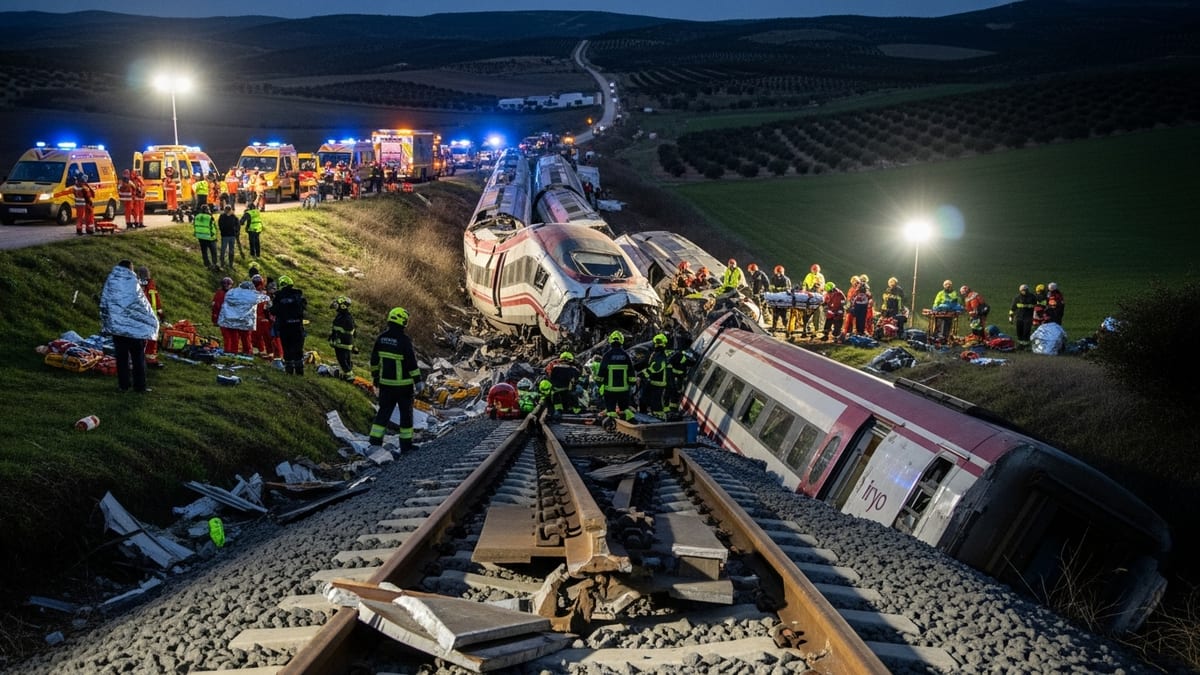
High-speed collision on key route into London
Publicly available information indicates that the crash occurred in the late afternoon near the village of Elstow, a few miles south of Bedford, on one of the mainlines feeding London St Pancras International. Both trains were reported to be operating high-speed intercity services toward the capital when the collision happened.
Early data from rail tracking platforms suggests that a southbound service from Corby struck the rear of a Nottingham to London train ahead of it on the same line. Images shared on social media show several derailed carriages and significant damage to the leading vehicles, consistent with a high-speed rear-end impact.
Initial tallies reported in national and regional outlets describe one fatality and a large number of casualties, with emergency responders treating passengers at the trackside and transporting the most seriously injured to nearby hospitals. Rail operators and local health services have categorized the incident as a major emergency.
Witness accounts collected in published coverage describe a sudden, violent jolt followed by smoke, flying debris and scenes of chaos inside the carriages. Passengers reported broken bones, head injuries and cuts as they tried to assist one another and make their way out of the damaged trains.
Casualties, emergency response and passenger accounts
Figures released through official service statements and ambulance updates, as relayed by national news organizations, indicate that more than 80 people may have been treated for injuries of varying severity. These reports describe over ten people with very serious injuries, several dozen with serious trauma and a larger group with minor wounds such as bruises and lacerations.
Paramedics, firefighters and police units converged on the scene from across Bedfordshire and neighboring counties. Media photographs show a large deployment of emergency vehicles along roads that run parallel to the line, with temporary triage points set up close to the tracks to prioritize the most critical cases.
Passengers who spoke publicly through broadcasters and social media channels described being thrown forward into seats and tables as the train suddenly decelerated. Some recounted using phone lights to navigate smoke-filled carriages, helping fellow travelers with visible fractures and bleeding before being guided down onto the trackbed by staff and rescuers.
Others described long waits in the aftermath as trains ahead and behind were brought to a halt, with passengers kept on board while crews and emergency services assessed the wider rail corridor. As daylight faded, many travelers spoke of walking along the tracks or being escorted to waiting buses and taxis to complete their journeys.
Severe disruption on East Midlands corridor
The two trains involved were reported to be operated by East Midlands Railway on the busy Midland Main Line, a key route connecting London with the East Midlands and parts of northern England. Following the collision, the operator announced the suspension of services to and from St Pancras on the affected corridor for the rest of Friday.
Rail industry statements carried by British media outlined substantial disruption, with long-distance and commuter trains either cancelled outright or terminating short of London. Alternative routes on other main lines quickly became crowded, and journey planners advised passengers not to travel unless essential.
The timing of the incident during the evening peak compounded the impact, stranding thousands of commuters and long-distance travelers. Many reported being advised to seek hotel rooms or alternative accommodation when it became clear that normal service would not resume quickly.
Network Rail and operators have indicated through public updates that repairs to track, signaling equipment and rolling stock assessment will dictate how quickly the line can partially reopen. Early estimates suggest at least several days of disruption, with reduced timetables and diversions expected even after the immediate wreckage is cleared.
Investigators assess possible causes
The Rail Accident Investigation Branch has dispatched inspectors to the site, according to government statements cited by UK news outlets. Their work is expected to focus initially on securing data from on-train recorders, analyzing signal aspects at the time of the crash and examining the condition of the infrastructure.
Specialist teams will also assess the performance of the trains’ braking systems and onboard protection technology, including automatic warning systems designed to prevent trains from passing signals at danger or approaching occupied blocks at unsafe speeds. Investigators typically review maintenance records, driver rosters and communications logs to reconstruct the sequence of events.
Commentary in national media notes that serious collisions between passenger trains in Britain have become comparatively rare in recent decades, a trend often attributed to layered safety systems and continuous infrastructure upgrades. The severity of the Bedford crash is therefore likely to prompt detailed scrutiny of whether any equipment malfunction, human error or procedural gap played a role.
Formal findings are expected to take many months. In previous cases, the investigation process has led to recommendations on signal design, driver training, rolling stock crashworthiness and emergency evacuation procedures, many of which have been implemented across the network.
Renewed focus on rail safety and passenger confidence
The collision comes at a time when passenger numbers on Britain’s railways are recovering after the pandemic, and when the government and operators are working to persuade more travelers to choose trains over private cars and short-haul flights. Analysts quoted in recent transport coverage suggest that highly publicized accidents can temporarily dent public confidence, particularly among occasional travelers.
Early commentary from rail unions, industry experts and passenger groups, as reflected in media reports, emphasizes the need to understand how two trains traveling in the same direction on a heavily signaled main line were able to collide. Some voices are already calling for accelerated investment in digital signaling and train protection systems on busy corridors such as the Midland Main Line.
While it will take time for a full picture to emerge, the Bedford crash is already prompting comparisons with previous incidents on the UK network and in other European countries, where investigations have led to substantial safety reforms. Observers note that the relatively low number of rail fatalities in recent years underscores both the progress made and the high expectations placed on modern rail systems to avoid such tragedies entirely.
For now, attention remains on those affected by the crash, the restoration of safe service on a vital route into London and the work of investigators whose findings will help determine what changes, if any, are needed to reduce the risk of a similar event in future.