


Cannes may be famous for red carpets and movie stars, but away from the flashbulbs it is a remarkably liveable Mediterranean town: walkable, beach‑focused and full of small rituals that locals repeat all year. This guide brings together the city’s best beaches, essential attractions and on‑the‑ground tips so you can experience Cannes the way residents and repeat visitors do, whether you are here for a long weekend or a week on the French Riviera.
Get the latest updates straight to your inbox!
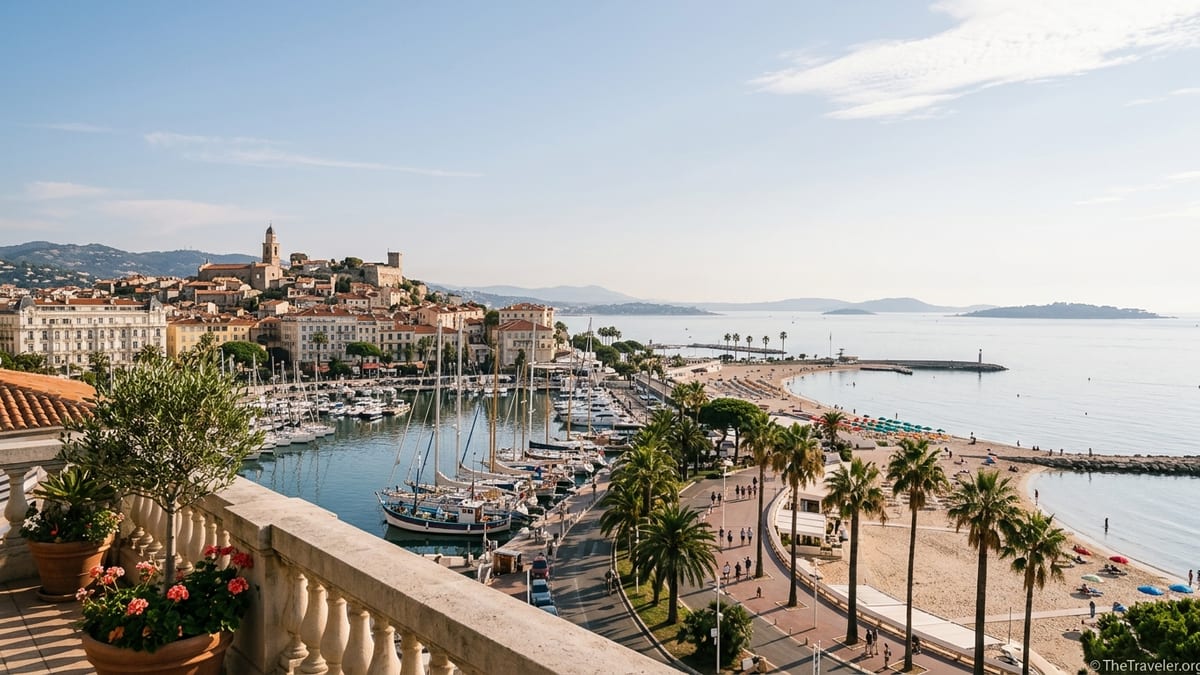
Getting Oriented in Cannes
Cannes sits on a gentle curve of the Mediterranean in the Provence‑Alpes‑Côte d’Azur region, about 30 kilometers southwest of Nice. The city splits naturally into a few areas you will move between often: La Croisette, the famous seafront boulevard lined with luxury hotels and beach clubs; the old town of Le Suquet on the hill above the harbor; the working Vieux Port with its fishing boats and superyachts; and the more local residential districts of La Bocca to the west and La Californie to the east in the hills.
The heart of most trips is a narrow band between the train station and the sea. From Cannes Ville station, it is a 7 to 10 minute walk straight down Rue des Serbes or Rue Hoche to the Croisette. This compact center means you can stay almost anywhere near the station or the waterfront and still be within easy walking distance of beaches, restaurants and the Palais des Festivals, where the Cannes Film Festival takes place each May.
For arrivals, most international visitors land at Nice Côte d’Azur Airport and continue by regional train or airport bus. The regional TER train from Nice Saint‑Augustin to Cannes generally takes around 35 to 40 minutes. A typical one‑way adult fare bought in advance is often in the range of 7 to 12 euros, depending on time and promotions, which makes it far cheaper than a taxi or ride‑hail service, which can easily cost 70 to 100 euros for the same journey.
Once in town, you will mostly move on foot. Local buses operated under the Lignes d’Azur and regional Zou! network connect Cannes with neighboring towns such as Antibes, Grasse and Mandelieu‑La Napoule, useful for day trips or if you are staying a little outside the center. Taxis are metered with a regulated starting charge a little above 2 euros and additional distance charges; always confirm the approximate fare with the driver before setting off, especially late at night or during festival periods when demand is intense.
The Best Beaches in and around Cannes
Cannes is unusual on the Riviera for having long stretches of sand rather than pebbles. Along the central Croisette you will find a patchwork of private beach clubs and a few small public sections, while to the west the Plages du Midi and as far as La Bocca feel more relaxed and local. You can mix both styles in a single trip.
On La Croisette, private beach clubs such as those in front of the Carlton and Martinez hotels rent out loungers and umbrellas on a daily basis. Prices change with the season and position in the front or second row, but in summer you should be prepared for around 40 to 80 euros per person for a full day including a mattress and umbrella, with food and drinks extra. In return you get waiter service to your sunbed, changing cabins, clean toilets and often a small pontoon for diving into deeper water away from the shore.
If you prefer to avoid paying for sand time, walk west from the Palais des Festivals toward La Bocca and you will come to a string of public beaches along the Plages du Midi. These have the same soft sand and gentle slope into the sea without the entrance fee. Bring your own towel and umbrella or pick up a simple fold‑up beach chair from a supermarket in town; in summer a basic chair often costs 15 to 25 euros and quickly pays for itself if you visit the beach over several days.
For a more local atmosphere, continue further to Cannes La Bocca, where wide public beaches run along the main road. Here you will notice more French families, teenagers playing beach volleyball and far fewer high‑end boutiques. The sea is just as inviting, and a bakery on Avenue Francis Tonner can provide an affordable picnic of baguette sandwiches, pastries and fruit for under 10 euros per person.
Island Escapes and Coastal Walks
One of the most rewarding day trips from Cannes is to the Lérins Islands, visible just offshore. Ferries run regularly from the main harbor to Sainte‑Marguerite, the larger island, and to Saint‑Honorat, which is home to a working monastery. Several companies operate these crossings; as of the 2026 season, adult round‑trip fares from Cannes to Sainte‑Marguerite typically fall around 20 to 25 euros, with discounts for children. Expect a crossing time of roughly 15 minutes and basic ferry seating both inside and on the open deck.
On Sainte‑Marguerite, sandy coves and pine forest trails begin almost as soon as you leave the small port. There are a few simple beach restaurants, but many locals bring their own picnic and find a rocky ledge or tiny beach to claim for the day. The water here is usually clearer than on the mainland, and outside peak summer weekends you may find long stretches with only a handful of people in sight.
Saint‑Honorat offers a more contemplative experience. The island is owned by a community of Cistercian monks, who produce wine and liqueurs in addition to welcoming day visitors. Modest dress is appreciated, particularly near the abbey buildings, and a quiet respectful tone goes a long way. There is one restaurant open to the public and paths that loop around the island passing chapels, old fortifications and small rocky inlets where you can swim between prayer bells.
Back on the mainland, walkers should consider sections of the coastal path often called the Sentier or Chemin des Douaniers, which traces the shoreline around much of this part of the Riviera. One of the most scenic stretches near Cannes begins around Palm Beach on the Pointe Croisette and follows the coast in the direction of Golfe‑Juan, with views of the islands and the red rocks of the Esterel in the distance. Expect narrow paths, rough stone steps and little shade in places; sturdy sandals, a refillable water bottle and a hat are essential, especially between June and September.
Essential Cannes Attractions Beyond the Beach
Although the sea dominates life in Cannes, it is worth setting aside time for a few key sights away from the sand. Start in Le Suquet, the old town that rises steeply just west of the Vieux Port. The climb via Rue Saint‑Antoine brings you past pastel‑painted houses, shuttered windows and small restaurants whose outdoor tables spill onto the cobbles in the evening. At the top, the church of Notre‑Dame d’Espérance and the remains of the medieval castle offer one of the best views over the bay, with the Croisette curving in front of you and the Lérins Islands anchored offshore.
Down by the waterfront, the Palais des Festivals et des Congrès is instantly recognizable by its red carpeted steps during the festival in May. At other times of year it hosts trade fairs and conventions, and visitors often stop to take photos on the steps or of the handprints of film stars set into the pavement nearby. Even if you are not attending a screening, walking past at sunset gives a sense of how central this building is to the city’s identity.
Food lovers should not miss Marché Forville, the covered market just below Le Suquet. Mornings are the best time to come, when local producers set out stalls of tomatoes, peaches, olives, cheeses and seafood. You can assemble a generous picnic for two, including a small wedge of local goat cheese, a bag of tomatoes, a punnet of berries and a loaf of fresh bread, for roughly 15 to 25 euros depending on your choices. Many restaurants in the streets around the market offer fixed‑price lunch menus that change daily, often around 20 to 30 euros for two or three courses.
Art fans will find small but worthwhile museums such as the Musée des Explorations du Monde in Le Suquet and exhibitions that periodically take over the central Espace Miramar. If you are staying several days and enjoy culture, consider checking the schedule at the tourist office near the Croisette where you can pick up information on current shows, guided walks and occasional free concerts on the harbor.
Where to Stay and When to Visit
Cannes has more beds per square meter than many cities its size because of the festival and convention calendar, which means visitors can choose from modest studio apartments to famous luxury hotels along the Croisette. Prices swing widely with the calendar. During the mid‑May film festival and major trade fairs, basic three‑star rooms that might be 120 to 180 euros per night in shoulder season can jump well above 300 euros, and many hotels require multi‑night stays. If you have flexible dates, checking the city’s events calendar before booking can save a significant amount.
For most leisure travelers, late April, May outside festival days, June, September and early October hit the sweet spot of pleasant temperatures and manageable crowds. Sea temperatures become comfortable for swimming from roughly late May through September. July and August bring hot weather, school holidays and premium pricing on many hotels and private beach clubs, though early morning and late evening can still feel magical if you are willing to get up for sunrise or stroll the Croisette after 10 p.m. when the heat has eased.
Location matters more than star rating for many visitors. Staying near the train station provides easy arrival and departure as well as quick access to both the Croisette and Plages du Midi. If you prefer a residential vibe and sea views, the hills of La Californie and Super‑Cannes offer apartments and villas with panoramic terraces, but you will likely rely on a car or taxis, given the steep climbs back from the seafront at night. Families often appreciate the quieter feel and larger apartment rentals in La Bocca, trading a 10 to 15 minute bus ride into the center for more space at a lower nightly rate.
If you are on a strict budget, look at smaller family‑run hotels a few blocks inland from the Croisette or simple rental studios. Booking several months ahead and avoiding peak event dates can bring nightly costs for a clean, central room into the 90 to 130 euro range, particularly outside July and August. Self‑catering apartments also allow you to save by having breakfast at home and using Marché Forville as your pantry.
Eating, Drinking and Everyday Costs
Eating well in Cannes does not have to mean white tablecloths on the waterfront every night. The city is full of small bakeries, crêpe stands, Italian ice‑cream parlors and neighborhood bistros that locals rely on. A typical bakery breakfast of a coffee and two pastries bought at the counter might cost 4 to 7 euros, compared with 15 to 25 euros per person for a hotel buffet. Many visitors quickly fall into a rhythm of a simple breakfast, a bigger lunch and perhaps a lighter dinner of shared plates and a glass of rosé.
Along the Croisette and in streets just behind it, expect menus to be priced for international visitors. A main course at a seafront restaurant will often be in the 25 to 40 euro range, with fresh fish dishes at the higher end. In contrast, a few streets inland near Rue Hoche or around Rue Commandant André, lunch menus of the day are common and can bring two courses and a coffee for around 18 to 28 euros. In La Bocca or residential pockets farther from the water, you may find pizzerias and brasseries where a generous pizza or plat du jour runs closer to 12 to 18 euros.
Alcohol prices follow a similar pattern. A glass of Provence rosé at a terrace on the Croisette will typically cost more than the same wine ordered on a backstreet square. House wine served by the carafe offers good value in many casual places. Supermarkets stock local rosés at everyday prices, often 6 to 10 euros a bottle, which is useful if your accommodation has a balcony or small kitchen and you want to create your own sunset aperitif overlooking the bay.
For coffee, note that prices vary depending on whether you stand at the bar or sit on the terrace. Ordering an espresso at the counter in a café can be noticeably cheaper than taking a seat with a harbor view. When in doubt, glance at the price list posted outside or ask before ordering. Tipping in France is modest compared with some countries. Service is officially included in restaurant bills, so locals usually round up small amounts or leave a few coins, or around 5 to 10 percent for notably good service rather than a fixed percentage every time.
Getting Around and Easy Day Trips
Within Cannes, you will likely walk most places, but there are a few transport tips that make life easier. In summer, parking along the seafront can be difficult and expensive, so many residents use municipal car parks slightly inland or, for beach days near Palm Beach at the Pointe Croisette, a dedicated parking area where daytime parking is currently free and an overnight flat fee applies. If you are staying in an apartment with limited parking, it is worth checking which public garage is closest and what the daily maximum rate is before you arrive.
Local buses connect the center with Palm Beach, La Bocca, Le Cannet and other nearby neighborhoods, and regional lines continue to Antibes, Grasse and Nice. Buying a pack of trips or a day ticket on the local network usually works out cheaper than paying individually for each ride, especially if you are traveling with family. Inspectors do check tickets, so always validate your card on boarding. For late nights, services thin out, and you may want to budget for a taxi home if you are staying farther from the center.
Cannes also works well as a base for day trips along the coast. Eastwards, Antibes is about 10 minutes away by regional train, with its own old town, Picasso museum and sandy beaches, while Nice is roughly 35 minutes away with a larger promenade and extensive dining scene. To the west, the red rocks and small coves of the Esterel coastline begin around Théoule‑sur‑Mer and continue past Saint‑Raphaël, reachable by train in approximately 25 to 40 minutes depending on the service. From Saint‑Raphaël, seasonal boats run to Saint‑Tropez, and many travelers combine train and boat for a relaxed day trip instead of driving the often congested coastal road.
If you prefer to explore independently, renting a small car for a day gives access to hill villages and lesser‑known beaches, but keep in mind that parking in historic centers is limited and streets can be narrow. Many visitors choose a mixed approach: public transport for straightforward trips along the coast, and a single rental day to visit inland spots such as Grasse for perfume museums or Mougins for hilltop views and galleries.
Local Etiquette, Safety and Smart Money Tips
Cannes is generally safe, especially compared with many larger cities, but it is still wise to follow standard precautions. On crowded festival evenings, during fireworks shows or on busy summer beach days, keep phones, wallets and passports secure and avoid leaving valuables unattended on the sand while you swim. Many hotel front desks and some apartment rentals can store passports and spare bank cards in a safe, which is sensible if you are out all day.
A little French goes a long way in smoothing daily interactions. Locals appreciate a clear “bonjour” when you enter a shop or café and “au revoir” when you leave. Before launching into English, asking “excusez‑moi, parlez‑vous anglais?” tends to produce a warmer response than assuming. Servers are often busy, particularly at lunch when terraces fill quickly, so looking for eye contact or a small nod before ordering feels polite and will be recognized as such.
On the beach, observe a few unspoken rules. Avoid shaking sand off towels when people are very close by, keep umbrellas secured so they do not blow away, and respect signed zones for activities like ball games or paddle sports. Topless sunbathing exists but is less common than it once was; following the lead of people around you is usually the safest approach. Loud music on portable speakers is unpopular on quieter stretches of sand, especially among families and older residents.
For payments, cards are widely accepted, including contactless, but carrying some cash for small bakeries, markets and ice‑cream stands remains useful. ATMs are easy to find around Rue d’Antibes, the station area and near the harbor. Inform your bank about your trip dates to avoid fraud alerts, and consider using a bank card with low foreign transaction fees, as small purchases like morning coffee quickly add up over a week.
The Takeaway
Cannes rewards travelers who balance its glamorous image with curiosity about its everyday rhythms. Spend a morning in the old streets of Le Suquet and the Forville market, an afternoon on the sand at Plages du Midi or a Lérins Island cove, and an evening strolling the Croisette as the lights come up on the bay. Between swims and walks, take time to notice the small details: locals chatting at café counters, fishermen working in the harbor, the scent of pines drifting across from the islands on a warm evening breeze.
With a little planning around seasons, transport and budget, it is entirely possible to enjoy Cannes on your own terms, whether that means a few indulgent hours at a private beach club or simple picnics under the tamarisk trees on a public stretch of sand. Use this guide as a starting point, then let the city’s mix of sea air, sunlight and human theater shape the rest of your stay.
FAQ
Q1. How many days do I need in Cannes? For most first‑time visitors, two full days provide enough time to explore Le Suquet, sample the main beaches and take an island trip, but three to four days let you slow down, revisit favorite spots and add a short day trip to Antibes or the Esterel coast.
Q2. Is Cannes very expensive compared with other French Riviera towns? Cannes can be pricey in peak season and during major events, especially along the Croisette, but everyday costs in local neighborhoods are comparable to nearby cities such as Nice and Antibes; by choosing public beaches, set‑menu lunches and accommodation a few blocks inland, many travelers keep daily expenses moderate.
Q3. Can I enjoy Cannes without a car? Yes, the central area is compact and walkable, and regional trains and buses link Cannes with Nice, Antibes, Grasse and coastal villages, so many visitors happily skip renting a car unless they plan several inland excursions or are staying in hilltop neighborhoods far from the seafront.
Q4. Are the beaches suitable for children? The city’s sandy beaches and generally gentle slope into the sea make Cannes appealing for families, particularly on the Plages du Midi and some parts of La Bocca where the water stays shallow for a while, though parents should still watch for waves, occasional jellyfish in summer and follow any posted safety flags or lifeguard instructions.
Q5. When is the best time of year to swim in Cannes? Sea temperatures usually become comfortable for most swimmers from late May through September, with July and August offering the warmest water; in April, early May and October, hardy locals still take dips, but visitors may find the sea fresh rather than truly warm.
Q6. Do I need to book the ferry to the Lérins Islands in advance? In the quieter months you can often buy tickets on the day at the harbor, but during summer weekends and around the film festival it is wise to purchase tickets in advance or earlier in the day to secure your preferred departure time, especially if you are traveling with a group.
Q7. What should I wear for evenings in Cannes? Dress codes vary from casual to glamorous, but in most places smart‑casual outfits such as summer dresses, linen shirts and neat sandals fit in well; upscale hotel bars and certain restaurants may expect closed shoes and long trousers for men, so packing at least one slightly dressier outfit is helpful if you plan a special night out.
Q8. Is tap water safe to drink? Yes, tap water in Cannes meets French safety standards and is what locals drink at home, so refilling a reusable bottle from the tap or marked public fountains is a simple way to stay hydrated on hot days and cut down on bottled water purchases.
Q9. How early should I book accommodation for the Cannes Film Festival? For the May festival, regular attendees often book six to twelve months in advance, and even casual visitors who simply want to experience the city during this period should aim to secure rooms several months ahead, as prices rise sharply and central options sell out quickly.
Q10. Are there quieter alternatives if the Croisette feels too busy? If the main waterfront seems crowded, you can head west to the more relaxed Plages du Midi and La Bocca, take a short ferry to a cove on Sainte‑Marguerite, or wander the backstreets around Rue Hoche and Le Suquet, where the atmosphere is often calmer and more local than on the main promenade.