


Cannes is so closely associated with its glittering film festival that it is easy to forget there is an entire small city behind the red carpet. For most of the year there are no flashbulbs or premieres, just a livable Mediterranean town with fishermen unloading their catch, students commuting by bus, and locals arguing over the ripeness of tomatoes at the market. Step a few streets away from the Palais des Festivals and Cannes reveals a softer, more human side made of quiet chapels, island pine forests, sandy coves, and unfussy neighborhood bars. This guide explores the best things to do in Cannes beyond the festival, with concrete ideas that work whether you have a spare afternoon or several days to linger on the French Riviera.
Get the latest updates straight to your inbox!
Wander the Old Quarter of Le Suquet
High above the yacht masts of the Vieux Port, the hilltop quarter of Le Suquet feels like another town entirely. This is the original Cannes, a compact maze of cobbled lanes once protected by medieval ramparts. Today you can climb the steep Rue Saint-Antoine, lined with bistros serving soupe de poisson and grilled sea bass, and then zigzag toward the summit where stone houses are draped with laundry instead of designer logos. It takes about 10 to 15 minutes on foot from the seafront to reach the top, though you will probably stop often to peek through doorways or photograph citrus trees in terracotta pots.
The reward is one of the best views on the Riviera. From the square in front of the church of Notre-Dame d’Espérance you can see the full curve of the bay, the line of La Croisette and, on clear days, the snow-dusted Alps. Visit around sunset for soft light and cooler temperatures; families bring children up here to ride scooters while older couples linger on benches facing the water. There are a few casual wine bars tucked into the back streets where a glass of Provence rosé usually costs far less than it would along La Croisette, and you are more likely to be surrounded by locals than conference delegates.
Le Suquet is also where you begin to understand that Cannes is a functioning town, not only a festival set. Grocers display crates of peaches directly on the pavement, small épiceries keep odd hours based on the owner’s mood, and restaurant blackboards change with whatever came in from the nearby market. If you are staying in a rental apartment rather than a hotel, use this area as your pantry; you can walk down to shop in the morning and carry ingredients back up the hill in time for lunch.
Explore the Museum of World Explorations and Local Heritage
At the very top of Le Suquet, inside the remains of a medieval castle once owned by monks from the Lérins islands, you will find the Musée des Explorations du Monde, known in English as the Museum of World Explorations. Recently revamped and rebranded from the old Castre Museum, it houses a compact but surprisingly varied collection, from Mediterranean antiquities and 19th century paintings of the Riviera to global musical instruments and art from the Himalayas and Oceania. The building itself, with stone walls and a square watchtower, is as much a reason to visit as the displays.
Allow at least an hour to wander through the rooms and climb the narrow staircase up the tower. At the top, a panoramic terrace offers a 360-degree view over Cannes, the Lérins Islands and the inland hills. Opening hours vary slightly by season, with extended evenings in summer, and tickets for adults are typically in the range of a few euros, making this one of the better-value cultural stops in town. Because the museum is relatively small, it rarely feels overwhelming; many visitors pair it with a stroll around the adjacent church and cemetery for a slower, reflective morning above the bustle.
If you enjoy smaller art spaces, look for temporary exhibitions at Suquet des Artistes, set in a former convent lower down the hill. The city has been investing in these cultural venues in recent years, so even outside festival weeks you are likely to find photography shows, contemporary installations or regional art on display. For travelers who only know Cannes from television coverage in May, it can be surprising to discover this quieter museum scene anchored in the old town rather than on the waterfront.
Eat Like a Local at Marché Forville and Nearby Streets
At the base of Le Suquet, just behind the town hall, Marché Forville is the beating heart of daily life in Cannes. Mornings from Tuesday to Sunday, stalls overflow with seasonal produce from the backcountry: crates of Menton lemons, bunches of basil, heirloom tomatoes, courgette flowers, goat cheeses and olive oils pressed in nearby valleys. Fishmongers call out prices for Mediterranean sea bream, red mullet and prawns landed at the Vieux Port minutes away. Prices are not bargain-basement, but you can still put together a picnic of bread, cheese, fruit and tapenade for less than a single cocktail on La Croisette.
One simple ritual is to order a plate of freshly opened oysters or a shrimp cocktail from a seafood counter and eat it standing at the bar with a glass of chilled white wine. If you prefer something more portable, look for socca, a chickpea pancake typical of the region, or slices of pissaladière, the local onion and anchovy tart. Surrounding streets have wine cavistes, bakeries and small traiteurs selling prepared dishes such as ratatouille, stuffed vegetables and roast chicken that you can bring back to your accommodation.
On Mondays, the market hall transforms into a brocante, or flea market, with antique silverware, old film posters, vintage linens and knick-knacks that make more interesting souvenirs than another Cannes-branded cap. Even if you do not buy anything, it is an entertaining way to understand what locals have collected over the decades. Go early for the best selection and to see restaurant chefs choosing ingredients for their lunchtime menus.
Swap the Red Carpet for Sand: Beaches and Beach Clubs
The Cannes film festival might dominate the news, but the city’s main stage is its coastline. Along the central bay you will find a mix of free public beaches and fee-based private stretches run by hotels and independent beach clubs. Public sections such as Plage Macé and Plage du Midi offer soft, groomed sand and free access; you only pay if you want to rent a sun lounger or parasol from a concession stand. These rentals are usually cheaper than the fully serviced private clubs, and you can always bring your own towel and umbrella to save money.
For the full Riviera experience, many visitors book into a beach club on La Croisette for at least one day. Well-known names include Carlton Beach Club, La Môme Plage and Hyde Beach, each with its own personality. Expect to pay a premium: in high season, a front-row sunbed at a prestigious club can cost from around 60 to well over 100 euros per day, with food and drinks extra. In return you get waiter service, changing cabins, showers and often a restaurant menu that runs from truffle pizza to grilled turbot. Reservations are strongly recommended in July and August and during major congresses when the city fills with delegates.
If you prefer a more relaxed atmosphere and slightly lower prices, look toward the eastern end of the bay near Port Canto or west along Plage du Midi, where clubs and seaside restaurants draw more locals and families than influencers. Even there, budget for at least 25 to 40 euros for a basic lounger in summer. To keep costs down, many travelers alternate between a splurge day at a club and free days on the public sand, grabbing takeaway salads or panini from nearby bakeries instead of ordering full restaurant meals every time.
Escape to the Lérins Islands
Just a short boat ride from the port, the Lérins Islands feel worlds away from conference halls and boutiques. Ferries run regularly throughout the year to Sainte-Marguerite, the larger and more wooded island, and to the smaller Saint-Honorat, home to an active community of Cistercian monks. Round-trip tickets generally cost in the region of 20 euros for adults, and the crossing takes about 15 to 20 minutes, making this one of the easiest day trips from Cannes.
On Sainte-Marguerite, wide dirt paths crisscross a forest of umbrella pines and eucalyptus planted in the 19th century. You can circle the island on foot in about two to three hours, stopping to swim in rocky coves with clear water overlooking the mainland. Near the landing pier stands the Fort Royal, the coastal fortress that once held the so-called Man in the Iron Mask. Inside, an eco-museum explains the natural and historical heritage of the islands. There are a few casual restaurants and snack bars near the harbor, but many locals bring their own picnic and a beach mat, then find a quiet spot under the trees.
Saint-Honorat offers a different kind of escape. The island is owned by the monastery, and access is structured around respect for the monks’ way of life. Visitors can stroll through vineyards, walk along the shore past tiny chapels and explore the ruins of the fortified monastery rising above the water. The monks produce wine and liqueurs that you can taste and buy in a small shop. There is a simple restaurant open to visitors as well, but the atmosphere remains contemplative. Loud music and beach games are discouraged, so this is not the island for a rowdy afternoon, but it is ideal if you want a calm, reflective break from the buzz of the mainland.
Walk, Cycle and People-watch Along La Croisette and the Port
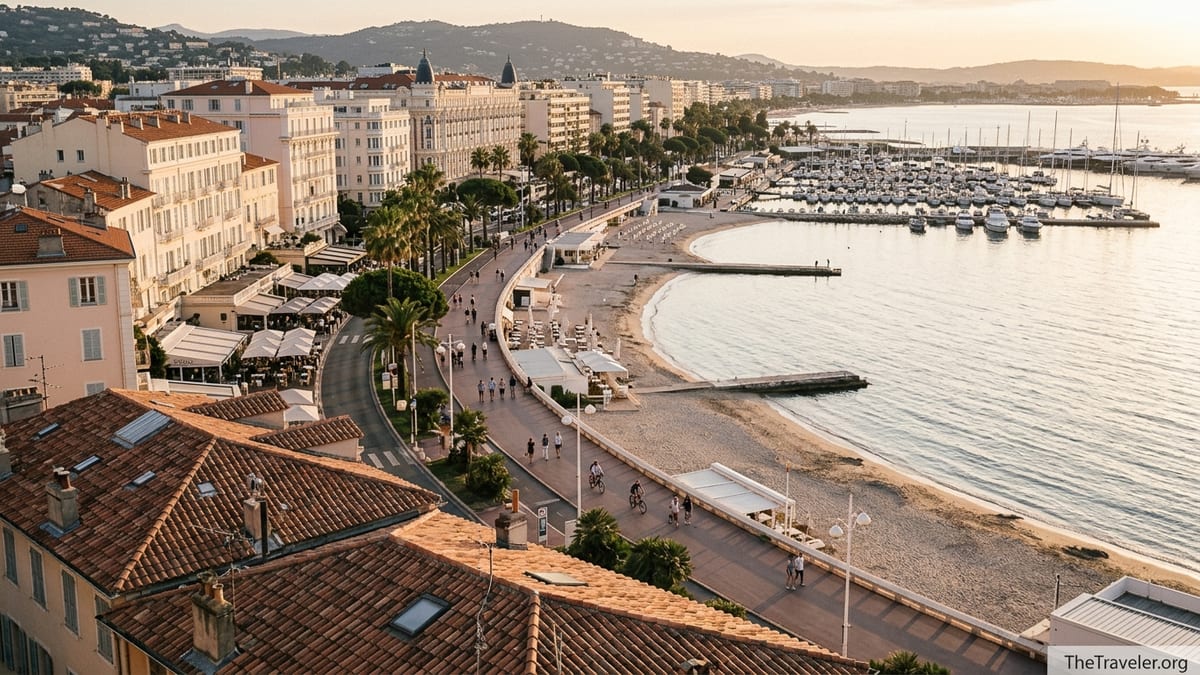
Even if you are avoiding the festival, you should still take time to walk the length of La Croisette, Cannes’ waterfront promenade edged with palm trees, gardens and grand hotels. In the early morning, joggers and dog walkers have the avenue largely to themselves, and you can watch the light change over the bay as fishing boats return to the Vieux Port. By late afternoon and evening, locals come out for a stroll before dinner, and the scene shifts to a rolling catwalk of street musicians, families, and visitors in resort wear.
For a different vantage point, head east to Port Canto, the second marina, where sleek yachts sit next to small sailing boats. The walk from the Palais des Festivals to Port Canto along the sea wall takes around 20 to 30 minutes at a gentle pace. It is one of the best free activities in town: there is no entry fee, just the occasional ice cream or espresso if you stop at a café. You can also rent bicycles or electric scooters through local operators to cover more ground along the shoreline and into the La Bocca district to the west.
Back near the Vieux Port, sit on the low wall by Quai Saint-Pierre or at a simple café terrace to people-watch. You will see everyone from shipyard workers and yacht crews in uniform to elderly residents walking home from the market, plus the inevitable flow of visitors posing for photos with the harbor as a backdrop. It is a reminder that Cannes is layered: a working port town, a playground for the wealthy and an ordinary French city, all occupying the same few streets.
Experience Everyday Cannes: Neighborhoods, Nightlife and Transport
Beyond the waterfront, the neighborhoods of Cannes reveal how the city functions when the cameras are not rolling. To the west, La Bocca has a more residential feel, with small squares, everyday supermarkets and a stretch of beach that draws more locals than tourists. To the north, near the main SNCF train station, streets are lined with kebab shops, Vietnamese restaurants and laundromats that cater to seasonal workers and students. These areas are not picture-perfect, but they are useful if you are staying longer and need practical services like affordable groceries, pharmacies or cafés where you can sit with a laptop for hours without pressure.
In the evenings, the most active nightlife district is often the Carré d’Or, a cluster of streets roughly behind the luxury hotels of La Croisette. Here you will find sleek cocktail bars, upbeat lounges and late-night spots that stay open well past midnight. Places come and go, but the general mood is energetic without being as intense as party resorts like Ibiza or Mykonos. Around Le Suquet, smaller wine bars and bistros offer a quieter alternative, especially outside peak summer. It is common to start with an aperitif on the seafront and then wander uphill for dinner in a more intimate setting.
Public transport is straightforward and can save a significant amount compared with taxis. Palm Bus operates local routes across Cannes and neighboring towns, with daytime, evening and summer services. As of recent information, a one-day pass allowing unlimited travel on the network costs just under 5 euros and can be purchased directly on board, making it a good option if you plan to combine beach time with a trip to Antibes or Grasse by bus. Regional trains also serve the main station, putting Nice, Monaco and smaller coastal towns within easy reach for day trips without needing a car.
The Takeaway
Spending time in Cannes outside the film festival is a chance to see how much more there is than one glamorous fortnight in May. The city’s everyday rhythm revolves around the slopes of Le Suquet, the chatter of Marché Forville, the ferry horns heading to the Lérins Islands and the long, slow parade along La Croisette at sunset. Prices can be high in front-row locations, but step a few streets inland or ride a bus a couple of stops and you will find café terraces and local bakeries that feel surprisingly down to earth.
By mixing a little of everything, you can build an itinerary that balances glamour and authenticity. Spend one day under a parasol at a beach club and the next hiking under pines on Sainte-Marguerite. Wander the Museum of World Explorations in the morning, then eat socca at the market and end your evening with a glass of rosé in a backstreet bar of Le Suquet. Cannes rewards curiosity: once you stop chasing red carpets and start following side streets, the city becomes a far richer destination.
FAQ
Q1. When is the best time to visit Cannes if I want to avoid the film festival crowds?
For fewer crowds and lower prices, consider late April, early June, September or early October, when the weather is still pleasant but major events are fewer.
Q2. Are Cannes’ beaches really all private, or can I enjoy the sea for free?
Not all beaches are private. Several public stretches such as Plage Macé and parts of Plage du Midi are free to access, and you only pay if you rent loungers.
Q3. How much should I budget for a day at a Cannes beach club?
In high season, plan on at least 60 euros per person for a basic sunbed on La Croisette, and more if you add lunch, drinks and front-row seats by the water.
Q4. Is it worth visiting the Lérins Islands on a short trip?
Yes. Even with only two or three days in Cannes, a half-day ferry trip to Sainte-Marguerite or Saint-Honorat offers quiet swimming coves and shady walks very different from the city.
Q5. Do I need a car to explore Cannes and nearby towns?
No car is necessary. Palm Bus routes and regional trains connect Cannes with Antibes, Nice, Grasse and other Riviera towns, making public transport an easy and economical choice.
Q6. Is Cannes affordable for budget-conscious travelers?
Cannes can be expensive, but you can control costs by using public beaches, shopping at Marché Forville, staying a few streets inland and relying on buses and trains instead of taxis.
Q7. What should I wear in Cannes outside the festival period?
Smart-casual clothing works almost everywhere. Light layers, comfortable shoes for cobbled streets and a slightly dressier outfit for dinners or beach clubs are usually sufficient.
Q8. Are museums and cultural sites open year-round?
Most museums, including the Museum of World Explorations, are open throughout the year, though hours can shorten in winter and on some public holidays, so checking schedules in advance is wise.
Q9. Is Cannes safe to walk around at night?
Central Cannes, La Croisette and Le Suquet are generally considered safe, with normal city precautions such as keeping an eye on valuables and avoiding very quiet, unlit areas late at night.
Q10. Can I swim in the sea outside the summer months?
Many locals swim from late May to October, and hardy swimmers go in earlier or later, though water temperatures are cooler and lifeguard services more limited outside peak summer.