


Online travel agencies can unlock impressive savings, but they also introduce a layer of complexity that many travelers underestimate. With eDreams ODIGEO and its brands such as eDreams, Opodo, GO Voyages and Travellink, small misread details often turn into expensive surprises: unexpected subscriptions, nonrefundable tickets, or customer service gaps when something goes wrong. This guide breaks down the most common mistakes travelers make when comparing eDreams ODIGEO services and shows, with real-world examples, how to avoid them.
Get the latest updates straight to your inbox!
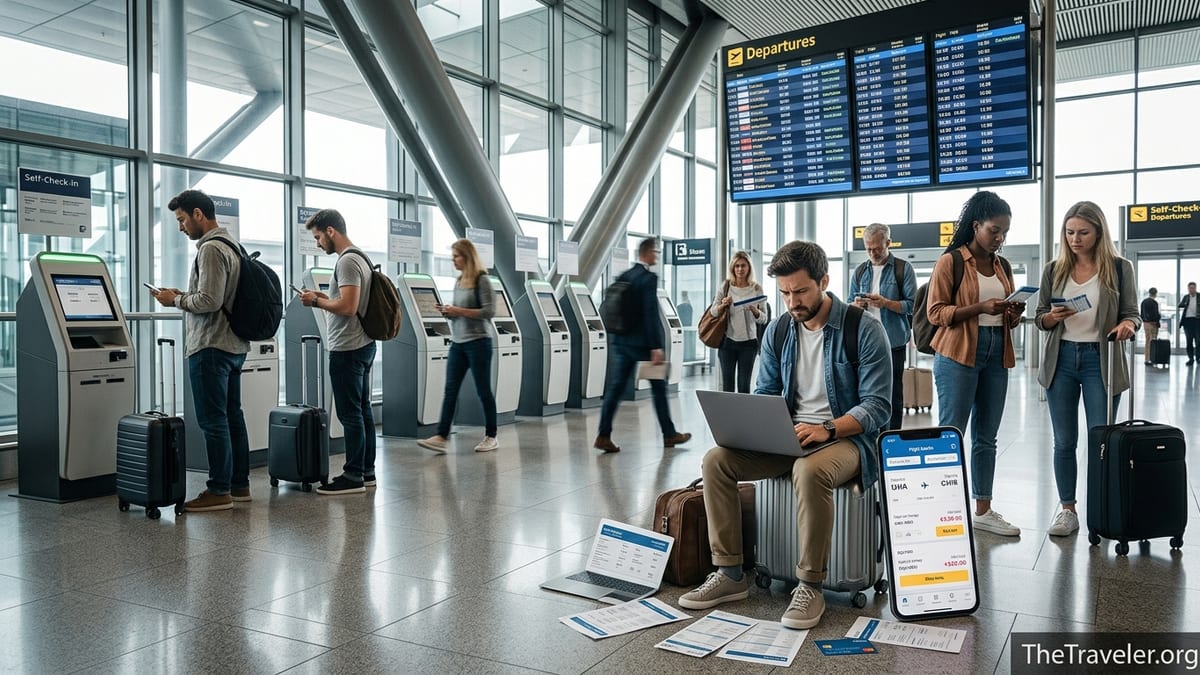
Misunderstanding What eDreams ODIGEO Actually Is
One of the biggest early mistakes is not realizing that eDreams ODIGEO is a group of brands, not just a single website. The company operates several online travel agencies, including eDreams, Opodo, GO Voyages, and Travellink, along with the metasearch engine Liligo. Each site may look slightly different, may be localized for different markets, and might run distinct promotions, but behind the scenes they share similar systems, policies, and a strong emphasis on subscription-based travel through eDreams Prime. Travelers sometimes assume that switching from, say, eDreams to Opodo will mean completely different rules, when in reality many of the same back-end practices apply.
This confusion shows up in real booking stories. A traveler in the United Kingdom might book a low-cost London to Barcelona flight through Opodo and another uses eDreams for the same airline and route on the same day. They later discover that both reservations are subject to similar change fees, support channels, and subscription options because both sites are part of the same group. Thinking that “another brand within the group” will automatically solve problems or yield more flexible terms is usually a mistake. The smarter move is to focus on fare conditions, service fees, and subscription language rather than just the name in the website header.
Another related misconception is believing eDreams ODIGEO functions like a metasearch comparison engine at all times. While Liligo behaves more like a pure price comparison tool, the core eDreams and Opodo brands act as full-service online travel agencies: they take your payment, issue tickets, and sit in the middle between you and the airline or hotel. That intermediary role matters enormously when something goes wrong, because the airline may direct you back to the agency instead of resolving the issue directly.
Travelers who do not recognize this dynamic often become frustrated when an airline such as Ryanair, Wizz Air, or Vueling refuses to modify a reservation purchased through eDreams and instead insists that any changes or refunds must be handled by the agency. Understanding that you are not booking directly with the carrier, even if the flight is on a familiar airline, is essential when comparing services and deciding where to click “buy.”
Focusing Only on the Headline Price and Ignoring the Real Total
Price-driven search is where eDreams ODIGEO often stands out, displaying very attractive fares that can undercut airline websites or rival agencies by 20 or 30 dollars on a typical European short-haul flight. The mistake many travelers make is stopping their comparison at this first number instead of following the full cost through to the final confirmation page. For instance, you might see a Paris to Rome fare for 59 dollars on eDreams compared to 85 dollars on the airline’s own site. By the payment step, that eDreams fare can climb once you add optional extras, service charges, or seat selection, especially if you choose payment methods that incur handling fees.
A common real-world pattern involves card processing and service fees that appear late in the checkout. Travelers report situations where a family booking from Madrid to Tenerife sees an increase of 40 to 60 dollars between the first search result and the final price once agency fees and payment method charges are applied. In many cases the final cost remains competitive, but sometimes the advantage over booking direct shrinks to a few dollars or even disappears. When people later say they were “overcharged,” often the charges were there on-screen but buried in dense fee breakdowns or shown only at the very last step.
Another pitfall is comparing only the base fare but not the ticket type. eDreams and its sister brands often sell heavily restricted “light” or “basic” fares that may not include checked baggage, free changes, or even standard customer support. For example, a traveler might pick a nonrefundable, no-change ticket from Lisbon to Frankfurt because it is 25 dollars cheaper, unaware that changing the dates will later cost more than buying a new ticket. The airline might offer a slightly more expensive “Flex” fare on its own site that allows same-day changes or free date modifications, and in disruption scenarios that flexibility can be more valuable than the small initial saving.
To compare services accurately, travelers need to look at the real total payable, including all taxes, fees, and surcharges, and line it up against the airline’s own final basket. Taking screenshots of each step, or writing down the price before and after payment method selection, can help catch situations where what looked like a bargain is merely a reshuffled set of costs.
Overlooking the Fine Print of eDreams Prime and Other Subscriptions
The eDreams Prime subscription program sits at the heart of many traveler complaints, industry investigations, and consumer organization warnings. The classic mistake is treating Prime like a simple, one-off discount instead of an ongoing, auto-renewing subscription with its own rules and renewal windows. Many travelers are enticed by a prominently displayed saving, such as seeing a return flight from Milan to Athens drop from 210 dollars to 170 dollars once the “Prime price” is selected, without realizing that they are also agreeing to a monthly or yearly membership fee after an introductory or trial period.
Consumer watchdogs in several European countries have flagged recurring patterns, from confusing sign-up flows to difficulties canceling. Travelers describe cases where a 30-day or 90-day free trial quietly flips into an annual charge of about 90 to 180 euros on their credit card if they do not cancel within a specific window. Some report that they only discovered the subscription months later while checking bank statements, sometimes after paying for multiple renewal cycles. Others describe trying to cancel via their account pages but being presented with multiple retention screens, small “cancel anyway” links, or unclear messaging around whether they had stopped auto-renewal or the subscription itself.
Real examples shared on consumer forums and complaint platforms show a remarkably consistent story. A traveler books a low-cost ticket from Berlin to Lisbon through eDreams, enjoys a discount labeled as a Prime benefit, and months later sees a Prime charge of around 90 euros. Another traveler in Italy signs up believing they have taken only a free trial, but is then billed for a year in advance. In some cases, travelers say that even after disabling auto-renewal or contacting customer support before renewal, they were charged again. Several national consumer groups have publicly criticized these practices and at least one competition authority has sanctioned aspects of how Prime has been marketed and renewed.
The key mistake from the traveler side is failing to treat Prime like any other financial contract. Before accepting a discounted “Prime” fare, it is crucial to read the specific terms of the trial, the length of the commitment, the exact renewal date, and the rules for cancellation. Travelers who book infrequently, say one or two trips a year, may find that a 90 euro annual subscription wipes out any short-term flight saving. Conversely, frequent flyers booking dozens of trips a year sometimes report genuine value from Prime, but even then they keep close track of renewal dates and document any cancellation requests in writing.
Assuming Customer Service Will Match a Full-Service Travel Agency
Another common misconception is assuming that a low headline price comes with high-touch, round-the-clock customer service. eDreams ODIGEO’s brands are primarily optimized for scale and automation. When things run smoothly, this model works: confirmation emails arrive, tickets are issued, and travelers check in directly with the airline. But when something goes wrong, such as a schedule change, airline cancellation, or a typo in a passenger’s name, many travelers discover that support is limited or slower than they expected.
Typical complaints include long call waiting times, confusing chat bots, and difficulty reaching a human agent who can actually modify a booking. Several travelers who booked multi-leg trips, such as a New York to Istanbul route with a connection in Rome, describe needing urgent help when the airline adjusted departure times. Instead of quick assistance, they spent hours on the phone, only to be told to contact the airline, which then sent them back to the agency. In the meantime, cheaper rebooking options vanished, leaving them to buy entirely new tickets.
Customer service strain is particularly visible around refunds and involuntary changes. There are many reports of travelers waiting months for refunds when airlines cancel routes, even after carriers publicly state that the money has been sent back to the agency. In one often cited pattern, a low-cost carrier cancels a Barcelona to Marrakesh flight and rapidly refunds the agency. The traveler, who booked via eDreams, has to chase for weeks or months to receive that money, sometimes lodging complaints with banks or consumer bodies. The core issue is that the agency acts as a middle layer, and its internal processes and support staffing determine how quickly changes are passed through.
Travelers make things worse for themselves when they assume that “I can always call them and fix it,” without considering time zone differences or peak call volumes. For a 40 dollar saving on a long-haul ticket, you might be committing to a support experience where resolving a relatively simple name spelling error or date change takes days rather than minutes. When comparing eDreams ODIGEO services with airlines or rival agencies, factor in not just price but also the likely need for post-booking support and your tolerance for slower or more scripted assistance.
Not Checking Directly With the Airline or Hotel After Booking
Many experienced travelers know that when you book through any online travel agency, it is wise to verify the booking directly with the airline or hotel. With eDreams ODIGEO brands, failing to take this step can amplify problems. There are real cases of travelers who booked flights, received an agency confirmation email, but later discovered that the airline never issued a ticket number or that a hotel reservation was not properly transmitted to the property.
Consider a traveler who books a multi-city itinerary from Chicago to Madrid and then onward to Marrakech. The eDreams confirmation looks fine, but they never log into the airline’s app to verify. Weeks later, they learn that a segment has been changed or canceled, but the email alert from the agency went to spam or a secondary address. By the time they notice, the best rebooking options are gone. In contrast, travelers who immediately add the reservation to the airline’s app often receive real-time push notifications of changes and can sometimes self-service modifications directly with the carrier, depending on the fare rules.
Something similar can happen with hotel bookings. A guest books a budget hotel in Lisbon through an eDreams ODIGEO brand, arrives late at night, and discovers that the property has no record of the reservation. In some situations this is due to technical glitches between the agency and wholesaler systems, or the hotel has not updated availability. If the traveler had called or emailed the hotel a few days before arrival to confirm, they might have discovered the issue early and requested written confirmation or an alternative room.
The practical habit here is simple: as soon as you receive your confirmation from eDreams, Opodo, or another brand in the group, immediately cross-check the details on the airline or hotel website or via their mobile app. Confirm passenger names, dates, routes, and ticket numbers. If anything does not match, escalate it immediately while there is still time to fix it. This step adds a few minutes to your planning but can save hours of stress at the airport check-in desk or hotel front desk.
Ignoring Legal, Ethical, and Regulatory Context
Most travelers focus narrowly on price and convenience, but it is increasingly risky to ignore the broader legal and ethical context surrounding major travel platforms. eDreams ODIGEO has attracted attention not only from consumer regulators but also from human rights organizations and NGOs. For instance, early in 2026 a group of organizations in Spain filed a legal complaint alleging that eDreams benefited from listings in sensitive occupied territories, prompting the company to stress that it had already removed those accommodations and that its policy is not to offer such stays. Regardless of the outcome, the episode highlights that large intermediaries can get pulled into complex geopolitical and human rights issues.
From a traveler standpoint, the mistake is assuming that “if it is on a big site, it must be fine.” In reality, the inventory on large platforms is often aggregated from multiple wholesalers and partner systems, and vetting can lag behind. While eDreams ODIGEO has corporate policies and a public code of conduct, enforcement is imperfect, and some problematic listings or routes may only disappear after external pressure. Travelers who care about the ethical aspects of their trips should not rely blindly on any single platform, whether it is eDreams, another OTA, or a hotel aggregator.
Regulatory actions also affect practical travel planning. Consumer authorities have investigated and in some cases fined companies over dark patterns, such as pre-ticked boxes, misleading countdown timers, or poor transparency around subscriptions like Prime. Even if these practices are gradually adjusted under regulatory pressure, older habits and interface designs may persist in parts of the booking flow. This means the onus remains on travelers to read screens carefully and question anything that feels rushed or confusing.
For example, if you see a promotion that claims a discount is “only available for the next 10 minutes” or that “five other people are looking at this fare right now,” treat it with skepticism and cross-check the same itinerary on the airline site or another OTA. Many travelers feel pressured by such nudges and later regret not taking a few extra minutes to compare or to read the subscription terms associated with the discount.
Overcomplicating Itineraries That Are Better Booked Direct
eDreams ODIGEO’s tools can stitch together complex routes, mixing low-cost carriers with full-service airlines and creating tight connections. The mistake is assuming that all such combinations are protected if anything goes wrong. For instance, a traveler might book a multi-leg itinerary from Los Angeles to Bangkok that combines a low-cost hop to a European hub with a long-haul flight on a different airline, ticketed under separate records but presented as a single plan on the agency’s site. If the first leg is delayed, the second airline may treat the traveler as a no-show and require a new ticket, because the flights are not on a single protected ticket.
There are many accounts of travelers stranded in hub airports because one low-cost carrier flight, such as a connection from Barcelona to London, arrived late and the onward long-haul carrier would not rebook them without fresh payment. In such cases, eDreams or Opodo may offer limited assistance or charge substantial fees to arrange alternatives. These combinations can look attractive at the search stage, especially when they seem hundreds of dollars cheaper than a traditional through-ticket, but the risk sits squarely on the traveler.
Similarly, booking the cheapest nonrefundable fare with strict conditions through an intermediary is a double constraint. For example, a traveler might buy a deeply discounted, nonchangeable ticket from Rome to New York via eDreams, then later need to adjust the date for work reasons. The airline might normally allow changes with a fee if the ticket were purchased directly, but because it was issued under an agency fare with additional restrictions, both the airline and agency fees stack up, leaving the traveler paying almost the price of a new ticket.
A good rule of thumb is to use online travel agencies for relatively simple, point-to-point journeys or for hotel comparisons where cancellation policies are flexible and clearly stated. For complex long-haul itineraries, multi-stop trips, or journeys involving tight self-transfers between low-cost carriers, it is often safer to book directly with the airline or work with a specialized travel advisor who can ensure that all segments are on a single, protected ticket.
The Takeaway
Comparing eDreams ODIGEO services with airline and hotel websites or rival agencies is not just about finding the lowest visible fare. Travelers who fixate on the first price often miss the fine print around subscriptions, ticket restrictions, support limitations, and broader regulatory context. Real-world complaints show consistent patterns: unexpected eDreams Prime renewals, difficulty canceling, slow or limited customer service in disruption scenarios, and confusion over who is responsible when flights change or hotels do not have a reservation.
Yet millions of people successfully use eDreams, Opodo, and the group’s other brands every year, often saving significant amounts on straightforward routes. The difference lies in preparation and attention to detail. Travelers who read each step carefully, cross-check reservations with airlines and hotels, and treat subscription offers like serious financial commitments tend to avoid the worst pitfalls. By recognizing where these platforms add value and where direct booking or alternative agencies might be safer, you can make informed decisions rather than reactive complaints.
Before you click “confirm” on any eDreams ODIGEO site, pause and ask three questions: Do I understand the real total cost and fare conditions? Am I knowingly accepting any subscription or recurring fee? And am I comfortable with the level of support I will receive if plans change? If you can answer yes to all three, then the service may be suitable for your trip. If not, take a step back, compare options, and choose the path that matches your risk tolerance and travel style.
FAQ
Q1. Is eDreams ODIGEO a legitimate travel company or a scam? eDreams ODIGEO is a large, publicly listed travel group that operates several well-known online travel brands. It is not a fake company, but its practices around subscriptions, fees, and customer service have drawn criticism and regulatory scrutiny, which means travelers must read terms carefully and decide whether the tradeoff between price and service is acceptable for their needs.
Q2. Why do I see a lower “Prime” price on eDreams compared with the airline? The lower Prime price usually reflects a discount tied to the eDreams Prime subscription program. In exchange for that discount, you agree to a subscription that auto-renews after any trial period and charges a recurring fee. If you do not want the subscription, you should compare the non-Prime price with the airline’s own final fare instead.
Q3. How can I avoid being charged unexpectedly for eDreams Prime? To avoid surprise charges, opt out of any Prime offer during the booking flow, read the trial and renewal terms before accepting a discount, and if you do join Prime, immediately note the renewal date on your calendar. If you decide the program is not for you, cancel within the allowed window and keep written proof, such as confirmation emails or screenshots of the cancellation.
Q4. Are flights booked through eDreams or Opodo protected the same way as booking direct? The level of protection depends on the ticket structure and fare rules, not simply the brand. If all segments are on a single ticket issued by one airline, you typically have standard protection if one leg is canceled. If your itinerary combines separate tickets on different carriers, especially low-cost airlines, a missed connection may not be protected and you could need to buy a new ticket, regardless of whether the booking went through eDreams or directly.
Q5. What should I do immediately after booking with an eDreams ODIGEO site? As soon as you receive your confirmation, log into the airline’s or hotel’s own website or app and verify that your booking appears correctly, including passenger names, dates, and ticket or reservation numbers. If anything is missing or wrong, contact the agency and the provider immediately while there is still time to correct the issue or rebook at reasonable prices.
Q6. Why are refunds through eDreams sometimes slow? Refund delays often stem from the layered relationship between travelers, the agency, and the airline or hotel. Even when a carrier processes a refund quickly, internal processing and verification within the agency can take additional time. High volumes of disruption, limited support staff, and manual checks can all contribute to longer waits than travelers expect.
Q7. Is eDreams Prime worth it for frequent travelers? For people who book flights and hotels many times a year and always find genuine Prime discounts that exceed the subscription cost, the program can provide value. However, the benefits depend heavily on your route patterns, travel frequency, and flexibility. It is important to track your actual savings versus the subscription fee and to stay on top of renewal dates to avoid paying for a year you will not use.
Q8. Can I handle changes or cancellations directly with the airline if I booked through eDreams? In some cases, especially with full-service carriers, airlines will allow you to manage changes directly, but many will redirect you back to the agency that issued the ticket. Low-cost carriers are more likely to insist that all modifications go through the agency. You should check your confirmation documents for instructions and be prepared that dealing with disruptions may require going through eDreams support rather than the airline.
Q9. How can I compare eDreams ODIGEO services fairly with other options? To make a fair comparison, look beyond the first price shown. Follow each option through to the final payment screen, note any service or payment fees, check whether a subscription is involved, and compare the fare type and flexibility against booking direct with the airline or hotel. Also consider customer service reputation and your own willingness to manage potential complications.
Q10. What is the safest way to use eDreams or its sister brands? The safest approach is to use these platforms for simple, point-to-point itineraries where the price difference is clear and the fare conditions are acceptable, to avoid accepting subscriptions you do not fully understand, to verify all bookings directly with airlines and hotels, and to keep documentation of every step. This way you can benefit from competitive pricing while reducing the risk of unpleasant surprises.