


More news on this day
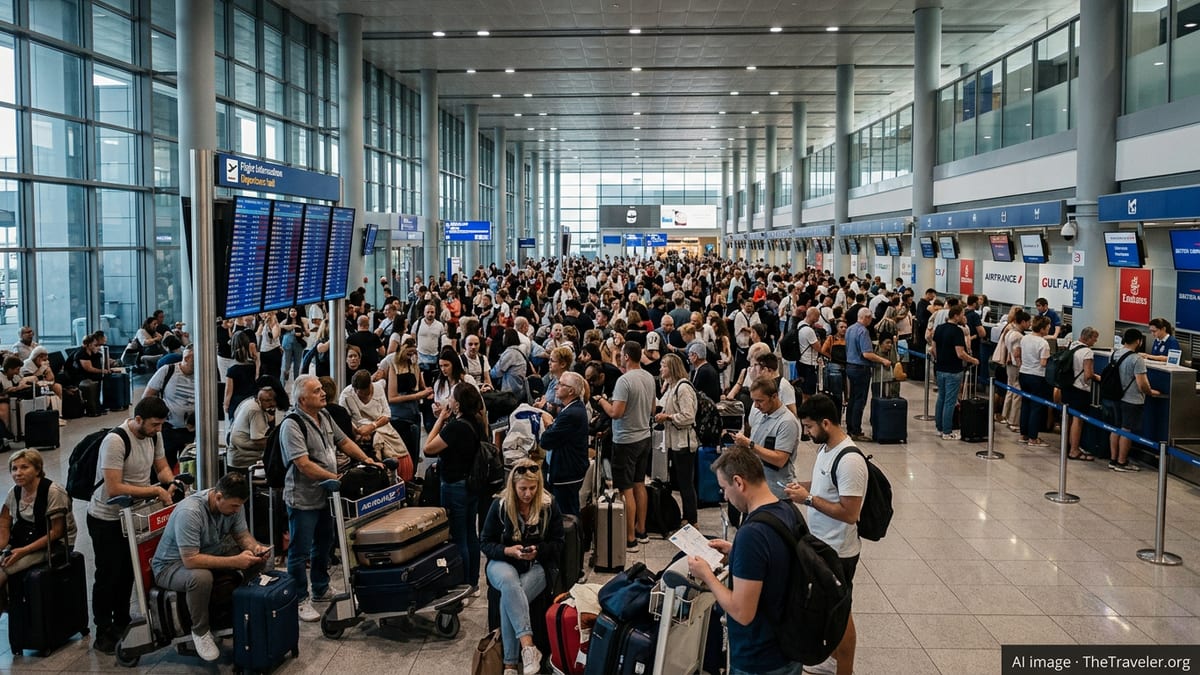
Travelers passing through Copenhagen Airport on June 23 and June 24 faced mounting disruption as nine flights operated by Norwegian Air Sweden, KLM, SAS, CityJet, and Scandinavian Airlines Ireland were canceled, with dozens more delayed, affecting a web of routes spanning Denmark, the Netherlands, France, Canada, the United States, and beyond.
Get the latest news straight to your inbox!
Disruptions Concentrated Around Major European Hubs
Publicly available flight disruption trackers and recent industry coverage indicate that the latest wave of cancellations at Copenhagen is closely tied to some of Europe’s busiest hubs. Routes linking Denmark with Amsterdam, Paris, and key Scandinavian cities have been among the most affected, amplifying the impact of each canceled or heavily delayed departure.
Norwegian Air Sweden and KLM have been particularly visible in the disruption statistics, with services between Copenhagen and Amsterdam and onward European connections facing extended delays. Scandinavian Airlines, including its Irish-registered subsidiary often referred to as Scandinavian Airlines Ireland, has also seen schedule disruption on core regional and continental services that feed into its Copenhagen hub.
CityJet, which provides capacity on behalf of larger network airlines at Copenhagen, has featured among the carriers canceling services, reducing resilience on high-frequency routes. As these operators collectively withdrew nine flights from the schedule, knock-on effects spread across the day’s operations, putting pressure on remaining departures and arrivals.
Travel-focused data analyses show that Amsterdam Schiphol and Paris Charles de Gaulle, already handling large volumes of transfer passengers, have simultaneously experienced their own delays and cancellations. That combination has made Copenhagen-related disruption particularly difficult to contain, with late-arriving aircraft and crews compounding local operational challenges.
Transatlantic Passengers to Canada and the US Caught in the Ripple Effect
The cancellations at Copenhagen have not been confined to short-haul European flying. Long-haul travelers connecting from Scandinavia and northern Europe to North America have also been affected, especially those booked on itineraries involving SAS and partner airlines across the Atlantic.
Recent travel reports describe cases in which passengers heading to or from Canada and the United States saw their journeys disrupted when feeder flights into Copenhagen were canceled or significantly delayed. With Copenhagen serving as a major connecting hub for Scandinavian Airlines’ transatlantic network, any disturbance in regional operations has the potential to cascade onto flights bound for major North American gateways.
Disruption has been particularly challenging for travelers on tight connections or with complex multi-leg itineraries that link Copenhagen to US and Canadian cities via hubs such as Amsterdam and Paris. When a short-haul segment operated by carriers like Norwegian Air Sweden, KLM, or SAS is removed from the schedule, passengers can miss onward long-haul flights even if those transatlantic sectors remain technically operational.
For some travelers, rebooking has required complete rerouting via alternative European hubs, lengthening travel times and, in certain cases, forcing overnight stays. Available accounts suggest that this has been especially disruptive for passengers with time-sensitive plans in North America, including prebooked domestic flights or rail connections beyond their arrival airports.
Knock-on Delays Across Denmark, France, the Netherlands, and Beyond
While nine flights were formally canceled in the latest reporting window, the broader picture at Copenhagen Airport has been dominated by extensive delays. Data compiled from recent operational summaries highlight that more than one hundred flights experienced late departures or arrivals over a single day, affecting a wide range of European destinations.
Flights between Copenhagen and other Danish airports have seen delays that ripple into regional networks, affecting communities that rely on timely links to the capital. Services to France and the Netherlands, particularly to Paris and Amsterdam, have also been singled out in recent coverage as experiencing recurrent hold-ups, largely due to congestion and tight turnaround times at multiple hubs.
These disruptions do not stop at Europe’s borders. With Copenhagen serving as a gateway and transfer point for journeys stretching to Asia and North America, even modest delays can reverberate along longer itineraries. Travelers connecting from Denmark and neighboring countries to onward flights to Canada and the United States have reported missed connections and extended waits as airlines reshuffle aircraft and passengers.
Analysts tracking punctuality at Copenhagen point out that the airport has recently handled record passenger volumes, which can magnify the effect of relatively small schedule shocks. When several carriers cancel or delay flights simultaneously, queues at check-in, security, and rebooking desks tend to lengthen quickly, putting additional strain on passengers and ground operations.
Operational and Network Factors Behind the Cancellations
According to recent aviation coverage and publicly available operational data, the disruptions involving Norwegian Air Sweden, KLM, SAS, CityJet, and Scandinavian Airlines Ireland appear to stem from a combination of factors rather than a single incident. These include weather-related constraints along certain routes, tight aircraft rotations, crew availability issues, and congestion at major European hubs.
CityJet’s role as a wet-lease operator providing flights on behalf of larger airlines means that any operational challenge it faces can immediately translate into a canceled or delayed flight bearing another carrier’s code. Similarly, Scandinavian Airlines Ireland, which operates aircraft within the broader SAS network, can influence resilience on routes where spare capacity is limited.
In parallel, data from wider European operations suggest that carriers such as KLM and Norwegian Air Sweden have been dealing with a higher-than-usual volume of delays across their networks in recent weeks. When an aircraft arrives late into Copenhagen from another congested hub, subsequent rotations from Denmark are more vulnerable to cancellation if turnaround times become unmanageable.
Industry observers also note that the high demand associated with early summer travel across Europe leaves airlines with less flexibility. With many flights operating close to full capacity, there are fewer open seats onto which disrupted passengers can be moved, turning each cancellation into a larger logistical challenge for both airlines and travelers.
What Affected Travelers Can Do Next
For passengers caught up in the latest wave of cancellations and delays at Copenhagen, publicly available guidance from aviation regulators and consumer organizations stresses the importance of documenting each stage of the disruption. This includes retaining boarding passes, written notifications, and receipts for any additional expenses that might later form part of a compensation or reimbursement claim.
In the European Union, air travel rights regulations generally provide that passengers whose flights are canceled at short notice may be entitled to assistance, rerouting, or financial compensation, depending on the cause and length of the disruption and the distance of the journey. Travelers are encouraged to review the specific conditions attached to their tickets and the nature of the disruption when assessing possible claims.
Experts in passenger rights also recommend that affected travelers use airline apps and online self-service tools where available, as these often offer quicker rebooking options than phone lines or airport desks during widespread disruption. At a busy hub such as Copenhagen, digital channels can sometimes secure scarce alternative seats before they are allocated to others in line.
With early summer traffic building and the possibility of further operational challenges across the European network, travelers planning to pass through Copenhagen Airport in the coming days are being advised in public guidance to allow extra time, monitor flight status closely, and have contingency plans for missed connections or overnight stays if schedules change at short notice.