


More news on this day
Travelers and residents are examining a new public statement from county officials following last week’s freight train derailment, which disrupted regional rail movements and raised renewed questions about rail safety and emergency preparedness.
Get the latest news straight to your inbox!
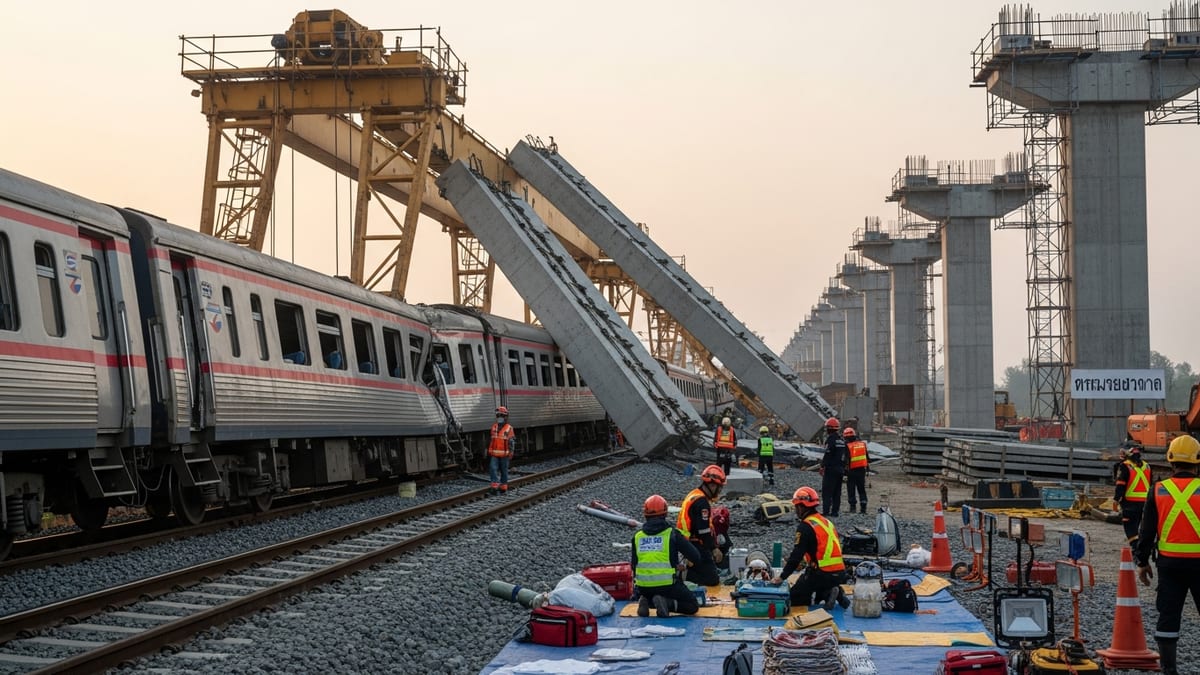
County outlines chronology of the derailment and response
The county’s statement reconstructs the course of events from the initial reports of rail cars leaving the tracks to the reopening of nearby roads and the gradual restoration of rail service. Publicly available information indicates that several freight cars derailed near a key junction used by both passenger and freight operators, briefly halting movements and prompting detours for intercity and commuter trains.
According to published coverage, emergency crews were dispatched within minutes, with local fire, police and hazardous materials teams coordinating at a unified command post. The statement notes that first responders focused on securing the site, assessing potential spills and checking for structural damage to the rail bed, bridges and adjacent roadways.
County officials describe how rail traffic was initially suspended across the affected segment while inspectors evaluated track conditions and signaling equipment. Only limited movements were permitted once initial safety checks were complete, with freight trains operating at restricted speeds and passenger services either turned back, rerouted or replaced with bus connections.
The statement emphasizes that no serious injuries were reported and that air and water quality monitoring began early in the response. Local agencies indicate that test results guided decisions on whether nearby residents could remain in their homes and when it was appropriate to lift precautionary restrictions on travel around the derailment zone.
Safety findings and what is known about the cause
While the full federal investigation is expected to take months, the county’s update summarizes preliminary findings shared through public channels. Based on initial assessments from rail safety specialists, current information points toward a localized track or equipment issue, although the exact failure point has not yet been publicly identified.
The statement stresses that there is currently no indication of excessive speed or intentional damage, echoing similar language found in recent railway operator briefings in other derailment cases. Inspectors have been documented examining wheel sets, couplers and sections of rail for signs of fatigue or fracture, and the county notes that any components removed from the site will be retained as part of the ongoing investigation.
Publicly available information also indicates that federal transportation investigators have requested event recorder data, train handling logs and maintenance records. The county acknowledges that these technical reviews are outside its direct authority but states that it will track the process closely and share significant developments with the public once released through official channels.
In the meantime, the statement reiterates that additional track inspections are being conducted along neighboring segments used by the same freight operator, mirroring heightened safety steps seen after other recent derailments across North America. The county characterizes these actions as precautionary and aimed at reassuring travelers who depend on the corridor.
Travel disruptions, detours and what passengers can expect
The derailment’s immediate impact was felt by rail passengers and motorists, as both mainline train movements and nearby road traffic were rerouted around the damaged area. The county statement details how passenger services were curtailed, with some intercity trains canceled outright and others terminated short of their usual destinations. Replacement buses were organized on short notice to bridge the gap between operating sections of the line.
For drivers, the incident led to temporary closures of underpasses and level crossings while crews worked to remove derailed cars and inspect bridge abutments. Detour routes added time to local trips, and the county notes that congestion was reported on secondary roads that usually carry far less traffic.
As of the latest update, the county reports that the track has been cleared of debris and that permanent repairs to ballast, ties and rails are advancing. Freight movements have largely resumed, although some trains are operating on adjusted schedules to accommodate continued work windows. Passenger operators have begun to restore more normal timetables, but riders are being advised through public channels to check for residual delays, altered stopping patterns and potential equipment substitutions.
The statement cautions that work on signaling systems and ongoing inspections may continue to affect service reliability in the short term. Travelers passing through the region over the coming days may encounter slower than usual journeys or last minute platform changes as rail dispatchers balance safety margins with demand.
Environmental monitoring and community concerns
Beyond the immediate transport disruptions, residents have closely followed information about possible environmental effects, particularly in light of high profile derailments elsewhere in recent years. The county’s statement devotes significant attention to sampling efforts around the site, including soil checks near the tracks and water testing where drainage could carry runoff.
According to the county’s summary, initial readings have not identified levels of pollutants that would require long term evacuations, though certain areas were restricted during cleanup as a precaution. The county explains that monitoring will continue over the coming weeks and that results are being shared with state environmental agencies and made accessible through public channels.
The statement acknowledges public anxiety about freight trains carrying hazardous materials, referencing national discussions that followed previous derailments in other states. Local leaders indicate that they are reviewing emergency notification procedures, including the timing and reach of alerts that inform residents when to avoid affected corridors or limit outdoor activity.
Community meetings are planned to allow residents to ask questions about the incident, the county’s role and how lessons from this derailment may shape future planning decisions, such as land use near busy freight lines and evacuation routing for neighborhoods located close to the tracks.
Next steps on rail safety and infrastructure planning
Looking beyond the immediate incident, the county uses the statement to situate the derailment within a broader review of rail safety and critical infrastructure. Officials describe an intention to work with state transportation departments, passenger rail providers and freight operators to identify potential bottlenecks and vulnerabilities on the corridor.
The statement references national rail safety guidance and recent federal discussions about stronger inspection regimes, more resilient track standards and technology to monitor rail conditions in real time. County transportation planners are evaluating how these evolving standards intersect with local priorities, including maintaining reliable mobility for commuters and long distance travelers.
Publicly available information suggests that the county is also examining grade crossings, bridge clearances and the condition of access roads used by emergency vehicles. Updating this infrastructure can support faster response times when incidents occur and offer more flexibility for detour routes when mainlines are disrupted.
For travelers, the county emphasizes that rail remains a central part of the regional transportation network, even as this derailment highlights the consequences when something goes wrong. The statement indicates that further updates will be issued as investigations progress and as any long term safety improvements that affect travel patterns are finalized.