


More news on this day
Residential cruising is taking another step into the mainstream as Villa Vie Residences unveils plans for Legacy, a second ship in its fleet that will offer purchasable cabins designed for long-term and even full-time life at sea.
Get the latest news straight to your inbox!
Second Residential Ship Joins a Growing Fleet
According to recent company announcements and trade coverage, Villa Vie Residences has confirmed that Legacy will join its existing residential ship, Villa Vie Odyssey, creating a two-vessel fleet dedicated to people who want to live at sea rather than book conventional holidays. Legacy is expected to enter service in the late 2020s, with the company outlining a global, continuously sailing itinerary built around extended port stays and repeat world circumnavigations.
Villa Vie Odyssey, which launched its multi-year voyage earlier in the decade, has been marketed as a way for residents to purchase cabins and treat the ship as a primary home or long-stay base. Reports indicate that most of Odyssey’s inventory has already been sold, with a high proportion of residents planning to spend the majority of the year on board. The decision to introduce Legacy reflects demand from would-be residents who were unable to secure a cabin on the first ship.
Public materials describe Legacy as a step up in size and specification, with more spacious residences, additional shared lounges and expanded wellness facilities. While full technical details have not yet been released, the ship is being framed as a purpose-built environment for “global living at sea,” with services, amenities and programming aimed at residents rather than short-stay vacationers.
The addition of a second ship places Villa Vie among a small group of operators worldwide offering cruise-style, fully residential vessels where cabins or apartments can be purchased, occupied long term and, in many cases, resold on a secondary market.
What It Means to Buy a Cabin and Live on Board
Residential cruise concepts differ from standard cruising in a crucial way: cabins are treated more like condominiums than hotel rooms. On ships such as Villa Vie Odyssey and the planned Legacy, buyers typically acquire long-term rights to a specific residence and pay ongoing monthly fees that cover crew, food, fuel, port charges and maintenance. Publicly available information shows entry-level ownership prices for comparable residential ships starting in the low six-figure range, with larger suites and multi-bedroom units costing substantially more.
For many residents, the model is positioned as an alternative to traditional retirement communities or land-based second homes. Instead of one fixed address, the “neighborhood” moves around the world, with itineraries designed to visit dozens of countries over multi-year cycles. Reports on existing residential ships indicate that some owners live on board full time, while others split their year between the vessel and homes ashore.
Monthly service charges can rival or exceed the costs of an upscale urban apartment, but they typically include accommodation, most dining, housekeeping, entertainment and transportation between continents. Advocates of the lifestyle argue that when all expenses are considered, living at sea can be comparable to maintaining a land-based home and traveling frequently, while also eliminating the logistics of flights, hotels and repeated packing.
Critics point to the lack of permanent local ties, questions about access to healthcare and the environmental footprint of long-duration cruising. Operators counter with medical facilities on board, partnerships with clinics in major ports and efforts to modernize ships with more efficient engines and waste systems. The overall model continues to evolve as new ships and concepts enter the market.
Villa Vie’s Expansion Signals Rising Demand
The decision to add Legacy comes against the backdrop of increasingly crowded interest in residential cruising. Coverage from business and travel outlets notes that over the past few years, projects such as Avora’s Lumina conversion and other planned residential vessels have aimed to capture a slice of demand from retirees, digital nomads and affluent travelers seeking long-term global mobility.
Villa Vie Odyssey has become one of the most visible examples of the trend. The ship operates on a multi-year itinerary visiting more than 100 countries, and reports indicate that a majority of cabins have been sold to residents who sign on for the full world-circling program rather than individual segments. The company has also promoted flexible ownership options, including packages designed for people who want permanent rights to a residence and others for those who plan to share a cabin with family or friends.
Legacy is being presented as the next stage of that strategy. Public descriptions highlight more diverse cabin types, including smaller studios and window cabins, alongside larger suites aimed at owners who want office space or room to host visiting relatives. By widening the range of price points and layouts, Villa Vie appears to be targeting a broader market than the traditional ultra-luxury residential yacht segment.
Industry observers note that a second ship also gives Villa Vie more flexibility in itinerary planning. Two vessels could allow for staggered routes, with one ship focusing on slower, extended stays in certain regions while the other follows a more traditional world cruise pattern, offering prospective residents a choice between different styles of long-term travel.
How Residential Cruising Fits Into the Broader Market
The rise of ships where passengers can buy cabins and live on board is part of a wider shift in how people think about cruising. Alongside established ultra-luxury residential vessels that operate as floating condominium communities, newer players are experimenting with hybrid models that blend long-term stays, membership-based access and traditional cruising elements.
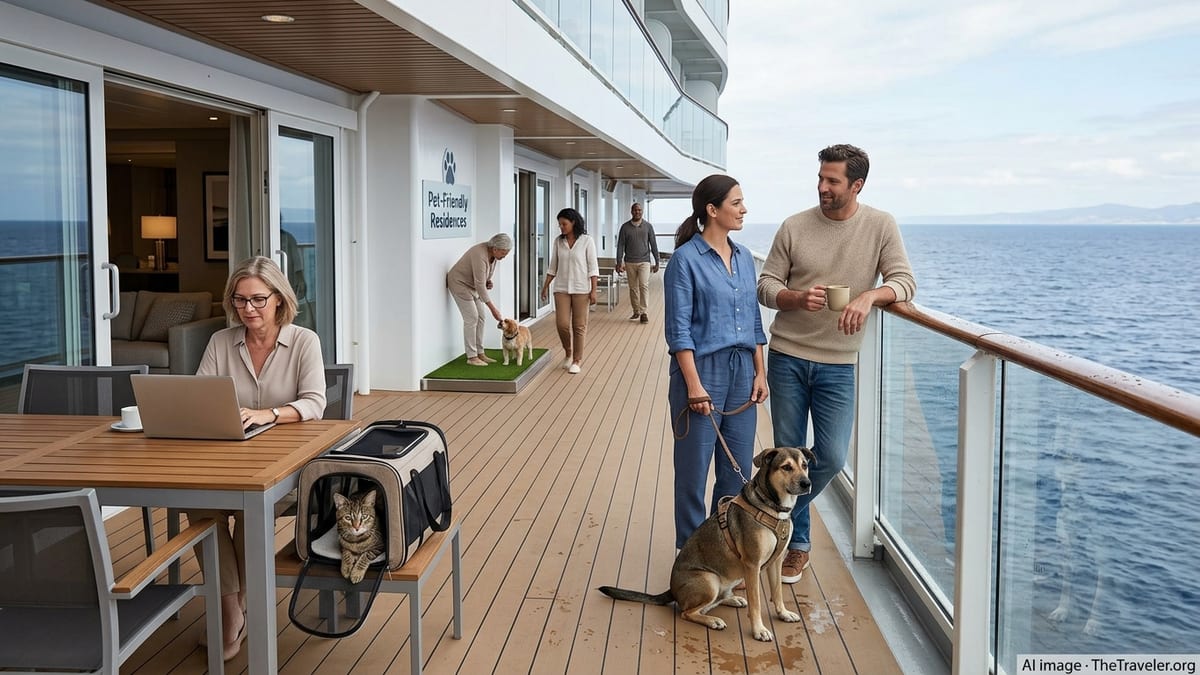
Travel industry coverage points out that residential cruising remains a niche compared with the mass-market vacation cruise business, but it is expanding. More operators are pitching products specifically to remote workers, younger professionals and multi-generational families, rather than focusing solely on retirees. Concepts such as continuous high-speed connectivity, dedicated co-working spaces and pet-friendly policies are increasingly highlighted as selling points.
At the same time, the investment required to build or convert a ship for residential use is substantial. Projects must secure enough committed buyers years in advance to justify construction, and fluctuations in global travel demand can affect timelines. In this context, Villa Vie’s decision to proceed with a second ship is being viewed as a sign that early sales and occupancy on Odyssey have met or exceeded internal expectations.
Analysts also suggest that legacy cruise brands are watching the space closely, experimenting with longer world cruises and extended voyages that appeal to travelers who might otherwise consider living on a residential ship. The lines between traditional and residential cruising are likely to blur further as more products target guests interested in months or years at sea rather than a single holiday.
Who Is Choosing to Live at Sea Full Time
Profiles of residents on existing ships suggest a diverse demographic mix. Many are early or traditional retirees who sold homes or downsized to fund life at sea. Others are remote-working professionals who treat the ship as a floating base while maintaining careers that rely on strong internet connectivity. Some residents are couples or families who move between shipboard life and properties on land, using their cabin as a long-term second home.
For these buyers, the appeal often lies in routine as much as in adventure. The ship offers a familiar community, daily housekeeping and dining, and a built-in social network that remains constant even as the ports change. People who enjoy cruising and are comfortable with compact living spaces can find the arrangement especially attractive.
However, specialists in retirement planning and lifestyle design advise prospective residents to consider practicalities carefully. Factors such as access to healthcare, tax residency, insurance, legal domicile and long-term financial sustainability all require detailed planning. Additionally, those looking at ownership on a ship like Legacy must evaluate contract terms, resale rules and governance structures in much the same way they would research a condominium association or co-op board.
As Villa Vie moves ahead with its second ship, interest in residential ocean living appears set to grow. Whether Legacy becomes a model for broader adoption or remains part of a relatively exclusive niche, the decision to expand signals that, for a small but committed group of travelers, the idea of buying a cabin and calling a cruise ship home is no longer a speculative dream but a tangible lifestyle choice.