


More news on this day
The fjord-side village of Eidfjord in western Norway is advancing a key infrastructure upgrade, extending its main cruise quay to enable future shore power connections as the country tightens environmental requirements in its famed fjord regions.
Get the latest news straight to your inbox!
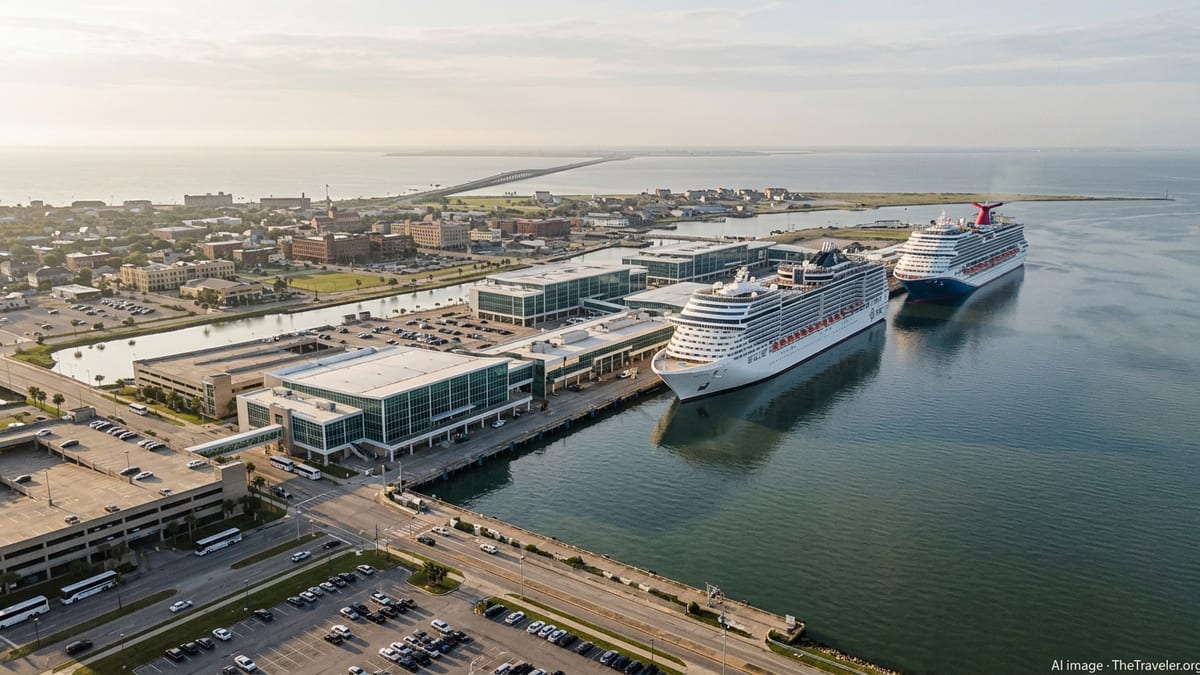
Quay extension unlocks space for shore power rollout
Publicly available planning documents for Eidfjord show that the existing cruise quay is being lengthened by around 40 meters, a change designed to improve berthing flexibility for large vessels and create room for new technical installations associated with shore power. Recent port fact sheets for the Hardangerfjord cruise region depict the colored section of the current quay and an uncolored extension segment scheduled for completion around the 2026 season, underscoring how closely the civil works are tied to electrification plans.
Regulatory notices from Vestland county indicate that permission for in-sea construction was granted to the local port entity in late 2025, with piling work slated to start before the end of that year and finish within a matter of weeks. The primary purpose cited in those documents is to facilitate a land-based power system so cruise ships can receive electricity from the grid while alongside, rather than running engines to supply onboard needs.
Earlier cruise manuals for Eidfjord listed shore power as unavailable but planned for 2026, highlighting how the quay extension marks a transition from concept to physical preparation. Once complete, the longer berth is expected to host connection points and cable-handling equipment that meet international high-voltage shore connection standards, enabling compatible ships to plug in during calls.
Eidfjord already serves as a summertime cruise stop at the inner end of Hardangerfjord, with a single main cruise berth and tender options used by operators offering fjord itineraries. The extension is therefore a relatively compact but strategically important intervention aimed at upgrading a modest-sized port to meet emerging expectations on green infrastructure.
Responding to Norway’s tighter fjord emissions agenda
Norway has adopted progressively stricter environmental rules for its most sensitive fjord regions, including world heritage fjords where future cruise access is increasingly contingent on low or zero emissions. National regulations and related guidance emphasize shore power as one of the key tools to cut atmospheric pollution from visiting ships when they are in port, allowing engines and auxiliary generators to be shut down.
Policy material from the Norwegian maritime authorities describes a broader move toward zero-emission requirements for cruise ships, tourist boats and ferries in designated fjords, while clarifying that vessels are expected to use land-based power when such facilities exist. Eidfjord, not itself a world heritage port but part of the highly promoted Hardangerfjord region, appears to be aligning with this trajectory by preparing to support shore power for future calls.
Recent industry presentations about Norwegian ports note that several destinations aim to make the use of shore power mandatory from the middle of this decade whenever a connection is technically available. For smaller fjord communities that host large ships, the combination of berth management, local air quality concerns and tourism growth has pushed port owners to consider how electrification can help reduce noise and emissions close to residential areas.
In this context, the Eidfjord quay extension is both a capacity project and an environmental one. By building in space and load-bearing capacity for power systems now, the port can move more quickly once grid connections, transformers and cable solutions are ready, rather than facing a second round of disruptive marine construction.
Technical considerations for cruise shore power in a small fjord port
Deploying high-voltage shore power in a compact fjord harbor poses a different set of challenges from those in large industrial ports. Cruise ships typically require several megavolt-amperes of power while alongside, and any installation must be carefully coordinated with local grid operators to ensure that peak demands can be met without destabilizing the wider network.
Engineering literature on high-voltage shore connections highlights the need for robust safety systems, grounding arrangements and short-circuit management to protect both port infrastructure and ships. For Eidfjord, where the quay sits close to the village center and scenic waterfront, the extension offers an opportunity to embed cable trenches, connection pits and transformer areas in a more discreet manner than would be possible on the existing structure alone.
Operational flexibility is another consideration. Some cruise ports in northern Europe have adopted moveable cable-handling units that can travel along the quay to meet connection points on different classes of ship. Extending Eidfjord’s berth length increases the range of potential mooring positions and could support the use of mobile or semi-mobile connection systems, reducing the need for each vessel to line up precisely with a fixed interface.
Any future installation will also have to comply with harmonized international standards for shore connections so that ships equipped for cold ironing can plug in without bespoke solutions. Planning material and regional cruise port guides suggest that Eidfjord’s developers are working within this framework, bringing the small port into line with larger Norwegian cruise hubs that have already introduced shore power.
Shore power as part of Hardangerfjord’s sustainable tourism push
The Hardangerfjord region, of which Eidfjord is a cornerstone destination, has positioned itself as a showcase for sustainable fjord tourism. Regional cruise destination documents emphasize a balance between welcoming ships and safeguarding the natural environment that draws visitors in the first place.
Industry coverage notes that Eidfjord has already introduced a one-ship-per-day policy to limit congestion and reduce the footprint of cruise activity on the village and surrounding landscapes. Adding shore power capability complements this approach by tackling emissions during port calls, especially on days when large ocean-going vessels are present for extended periods.
For cruise lines, ports that combine clear operational limits with modern green infrastructure can be attractive as environmental expectations from travelers, regulators and investors rise. By signaling progress on shore power through its quay extension, Eidfjord strengthens its position on itineraries that market low-impact access to Norway’s interior highlights, including Hardangervidda National Park and nearby waterfalls.
The project also mirrors developments across Norway, where ports from major cities to smaller fjord communities are pursuing grid connections, substations and berth adaptations to support electrified calls. Within that national pattern, Eidfjord’s decision to pair a modest physical expansion of its quay with preparations for shore power illustrates how even small-scale infrastructure changes can have outsized significance for cruise sustainability strategies.
What cruise visitors can expect in coming seasons
For travelers, the quay extension at Eidfjord is unlikely to be immediately dramatic, but it may gradually change the experience of arriving in the village. A longer berth can simplify gangway arrangements and tendering, and in time, ships that connect to shore power should produce less engine noise, vibration and exhaust while docked in the sheltered fjord.
Port information released for the 2026 season already references the planned extension and points toward future electrification, although it indicates that shore power will be introduced in stages as infrastructure and vessel readiness align. Cruise lines scheduling Eidfjord calls in the late 2020s can therefore expect a transition period during which some visits are fully electrified while others continue to rely on onboard generation.
Destination guides and regional marketing material continue to present Eidfjord as a gateway to outdoor activities, from coach tours to waterfalls to excursions onto the Hardangervidda plateau. The quay works have been designed to coexist with this tourism focus, with landscape and waterfront planning projects aiming to preserve the village’s open promenade character even as technical facilities are added behind the scenes.
As more ports along Norway’s coast adopt shore power, the Eidfjord quay extension stands out as a concrete sign that smaller fjord communities are intent on participating in the country’s maritime energy transition. For passengers, that could mean cleaner air, quieter stays at the pier and a clearer connection between spectacular scenery and the infrastructure choices made to protect it.