


More news on this day
Traffic on Interstate 205 around Northeast Airport Way slowed to a crawl Sunday after a series of crashes near the Portland International Airport access routes created lengthy backups in both directions.
Get the latest news straight to your inbox!
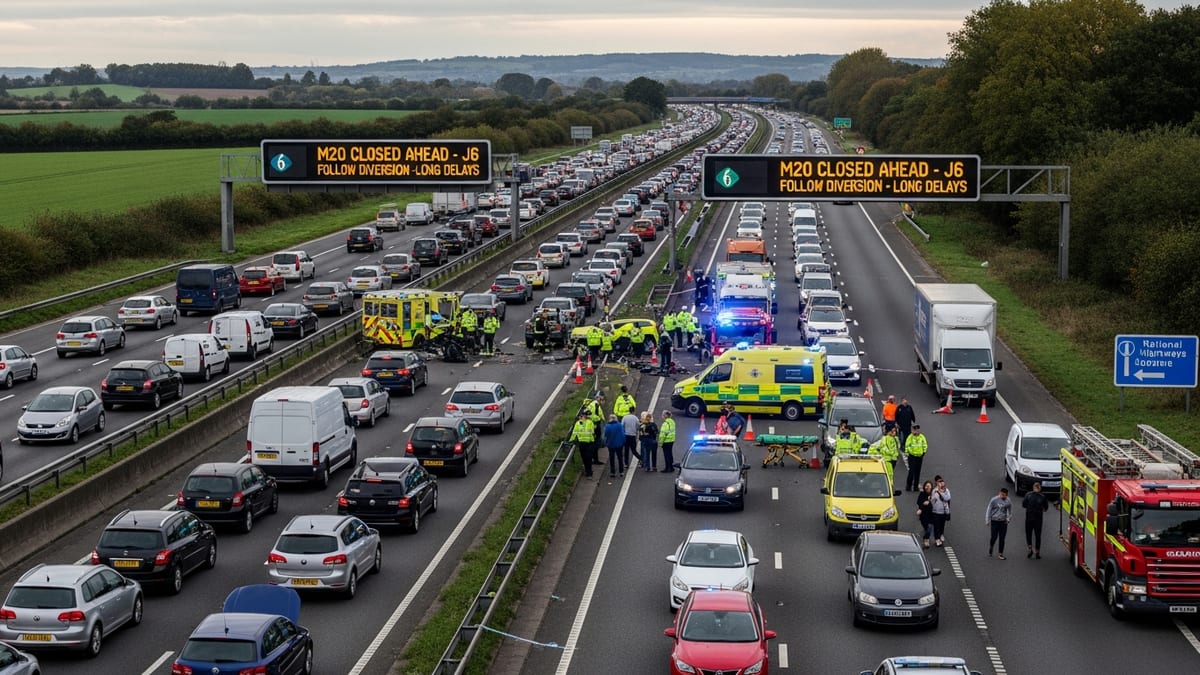
Backups Build Around Airport Access Routes
Reports from state transportation condition updates and local traffic monitoring platforms describe a string of incidents near the Interstate 205 interchange with Northeast Airport Way, a primary connection for Portland International Airport. The crashes occurred along a stretch where freeway traffic, airport-bound vehicles and local industrial traffic regularly converge, creating recurring pressure points even on typical weekends.
Travelers attempting to reach the airport encountered extended travel times as congestion built quickly in the late afternoon and early evening. Publicly available traffic maps showed slow-and-go conditions and stop-and-start pockets on I-205 approaching the Northeast Airport Way exits, as well as on the airport access roads themselves.
Some drivers diverted to parallel corridors such as Northeast Columbia Boulevard and Marine Drive to bypass the freeway delays. Those alternate routes also experienced heavier volumes than usual, particularly near on-ramps that feed back toward I-205 and toward the Glenn Jackson Bridge over the Columbia River.
State roadway condition summaries indicated that lane blockages related to crashes and disabled vehicles were a key factor in the delays, with at least one incident reported near the northern approach to the Glenn Jackson Bridge and additional disruptions closer to the Airport Way interchange.
Impact on Regional and Airport Travel
The Northeast Airport Way interchange is a crucial node for both regional commuters and air travelers. Portland International Airport sits just west of I-205, and most passenger vehicles, airport shuttles and a large share of rideshare traffic rely on the freeway-to-Airport Way connection for direct terminal access.
When traffic slows on this segment of I-205, the effects are often felt beyond the immediate airport area. Drivers bound for Vancouver and Clark County via the Glenn Jackson Bridge can experience spillover congestion as freeway queues extend north and south of the Airport Way exits. Industrial districts and warehouse complexes along Airport Way and Columbia Boulevard can also see delays as trucks and local delivery vehicles contend with the same chokepoints as passenger cars.
On Sunday, the combination of crash-related lane restrictions and typical weekend travel volumes produced longer-than-normal trip times to and from the airport. Publicly available online travel tools showed estimated delays stretching beyond 20 minutes for some segments, especially for motorists approaching from the south and attempting to merge toward the airport exits.
Travel industry observers note that even short-lived lane closures near this interchange can disrupt airline drop-off and pickup patterns, as delayed passengers arrive in compressed waves rather than gradually. That effect can amplify curbside congestion and increase pressure on airport parking and ground transportation areas.
Ongoing Construction and a Known Bottleneck
Recent planning and freight studies for the Portland region have consistently highlighted the I-205 and Airport Way corridor as a reliability challenge. Analyses by regional transportation agencies describe the stretch between I-84, Airport Way and the Glenn Jackson Bridge as a critical freight and commuter route where travel times can multiply during peak hours and incidents.
Separate documentation from the Oregon Department of Transportation outlines continuing work on the I-205 corridor, including auxiliary lane improvements and paving projects aimed at reducing crash frequency and smoothing traffic flow. While many of those efforts are concentrated farther south, the corridor’s overall configuration and heavy volumes contribute to a situation in which even minor crashes can trigger disproportionate backups near Airport Way.
Transportation studies note that the Airport Way area carries a mix of airport passengers, hotel shuttles, cargo operations and local employees commuting to large logistics centers. This blend of short-trip local traffic and longer-distance freeway travel can increase the chances of sudden braking, lane changes and merging conflicts that often precede collisions.
Sunday’s delays fit into a broader pattern described by freight and mobility reports, which point to the I-205 east Portland segment as one of the metropolitan area’s more delay-prone corridors, particularly when crashes, stalled vehicles or wet pavement conditions are present.
Advice for Drivers and Alternative Options
Publicly available transportation advisories recommend that drivers heading to Portland International Airport build in extra travel time whenever incidents are reported near I-205 and Northeast Airport Way. For many travelers, that can mean leaving at least 30 to 45 minutes earlier than usual when freeway speeds begin to drop or when digital message signs warn of congestion ahead.
Trip-planning guidance from regional agencies also suggests that, when conditions allow, some drivers consider using alternate access routes such as Northeast 82nd Avenue, Northeast Columbia Boulevard or Marine Drive to approach the airport from different directions. However, those choices can depend heavily on real-time congestion patterns, construction activity and local familiarity with the street network.
Transit services and airport shuttles can provide another option for some travelers, particularly those staying at hotels with dedicated airport transport. While bus and light-rail services are not immune to the impacts of roadway incidents, they can reduce the stress of navigating traffic and parking during periods of disruption on I-205.
Transportation planners frequently encourage drivers to check multiple sources before leaving home, including regional travel information sites, mapping applications and local news outlets that track freeway conditions. In fast-changing situations near the airport, conditions can improve or worsen within minutes as lanes reopen or additional crashes occur.
Continuing Monitoring of I-205 Conditions
As of Sunday evening, traffic information services continued to monitor the I-205 corridor for residual delays near Northeast Airport Way. Some reports indicated gradual improvement after earlier crashes were cleared, though pockets of slow traffic remained possible as normal Sunday travel patterns continued.
Roadway condition summaries emphasize that the Airport Way and Glenn Jackson Bridge segment of I-205 is particularly sensitive to disruptions because there are limited high-capacity alternatives for crossing the Columbia River or reaching the airport quickly from the east side of the region. Even after initial incident response concludes, it can take time for queues to dissipate and for traffic to return to typical speeds.
Regional transportation analyses suggest that ongoing improvements to auxiliary lanes, ramp design and traffic management systems may gradually enhance reliability on this section of freeway. In the meantime, drivers are likely to continue experiencing occasional significant delays when crashes or disabled vehicles occur near the Airport Way interchange.
For travelers with flights to catch or tight arrival windows, experts in travel planning often recommend closely watching traffic trends on I-205 throughout the day and allowing a safety buffer in departure times whenever the corridor shows signs of strain.