


More news on this day
Major hubs across Indonesia, China and Southeast Asia faced another day of severe aviation disruption as at least 184 flights were delayed and 27 canceled, affecting services operated by Batik Air, China Eastern, Hainan Airlines and several regional carriers and leaving passengers stranded from Jakarta to key coastal cities in eastern China.
Get the latest news straight to your inbox!
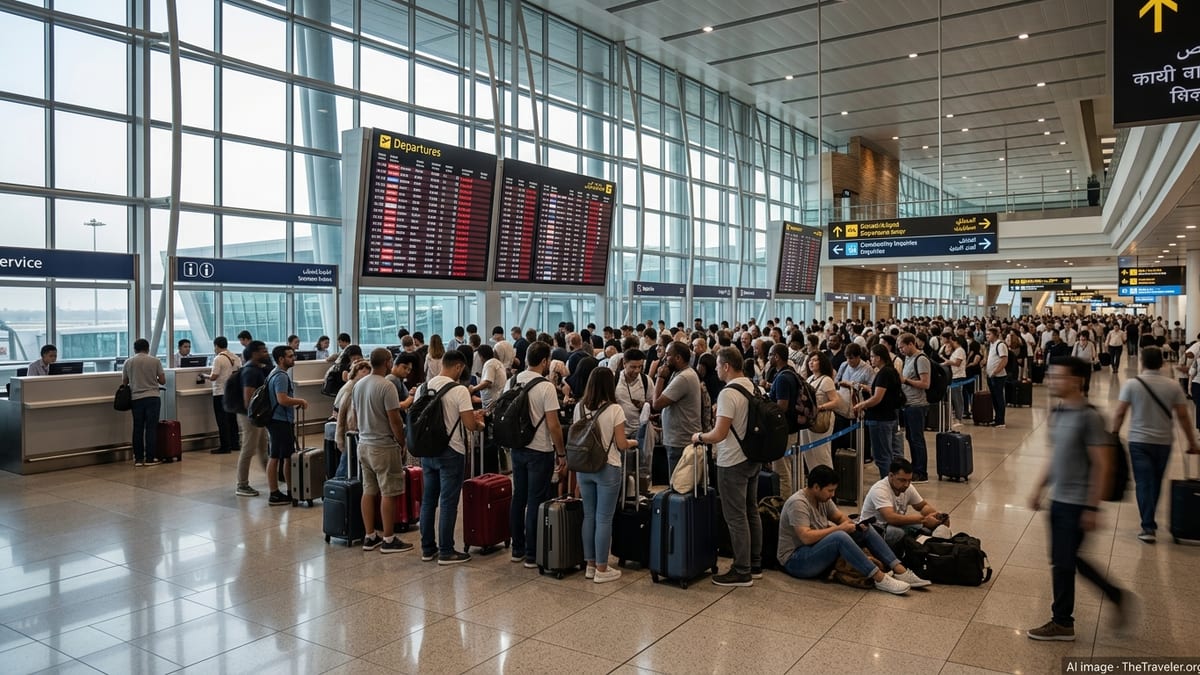
Widespread Delays From Jakarta to Eastern China
Published reports and real time flight tracking data indicate that a fresh wave of schedule disruption has swept across multiple Asian airports, with knock on effects for regional and long haul connections. The latest figures show 184 delayed departures and 27 outright cancellations concentrated on routes linking Indonesia, China, Malaysia, Singapore, Thailand and Vietnam, in many cases involving busy transfer hubs.
Jakarta’s Soekarno Hatta International Airport has seen clusters of late evening and overnight departures pushed back or rolled into the next operating day, affecting both domestic and international services. Travelers connecting from secondary Indonesian cities onto regional flights have reported missed onward journeys, extended terminal waits and rebookings stretching into the following day.
In China, disruption has been particularly acute on services into and out of major coastal centers, including Shanghai and Ningbo. Domestic and regional links used by travelers from Southeast Asia to connect to Chinese cities have faced rolling delays, with some rotations removed from schedules at short notice, compounding the difficulty for passengers already en route.
Knock on effects have rippled through secondary Southeast Asian hubs as well. Flights from Kuala Lumpur, Singapore, Bangkok and Hanoi feeding into the Jakarta and Shanghai areas have operated off schedule, tightening connection windows and increasing the risk of missed flights for travelers heading onward to other parts of Asia or Europe.
Airlines Under Pressure: Batik Air, China Eastern, Hainan and Others
Among the carriers most visibly exposed to the current disruption are Batik Air, China Eastern Airlines and Hainan Airlines, alongside several other regional operators. Publicly available schedule information and traveler accounts show that these airlines have jointly accounted for a significant share of the 184 delays and 27 cancellations recorded across the affected corridors.
Batik Air, which operates dense domestic networks in Indonesia as well as cross border routes to Malaysia, Singapore and Thailand, has faced particular strain where tight turnarounds in Jakarta coincide with evening weather or air traffic constraints. When one rotation is delayed, subsequent flights on the same aircraft have often departed late, resulting in passengers missing onward connections at intermediate hubs.
China Eastern and Hainan Airlines, both major players in China’s domestic and international markets, have experienced a series of last minute schedule changes on routes linking Southeast Asian cities with Chinese coastal hubs. Travelers have reported cancellations of sectors serving Ningbo and Shanghai, followed by rebookings via alternate Chinese cities or longer layovers on remaining services.
Other regional carriers, including Malaysia based and Singapore based airlines, have also recorded delays on overlapping routes as they contend with the same congested airspace and weather sensitive coastal gateways. While many flights have ultimately departed, the cumulative impact of rolling schedule changes has been significant for travelers navigating multi segment itineraries.
Weather, Congested Airspace and Operational Constraints
Several factors appear to be converging to produce the latest wave of travel disruption. Meteorological agencies and aviation weather services have highlighted periods of heavy rain, low cloud and strong winds affecting parts of eastern China and sections of maritime Southeast Asia, leading to temporary capacity reductions at key airports.
When weather conditions reduce runway capacity or visibility, air traffic regulators typically slow arrival and departure rates, creating queues in the air and on the ground. In such circumstances, ground delay programs are frequently imposed at departure airports to manage congestion at destination hubs, lengthening overall journey times for passengers on affected flights.
In addition to weather, the steady recovery of air travel across Asia has pushed some hubs close to the limits of their current operating capacity at peak times. Publicly available aviation analysis in recent months has pointed to higher than usual delay and cancellation rates at several major Chinese and Southeast Asian airports as airlines rebuild networks, hire staff and bring aircraft back into service.
Operational planning challenges, including tightened aircraft utilization and complex connection banks, can amplify the effect of a single disruption. When one flight is delayed or canceled for technical or crew related reasons, aircraft and staff may not reach subsequent stations in time, creating a cascading series of late departures across multiple countries.
Passengers Stranded and Itineraries Unraveling
The immediate impact of the latest disruptions has been most visible in crowded terminals at major hubs such as Jakarta, Shanghai and other coastal Chinese cities, where passengers have reported overnight waits and extended layovers. Social media posts and travel forum discussions describe long lines at service desks, limited availability on alternative flights and difficulties securing clear information in fast moving situations.
Travelers connecting from Southeast Asia to China and onward to Europe have been particularly exposed. When an initial leg from cities such as Kuala Lumpur, Singapore, Bangkok or Ho Chi Minh City runs hours late, passengers may arrive at Chinese hubs after their long haul connections have departed, forcing last minute rerouting or overnight stays at the transit point.
Reports from affected airports describe families with young children, tour groups and independent travelers seeking last minute accommodation as hotels near terminals fill up. Some passengers have opted to purchase tickets on competing airlines where space is available, while others have chosen to abandon complex itineraries and return to their original point of departure.
The financial impact for travelers has varied depending on fare conditions, insurance coverage and local regulations. While many airlines have offered rebooking on the next available services, additional costs for meals, hotels or alternative transport have often fallen on passengers, especially where disruptions are attributed to weather or broader airspace constraints.
What Travelers Across the Region Can Expect Next
Aviation analysts monitoring the situation suggest that irregular operations across the affected Asian corridors may continue in the short term, especially during periods of unsettled weather or heavy holiday traffic. Airports serving Jakarta, Shanghai and other coastal Chinese cities are expected to remain under pressure as airlines balance growing demand with operational constraints.
Public travel advisories and airline guidance emphasize the importance of allowing generous connection times when itineraries involve multiple carriers or critical onward links, particularly through hubs currently experiencing elevated disruption rates. Same day self connection itineraries, where travelers purchase separate tickets on different airlines, are seen as especially vulnerable to missed flights if earlier sectors run late.
Passengers with imminent travel plans across Indonesia, China, Malaysia, Singapore, Thailand and Vietnam are being encouraged by consumer advocates to monitor flight status frequently, make use of airline and airport apps where available, and stay alert to schedule changes that may be communicated at short notice. Flexibility in routing and travel dates, where possible, can improve the chances of completing journeys with minimal disruption.
As airlines including Batik Air, China Eastern and Hainan Airlines adjust networks and timetables in response to demand, weather and airspace conditions, the coming days are expected to test the resilience of Asia’s recovering aviation system and the patience of travelers moving through some of its busiest hubs.