


More news on this day
Crews remain on scene in Laurens County as cleanup and recovery operations continue following a recent freight train derailment, with rail traffic disrupted and travelers advised to expect detours while work proceeds.
Get the latest news straight to your inbox!
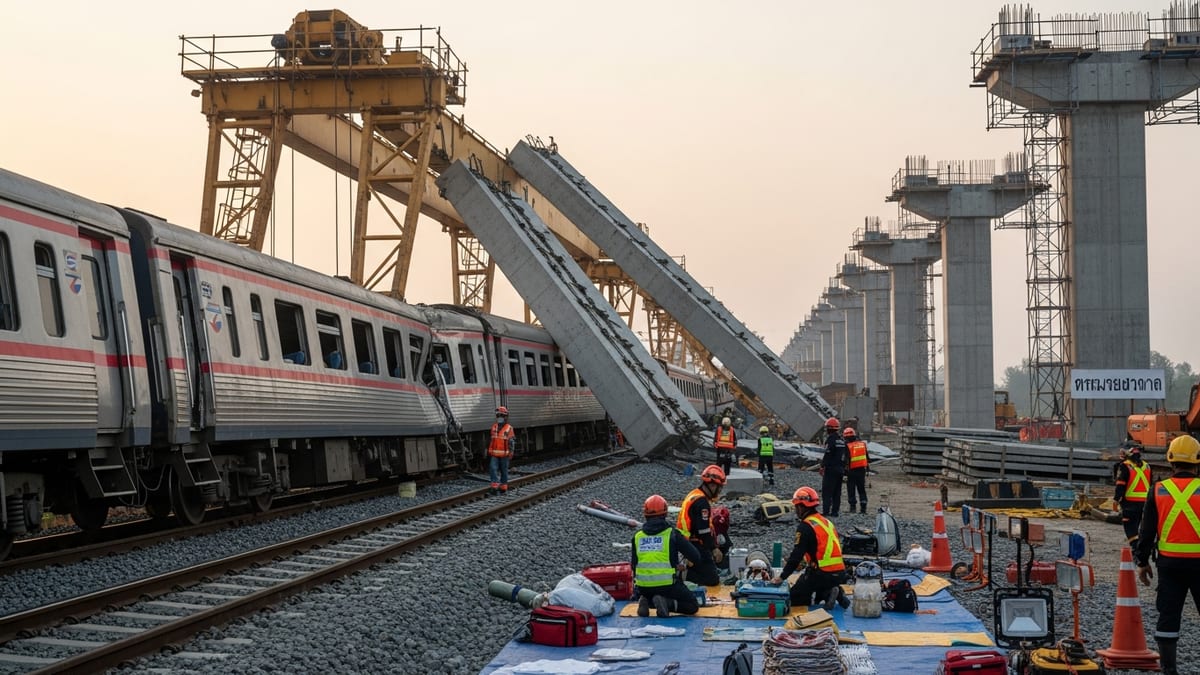
Ongoing cleanup along rural Laurens County rail corridor
Publicly available information indicates that multiple freight cars left the tracks along a rail corridor in Laurens County, South Carolina, prompting an extended response focused on debris removal, track repairs, and site stabilization. The incident occurred in a largely rural area, but access routes serving nearby communities and through travelers have been affected while crews work around the clock to clear the scene.
Railroad response teams have brought in heavy equipment to lift and cut apart damaged cars, remove spilled cargo, and haul away scrap metal. Ballast and soil that were disturbed by the derailment are being excavated and replaced so that the track structure can be rebuilt to current standards. Observations from the scene show work trains delivering new rail, ties, and rock as the right of way is gradually restored.
Local emergency agencies have maintained a presence in the area to support traffic control and monitor public safety as the cleanup continues. Reports from regional outlets suggest that no large-scale evacuations have been required, but access restrictions remain in place closest to the damaged section of track while heavy machinery is operating.
For drivers using secondary highways and county roads that intersect the line, detours and temporary closures are expected to continue until equipment is removed and inspectors determine that rail and roadway structures are safe to reopen.
Environmental assessment and monitoring at the derailment site
According to published coverage of similar freight derailments in the Southeast, cleanup operations typically begin with containment of any visible spills followed by systematic testing of nearby soil and waterways. In Laurens County, environmental contractors are using vacuum trucks, absorbent booms, and portable tanks where needed to collect runoff and any material associated with the derailment before it can move farther downstream.
State and federal guidance on rail incidents calls for extensive sampling of surface water, groundwater, and sediment when freight cars carrying industrial products are involved. Public documents released after other recent derailments show that sampling points are often established both upstream and downstream of the accident site to detect any changes in water quality and to guide longer-term remediation if contamination is found.
On land, crews are grading and reshaping disturbed areas along the rail bed to prevent erosion during summer thunderstorms. Silt fencing and temporary berms are being installed around excavation zones to keep exposed soil from washing into local creeks. Once track work is complete, additional cleanup may continue for months as vegetation is replanted, contaminated material is removed, and monitoring wells or inspection points are checked on a regular schedule.
Residents and travelers near the corridor may continue to see work lights at night and hear equipment during off-peak hours, a pattern that matches other long-running derailment responses where responders make use of cooler overnight conditions to move heavy materials.
Travel, freight, and tourism impacts across Laurens County
The derailment has brought renewed attention to how much freight traffic moves quietly through Laurens County and the broader Upstate region. The affected line is part of a network that helps connect inland manufacturing centers and distribution hubs with ports and larger rail gateways, meaning that any closure can ripple through supply chains serving South Carolina and neighboring states.
While freight has priority on the damaged corridor, the incident also touches the local tourism economy. Laurens County markets itself as a base for exploring historic towns, rural byways, and outdoor attractions across the Piedmont. Visitors who planned summer trips that involve drives across the county, cycling routes near the tracks, or stays in small towns close to the rail line may encounter detours or slower travel while cleanup and investigation remain underway.
Travel publications that cover recent derailments in other destinations note that most impacts for visitors are short term, primarily involving traffic delays, construction noise, and occasional closures of trail segments or river access points adjacent to rail corridors. Similar patterns are emerging in Laurens County, where access is generally available but with pockets of disruption closest to the site and along key approach roads.
Local businesses that rely on pass-through traffic, such as roadside diners, fuel stations, and small lodging properties, may see changing customer patterns in the weeks ahead as navigation apps redirect motorists around temporary closures. For travelers planning routes through the area, monitoring local advisories and allowing extra time for detours can reduce the stress of unplanned delays.
Rail safety context for South Carolina’s Upstate
Rail safety has been under heightened scrutiny across the United States following several high-profile derailments, and Laurens County’s incident adds another data point to that broader conversation. Historical records show that South Carolina’s Upstate hosts a mix of regional short lines and major freight corridors, carrying everything from agricultural products and manufactured goods to chemicals and fuel.
Transportation case studies from other South Carolina rail accidents highlight how derailments can vary widely in impact depending on train speed, cargo, and proximity to neighborhoods or sensitive waterways. In some past events, cleanup has focused mainly on clearing debris and repairing track, while others have required long-term environmental restoration and major investment in local infrastructure.
Current federal rail policy places emphasis on track inspections, wayside detectors, and improved operating practices aimed at reducing derailment risk. Publicly available railroad materials often point to expanded use of specialized inspection cars, drones, and track geometry testing to detect problems before they lead to incidents. The Laurens County derailment is likely to feed into internal reviews of track condition, train handling, and scheduling along this corridor.
For communities along the line, the visible presence of cleanup crews and engineering teams can be a reminder of both the benefits and risks that come with freight rail service. Residents gain access to jobs, industrial investment, and improved logistics, while also living alongside corridors where incidents, though statistically rare, can have outsized local effects when they do occur.
What travelers should know as recovery progresses
As crews continue their work in Laurens County, travelers passing through the region can expect a period of transition before operations fully return to normal. Freight trains may move at reduced speeds on repaired track segments, work zones may remain active near highway-rail crossings, and temporary signage may redirect traffic at short notice depending on the day’s construction plan.
Travel reports from other recent derailment sites suggest that conditions can change quickly from week to week, with some road closures lifted as heavy lifting ends and new restrictions introduced as crews shift to secondary tasks like ditch work or utility repairs. Visitors who rely on navigation apps or in-vehicle systems may see frequent rerouting as mapping services update in response to these changes.
For those considering rail-adjacent recreation such as photography, birding near wetlands, or walking along informal paths beside the tracks, safety guidance consistently urges people to stay well clear of active work zones and to avoid trespassing on railroad property. Even after trains begin running again, residual construction activity along the right of way means that equipment and personnel may still be operating close to the tracks.
In the longer term, once cleanup is complete and normal service resumes, communities in Laurens County are expected to refocus on promoting the region’s rural landscapes, mill-town heritage, and small-city amenities. For now, the priority remains on making the derailment site safe, stabilizing the environment around the corridor, and restoring a key piece of rail infrastructure that serves both local residents and travelers passing through South Carolina’s Upstate.