


More news on this day
A U.S.-flagged residential cruise ship marketed as an “endless” world voyage has abruptly suspended operations in Cambodia due to surging fuel costs, forcing hundreds of long-term passengers to disembark and seek housing on land.
Get the latest news straight to your inbox!
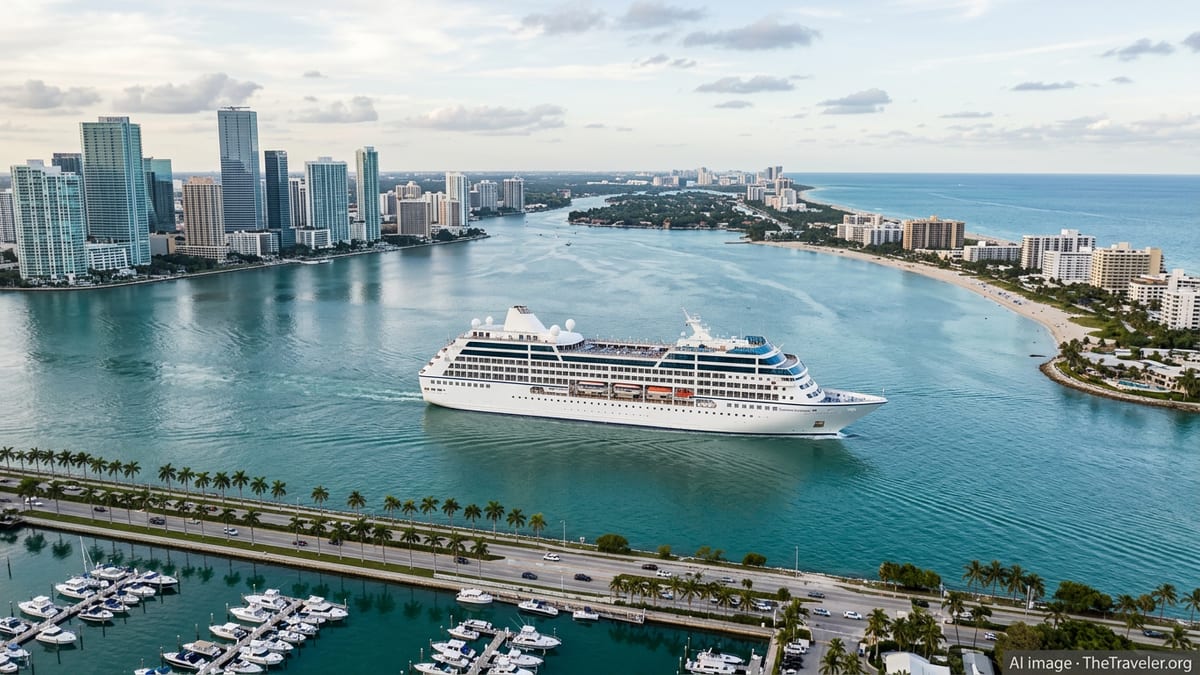
Three-year residential voyage cut short in Sihanoukville
Publicly available information indicates that the vessel at the center of the disruption is the Villa Vie Odyssey, a residential cruise ship operated by U.S.-based company Villa Vie Residences. The ship had been sailing a multi-year itinerary designed to circle the globe, with cabins sold as floating apartments rather than traditional cruise staterooms.
The Odyssey arrived at the Cambodian port of Sihanoukville, on the Gulf of Thailand, in late October 2026 and informed passengers that the world cruise would not continue. Reports from international news outlets describe how several hundred guests, some of whom had sold or rented out their homes on land to live at sea, were told the voyage was being suspended and that they would need to leave the ship.
Coverage from Associated Press, CBS News and other outlets states that the company attributed the decision primarily to escalating fuel prices in Asia, which it described as making the business model unsustainable on the planned route. The change converted what had been marketed as a seamless, yearslong circumnavigation into an unexpected and complex relocation exercise for residents.
Local media in Cambodia describe scenes of passengers disembarking with substantial luggage and personal belongings, in some cases after hurriedly arranging flights and hotels from Sihanoukville and the capital Phnom Penh. For a subset of travelers who had treated the ship as a permanent address, that process included searching for longer-term accommodation with little advance warning.
Soaring fuel prices pressure cruise economics
The suspension comes against the backdrop of a pronounced spike in marine fuel costs in 2026, partly linked by analysts to disruptions in oil and gas flows through the Strait of Hormuz and broader instability in global energy markets. Industry data compiled by motoring and travel organizations show diesel prices rising sharply over the year, with averages in many regions increasing by several dollars per gallon compared with early 2026.
Filings and annual reports from major cruise operators have long highlighted exposure to fuel price volatility as a key operational risk, noting that fuel is one of the largest recurring expenses for large passenger ships. Those corporate disclosures warn that sustained increases can affect itineraries, pricing and even the viability of certain deployments, particularly on long, fuel-intensive routes.
Residential concepts such as Villa Vie Odyssey are especially sensitive to these costs because they operate continuously, often on ambitious multi-continent routes with limited scope to shorten sailings or redeploy ships on short notice. Public information on the Odyssey’s business model indicates that residents paid substantial upfront sums or long-term fees that were calculated using fuel assumptions made well before the 2026 price surge.
According to widely shared summaries of the operator’s statements, fuel expenses on parts of the Asia leg rose several hundred percent compared with earlier expectations. Without the ability to immediately raise rates or restructure all resident agreements, continuing the planned global circuit reportedly became financially untenable, leading to the decision to halt the voyage in Cambodia.
Hundreds suddenly displaced from ‘floating homes’
News reports from Cambodia and international broadcasters emphasize the human impact of the suspension. Many passengers on Villa Vie Odyssey had treated their cabins as permanent or semi-permanent homes, with some retirees and remote workers publicizing online that they had downsized or sold properties on land to fund life aboard.
When the company announced the suspension in Sihanoukville, several hundred residents suddenly faced the challenge of re-establishing themselves ashore, often far from their home countries. Media coverage describes passengers queueing at onboard desks to seek information on refunds, travel assistance and the status of their belongings, while also making urgent arrangements for flights, visas and accommodation.
Reports from outlets carrying wire service coverage indicate that passengers were informed they would have to vacate cabins, and that only a limited period was available to collect possessions. Accounts shared publicly suggest that at least some residents were away on excursions when the decision took effect, creating additional complications in retrieving items left on board.
The demographic mix on the ship reportedly ranged from older retirees to younger digital nomads and families, reflecting a broader trend toward long-duration and residential cruising. For this group, the sudden end of the voyage raises not just travel questions but also issues related to mail forwarding, health care access, banking, and immigration status, which had often been structured around an at-sea lifestyle.
Cambodian port becomes unexpected end point
Sihanoukville, a fast-developing coastal city better known regionally for regional ferries to nearby islands and casino resorts, was not initially promoted as a final destination for the Odyssey’s voyage. The port, however, provided deep-water berthing and air links via Phnom Penh that allowed for a relatively rapid disembarkation and onward travel.
Local Cambodian news outlets and international coverage describe how buses and private transfers shuttled former residents to Phnom Penh International Airport and area hotels. Travel agents in the region reported a short-term surge in last-minute bookings to hubs such as Bangkok, Singapore and Kuala Lumpur, as passengers sought to connect onward to Europe, North America and Australia.
Publicly available information on Cambodian tourism authorities shows that Sihanoukville and its surrounding islands have been positioning themselves as emerging beach destinations, though the infrastructure is still developing compared with more established Southeast Asian ports. The sudden arrival of several hundred long-stay international travelers highlighted both the city’s growing role in regional cruising and the logistical strains that can emerge when large vessels alter plans unexpectedly.
Some passengers reportedly chose to remain in Cambodia or neighboring countries temporarily, using the disruption as an opportunity to explore the region while they considered longer-term housing and travel options. Others expressed publicly that they aimed to return quickly to home countries to regroup and reassess their finances.
Questions over refunds and the future of residential cruising
The suspension of Villa Vie Odyssey’s global cruise has raised questions about financial protections for residents on long-term maritime projects. Public statements from the company, relayed in media coverage, indicate that it is seeking to restructure and secure new financing while assessing options for the ship’s future deployment.
Prospective legal and consumer responses will depend partly on the specific contracts signed by residents, which are not all publicly available in full. Industry commentators note that residential cruise agreements often differ from standard cruise tickets, combining elements of real estate, time-share and traditional voyage contracts, which can complicate refund policies when operations change unexpectedly.
Broader analysis in business media suggests that the episode may influence investor and consumer confidence in similar residential-at-sea ventures. Other projects, such as long-duration “world cruise” itineraries and purpose-built residential ships, have promoted themselves as alternatives to conventional retirement or relocation. The experience of Odyssey’s residents highlights the risks that extreme fuel price movements and shifting operating costs pose to these models.
Cruise industry filings and research reports also underline that operators are exploring measures to manage fuel exposure, including itinerary changes, slow steaming, hedging strategies and investments in more efficient or alternative-fuel ships. How residential cruise concepts adapt to these pressures, and whether Villa Vie Odyssey eventually resumes operations, will be closely watched by travelers considering a long-term life at sea.