


Cruises and all inclusive resorts both promise a sun filled, unpack once kind of vacation where the details are handled for you. Yet when travelers start comparing real prices and inclusions, the value question gets complicated fast. Daily gratuities, resort fees, transfers, shore excursions and drink charges can all push a seemingly good deal into expensive territory. The key is understanding how each style of trip is priced, then lining that up with how you actually like to travel.
Get the latest updates straight to your inbox!
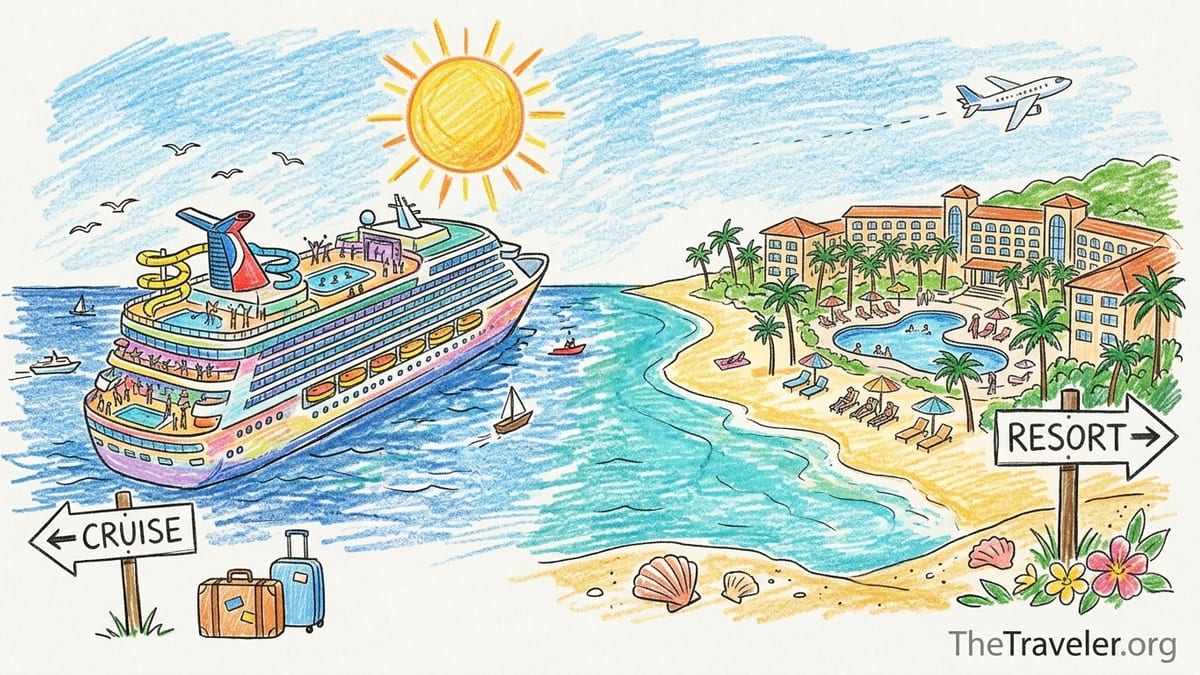
How base prices for cruises and resorts really compare
Looking at base prices alone, a mainstream Caribbean cruise often appears cheaper than a comparable all inclusive resort stay. Recent price tracking for Royal Caribbean sailings in the Caribbean shows typical fares around 120 dollars per person, per night for inside and oceanview cabins, with some Mexico and Central America itineraries averaging a little over 100 dollars per night when booked in the less popular weeks. Those figures are cruise only and assume two people sharing a cabin.
By contrast, a survey of all inclusive resorts across Cancun and the Riviera Maya found average nightly prices around 430 to 500 dollars per room for mainstream properties, which works out to roughly 215 to 250 dollars per person for two adults. Individual resort listings in Mexico in late 2026 show plenty of four and five star all inclusive options in the 130 to 300 dollars per person, per night range, from Barceló Maya Grand Resort at around 110 to 120 dollars per person up to premium brands such as Grand Velas Riviera Maya at more than 700 dollars per person.
That means on the headline rate, a mid market Caribbean cruise might cost a couple about 1,400 dollars for seven nights before taxes and fees, while a comparable all inclusive week at a solid four star in Cancun could easily start near 3,000 dollars for the room alone. The cruise fare usually also includes transportation between multiple ports, big ship entertainment and basic dining, which makes the sticker price look very competitive.
The reality, however, is that cruise fares tend to be stripped down while many Mexican and Caribbean all inclusives really do include almost everything you will consume on site. To decide which offers better value, you have to look beyond the headline price and examine exactly what is and is not covered in each scenario.
Accommodation and space: cabin versus resort room
On a large ship, the entry level inside cabin on a mainstream line often measures about 130 to 160 square feet. Balcony cabins on popular Caribbean ships might run 180 to 220 square feet including the balcony. These spaces are efficient but compact, especially for families sharing one room. If you upgrade to a suite to get hotel like space, nightly prices increase dramatically, sometimes doubling or tripling the base fare.
At an all inclusive resort along Mexico’s Caribbean coast, standard rooms in the mid range category are more often in the 300 to 450 square foot range, with a real sitting area and a full balcony or terrace. Junior suites at adults only properties such as Secrets or Excellence commonly exceed 500 square feet. Because you spend most of your vacation in one location, resort design typically emphasizes outdoor space and larger pools, something that is constrained at sea.
Where cruises claw back value is through access to the ship’s public areas. You may have a small cabin, but you gain multiple theaters, lounges, a promenade or central atrium, sometimes multiple pool decks and water slides, along with sports courts or ice rinks. The newest megaships sailing from Florida can feel like floating cities with neighborhoods devoted to families, nightlife or adult only relaxation. A resort may give you more private room space, but the variety of public venues on a big ship is hard to match.
For travelers who prize a spacious private room and quiet balcony time, an all inclusive resort often delivers better comfort for the money. For travelers who plan to be out exploring the ship, attending shows and using amenities most of the day, the smaller cabin on a cruise can still represent strong value because you are paying for a moving resort with far more included entertainment.
Food, drinks and specialty dining
Most mainstream cruise fares include multiple complimentary dining venues, but they do not include everything you will see advertised on board. On a typical Caribbean sailing, your base fare covers main dining room meals, a buffet and perhaps one or two casual spots such as a pizza counter or grill. Coffee, tea, tap water and some juices are included, but specialty coffee, soft drinks, bottled water and almost all alcoholic drinks cost extra.
Drink packages illustrate how quickly the onboard bill can climb. On several large ship brands sailing from Florida, nonalcoholic packages that cover sodas and specialty coffees often start around 25 to 35 dollars per person, per day, while alcoholic packages that bundle most beer, wine and cocktails frequently cost between 70 and 100 dollars per person, per day before a mandatory service charge of around 18 to 20 percent is added. For a couple on a seven night cruise, a pair of full alcoholic packages can easily run more than 1,000 dollars in total including gratuities on the package itself.
By comparison, mid range and upscale all inclusive resorts in Cancun, the Riviera Maya and Punta Cana typically include unlimited domestic and many international alcoholic beverages, soft drinks and specialty coffees in the nightly rate. Menus at properties such as Hyatt Ziva Cancun, Moon Palace Cancun or Secrets Akumal advertise multiple a la carte restaurants with no cover charges, plus buffets and snack bars that can be visited as often as guests like. Premium spirits and a selection of wines by the glass are usually part of the package at adults only resorts in the upper tier.
Where resorts sometimes add complexity is with very high end wine lists, private romantic dinners on the beach or chef’s tables that carry a surcharge. Still, the amount most couples spend out of pocket on food and drink at a quality all inclusive is often limited to these occasional splurges. By contrast, cruise passengers who regularly visit specialty restaurants at 30 to 60 dollars per person and order drinks a la carte can see their onboard account grow to match or exceed their original cruise fare, especially on longer itineraries.
Excursions, activities and entertainment value
Entertainment is one area where cruises deliver significant included value. Large ships operating in the Caribbean often stage Broadway style shows, ice skating or aqua theater productions, live music, game shows and outdoor movies at no extra cost. Families can access kids clubs, waterslides and organized poolside activities throughout the day. All of this is bundled into the fare, so it is realistic to enjoy a full week on board without paying extra for entertainment.
The equation shifts once you factor in shore excursions. Ship operated shore tours in Caribbean ports such as Cozumel, Roatan or St Thomas commonly cost anywhere from 50 to 200 dollars per person, depending on whether you choose a simple beach break, a snorkeling trip or an all day adventure with transportation and lunch. A family of four booking ship organized excursions in two or three ports can quickly add several hundred to more than a thousand dollars to the cost of a seven night sailing.
All inclusive resorts, by contrast, concentrate activities on site. Non motorized water sports such as kayaks, snorkel gear and stand up paddleboards are usually included at beach properties. Daily programs might feature yoga, beach volleyball, cooking classes, tequila tastings or themed pool parties without a fee. Evening entertainment typically consists of live bands or shows in a central theater or lounge. While the production values are usually more modest than what the biggest ships offer, there is also little pressure to spend extra money day after day.
Off site excursions from resorts are available, but many guests only book one or two during a weeklong stay. A couple staying near Playa del Carmen might book a day trip to visit cenotes or Mayan ruins at Tulum through a local tour operator for 80 to 150 dollars per person including transportation and lunch. If you are content to relax by the pool, walk the beach and enjoy on site entertainment for most of your vacation, the all inclusive model keeps more of your activities genuinely included in the upfront price.
Transfers, flights and getting to your vacation
Another big difference in overall value comes from how you reach your ship or resort. Cruises from U.S. homeports such as Miami, Fort Lauderdale, Port Canaveral or Galveston allow many American travelers to drive to the port. Parking can still cost several hundred dollars for a week, but there is no international flight required. This can make short three or four night cruises especially attractive for value seekers within driving distance of the coast.
When a flight is required to reach the port, cruise value changes. Sailing to the Caribbean from San Juan or to Europe from Barcelona or Rome often means adding airfare that can rival the cost of the cruise itself. Transfers between airport, hotel and ship are not usually included in basic cruise fares. Cruise line operated shuttles commonly charge per person, while private transfers or taxis must be budgeted separately.
All inclusive resorts in hubs such as Cancun or Punta Cana almost always require a flight for North American travelers, but packages frequently bundle airport transfers into the rate. Many resorts either include shared shuttle transfers outright or sell them inexpensively as an add on, so couples pay one combined price for flights, transport and a weeklong stay. Travel agencies and tour operators that specialize in all inclusives often advertise package prices per person from specific gateway cities, reflecting both airfare and resort stay in a single figure.
If you live close to a major cruise port, a value comparison that assumes no airfare may come out strongly in favor of cruising. If you must fly either way, the difference between adding airport to ship transfers and staying at a resort with included airport pickup can narrow the gap. In either case, understanding whether the attractive price you see in advertising includes flights and transfers is essential before judging which option truly costs less.
Gratuities, service charges and who is really included
Gratuities have become one of the most important hidden costs for cruise travelers to understand. Major cruise lines sailing from North America now publish automatic daily service charges ranging roughly from 17 to more than 20 dollars per person, per day for standard cabins, with higher rates for suites. A widely reported figure for Royal Caribbean in late 2026 is 18.50 dollars per person, per day for non suite cabins and 21 dollars for suites. Carnival and Norwegian sit in a similar range, while some premium lines go higher or, in a few cases, bundle gratuities into the base fare.
For a couple on a seven night cruise at a mainstream line’s standard rate, that means roughly 260 dollars in automatic gratuities added to the bill, and closer to 520 dollars for a family of four if all travelers are above the age at which the line starts charging children. On top of that, additional automatic gratuities of around 18 to 20 percent are usually added to bar drinks, specialty restaurant checks, spa treatments and even pre purchased drink packages. This can push the effective cost of onboard services significantly above the menu prices passengers see advertised.
At all inclusive resorts in Mexico and the Caribbean, basic gratuities to restaurant servers, bartenders and housekeeping are typically considered included in the package price. Staff are paid through a combination of wages and service charges built into the nightly rate, so many properties do not require daily tip envelopes or automatic service fees. Guests often choose to leave small cash tips for excellent service, but it is discretionary rather than a fixed, per person charge that appears on every bill.
However, the resort world has developed its own versions of hidden fees. Some Caribbean all inclusives charge separate resort fees that cover items such as local taxes, Wi Fi or use of certain facilities. Others promote a base package that covers standard drinks and buffet dining while reserving premium restaurants or top shelf liquor for higher tier club guests. When comparing value, travelers should ask specifically whether taxes, local environmental fees and service charges are already in the quoted price for the resort, just as cruise passengers must account for the automatic gratuities that are never included in the headline fare.
Taxes, port charges, resort fees and other extras
Both cruises and resorts advertise prices that often exclude mandatory government taxes and other charges. For cruises, these take the form of port taxes and fees assessed on each passenger for each port of call, along with other regulatory charges. On a seven night Caribbean itinerary visiting three or four ports, these extra charges can easily run several hundred dollars per cabin. Many promotional flyers list attractive per person fares in large print, then specify that taxes, fees and port expenses are additional in smaller type.
All inclusive resorts, especially in Mexico and the Dominican Republic, incorporate some taxes into their published nightly rates but still add others at checkout. In Cancun, for example, nightly room rates generally include Mexican value added tax and hotel occupancy tax, but guests also pay a modest per night environmental or tourism fee charged by local authorities. These amounts are usually small compared with cruise port charges, but they are still relevant when calculating the total bill.
Beyond government taxes, travelers should be alert to optional but common extras. On ships, Wi Fi is rarely included in the base fare. Unlimited Wi Fi packages for one device can range from around 15 to 25 dollars per day on many mainstream lines, with premium streaming packages costing more. Photo packages, arcade credits, casino spending and spa services further increase onboard spend. At resorts, Wi Fi is more commonly included, but spa treatments, private cabanas, off menu experiences and premium wine lists can all produce significant add ons for travelers who want them.
From a pure hidden fee perspective, cruises tend to start with lower headline prices that grow once port fees, gratuities and onboard extras are added, while all inclusive resorts start higher but more often deliver a final bill that is close to the original quote if you stay on property. The better value depends on your self control and whether you prefer an environment where almost everything is prepaid or one where you choose a la carte how much to spend beyond the basics.
Which offers better value for different traveler types?
Once the pieces are laid out, the question becomes less about which option is objectively cheaper and more about matching the pricing model to your travel style. Couples who drink daily, enjoy lingering over cocktails and do not want to think about per drink prices often extract excellent value from all inclusive resorts where unlimited drinks and a variety of dining options are built into the rate. If those same couples bought a full beverage package on a cruise, their total cost for the week might rise to equal or exceed what they would have paid at a mid range resort.
Families who plan to spend little on alcohol but place a high value on entertainment and visiting multiple destinations often find cruises deliver stronger value. The fact that kids clubs, water slides, theatrical shows and multiple pools are included in the fare means that a family of four can enjoy a packed week without booking more than one or two shore excursions. If they drive to the port rather than fly and skip drink packages, the total cost of a mainstream Caribbean cruise can undercut an equivalently fun week for four at a beachfront all inclusive.
Travelers who dislike surprises on their bill may lean toward resorts where packages are genuinely comprehensive. A couple booking an adults only all inclusive near Playa Mujeres at about 250 to 300 dollars per person, per night, including airport transfers and taxes, can leave with very few extra charges beyond spa visits or a special off property excursion. The same couple on a cruise could start with a nightly fare near 120 dollars per person but end the week with a similar or higher all in cost once gratuities, drink packages, specialty dining, Wi Fi and excursions are added.
There is also a qualitative side to value. Some travelers prize waking up in a new port several mornings in a row and see great value in sampling multiple islands or coastal cities on one trip. Others value slow mornings on the same stretch of beach, building a relationship with staff at their favorite pool bar and not worrying about ship departure times. The better value is whichever model lets you enjoy what you care about most without paying heavily for features you will not use.
Practical tips to calculate your own best value
The most reliable way to choose between a cruise and an all inclusive resort is to build a realistic sample budget for both options for the same travel week. Start with a concrete example: perhaps a seven night Caribbean cruise from Florida on a mainstream line in March and a seven night stay at a four star all inclusive in Cancun for the same dates. Collect current per person fares, average nightly resort rates, estimated airfare and taxes from your home airport and then layer in the extras that match how you travel.
For the cruise, that means adding port taxes, daily gratuities for each traveler, either drink packages or a realistic estimate of a la carte beverages, Wi Fi for at least one device if you know you will be online, and a ballpark cost for shore excursions in at least two ports. For the resort, add the nightly room rate multiplied by seven, any published resort or environmental fees, round trip airport transfers if they are not included, and a modest budget for tips and one or two off site excursions.
Once you sum both columns, compare the totals in terms of cost per person, per night as well as overall. The numbers often tell a clearer story than marketing slogans. Some travelers are surprised to find that a supposedly pricey five star all inclusive comes out close to what they would have spent on a mid range cruise once all extras are tallied, while others discover that a carefully budgeted cruise where they skip drink packages and stick to included dining remains a bargain compared to even modest beachfront resorts in high season.
Finally, remember to assign value to non financial factors such as travel time, jet lag, crowd tolerance and motion sickness. A cheap cruise can feel less valuable if rough seas ruin two days of your trip, just as a well priced resort can disappoint if sargassum seaweed makes the ocean unswimmable that week. Value is both what you pay and what you get, so consider weather patterns, ship age, resort beach quality and your own priorities alongside the line items on your spreadsheet.
Conclusion: matching the vacation to your wallet and your style
When you strip away marketing language and calculate realistic costs, neither cruises nor all inclusive resorts are automatically the better deal. Mainstream cruises often win on base price and entertainment per dollar, especially for families who do not drink heavily and can drive to a port. All inclusive resorts tend to deliver stronger value for travelers who prioritize unlimited food and drink, larger rooms and a mostly prepaid experience with fewer surprise charges.
The choice ultimately hinges on your habits. If you crave variety, enjoy shows and nightlife, and do not mind managing onboard extras, a Caribbean cruise can be both affordable and memorable. If you prefer to plant yourself on one beautiful beach, savor cocktails without doing mental math and walk away with a bill that looks very close to the original quote, a good all inclusive resort may feel like the smarter use of your vacation budget.
Whichever path you choose, the smartest step is to price out a specific ship, sailing date and resort for the same week, then build a complete cost picture that includes accommodations, food and drink, excursions, transfers, gratuities and likely extras. With those numbers in hand, the question of cruise versus all inclusive becomes far less abstract and far more about which experience offers the best personal value for you.