


More news on this day
Cruise specialists gathering for Cruise360 Australasia this year are set to confront one of the industry’s most pressing themes, as cruise leaders and technology advocates debate how artificial intelligence is reshaping everything from itinerary planning to front-line sales.
Get the latest news straight to your inbox!
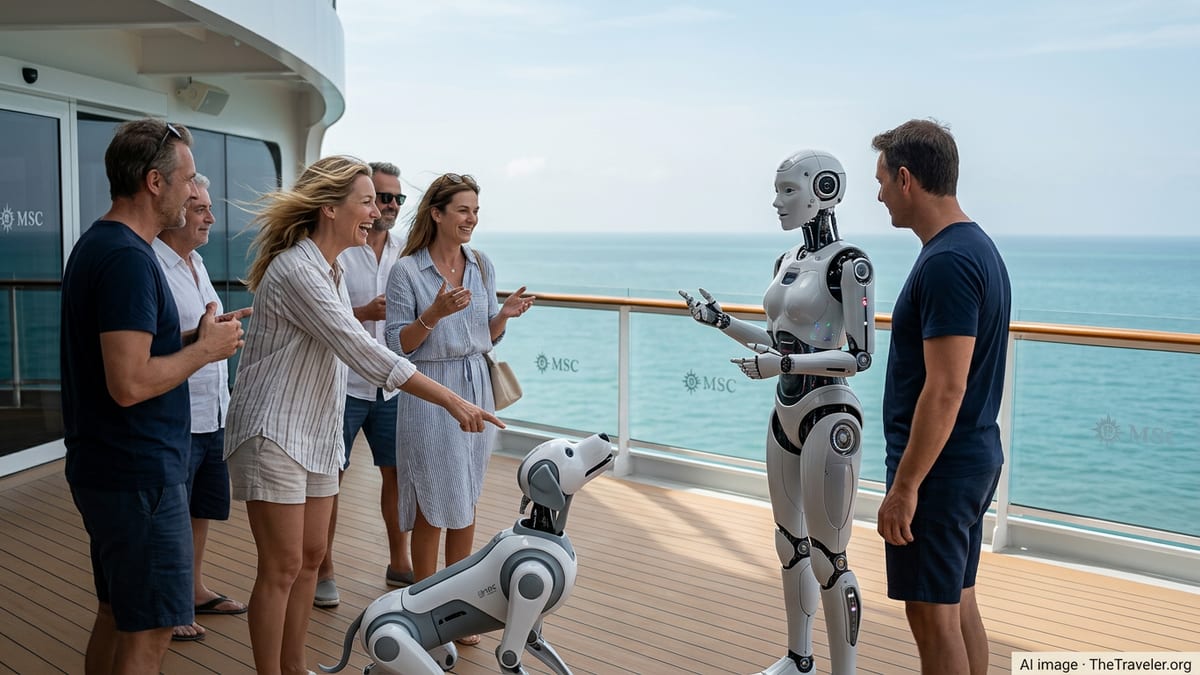
AI Moves to the Center of Cruise360’s “Future Ready” Agenda
The Cruise360 Australasia conference has long been positioned as a barometer of industry change, and this year artificial intelligence is moving from the margins to the main stage. Program details released by Cruise Lines International Association for recent editions of the event show a swelling focus on technology, data and future-facing skills as cruise volumes resume steady growth across Australia and New Zealand.
Previous Cruise360 programs included dedicated sessions on using AI as a behind-the-scenes assistant for travel agents, highlighting tools that help automate research, content drafting and routine client communication. Organisers now appear to be building on that foundation by broadening the discussion to the wider implications of AI across cruise operations, marketing and customer experience.
The push comes as the region marks a decade of Cruise360 gatherings and a recovery in ocean cruising, with CLIA figures indicating more than a million Australians returning to sea in the most recent reporting year. Against that backdrop, the question for this year’s expert panel is no longer whether AI will affect cruising, but how quickly and in what ways travel advisors and cruise lines can adapt.
By placing AI within a broader “Future Ready” theme, the conference is setting the stage for a debate that links emerging technologies with day-to-day commercial realities for agents, operators and destination partners.
Cruise Leaders Weigh Operational Gains Against Guest Experience
International and regional cruise executives appearing at Cruise360 Australasia are expected to examine AI’s potential impact on core operations, from deployment decisions to onboard revenue strategies. Publicly available information about recent panel lineups shows an emphasis on senior leaders who oversee itinerary planning, commercial strategy and global sales, providing a vantage point on how data-driven decision-making is evolving.
For cruise lines, AI offers the promise of more precise demand forecasting, dynamic pricing and route optimisation, potentially allowing ships to respond more quickly to shifts in consumer sentiment, regional events or regulatory changes. At the same time, industry commentary suggests a growing use of predictive maintenance and onboard monitoring systems intended to reduce downtime and improve safety, supported by AI-enabled analytics.
Yet the debate at Cruise360 is also likely to focus on the customer-facing dimension. As cruise companies test chatbots, virtual concierges and personalised recommendation engines, there is active discussion within the sector about where automation adds value and where it risks diluting the human touch that many guests still expect from cruising.
Executives are expected to explore how far AI can be pushed in areas like pre-cruise planning, shore excursion selection and onboard service requests without undermining the sense of hospitality that underpins the cruise product. That balance between efficiency and warmth is emerging as a central theme for many travel brands, and Cruise360’s expert panel is positioned to bring a specifically Australasian perspective to the issue.
Travel Advisors Turn AI from Buzzword to Practical Tool
For front-line travel advisors, Cruise360 Australasia has increasingly become a forum to translate big-picture trends into real-world practice. Earlier program details highlighted sessions on using AI to streamline repetitive tasks, freeing up time for relationship building and complex itinerary design. This year’s debate is expected to push further into how agents can integrate AI into their workflows without losing control of their brand and advice.
Specialist commentators within the trade community have pointed to applications such as automated pre-qualification questionnaires, draft itinerary building, language translation and content generation for newsletters or social media. When used carefully, these tools can shorten response times and allow agents to handle a higher volume of enquiries without compromising accuracy.
However, there is growing recognition that uncritical reliance on AI tools can create reputational risk if information is outdated, inaccurate or tone-deaf to a client’s needs. Cruise360’s AI-focused discussions are therefore expected to emphasise verification, professional judgment and compliance with agency policies when deploying automation.
Training and certification remain important themes for CLIA and its members, and the Cruise360 platform provides a structured environment for advisors to test use cases, compare experiences and assess which tools genuinely add value. The debate around AI’s impact is likely to reflect this practical orientation, focusing on how to build sustainable skills rather than chasing short-lived technology trends.
Ethics, Data and Regulation in a Rapidly Changing Landscape
As AI adoption accelerates across travel and tourism, questions of data governance and ethical use are becoming more prominent. Cruise360 Australasia’s wider conference program features sessions examining global events, regulatory trends and environmental policy, providing a context in which AI-related issues naturally arise.
Observers note that cruise lines and agencies are handling increasingly detailed customer profiles, including preferences, health information and spending behaviour. When AI tools are layered onto these datasets, new possibilities emerge for targeted marketing and hyper-personalised offers, but also for potential misuse or bias if systems are not carefully designed and monitored.
Industry forums such as Cruise360 are seen as an opportunity to surface concerns around transparency, consent and data security in relation to AI-driven initiatives. Debate is likely to touch on how cruise companies can explain algorithmic decisions to consumers, maintain trust when personalisation engines are at work, and align with evolving privacy regulations in markets such as Australia, New Zealand and key international source regions.
Environmental considerations may also intersect with AI discussions where advanced analytics are used to optimise fuel consumption, adjust itineraries in response to congestion or emissions limits, and model the impact of new technologies. By bringing together cruise lines, advisors and destination partners, Cruise360 offers a venue to explore whether AI can support the sector’s sustainability goals as well as its commercial ambitions.
Australasia Positions Itself in the Global AI Conversation
Cruise360 Australasia takes place against a backdrop of strong regional engagement with the global cruise trade, as industry bodies and destination agencies work to showcase ports and new itineraries. Attendance by international speakers and the conference’s focus on future skills signal a desire to keep Australasia closely aligned with broader technological shifts.
Travel and cruise publications across the region have highlighted the importance of professional development and networking as cruising rebounds, noting that agents who stay informed about AI and digital tools may be better placed to capture new demand. The Cruise360 platform, with its mix of plenary debates, specialist sessions and a dedicated trade show, is structured to support this kind of knowledge exchange.
By elevating AI as a conference-wide talking point, Cruise360 Australasia is effectively acknowledging that technological literacy is becoming part of the core toolkit for cruise advisors and suppliers. The debate among experts at the event is expected to shape how quickly those capabilities spread through the regional market.
As delegates gather for the latest edition of Cruise360, the conversation around artificial intelligence offers a lens on how the industry sees its own future: more data-driven, more interconnected and more reliant on technology, but still searching for ways to preserve the distinctive human experiences that keep travellers coming back to sea.