


More news on this day
Port Argentario on Tuscany’s Monte Argentario peninsula is marking ten years of steady cruise development with what local reports describe as a record-breaking 2026 season, capped by prestigious maiden calls from several major international cruise brands.
Get the latest news straight to your inbox!
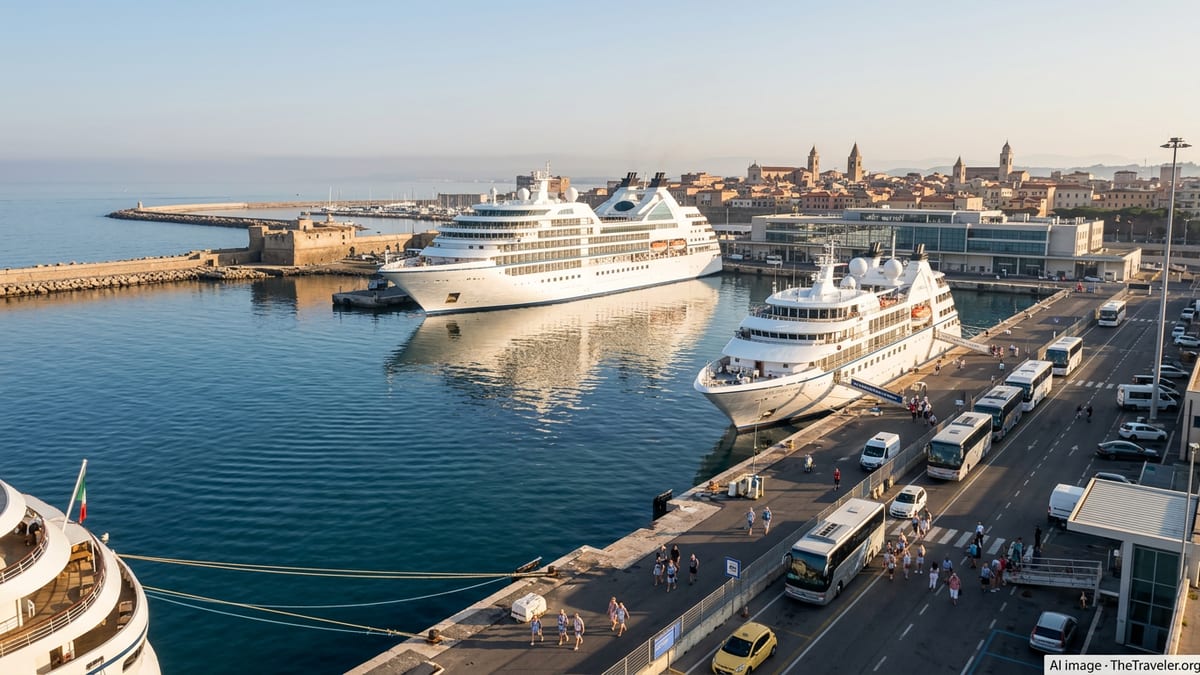
A Boutique Tuscan Port Comes of Age
Port Argentario, which brings together the historic harbors of Porto Santo Stefano and Porto Ercole under a coordinated development initiative, has worked over the past decade to reposition itself from a purely yachting and ferry enclave to a niche Mediterranean cruise destination. Publicly available planning documents show that the PortArgentario project was launched as a collaboration between the regional port authority and the municipality of Monte Argentario to integrate the area more closely into the wider Tuscan port system and tourism strategies.
The port’s evolution has been gradual but consistent. Early years focused on improving basic marine infrastructure, rationalizing berths and establishing operating procedures suitable for occasional small cruise calls. More recent investment has targeted passenger reception areas, tender operations and coordinated shore excursion logistics to support calls by larger ocean-going ships anchored off the peninsula and transferring guests ashore by tender.
Industry data for the Northern Tyrrhenian area indicate that while major hubs such as Livorno and Civitavecchia continue to dominate volumes, smaller ports along the Tuscan and Lazio coasts have recorded some of the fastest percentage growth in cruise calls. Port Argentario has positioned itself within this trend as a boutique stop that offers cruise lines an alternative to congested gateways, while still allowing access to Tuscany’s inland cultural attractions and the Maremma coastline.
Local tourism strategies emphasize the dual appeal of the port: the immediate draw of Monte Argentario’s coastal villages and natural landscapes, and the option to market calls as part of a broader “Greater Tuscany” cruise proposition. This positioning has proven attractive to both mainstream and upscale operators that are reshaping their Mediterranean itineraries to blend headline cities with less familiar, experience-focused ports.
Record 2026 Season Underlines a Decade of Growth
According to regional transport and port statistics for the Northern Tyrrhenian, the 2026 season is on track to be the strongest yet for cruise traffic across the system, with Argentario among the secondary ports benefiting from overall market recovery and redeployed capacity in the central Mediterranean. While Argentario’s absolute passenger numbers remain modest compared with larger Tuscan ports, available figures and schedule projections point to a clear upward trajectory in both calls and guests over the past ten years.
From an initial handful of experimental calls in the mid-2010s, the port has gradually built a more regular presence on Mediterranean deployment maps. Industry coverage of Central Italy’s ports notes that this decade of patient development has allowed Argentario to move from opportunistic, one-off visits toward inclusion in seasonal programs, particularly for spring and autumn itineraries that favor scenic and culturally rich smaller ports.
The 2026 season is described by Italian maritime news outlets as a record year for the wider Northern Tyrrhenian cruise cluster in terms of scheduled calls and passenger throughput, and Argentario’s inclusion in this narrative signals its maturation within the network. Cruise planners appear to be responding to strong demand for itineraries that combine established destinations with lesser-known coastal towns where crowding is less acute and shore experiences can be curated at a smaller scale.
This pattern reflects broader post-pandemic trends in the Mediterranean, where cruise lines have sought to diversify ports of call, tamp down congestion in the busiest hubs and highlight sustainability and community engagement. Argentario’s manageable size and environmental sensitivities, including its proximity to protected marine areas and natural reserves, align with these priorities and shape how cruise activity is being scaled.
Prestigious Maiden Calls Expand the Port’s Global Profile
A key feature of the current season is a series of maiden calls by internationally recognized cruise operators, ranging from large-ship brands to premium and luxury lines that specialize in destination-intensive itineraries. While detailed commercial schedules are typically handled directly between lines and local agents, publicly available port calendars and cruise deployment announcements highlight Argentario as a new stop on several central and western Mediterranean routes in 2026.
These inaugural visits are particularly significant for a port of Argentario’s size. They bring ships carrying several thousand guests in the case of mainstream operators, as well as smaller, higher-yield luxury vessels whose passengers tend to spend more per head on local excursions, dining and shopping. The combination broadens the port’s exposure across multiple market segments and raises its profile in international cruise marketing materials.
Industry commentary notes that lines are attracted by Argentario’s visual impact on arrival, with the peninsula’s rugged coastline, historic fortifications and pastel waterfronts lending themselves well to scenic cruising and tender operations. For passengers, maiden calls often feature prominently in itinerary descriptions, and Argentario’s debut on these routes is being promoted alongside better-known Tuscan and Lazio ports as part of a refreshed portfolio of central Italian destinations.
For the port, each first-time visit serves as both a test and a showcase of its operational readiness. Successful handling of these calls, including the coordination of tender flows, security checks and tour departures within compact waterfront spaces, supports the case for repeat business and expanded deployment in subsequent seasons.
Infrastructure, Access and Sustainability Shape Future Plans
Planning documents and regional port strategies for Tuscany underline that future growth in cruise traffic at Argentario will depend on carefully balancing capacity with environmental and community considerations. The peninsula’s limited road access and the small scale of its port areas mean that authorities have favored a model centered on controlled volumes, staggered arrival times and reliance on tender operations rather than extensive new pier construction for mega-ships.
Integration with the broader Tuscan port system also plays a role. Argentario is being positioned as a complementary call to major gateways such as Livorno, allowing cruise lines to design itineraries that distribute passenger flows more evenly across the region. This approach supports local tourism diversification, directing visitors toward coastal and rural areas that have traditionally seen fewer international arrivals compared with the principal art cities.
On the sustainability front, policy papers and regional discussions emphasize shore excursion design and visitor management as key tools. Small-group tours, walking itineraries within the historic centers of Porto Santo Stefano and Porto Ercole, and excursions that highlight nature reserves and local gastronomy are being promoted as ways to spread economic benefits while limiting pressure on the most sensitive sites and peak-period congestion.
Looking ahead, cruise analysts expect Argentario’s role to continue evolving within the Northern Tyrrhenian cruise network. If the port can maintain its balance between exclusivity and accessibility, and if lines remain committed to itineraries that showcase smaller, character-rich destinations, the record 2026 season may be remembered as the moment when Argentario secured a lasting place on the Mediterranean cruise map.