


More news on this day
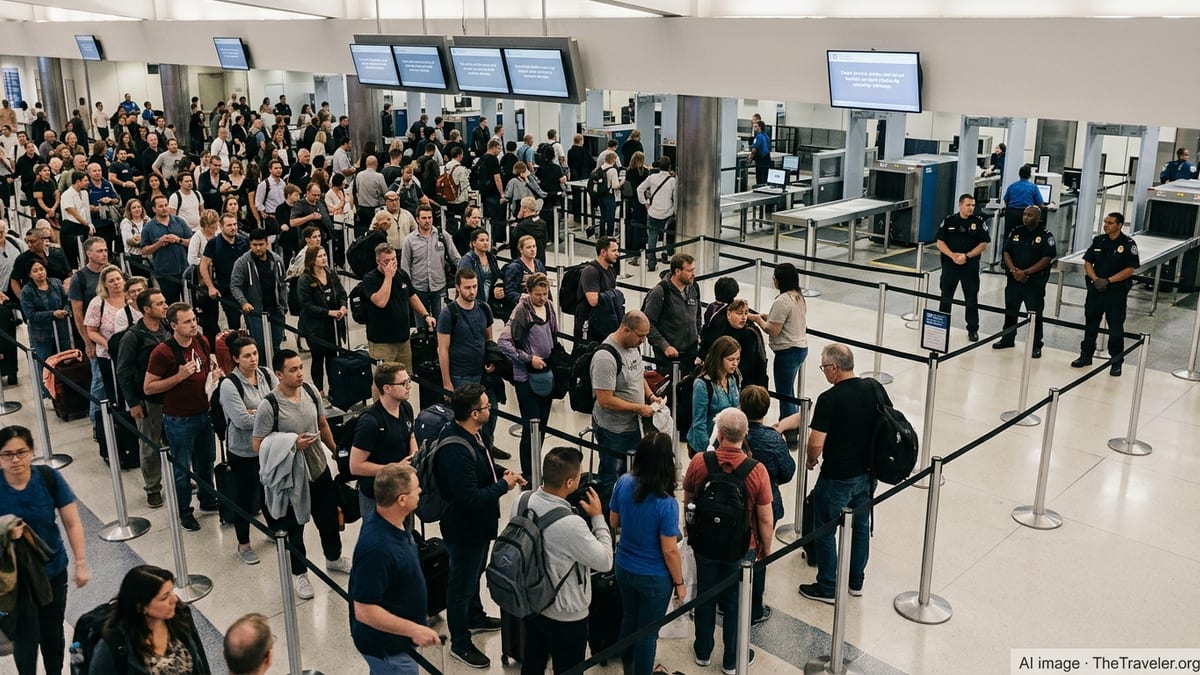
As millions of Americans take to the skies for Labor Day weekend, new data-driven rankings place both Dallas airports among the U.S. hubs with the highest odds of flight delays, putting travelers at the heart of a potential holiday bottleneck.
Get the latest news straight to your inbox!
Dallas Love Field Leads New Labor Day Delay Risk Model
A recently published analysis of historical Labor Day performance places Dallas Love Field at the top of a new ranking of U.S. airports most at risk for departure delays this holiday period. The model, compiled from five years of Bureau of Transportation Statistics Labor Day window data, assigns Love Field an implied delay probability of about 35 percent for departing flights, the highest figure among the 10 airports examined.
The analysis focuses on the Friday through Monday Labor Day travel window between 2021 and 2025, using on time performance records to estimate the likelihood of disruptions this year. According to the published methodology, implied disruption probabilities are calculated from past delay and cancellation patterns around the same holiday, effectively turning historical performance into forward-looking odds for travelers weighing their airport options.
Houston Hobby, another airport dominated by the same low cost carrier that drives most of Love Field’s volume, ranks just behind Dallas with an implied Labor Day delay risk of nearly 32 percent. The prominence of both airports in the ranking highlights how concentrated operations, tight scheduling and summer weather in the southern United States can combine to elevate disruption risk at specific regional hubs.
While the model is not a formal forecast of delays over the holiday, it provides a statistical snapshot of where travelers have historically been most likely to encounter late departures during one of the busiest long weekends of the year.
DFW’s Sheer Scale Magnifies Impact of Disruptions
Dallas Fort Worth International Airport does not sit at the very top of the new Labor Day risk table, but its role as one of North America’s largest hubs means any bout of bad weather or airspace congestion can ripple through national networks. Airports Council International’s latest traffic summary lists DFW as the second busiest airport in North America by total passengers, with nearly 88 million travelers in 2024 and a growth rate above 7 percent year over year.
DFW is also among the global leaders in aircraft movements. Separate rankings of flight operations show the airport handling more than 650,000 aircraft movements annually, underscoring its importance as a fortress hub for its primary carrier and as a connecting point linking dozens of domestic and international destinations. That scale, combined with the concentration of airline activity, can turn even localized thunderstorms into system wide headaches.
Recent holiday periods illustrate how vulnerable large hubs can be. Published coverage of last year’s Labor Day weekend described hundreds of delayed and canceled flights at DFW after heavy thunderstorms and flash flood warnings passed over North Texas, with Federal Aviation Administration advisories citing average delays of close to an hour as storms forced ground stops and flow restrictions. With similar passenger volumes expected again this year and peak travel clustered into a narrow window, any constraints on runway capacity or en route traffic could quickly translate into missed connections and rolling delays.
National performance data for 2024 also place DFW among the relatively small group of airports that appear on lists for both elevated delays and cancellations. A synthesis of Department of Transportation statistics notes that Dallas Fort Worth, Orlando and Tampa were the only three U.S. airports to feature on both the most delayed and most canceled rankings last year, reinforcing the picture of a high volume hub where disruptions can be frequent and far reaching.
Holiday Demand Surges Collide With Summer Weather
The Labor Day weekend traditionally marks the informal end of the U.S. summer travel season, and demand projections for Dallas are once again robust. In earlier seasons, DFW forecast more than 1.3 million passengers over the six day Labor Day travel period, an increase of more than 6 percent from the prior year, and local business reports this year point to similar or higher volumes as airlines add capacity from both DFW and Love Field to meet sustained leisure demand.
At the same time, national transportation statistics identify summer as the most delay prone period for U.S. air travel. Analyses of on time performance show that delays and cancellations tend to build throughout the day, especially in southern and eastern states prone to convective storms. By evening hours, the share of on time arrivals can fall sharply as early disruptions cascade across networks, a trend that is particularly relevant for connection heavy hubs such as DFW.
Dallas sits squarely in a region where late summer weather patterns can turn quickly, with intense thunderstorms, hail and flash flooding periodically disrupting operations at both airports. Past events have seen ground stops, diversions and extended tarmac delays as crews wait for lightning to clear and runways to be inspected. With runways, taxiways and airspace shared among tightly scheduled banks of arrivals and departures, even short interruptions can back up traffic well into the night.
For travelers, the combination of peak holiday demand, high utilization of gates and runways, and volatile weather creates conditions in which a statistical ranking of delay risk can rapidly translate into real world inconvenience. That is especially true at hubs where a single aircraft might be scheduled to operate multiple segments in a day, so a delay on an early leg can propagate through several subsequent flights.
Why Dallas Hubs Rank So High on Risk Lists
Several structural factors help explain why both Dallas airports surface near the top of current delay risk assessments. One is their role as key connecting points within their respective airline networks. DFW functions as the primary hub for one of the nation’s largest carriers, and federal aviation data classify it as one of the highest volume large hub airports in the country by passenger enplanements.
Love Field, while much smaller in absolute terms, effectively acts as a focus city and quasi hub for its main tenant carrier, with a high proportion of flights operating point to point across a dense short haul network. Travel industry analysts note that saturated schedules at concentrated hubs and focus cities can reduce buffer time between flights, leaving less room to recover when aircraft or crew are out of position.
Another factor is the broader performance profile of Dallas airports. Surveys of holiday travel disruption have placed both DFW and Love Field near the top of national rankings for departure delays in recent years, with one large scale report on holiday performance listing Dallas Fort Worth and Dallas Love Field among the five worst U.S. airports for departure delays across year end travel periods. When overlayed with Labor Day specific data, that historic tendency toward lateness amplifies the perceived risk.
Finally, Dallas airports must manage rapid growth. Regional planning documents for North Texas aviation show daily operations at DFW and Love Field increasing in step with the region’s population and economic expansion, with combined capacity estimated at more than 5,000 flights per day. That growth has supported billions of dollars in economic impact but has also tested infrastructure, from ramp space and baggage systems to air traffic control staffing, any of which can contribute to delays when stressed.
What Travelers Can Do to Reduce Their Odds of Disruption
With both Dallas airports flagged as higher risk hubs for Labor Day delays, travelers departing from or connecting through North Texas may want to adjust their plans accordingly. Data driven flight performance analyses repeatedly suggest that the first departures of the day are significantly more likely to operate on time, before weather and operational disruptions accumulate. Booking early morning flights from Dallas, even at the cost of an inconvenient wake up, can materially lower exposure to holiday delays.
Passengers may also benefit from building longer connection windows than usual when itineraries route through DFW, especially on peak travel days from Friday through Monday. A modest increase in scheduled connection time can provide a buffer if inbound flights experience moderate delays and can reduce the chance of missed onward flights that might be difficult to rebook during a crowded holiday weekend.
Travel insurance and disruption protection products have gained popularity as delays and cancellations have become more common. Industry research from major booking platforms shows a growing share of travelers purchasing add ons that cover missed connections, long delays or rebookings on alternative carriers. For those flying through airports with elevated statistical risk, these products may provide additional flexibility when schedules unravel.
Finally, travelers can monitor real time conditions at Dallas airports in the days leading up to departure, paying attention to weather forecasts, airline travel advisories and Federal Aviation Administration operations plans. While historical data provide a useful guide, day of performance will ultimately depend on a mix of local weather, national airspace constraints and airline specific operational factors that can shift quickly as the holiday weekend unfolds.
https://www.actionnetwork.com/content/labor-day-flight-delay-odds
https://www.ipx1031.com/holiday-travel-airport-statistics-report/