


More news on this day
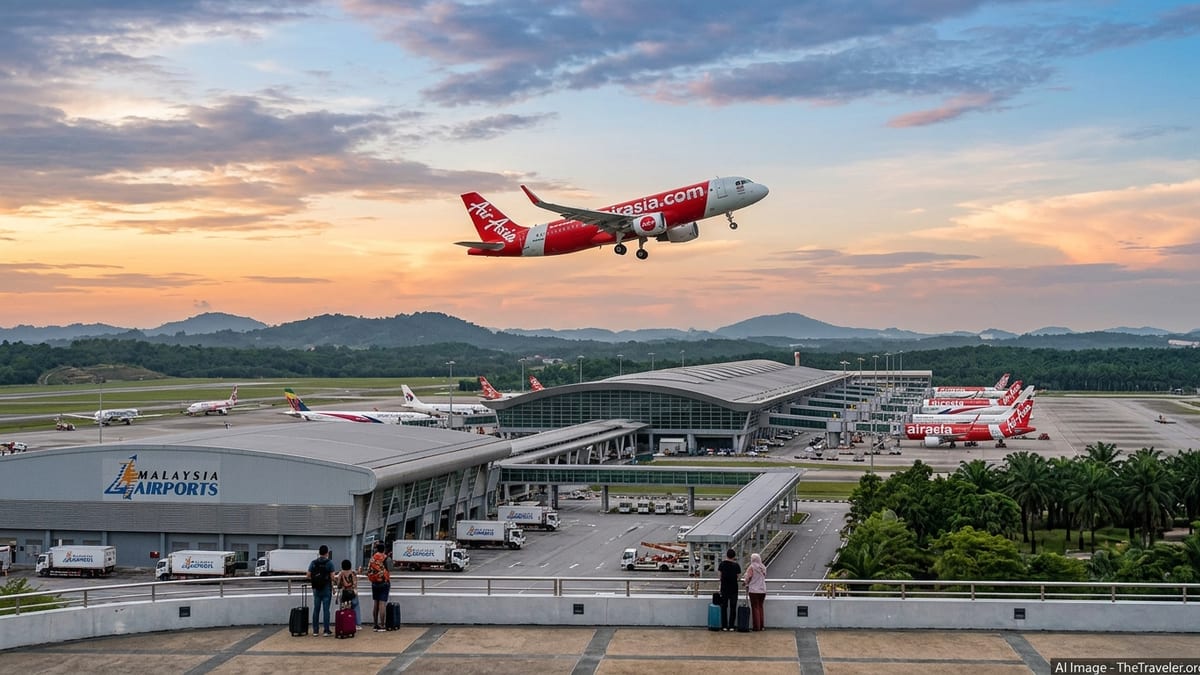
Malaysia Airports Holdings Berhad (MAHB) has confirmed it is in talks with AirAsia Group Bhd over a repayment plan for roughly RM500 million in overdue airport charges, a mounting liability that now sits alongside a broader funding squeeze at Southeast Asia’s largest low cost carrier and poses medium term questions for Malaysia’s fast growing tourism sector.
Get the latest news straight to your inbox!
RM500 million in unpaid fees and a fragile balance sheet
MAHB said in mid November 2026 that it is negotiating with AirAsia on how the airline will clear around RM500 million in unpaid charges for landing, parking and other airport services, confirming the scale of arrears that had been circulating in local financial reports. The sum relates to obligations owed to Malaysia’s airport operator and is separate from any bank borrowing or government backed loans.
According to a briefing on AirAsia’s finances cited by Malaysia’s Ministry of Finance, the airline’s current liabilities stood at about RM18.4 billion as of 30 June 2026, far outweighing its cash holdings. Consultancy firm Alton Aviation has been appointed to examine the group’s funding needs, with a mandate that includes assessing options to stabilise the balance sheet and reduce overdue payables.
People familiar with the situation told Reuters in early September that AirAsia is targeting up to US$1 billion in new international debt alongside about RM700 million in domestic credit lines, with the fundraising supported by the Finance Ministry. The airline reported a net loss of more than RM800 million for the second quarter of 2026, underscoring that operational recovery has not yet translated into sustained profitability.
Tourism boom raises the stakes for connectivity
The financial strain comes at a time when Malaysia’s tourism sector is expanding rapidly again. The Department of Statistics Malaysia’s Tourism Satellite Account 2025, released on 15 September 2026, estimated that tourism generated RM323.0 billion of value added in 2025 and contributed 15.9 percent of national GDP, up from 15.1 percent a year earlier.
Within that total, domestic tourism expenditure reached RM112.1 billion, with retail trade and food and beverage services accounting for a majority of tourism related activity. Official tourism agency data indicate that international arrivals in 2025 exceeded pre pandemic 2019 levels, helped by restored air links across Southeast Asia and to key long haul markets.
AirAsia has been one of the main beneficiaries and facilitators of that rebound. Company filings and recent government linked analysis show the airline group carrying close to 60 percent of Malaysia’s domestic passengers, giving it a central role in linking Kuala Lumpur and other hubs with secondary cities such as Kota Bharu, Kuala Terengganu and Miri. Any forced downsizing would therefore ripple quickly into overall seat capacity and fare dynamics.
Government weighs support options and replacement capacity
Malaysia’s authorities have already provided targeted assistance in the past, including a government guaranteed RM500 million loan facility approved in 2021 to help AirAsia through the pandemic era downturn. The new review by Alton Aviation, however, is intended to map out the airline’s future funding path rather than to pre judge any fresh bailout, and officials have not announced new direct support.
Reports in local business media indicate that the government has asked Malaysia Airlines and Batik Air in recent months whether they could absorb significant portions of AirAsia’s domestic market share if required. Executives at rival carriers have signalled that they would only contemplate taking over large route packages if associated aircraft leases or capacity were made available, which may limit how quickly secondary routes could be backfilled if AirAsia trims frequencies.
For now, aviation regulators and policymakers face a dilemma: preserving a carrier that underpins domestic and regional connectivity, particularly for price sensitive travelers, while avoiding an open ended commitment of public funds. Scenario planning has so far focused on ensuring that critical trunk routes between major Malaysian cities retain enough capacity in the event of any restructuring.
What travelers are seeing now and what to watch next
As of mid November 2026 there has been no announcement of a broad route shutdown, mass cancellations or a suspension of AirAsia’s operating licence in Malaysia. The airline continues to sell tickets across its domestic and international network, and government statements have framed the current review as precautionary rather than a response to imminent insolvency.
Nonetheless, the combination of sizeable arrears to MAHB, high overall debt and reliance on new external financing increases the risk that schedules may be adjusted over the medium term. Travelers using secondary domestic routes or thinner cross border links should pay close attention to timetable changes, as these services are typically more vulnerable to frequency cuts if aircraft are redeployed to higher yielding routes.
Key developments to watch in the coming weeks include whether AirAsia and MAHB finalise a binding repayment schedule for the RM500 million in outstanding airport charges, and whether the airline secures the targeted US$1 billion and RM700 million funding package. Until those details are confirmed, travelers planning trips within Malaysia in 2027 may wish to monitor booking conditions, check for flexible change policies and verify flight status closer to departure, particularly during peak holiday periods.