


More news on this day
A rare nationwide ground stop ordered by the Federal Aviation Administration on Friday, November 13, halted most U.S. departures for hours after a telecommunications failure, triggering days of disrupted flights that rippled into crowded airport hotels, missed cruise embarkations and extended post-cruise stays in key gateway cities.
Get the latest news straight to your inbox!
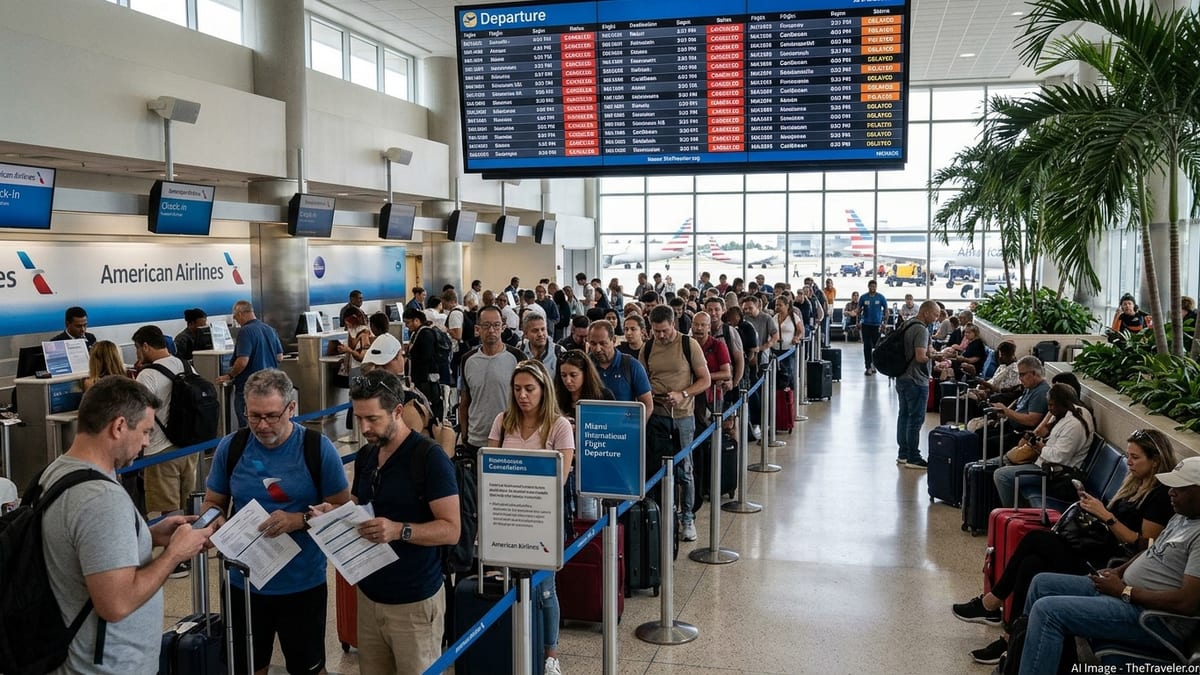
Telecom failure triggers hours-long halt and mass cancellations
According to the FAA, a telecommunications failure affecting multiple Air Route Traffic Control Centers on Friday afternoon led the agency to order a nationwide ground stop on all departing flights from U.S. airports "due to extraordinary circumstances and reasons for safety." The order took effect in the late afternoon Eastern time and was lifted after more than four hours, once the network was stabilized and controllers could reliably see and communicate with aircraft again.
In a detailed question-and-answer document published on November 15, the FAA said preliminary findings point to unstable behavior in its legacy communications infrastructure after a new router deployment caused data to flood the FAA’s Fiber to the Terminal (FTI) network at roughly 1,000 connection attempts every four to five seconds. The overload degraded radar and voice communications at 17 of the country’s 22 en‑route centers, prompting the systemwide pause on departures while already airborne flights continued under positive control.
The agency said there is currently no evidence that the outage was caused by a cyberattack or hostile act, and Transportation Department and Homeland Security officials have repeated in briefings that the working theory involves interactions between the new routers and older FAA systems, which have since had affected router functions disabled pending further investigation. New router installations have been paused while hardware and configuration testing continues in a lab environment.
Flight disruption extends through the weekend at major hubs
The immediate effect on flight operations was severe. The FAA’s own summary indicates that roughly 12,400 flights were canceled on November 13 alone, including more than 9,000 cancellations by major U.S. airlines, with many more delayed as the ground stop took hold and carriers halted departures in mid-afternoon. Flight status trackers cited by federal and local reports show that by Friday evening, the number of aircraft in U.S. airspace was a fraction of normal levels and departures were only slowly restarting.
Recovery at major hubs stretched into the following days. Data compiled from FlightAware and summarized by local outlets indicate that cities such as Dallas–Fort Worth, Detroit, Miami and Fort Lauderdale continued to see elevated cancellations and rolling delays through Sunday, November 15, as airlines repositioned aircraft and crews. A FEMA operational briefing for November 15 noted thousands of additional delays and cancellations nationwide and warned that residual disruption was likely to continue until at least Monday, November 16, while schedules were reset.
Individual traveler accounts collected by local and national media highlight how the knock-on effects played out at airport level after the FAA lifted the order. Passengers reported spending 10 to 14 hours in terminals waiting for replacement flights, or being rebooked for the next day when crews timed out or aircraft were out of position. In some cases, people opted to abandon flights in favor of long ground journeys when it appeared that their trips would otherwise stretch into multiple days.
South Florida cruise gateways feel the strain
In South Florida, where Miami International Airport (MIA) and Fort Lauderdale–Hollywood International Airport (FLL) serve as primary gateways for the Caribbean cruise market, the timing of the ground stop on a busy Friday and the following Sunday turnaround day created particular pressure. Local television reports from November 13 showed arriving passengers at MIA and FLL facing long lines, repeated departure time changes and late-night rebookings shortly after the nationwide order was lifted.
By Sunday, November 15, CBS Miami reported that terminals at MIA were still backed up as three groups converged: passengers rebooked after the ground stop, travelers dealing with unrelated mechanical issues and large numbers of cruise guests flying home at the end of their voyages. The station highlighted at least one cruise passenger stuck at a hotel in Puerto Rico since Friday when her Fort Lauderdale-bound flight was canceled during the ground stop, forcing her family to extend their stay and search for new space-limited return options into South Florida.
Other South Florida coverage documented travelers who disembarked cruises over the weekend only to find their homebound flights delayed for many hours or rebooked to the following day. Some were unable to secure same-day departures and turned to airport-area hotels, only to encounter limited availability and higher last-minute rates near both MIA and FLL as stranded flyers, delayed cruise passengers and regular weekend travelers competed for rooms.
Stranded flyers crowd hotels and miss or shorten cruises
The air network disruption quickly translated into stress on hotel capacity in multiple markets. National wire-service coverage described travelers in several cities, including South Florida and Southern California, who were forced to search widely for vacancies after late-night cancellations, in a few cases securing rooms miles from the airport when closer hotels were sold out. Some passengers slept in terminals when they could not find or afford available rooms at short notice.
For cruise travelers, the most acute impacts fell into two categories. First, guests returning from sailings into Miami and Fort Lauderdale faced extended post-cruise stays when onward flights were canceled or delayed, occasionally adding one or more unplanned hotel nights and meals to their trip. Second, would-be cruisers flying into Florida reported missing embarkation altogether when they could not reach their departure port in time on Friday or Saturday, or having to shorten trips by joining itineraries at a later port when the cruise line permitted.
Major airlines acknowledged the disruption by publishing travel waivers that allowed customers booked around November 13 to change U.S. domestic and some international itineraries without change fees, provided travel took place within specified rebooking windows. However, these waivers generally did not cover separate cruise bookings, hotel costs or other trip components, leaving many travelers to absorb the cost of missed embarkations or extra hotel nights. Some hotel operators in airport districts reported elevated occupancy and last-minute bookings over the November 13 to 16 period but have not characterized the spike as anything more than a short-lived surge tied to the one-time event.
What travelers should do next and pending FAA fixes
For travelers planning cruises or complex itineraries through U.S. gateways such as Miami, Fort Lauderdale or other major hubs, the incident underscores the value of time buffers built into air and sea schedules. Industry guidance commonly recommends arriving at the cruise departure city at least one day before embarkation; the November 13 ground stop and subsequent delays suggest that adding extra margin, especially during busy periods, can reduce the risk of missing a sailing when air systems experience large-scale disruption.
The FAA and Department of Transportation, meanwhile, have outlined early steps to prevent a repeat. The agency has temporarily paused new installations of the router model associated with the November 13 event and disabled the specific functionality that contributed to the data flood on already installed units. Officials say they are accelerating assessments of legacy server and network infrastructure and are preparing a plan to replace or harden aging components in the FTI network, subject to congressional funding and procurement processes that have not yet been finalized.
Transportation officials have signaled that additional public findings will follow as the root-cause investigation continues and as the FAA details a schedule for broader infrastructure upgrades. Travelers can expect airlines to continue adjusting schedules in the short term as they normalize fleets and crews, but there is no indication at this point of long-term reductions in service due solely to the ground stop. Those booking cruises or tight connections through affected gateways in the coming weeks may wish to monitor airline waivers, verify flight status frequently, and maintain flexible plans in case residual disruptions persist longer than anticipated.