


More news on this day
Newly published pricing surveys show that renting a car directly at many U.S. airports has become markedly more expensive for summer 2026 and upcoming holiday periods, with localized shortages and sharp price differentials emerging at some high-demand gateways.
Get the latest news straight to your inbox!
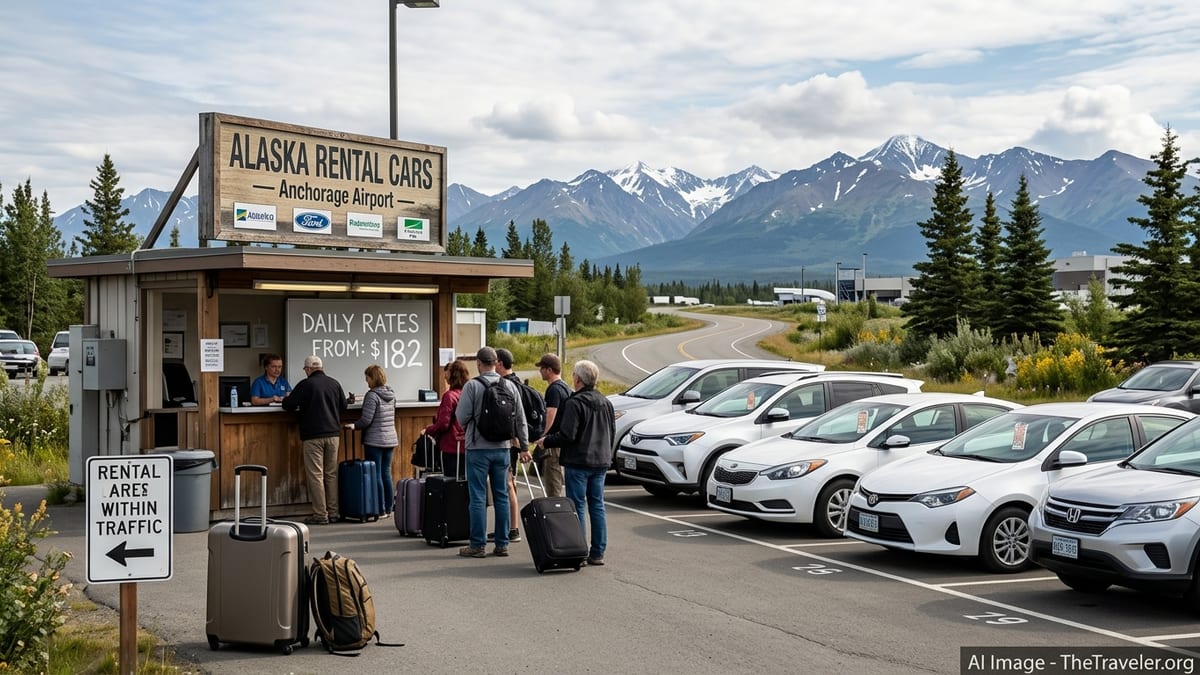
Airport survey finds Anchorage at the top of U.S. rental prices
A summer 2026 survey of 100 U.S. airport locations by price-comparison site Cheapcarrental.com found that on-airport rentals averaged 82.90 dollars per day for the most affordable car between 1 June and 31 August 2026, an increase of more than 13 percent compared with summer 2025. Anchorage ranked as the most expensive airport in the study, with an average daily rate of 182 dollars, more than double the national airport average and ahead of other high-priced leisure markets such as Bozeman Yellowstone and several airports in the U.S. Northeast.
The same survey highlighted how uneven the picture is across the country. At the lower end of the spectrum, Jacksonville and Tampa recorded average daily rates of about 45 dollars, while Albany, New York, averaged 146 dollars and Boston 136 dollars. New York’s LaGuardia and JFK airports came in at roughly 115 dollars and 104 dollars a day respectively, underlining that the sharpest pain points are concentrated in a subset of busy leisure and regional markets rather than at every major hub.
Washington’s Reagan National Airport showed the largest year-on-year jump in the survey, with average daily prices for the least expensive car more than doubling from 2025 levels. That pattern is consistent with what many travelers are seeing when searching for cars around peak dates, particularly in locations where fleets are tight or where local taxes and customer facility charges have recently increased, such as at Anchorage’s rental car center.
Corporate travel forecasts show structurally higher but stabilised rates
While the airport survey focuses on leisure-heavy U.S. gateways, recent global corporate travel forecasts point to a broader picture of car rental pricing that has largely stabilised at a higher baseline than before the pandemic. The CWT and GBTA 2026 Global Business Travel Forecast reported that average global daily car rental rates rose 6.1 percent in 2024 to 45.40 dollars and were projected to reach about 46.70 dollars in 2025, noting that car supply is now better aligned with demand even as prices remain elevated relative to pre-2020 levels.
Updated GBTA research looking out to 2027 indicates that managed car rental rates dipped in 2025, are expected to rise again in 2026 and then level off. In this outlook, car hire remains one of the more expensive components of ground transport for business trips, but the report does not project a return to the extreme dislocations of 2021 and 2022. Instead, it suggests a more typical demand-driven pattern where tight periods around major events or holidays produce short-lived spikes and, occasionally, localised shortages when fleets are fully committed.
For individual travelers, these forecasts translate into a market where headline prices at airport counters may look high by historical standards but are no longer in a state of continuous crisis. Instead, the current challenge is navigating a structurally higher price floor, particularly at locations where leisure and business demand overlap or where airport-specific fees significantly inflate base rates.
What recent consumer audits show in New York and other major cities
Consumer-facing analyses echo the survey findings that airport locations and peak dates now command a noticeable premium. An October 2026 NerdWallet review of rental pricing gathered more than 1,800 quotes across 20 U.S. cities from nine major brands, sampling bookings seven, 52 and 91 days before pickup. The study focused on the cheapest non-electric economy cars and compared airport and neighborhood locations where both were available, primarily for weeklong rentals.
Although the methodology differs from the summer airport survey, the consumer audit found that large metropolitan areas, including New York, frequently posted some of the highest average weekly costs, particularly at airport locations and around popular travel periods. Neighborhood branches within the same metro sometimes delivered lower totals, but the gap was inconsistent and could narrow or disappear for last-minute bookings, underscoring that there is no single “cheap” channel in every city.
Other public data points suggest that airport rentals can also be pushed higher by local concession fees and per-day customer facility charges, which are layered on top of the base rate and taxes. In Anchorage, for example, state transportation notices detail adjustments to per-day facility charges at the airport’s rental car center in 2026, contributing to the already high daily costs reflected in the summer survey. Travelers comparing prices should factor in these location-specific surcharges when weighing airport against off-airport pickups.
Why prices are higher and how it affects trip planning
Industry reports trace the current pricing environment to a combination of factors rather than a single cause. Car rental companies reduced and then rebuilt their fleets after the pandemic period, while facing higher vehicle acquisition costs and increased financing and operating expenses. Strong leisure demand, particularly around school holidays and to destinations reliant on driving rather than public transport, has kept utilisation high at many airports during peak weeks.
Company-specific decisions, such as Hertz’s 2024 and 2025 strategy to sell a portion of its electric vehicle fleet, have attracted attention but represent only one element in a wider market. Available data does not support the idea that EV pullbacks alone are responsible for current nationwide pricing or availability patterns. Instead, local demand surges, constrained fleets and airport fee structures appear to be the primary drivers of the sharpest price jumps documented in the recent airport survey.
For travelers, the main practical consequence is that renting a car at a popular U.S. airport during busy periods can now require more advance planning and a larger share of the trip budget than before 2020, even though the worst of the pandemic-era disruptions has passed. Genuine “shortages” tend to occur when demand for specific vehicle types or travel dates outstrips the cars that agencies are willing to position at a location, resulting in sold-out dates or very limited last-minute options rather than an across-the-board lack of vehicles year-round.
What to expect for 2027 bookings and how to keep costs down
Forecasts from GBTA and its partners suggest that global car rental pricing is likely to remain firm through 2026, with moderate increases and regional variation, before stabilising into 2027. For U.S. leisure travelers planning ahead for 2027, that implies that today’s elevated airport rates may persist rather than retreat substantially, though they are not projected to return to the most acute levels seen during the initial post-pandemic rebound.
Travelers looking to contain costs or avoid localised shortages can take several evidence-based steps. Booking early for peak periods such as the summer school holidays or the Thanksgiving and end-of-year travel windows can secure a wider choice of vehicles before fleets tighten. Monitoring flexible reservations and rebooking if prices fall, as suggested by consumer pricing audits, can also help manage costs when rental companies adjust rates closer to departure.
Comparing airport and off-airport locations, while including the cost and time of transfers, remains a useful strategy in markets where airport fees materially raise the total price. In destinations with robust public transport or widespread rideshare coverage, some travelers may find that combining trains, buses or ride-hailing with occasional day rentals from neighborhood branches offers better value than a continuous airport rental. Given how quickly rates can change, especially during sales or schedule disruptions, travelers planning for 2027 should treat today’s survey figures as a guide to relative differences between airports and booking strategies, and always recheck live prices before committing.