


More news on this day
Deutsche Bahn and Renfe are moving to expand long-distance and cross-border rail services ahead of the Easter holiday period, adding seats and preparing new rolling stock as leisure demand rebounds across Europe.
Get the latest news straight to your inbox!
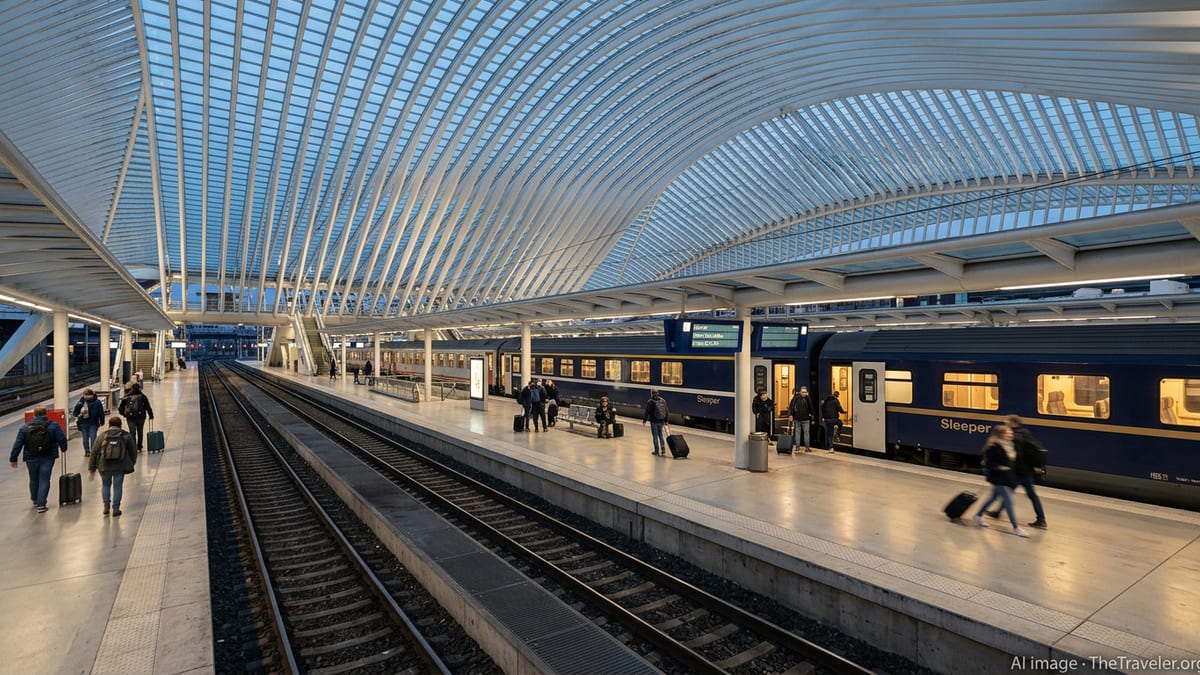
Holiday timetables stretch to meet Easter demand
Across Europe, Easter remains one of the first major travel peaks of the year, and publicly available information shows that both Deutsche Bahn and Renfe are positioning rail as a primary alternative to short-haul flights. In Germany, DB’s long-distance network is being reinforced around the main getaway days, with additional trains and longer consists timed to coincide with school holidays and public festivities.
Reports on DB’s ticketing platforms highlight extra capacity on busy north–south and east–west axes, including routes linking the Rhine-Ruhr region with Bavaria and the Baltic coast. Discounted long-distance fares and saver offers, which can be booked several months in advance, are being promoted to spread demand away from the most congested departure times in the Easter window.
In Spain, Renfe’s Easter strategy is centred on boosting the number of available seats across its high-speed and long-distance network. Recent company updates describe millions of seats being offered over the Semana Santa period, particularly on corridors such as Madrid–Andalusia, Madrid–Barcelona and the Mediterranean axis to Valencia and Alicante. The operator is also using promotional campaigns to highlight rail as a convenient way to reach traditional Holy Week destinations.
Cross-border focus: Germany, France, Poland and Central Europe
Deutsche Bahn’s preparations ahead of Easter are closely linked to its broader push to expand cross-border services. Railway industry coverage indicates that DB is investing in adapting its ICE 3neo fleet for wider European deployment, including in France and Poland. These upgrades aim to support more through services on international routes once approvals are in place, increasing options for passengers planning multi-country journeys over long holiday weekends.
While many of these ICE 3neo modifications will come into full effect over the next timetable periods, they form part of a long-term strategy in which the Easter peak is an early stress test. The enhanced fleet is expected to underpin denser timetables between major German hubs and neighbouring countries, helping to reduce journey times and offer more direct connections that compete more strongly with air travel.
For Renfe, the cross-border picture extends beyond the Iberian Peninsula into Central Europe. Publicly available company information shows that Renfe, through its stake in Czech operator Leo Express, is deploying Talgo VI trains on international routes linking the Czech Republic, Slovakia, Poland and Germany. These services, which are ramping up through 2026, will complement seasonal peaks such as Easter by adding new options for passengers travelling between Central European capitals and Germany.
Asset sharing deepens ties between DB and Renfe
The expanding relationship between Deutsche Bahn and Renfe is not limited to parallel capacity increases for Easter. Industry media report that Renfe has acquired passenger coaches from DB with the intention of leasing them to Leo Express, in which Renfe is the main shareholder. This transaction is designed to support new and expanded services, including future Prague–Munich operations that will directly connect the Czech Republic and Germany.
By repurposing rolling stock sourced from DB and placing it into service via Renfe’s leasing arm, both groups are effectively tightening their operational links. The arrangement allows Renfe to maximise the use of its European assets while giving Leo Express a faster route to fleet expansion. It also signals a pragmatic form of cooperation in which vehicles originally built for the German network will help carry international passengers under the Spanish group’s umbrella.
For travellers, these moves are expected to translate into more through connections and a wider choice of operators on cross-border routes. Around busy periods such as Easter, the additional capacity offered by this shared asset strategy could help relieve pressure on popular international trains and smooth out some of the bottlenecks regularly seen at peak times.
Fleet expansion and reliability underpin holiday services
Both Deutsche Bahn and Renfe are pairing seasonal capacity boosts with longer-term fleet renewal plans, which are critical for maintaining reliability during holiday peaks. In Germany, DB’s ongoing investment programme in long-distance trains and infrastructure is aimed at reducing cancellations and delays on core intercity and high-speed routes that are heavily used during Easter and summer holidays.
Renfe, meanwhile, is working to strengthen its high-speed offering after a challenging period marked by rolling stock issues and an accident that temporarily shifted attention to network restoration. Specialist rail coverage indicates that the company has resumed major procurement plans for new high-speed trainsets capable of operating at up to 350 kilometres per hour, with the goal of supporting both domestic growth and future international services.
This renewed focus on fleet robustness is particularly significant at Easter, when any disruption has a disproportionate impact on passengers travelling for family gatherings or religious events. By bringing additional trainsets into service and upgrading existing stock, Renfe aims to increase frequencies on key corridors and safeguard peak-period timetables from last-minute cancellations.
What the expanded offer means for Easter travellers
The combined effect of DB and Renfe’s initiatives ahead of Easter is a denser network of high-speed and long-distance options for travellers moving within and between Germany, Spain and Central Europe. More seats, additional departures and modernised trains support a gradual shift from car and air travel to rail for medium-distance journeys, particularly for passengers who value centre-to-centre connections.
For holidaymakers planning multi-country itineraries, the deepening links via Leo Express and the future deployment of upgraded ICE 3neo units promise better connectivity across borders. As Easter demand grows, these expanded services are likely to play a growing role in how Europeans schedule their first major trips of the year, turning the holiday period into a bellwether for the continent’s evolving rail network.