


More news on this day
Deutsche Bahn has begun equipping staff on its long-distance ICE and Intercity trains with body-worn cameras, extending a security measure already in use on regional services as reports highlight rising attacks on rail employees across Germany.
Get the latest news straight to your inbox!
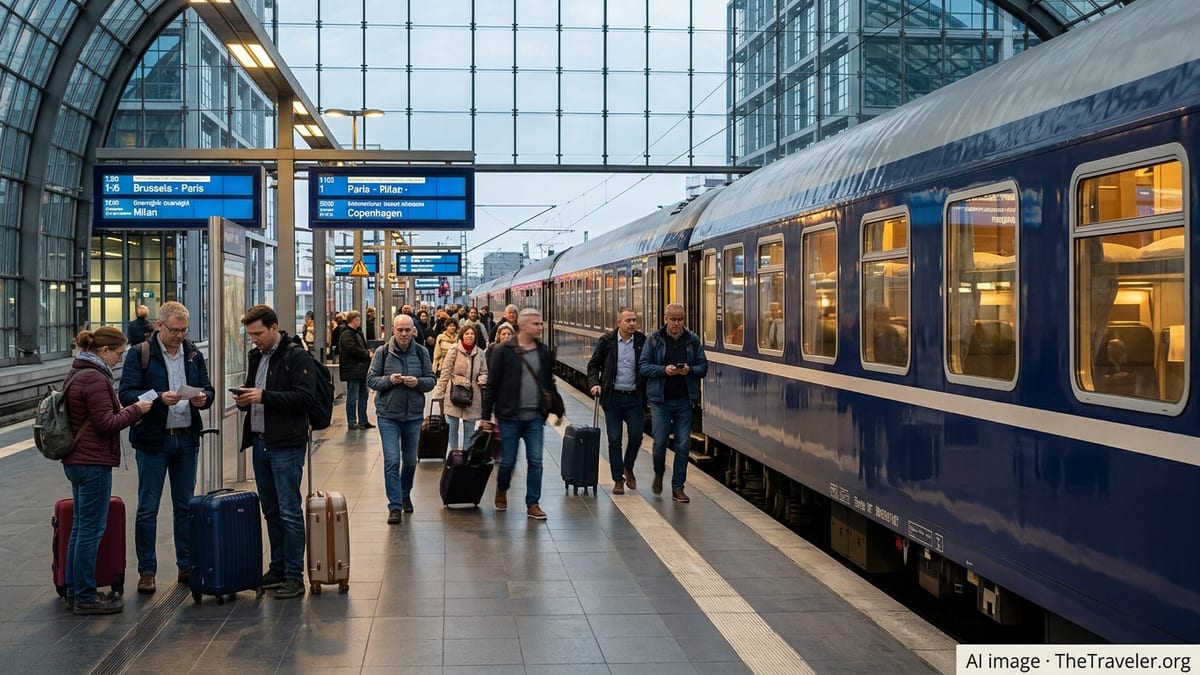
Voluntary bodycams arrive in Germany’s long-distance rail cabins
According to recent German media coverage, long-distance train crews on Deutsche Bahn services can now choose to wear body-worn cameras while on duty, with the rollout covering both ICE high-speed and Intercity trains. The company had already introduced bodycams for security staff and some regional train personnel in previous years, but this is the first time the technology is being systematically offered across the long-distance network.
Reports indicate that the cameras are worn visibly on the uniform and are not recording continuously. Instead, they are activated by staff in situations perceived as threatening or escalating. The move is described as an expansion of measures that have already been tested on other parts of the network and in pilot projects with train attendants.
Publicly available information shows that footage is stored for a limited time and is intended primarily for use by law enforcement in the event of criminal complaints. Deutsche Bahn’s security concept states that federal police are responsible for accessing and evaluating recordings, in line with German data protection and privacy rules.
The introduction in long-distance services aligns with a broader security strategy at the company, which has invested heavily in station and onboard surveillance in recent years. The annual security reporting of Deutsche Bahn highlights tens of thousands of fixed cameras across stations and regional trains, with bodycams presented as an additional tool focused specifically on staff protection.
Rising attacks on rail staff push security higher on the agenda
The expansion of bodycams comes against a backdrop of rising violence against railway employees. Coverage by German news outlets citing federal data notes that reported attacks on staff at Deutsche Bahn and other rail operators increased between 2024 and 2025, reaching close to 2,700 incidents. Industry associations have warned that verbal abuse, threats and physical assaults have become a regular concern for front-line workers such as conductors and customer service agents.
Trade unions and passenger groups have for several years drawn attention to incidents on busy commuter and regional routes, but more recent reporting suggests that long-distance services are not immune. Peak holiday periods, major events and crowded weekend trains are repeatedly identified as moments when tensions can rise, for example during disputes over tickets, seat reservations or delays.
In this environment, bodycams are promoted by the rail sector as a deterrent rather than only a tool for collecting evidence after an incident. Published material from Deutsche Bahn’s earlier pilots in regional services points to cases where the visible presence of a camera reportedly de-escalated conflicts before violence occurred. The company describes the devices as one component among many, alongside increased patrols, better staff training and closer cooperation with police.
Critics, including some civil liberties advocates, have nevertheless raised concerns in past debates over body-worn cameras in public spaces. They argue that more surveillance may not address underlying issues such as overcrowding, inadequate staffing or high levels of passenger frustration linked to delays. For international travelers, the growing presence of visible cameras on staff is likely to sharpen perceptions of German trains as both highly monitored and increasingly focused on security.
What travelers on ICE and Intercity services can expect
For passengers riding long-distance trains in Germany, the most obvious change is the sight of conductors and customer service agents wearing small devices attached to their uniforms. Current information suggests that staff are required to provide a visual or verbal indication when recording is started, in line with German rules for body-worn cameras used in public settings.
Reports on the new rollout state that participation is voluntary for employees, following the pattern already established in regional operations. Staff must complete specific training on legal and technical aspects before receiving a device. Early figures from regional services indicate that roughly one third of eligible customer service staff have opted to use bodycams, suggesting that adoption on long-distance routes may also grow gradually rather than overnight.
For international visitors, the policy may resemble developments in other European transport systems, where bus and rail operators increasingly rely on cameras to protect personnel. While some travelers may feel reassured by the extra security presence, others could be wary of the expanded use of video recording in shared public spaces, especially in confined train compartments or night services.
Travelers should be aware that the cameras are primarily aimed at protecting staff and documenting serious incidents, not at enforcing minor rules. Available descriptions of the program emphasize that footage is generally stored for a limited period and then deleted if no incident is reported within that timeframe.
Balancing security, privacy and the rail travel experience
The decision to extend bodycams to long-distance staff highlights the challenges of balancing security and privacy on Europe’s busiest rail network. Deutsche Bahn’s long-distance services carry millions of passengers each month across Germany and into neighboring countries. At the same time, the system has faced ongoing criticism for punctuality problems and overcrowded trains at peak times, both of which can heighten tensions on board.
Security specialists quoted in German media describe bodycams as one layer in a broader set of measures that includes more visible staff presence, station patrols, conflict management training and better reporting of incidents. For travelers, these efforts may translate into more uniformed personnel on platforms and in carriages, as well as clear signage indicating the presence of video technology.
Privacy advocates, however, regularly call for transparent rules about how footage is handled, who can access it and for how long it is stored. Published guidance from data protection authorities in Germany stresses the importance of strict limits, documentation of each recording, and clear information for the public when bodycams are in operation. As the technology becomes more common on long-distance services, those questions are likely to feature more prominently in public debate.
From a travel perspective, the rollout underscores how major rail operators in Europe are reshaping the onboard experience to respond to changing security expectations. For visitors planning long-distance journeys across Germany, the presence of bodycams will increasingly be part of the visual landscape alongside more familiar elements such as digital reservation displays and onboard Wi-Fi.
Implications for Germany’s role as a rail travel hub
Germany’s long-distance rail network plays a central role in European overland travel, linking cities such as Paris, Amsterdam, Zurich, Vienna and Prague through high-speed and Intercity routes. As the country works to attract more travelers away from short-haul flights, public perceptions of safety and reliability on its trains become particularly important.
Recent performance figures have shown persistent challenges with punctuality and overcrowding on busy corridors, fueling public debate about the quality of service. Against that backdrop, the expansion of bodycams can be read as a signal that Deutsche Bahn is seeking to strengthen staff protection and passenger confidence, even as it tackles broader operational issues through infrastructure upgrades and timetable adjustments.
For international tourists, the measure may offer reassurance that staff are better equipped to handle difficult situations, especially on late-night or cross-border services. At the same time, travelers attuned to privacy concerns may see the shift as part of a wider trend toward more intensive surveillance in public transport.
How the new policy is perceived will likely depend on everyday experience on board: whether bodycams remain a largely unobtrusive presence that helps calm tensions when needed, or whether their use sparks controversy in specific incidents. As Germany continues to promote rail as a comfortable and climate-friendly way to cross the country, the long-distance bodycam program will be a closely watched element of its evolving security strategy.