


More news on this day
Sharjah International Airport is preparing for one of its busiest summer seasons on record, with millions of passengers expected to pass through its single-runway hub over the peak July and August holiday period. For travellers, the combination of heavy demand, higher fares and tighter schedules means that avoiding delays now depends as much on planning on the ground as it does on what happens in the air.
Get the latest news straight to your inbox!
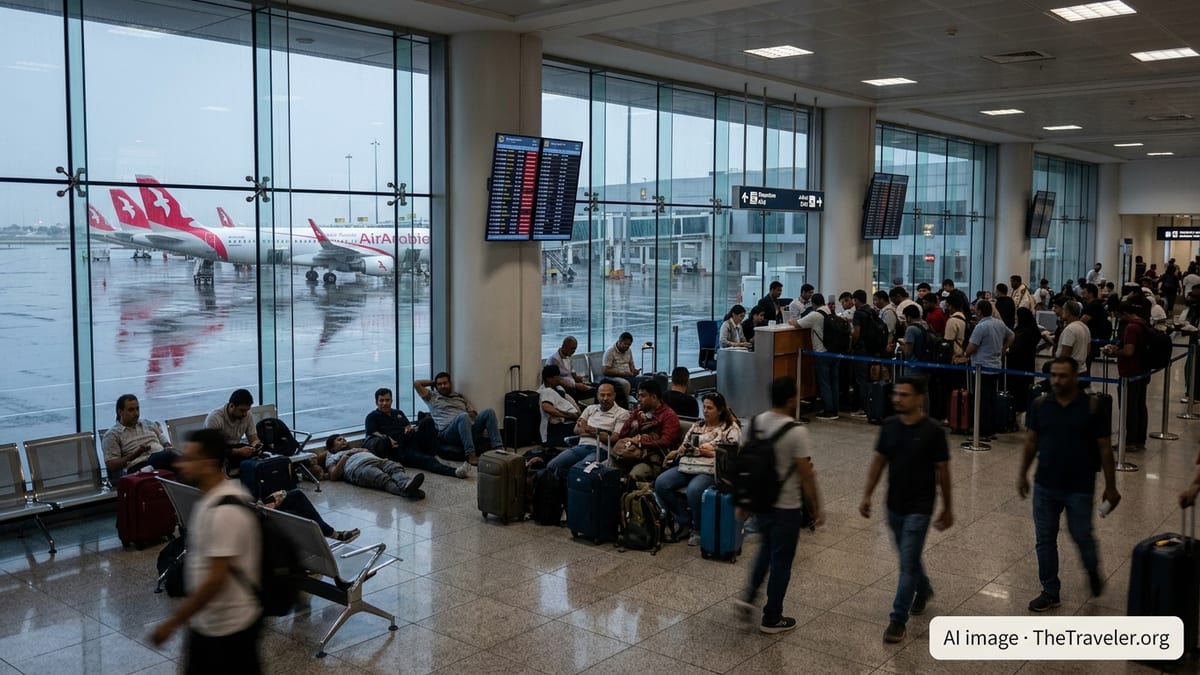
Summer surge puts extra pressure on a single-runway hub
Sharjah International Airport has grown into a major low cost and regional gateway, supporting strong demand from residents and transit passengers across the Gulf, South Asia and beyond. Publicly available figures show that the airport has been handling steadily rising passenger volumes in recent years, and local media coverage indicates that operators expect around three million travellers and roughly 19,000 flight movements over the core summer peak in 2026.
Unlike some larger hubs in the region, Sharjah operates with a single runway, which means any disruption or bunching of arrivals and departures can quickly translate into congestion on the ground. Aeronautical publications for the United Arab Emirates highlight temporary taxiway closures and infrastructure works in the Sharjah area in 2026, which can further limit operational flexibility at busy times. While such measures are designed to maintain safety and efficiency, they can also contribute to queues on stands and at boarding gates when traffic is heavy.
The broader aviation backdrop is also challenging. Regional and international analysis points to strong global demand for flights this year, particularly over school holidays and religious festivals, at a time when many airlines are still adjusting capacity and dealing with higher fuel costs. For passengers using Sharjah Airport, this translates into fuller flights, tighter turnaround times and less margin for error if they arrive late, have incomplete documents or encounter delays at security or immigration.
Travel advisories and industry reports covering the UAE note that while air navigation in the country has largely returned to normal after earlier regional disruptions, pressure points remain around peak travel weekends. As a result, travellers departing from Sharjah during July and August are being urged by airlines and travel agents in public guidance to treat the season as an extended peak, rather than a short rush around a single holiday.
Timing your arrival to beat peak queues
One of the most effective ways to avoid delays at Sharjah Airport this summer is to adjust arrival times to reflect peak-season realities. Guidance shared by major Gulf carriers operating from nearby hubs suggests arriving at least three hours before departure for economy passengers during the busiest weeks, with more time advisable for long haul flights or when travelling with children or large amounts of baggage.
Sharjah’s role as a popular base for low cost and regional carriers means that departure waves often cluster in the late evening and early morning, when travellers connect to South Asia, North Africa and beyond. Local travel forums and community discussions indicate that the period from roughly 10 p.m. to the early hours can see particularly dense crowds at check in and security, especially on weekends. Where flight options allow, choosing a midday or mid afternoon departure can significantly reduce waiting times at counters and security lanes.
Passengers should also factor road traffic into their planning. Commuter congestion between Dubai, Sharjah and Ajman, as well as around industrial and residential districts feeding into the airport corridor, can be intense in the late afternoon and early evening. Residents posting on regional travel forums frequently report underestimating the time needed to reach Sharjah Airport from western Dubai suburbs on a workday, especially when accidents or roadworks slow traffic on key highways.
Allowing an extra 30 to 60 minutes for the road journey during summer, particularly on Thursdays, Fridays and the eve of public holidays, can provide a buffer against unexpected jams. Travellers relying on taxis or ride hailing services should book well in advance where possible, as high demand and surge pricing have been reported at peak hours around major terminals across the UAE.
Managing documents, baggage and check in before you leave home
With airport infrastructure and airline schedules running close to capacity, one of the main sources of avoidable delay remains incomplete paperwork or baggage issues at the terminal. Publicly available guidance from UAE carriers and travel agencies stresses the importance of checking passport validity, visa requirements and transit rules several days before departure, particularly for multi leg itineraries routed through other Gulf states.
Travel industry coverage in the region notes that changing visa rules and shifting requirements on transit passengers have caught some travellers off guard over the past year, leading to denied boarding and missed connections. Passengers departing from Sharjah this summer are encouraged to review airline advisories and destination government portals for the latest entry conditions, including any health or insurance documentation still in force.
Early online check in, where offered, can also reduce the risk of delay at the airport. By confirming seats and uploading required documents in advance, passengers may be able to use dedicated bag drop counters rather than full service check in queues. This is particularly useful at a busy point to point airport like Sharjah, where departure flows can be heavily concentrated around a small number of high demand routes.
Baggage preparation is another area where travellers can save time. Security agencies across the UAE typically apply global standards on liquids, electronics and restricted items, and reports from previous peak seasons highlight how non compliant hand luggage can slow screening lanes. Packing liquids in clear bags, keeping electronics accessible and weighing checked bags before leaving home all help to avoid last minute repacking at the counter or additional screening, which can be stressful when queues are long.
Navigating check in, security and boarding during peak hours
Once at Sharjah Airport, passengers are likely to encounter longer lines at check in, immigration and security during the busiest summer weekends. Observations from recent peak periods at major UAE airports suggest that queues can extend well beyond standard barriers at certain times, particularly before popular flights to South Asia, Europe and the wider Middle East.
To move through the airport more smoothly, travellers are advised by aviation and consumer reports to head directly to their airline’s check in or bag drop counters on arrival, rather than stopping for food, shopping or currency exchange. Completing check in formalities early creates more flexibility later if there is a backlog at security or passport control.
Security processes in the UAE, including at Sharjah, generally require passengers to separate laptops and larger electronics, remove metal objects and follow instructions on liquids and prohibited items. Travel commentary from previous summers indicates that passengers who prepare their belongings in advance, use trays efficiently and pay attention to signage help keep lines moving for everyone. Families with small children may wish to assign one adult to manage documents while another handles strollers and bags, minimising delays at the scanners.
At the boarding stage, airlines operating from Sharjah often call passengers in zones or groups to reduce crowding at the gate. Industry experience shows that ignoring these calls or arriving late at the gate can lead to bottlenecks in the jet bridge or at the aircraft door, increasing the risk of departure being held while crew wait for missing passengers. Keeping an eye on departure screens and listening for announcements is particularly important in a compact terminal where multiple flights may board in close succession.
Using real time information and flexible plans to stay ahead
Given the dynamic nature of aviation this summer, real time information has become an essential tool for travellers using Sharjah Airport. The airport’s online timetable and flight status services provide updates on departures and arrivals, while most airlines now offer mobile apps or messaging services that flag schedule changes, gate moves or check in disruptions as they occur.
Regional airport alerts in recent weeks, particularly from nearby Dubai International, have underlined the importance of monitoring flight status on the day of travel and before leaving home. These alerts highlight that weather, air traffic restrictions or operational challenges elsewhere on a route network can ripple through to flights departing from the UAE, sometimes at short notice. Sharjah passengers can reduce uncertainty by enabling notifications from their airline and checking status again upon arrival at the terminal.
Flexibility also plays a role in avoiding lengthy delays. Travel market analysis focusing on the UAE shows that fares during the core summer period in 2026 have risen noticeably compared with the previous year, especially on high demand routes to Europe, South Asia and key regional destinations. Where budgets and schedules permit, shifting trips by a day or two away from peak weekends, or choosing less congested destinations, can ease pressure at the airport and lower the risk of last minute disruption.
For those who must travel at the very height of the season, building contingency time into itineraries is prudent. This can include longer connections on multi sector journeys, allowing for possible delays at Sharjah or downstream airports, and avoiding tight commitments immediately after arrival such as same day business meetings or onward ground travel with non refundable tickets. With passenger numbers at or near record levels, travellers who plan for congestion and stay informed stand the best chance of moving through Sharjah Airport this summer with minimal delay.