


More news on this day
Kyrgyzstan has broken ground on a new strategic railway in the east of the country, launching construction of the Balykchy–Cholpon-Ata line along the northern shore of Lake Issyk-Kul in a move widely viewed as a turning point for domestic mobility and regional tourism.
Get the latest news straight to your inbox!
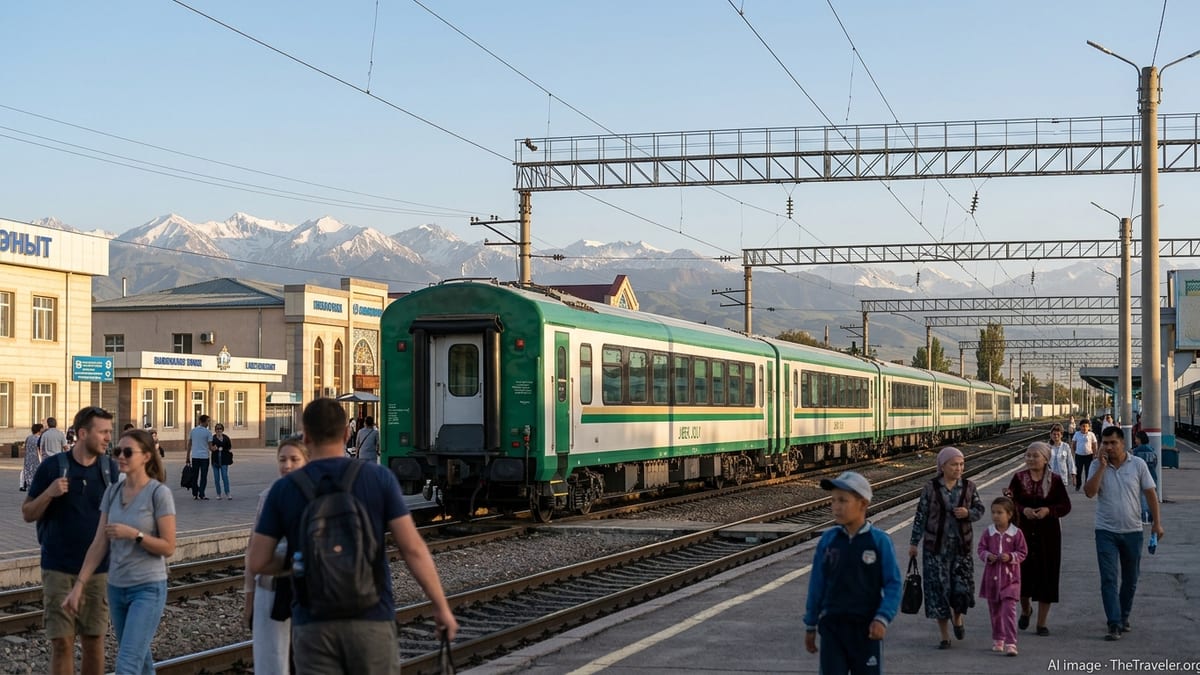
A domestic rail milestone on the shores of Issyk-Kul
Publicly available information shows that work on the Balykchy–Cholpon-Ata railway began in mid-June 2026, extending the existing line that currently terminates at Balykchy toward the resort town of Cholpon-Ata. The project runs through the Issyk-Kul region, one of Kyrgyzstan’s most visited areas and a key corridor in the country’s east.
Reports indicate that the new line is conceived as the first stage of a longer Issyk-Kul railway arc, which has been discussed for years as a way to improve access around the lake and ultimately link the country’s north and south by rail. By pushing tracks deeper into the Issyk-Kul basin, Kyrgyz authorities aim to reduce reliance on road transport over mountain passes that are vulnerable to congestion and seasonal disruption.
Early briefings in local media describe the route as following the northern lakeshore, where some of Kyrgyzstan’s largest tourism complexes and beach resorts are located. The alignment is expected to require new bridges, cuttings and engineering works to fit within already busy coastal settlements, but planners present the project as achievable with domestic resources and targeted external support.
Strategic goals: tourism, freight and regional cohesion
According to published coverage, the Balykchy–Cholpon-Ata line carries strategic weight beyond its modest initial length. Lake Issyk-Kul has long been promoted as a regional tourism hub, and officials have argued in public forums that direct rail access could expand visitor numbers, smooth seasonal peaks and support the development of year-round resorts and conference venues along the shore.
Rail planners also frame the project as a tool for regional cohesion, offering eastern communities an alternative to long-distance bus and car travel between Bishkek, Issyk-Kul and the mining and agricultural districts to the east. By connecting local producers to the national rail grid, backers of the line expect lower transport costs for construction materials, food products and industrial goods moving in and out of the region.
In the longer term, policy documents and media analyses describe the railway as a stepping stone toward a more integrated national network that could eventually link Issyk-Kul with the south of the country. Such a north–south rail axis has been mentioned for years as a strategic objective, but the Issyk-Kul segment is emerging as one of the few concrete domestic projects now under active construction.
Part of a wider rail expansion push
The launch of the new eastern line comes as Kyrgyzstan’s state railway operator pursues multiple track and station upgrades nationwide. Public data on the company’s 2025 results highlights record freight volumes and notes that work is underway on at least two major domestic corridors, with new stations and sections planned to enter service from 2026.
Against this backdrop, the Balykchy–Cholpon-Ata project is portrayed in local economic reporting as both a capacity boost and a signal of renewed investment in rail after years of limited expansion. Analysts point out that while the country’s international rail ambitions often attract more attention, incremental domestic projects like Issyk-Kul can deliver immediate benefits for local economies and residents.
The eastern line is also expected to interact with international transit routes over time. As work advances on the China–Kyrgyzstan–Uzbekistan railway further south and west, the national network is likely to handle higher volumes of transit and export freight. Strengthening feeder lines in the east is viewed as one way to ensure that more regions of Kyrgyzstan can plug into those emerging corridors.
Engineering challenges around a fragile alpine lake
Building new rail infrastructure around Issyk-Kul, a high-altitude lake with a sensitive ecosystem, brings technical and environmental challenges. Media reports on the project note that planners must balance the need for straight, efficient alignments with the requirement to protect beaches, wetlands and cultural sites that underpin the region’s tourism appeal.
Preliminary outlines of the route suggest a mix of embankments, cuttings and possibly short tunnels or protective structures where the terrain narrows between the lake and the surrounding foothills. Local experts cited in public discussion have stressed the importance of modern drainage and slope-stabilization systems to reduce the risk of erosion and landslides in areas where railway works cut into existing slopes.
Environmental reviews referenced in domestic coverage emphasize that rail, if built to modern standards, can help shift passenger and freight traffic away from roads that run close to the shoreline, potentially reducing emissions and pressure on fragile coastal zones. Ensuring that construction methods, waste management and future operations meet those standards will be a key test for project managers and contractors.
What travelers can expect in the coming years
For travelers, the Balykchy–Cholpon-Ata line promises a new way to reach one of Central Asia’s most iconic lakes. Once opened, the route is expected to shorten journey times from Bishkek to the main resort area by providing a direct rail connection across the eastern part of the country, with the potential for through-services that connect with existing trains arriving from the north and west.
Tourism operators following the project anticipate opportunities for new products, including rail-inclusive holiday packages, scenic day trips around Issyk-Kul and easier access for visitors attending festivals and sporting events along the coast. If subsequent phases extend the line further east and eventually around the lake, the eastern shore’s smaller communities could see a rise in visitor numbers and investment.
Publicly available forecasts stop short of giving a firm opening date, but project timelines discussed in local media place the initial section within a medium-term horizon, contingent on funding flows and construction progress. As track-laying advances over the next few years, the Issyk-Kul railway is likely to become one of the most closely watched infrastructure projects in Kyrgyzstan’s eastern regions, signaling how far the country can go in translating long-discussed connectivity plans into tracks on the ground.