


More news on this day
A minor train derailment in Morgan County, Tennessee, has been reported near the community of Oakdale, coming just weeks after a separate crash and alcohol spill along the Emory River that disrupted outdoor recreation and raised environmental concerns across the region.
Get the latest news straight to your inbox!
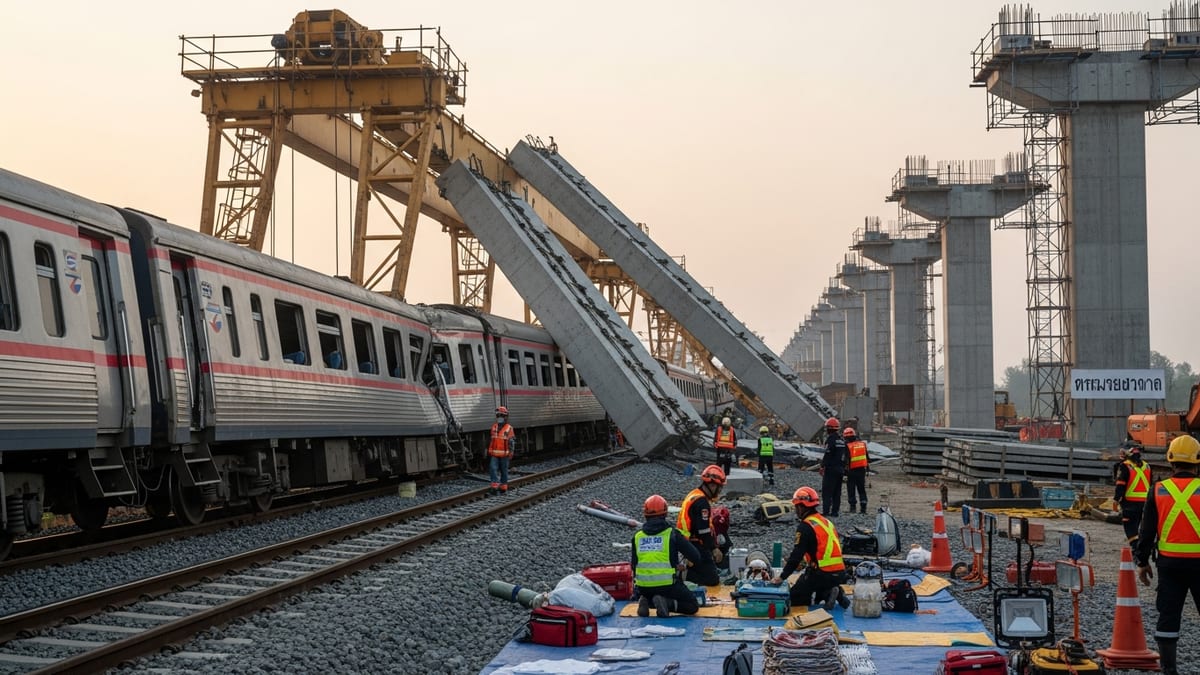
Second rail incident in rural Morgan County in less than a month
Regional television coverage indicates that the latest incident occurred in the Oakdale area of Morgan County in early July, when one train engine partially left the tracks. Early descriptions describe the event as a minor derailment, with the rail equipment remaining largely upright and no large-scale damage evident at the site.
Initial reports do not indicate injuries or significant cargo loss associated with the Oakdale derailment, and publicly available information suggests that the affected locomotive was quickly stabilized. Rail traffic in the immediate area was temporarily disrupted while crews worked to re-rail the engine and inspect the track.
The Oakdale incident follows a more serious derailment in Morgan County on June 11, when a Norfolk Southern freight train left the tracks near Lancing along the Emory River. That earlier crash involved more than a dozen cars and triggered a fire and an ethanol spill, prompting evacuations and a multi-agency emergency response across the rural corridor.
Together, the two crashes highlight how quickly conditions can shift for people traveling through this quieter stretch of eastern Tennessee, where major rail lines run close to rivers, roads, small communities and popular outdoor destinations.
Ethanol spill left lasting mark on Emory River recreation
The June derailment near Lancing released alcohol cargo, described in public updates as ethanol, into the environment and raised immediate questions about water quality in the Emory River system. Environmental agencies and local emergency management teams moved to monitor air and water around the site while fires were brought under control and damaged tank cars were secured.
Public statements from state and federal agencies show that the ethanol spill led to a temporary contact advisory on portions of the Emory River, asking people to avoid swimming and other direct water contact while testing was under way. Recreational sites such as Rock Creek Campground and river access points near the derailment were either closed or restricted as a precaution.
National Park Service notices regarding the nearby Obed Wild and Scenic River echoed those restrictions, asking visitors in mid-June to stay out of certain stretches of water while monitoring continued. For paddlers, anglers and campers who plan vacations around summer river conditions, the advisory forced itinerary changes and pushed some visitors toward alternative destinations away from Morgan County.
Recent coverage indicates that contact advisories have been eased in stages as sampling data have become available, gradually reopening more of the Emory River to recreation. Even so, the June derailment remains a reference point for many travelers weighing whether to return to the area or to postpone trips until longer-term monitoring results are known.
Travel implications for visitors heading to Oakdale and the Emory River
With the Oakdale derailment coming on the heels of the ethanol spill near Lancing, travelers bound for eastern Tennessee face a more complicated planning landscape than in a typical summer. While the latest incident has been described as minor, any rail disruption in the narrow valleys of Morgan County can temporarily affect nearby road access, campground operations and river use.
Publicly available mapping and transportation updates show that Oakdale sits along an active freight corridor used by trains moving through the Cumberland Plateau. Short-term responses to derailments can include road closures near rail crossings, detours on rural highways and an increased presence of clean-up crews and heavy equipment, all of which may slow driving times for visitors unfamiliar with the back roads.
For those heading to regional attractions such as the Obed Wild and Scenic River, Catoosa Wildlife Management Area or small-town lodging around Wartburg and Harriman, trip planners are watching for any lingering restrictions that might affect river put-ins, campsites or day-use areas. Many outfitters and lodgings in the broader East Tennessee region continue to operate, but travelers are increasingly checking advisories and local news before committing to multi-day river runs or backcountry stays.
The back-to-back derailments also add to a broader national discussion around rail safety in scenic destinations, where tracks often share narrow corridors with blueway trails, state parks and popular climbing and paddling spots. For Morgan County, the incidents have placed an unexpected spotlight on how freight operations intersect with a growing outdoor tourism economy.
Environmental monitoring and recovery efforts continue
In the weeks since the June ethanol spill, environmental agencies have outlined a phased response that moves from emergency firefighting and containment to extended monitoring of water and sediment. Federal environmental response summaries describe the deployment of booms along the Emory River near the Lancing site, along with systematic sampling of river water downstream to track the movement and dilution of alcohol in the system.
Temporary advisories were accompanied by visible signs at river access points, warning paddlers and swimmers to limit contact with the water until more test results were available. Public updates from Tennessee environmental officials have emphasized that ethanol, while flammable and potentially hazardous in concentrated form, usually disperses relatively quickly in flowing water, though short-term effects on aquatic life and river chemistry are still taken seriously.
By late June, coverage in regional outlets suggested that monitoring results were trending in a positive direction, allowing agencies to relax some restrictions. However, follow-up assessments continue around the derailment site to evaluate shoreline impacts, pockets of trapped product and any residual changes in water quality.
The fresh derailment at Oakdale does not appear, based on current reports, to involve a significant spill or extended environmental closure, but it unfolds against the backdrop of an ongoing recovery story along the Emory. Travelers planning late-summer trips to the region are likely to see continued work crews, sampling teams and inspection activity along certain stretches of the rail line and river corridor.
Rail safety under scrutiny for visitors and communities
For visitors drawn to eastern Tennessee’s rivers and ridges, the Morgan County incidents underscore the reality that core transportation infrastructure often runs directly alongside recreation hubs. Freight trains share the same corridors used by anglers hiking to secluded pools, paddlers launching onto whitewater and road-trippers following winding two-lane highways.
Nationally, attention on rail safety has grown as communities and travelers absorb a series of derailments involving chemical and fuel cargo. The ethanol spill near Lancing fits into that broader pattern, blending questions about hazardous materials transport with concerns over how quickly authorities can protect waterways that serve both local residents and tourism-based businesses.
In Morgan County, the minor Oakdale derailment may ultimately be remembered as a near-miss, with limited damage and no major spill reported. Yet its timing, so soon after the June crash, has reinforced calls from residents and travelers for clear communication about what trains are carrying, how often tracks are inspected and how emergency plans align with the seasonal rhythms of outdoor recreation.
As cleanup and monitoring continue, travelers eyeing the Emory River and the Oakdale-Lancing corridor are watching for updated advisories, campground notices and transportation bulletins. For many, the choice of where to paddle, hike or camp this season will depend not only on river levels and weather, but also on confidence that crucial rail lines threading through Tennessee’s backcountry are being managed with both safety and tourism in mind.