


For many frequent travelers in Asia and Europe, the choice of credit card can meaningfully change how comfortable your trips feel and how quickly you earn miles for the next adventure. I recently put two popular travel-focused products side by side: the DBS Altitude Visa, a mainstream miles card in Singapore, and the HSBC Premier World Elite Mastercard, a premium, relationship-based card available in markets like the UK and selected Premier franchises. This comparison focuses on how they actually perform in real travel scenarios rather than just what looks good in the brochure.
Get the latest updates straight to your inbox!
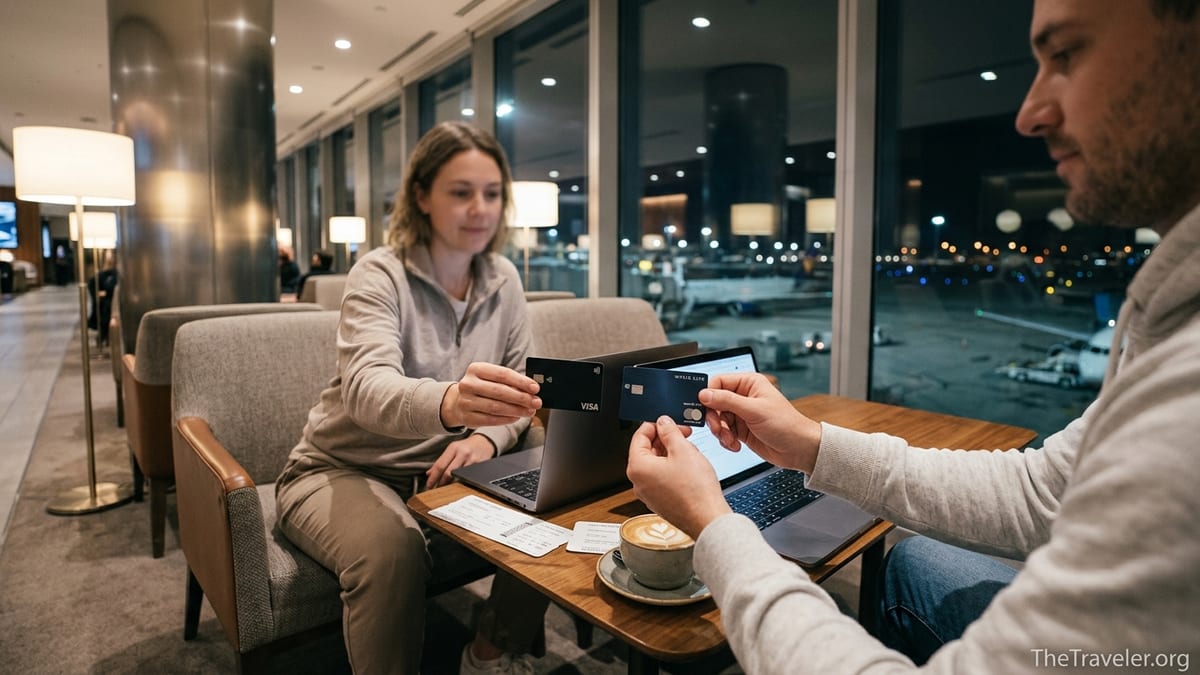
How These Two Cards Are Positioned
The DBS Altitude Visa is a mass-market travel card widely held in Singapore. It is designed for people who spend regularly on flights, hotels and online travel bookings, and who want to accumulate airline miles flexibly without committing to a single carrier. Eligibility is relatively straightforward: meet the income requirement set by DBS and you can apply, with no need to place a large deposit base with the bank. In practice, it is a typical choice for young professionals who are starting to fly two or three times a year and want an easy entry into the miles game.
The HSBC Premier World Elite Mastercard, on the other hand, is very much a top-tier relationship card. In the UK, for example, you must first qualify as an HSBC Premier client, which usually means meeting minimum income or asset thresholds with the bank, and then you pay an annual card fee of around GBP 290 to hold the World Elite product. In several other markets, a similar World Elite or Premier World Elite variant exists but is also tied to Premier status and typically a substantial deposit or investment balance with HSBC. This is not a card you apply for casually.
Because of these different starting points, the way most travelers encounter each card is quite different. A Singapore-based consultant booking her own work trips and personal holidays will often start with DBS Altitude because of its relatively low barrier to entry and solid earn rates on online travel. A long-time HSBC Premier customer in London or Hong Kong might add the Premier World Elite as a natural extension of their existing banking relationship, looking to concentrate both daily spending and long-haul travel on a single premium card.
In short, DBS Altitude Visa plays in the “smart mainstream” category, while HSBC Premier World Elite Mastercard is pitched as a luxury travel companion with an expectation of higher spend and deeper loyalty to the bank.
Annual Fees, Relationship Requirements and Waivers
When you compare the two cards on cost of ownership, the differences are stark. DBS Altitude Visa in Singapore typically charges an annual fee in the low hundreds of Singapore dollars, often around the SGD 190 to SGD 200 range plus tax. Many cardholders report that the first year fee is sometimes waived and that subsequent years may be waived on request if you charge a reasonable amount through the card. In some cases, DBS offers the option to pay the annual fee in exchange for a block of miles, which can make sense for heavy users who value miles highly and prefer to “buy” them through fees rather than cash tickets.
With HSBC Premier World Elite Mastercard in the UK, the economics are quite different. The headline annual fee sits around GBP 290. That fee is rarely waived outright, because the card is positioned as a premium product with rich ongoing benefits like unlimited Priority Pass lounge access and boosted earn rates on overseas spend. At the same time, to even be eligible you need to maintain a Premier banking relationship, which might require a minimum income (for example, GBP 75,000 paid into HSBC annually) or a large deposit or investment balance. Effectively, you are paying twice: once in the form of opportunity cost on money kept with HSBC, and again via the explicit card fee.
Consider a simple example. A Singapore-based traveler who charges about SGD 24,000 a year to DBS Altitude might get the annual fee waived after a quick call to customer service, making the card effectively free aside from foreign currency markups. Meanwhile, a UK-based Premier client who spends a similar amount in pounds on the HSBC Premier World Elite will still pay the GBP 290 fee but gain perks like unlimited lounge access on every trip from London to Singapore or Dubai. For that traveler, the trade-off may be acceptable because a Priority Pass-style membership alone can cost more than GBP 300 annually if purchased directly, especially if you travel frequently and pay per-visit fees.
One more subtle difference is how each bank uses the card to reinforce the wider relationship. DBS uses Altitude as a flexible add-on product and routinely cross-sells it to customers with DBS Multiplier or other current accounts. HSBC uses Premier World Elite as a flagship symbol that you have “arrived” in their Premier ecosystem. This psychology matters because it affects how easily fees are waived, how retention offers are made, and how aggressively each bank is willing to keep you on the product when you threaten to cancel.
Earn Rates, Miles Currencies and Real-World Spending
On paper, both cards are clearly aimed at people who care about earning airline miles rather than pure cashback. DBS Altitude Visa earns bank points that convert to major airline programs such as KrisFlyer and Asia Miles. For day-to-day use, the card typically offers around 1.2 miles per Singapore dollar on local general spend and about 2.0 miles per Singapore dollar on foreign currency transactions, with higher bonus earn rates for spending with airlines and online travel agencies. Promotional tie-ups can increase this further, such as special deals on hotel bookings via sites like Agoda, where cardholders have seen enhanced miles per dollar for specific campaigns.
The HSBC Premier World Elite Mastercard in the UK earns HSBC Reward points. These convert into airline miles with partners such as British Airways Executive Club, Asia Miles, Singapore Airlines KrisFlyer and Etihad. The effective earn rate is often quoted as around 1.5 airline miles per pound on most everyday purchases once you factor in the conversion ratio, which is noticeably higher than many competing Visa or Mastercard products in that market. Importantly, the card often gives double points on non-sterling transactions, meaning overseas or foreign currency spend is especially lucrative if you are comfortable with the foreign exchange spread and fees.
A practical example helps here. Imagine a week-long holiday from Singapore to Tokyo where you spend SGD 3,000 total. If you run that through the DBS Altitude Visa, with say SGD 2,000 in Japanese yen transactions plus SGD 1,000 in pre-booked flights and hotels through an online travel portal, you might generate roughly 6,000 to 7,000 miles from the foreign currency transactions and another few thousand from the online travel bonus. Converted to KrisFlyer, that could be enough to top up an existing miles balance for a one-way saver ticket from Singapore to Bangkok in economy.
Now picture a UK-based Premier customer spending GBP 3,000 during a two-week trip to Southeast Asia on the HSBC Premier World Elite Mastercard. At a notional 1.5 miles per pound earn rate on general spend, that trip could yield around 4,500 airline miles, and likely more if part of the spend falls into bonus categories or sign-up offer thresholds. For someone who travels to Asia once or twice a year, those miles accumulate quickly toward a business class upgrade from London to Hong Kong or Singapore on a partner airline, especially when combined with a welcome bonus that can be worth tens of thousands of miles for hitting a GBP 2,000 spend in the first three months.
Travel Perks: Lounges, Limos and Insurance
Where the HSBC Premier World Elite Mastercard really starts to differentiate itself is in hard travel perks. In the UK version, cardholders receive unlimited Priority Pass style lounge access, typically for the primary cardholder, at thousands of airport lounges worldwide. This means that whether you are flying economy on a low-cost carrier from Manchester to Barcelona or on a full-service airline from Heathrow to Singapore, you can still sit down in a quiet lounge with hot food, drinks and Wi-Fi at no extra charge each time you depart. For frequent travelers who pass through airports weekly, this perk alone can offset the annual fee within a few months.
DBS Altitude Visa is more modest in this regard. In Singapore, the card usually comes with a small number of complimentary airport lounge visits per year, often via a scheme like Priority Pass or DragonPass. Many cardholders report receiving around two free visits per membership year, which is enough to add comfort to one or two major trips but not enough to satisfy a road warrior who is in and out of airports every month. Additional lounge visits beyond the complimentary allotment are charged at standard Priority Pass rates, so you need to decide carefully when to use the free entries.
Another classic premium touch from HSBC Premier World Elite is complimentary airport limousine transfers in some markets. In Singapore, the local Premier Mastercard variant provides free limo rides to and from Changi Airport when you meet quarterly spend thresholds, and Premier Elite customers can sometimes enjoy them without minimum spend, as long as they maintain a seven-figure relationship balance with the bank. In practice, that might look like a family of four being picked up in a Mercedes van from their condominium in Bukit Timah and dropped at Terminal 3 for a midnight flight to Europe, with the entire ride covered by the bank as a perk for their high-balance relationship.
By contrast, DBS Altitude Visa does not usually offer limousine transfers as a core feature. Instead, it focuses on softer travel benefits like exclusive weekend discounts on hotel and activity bookings through partner travel sites when paying with the card and using specific promotional codes. While this can translate to meaningful cash savings, such as 15 percent off attraction tickets in Osaka or Seoul when booked through a partner platform, it lacks the “arrive in style” factor of a chauffeured airport transfer.
Both cards bundle travel insurance, but the coverage levels and conditions vary by market and policy. The key practical point is that with DBS Altitude, you must usually charge the full fare of your flight to the card to activate complimentary travel insurance, which can include medical coverage and compensation for flight delays or luggage loss. With HSBC Premier World Elite, the included insurance tends to be more comprehensive due to the higher target demographic, but it is still important to read the policy schedule carefully before relying on it as your sole coverage on a long-haul trip.
Foreign Currency Spending and FX Considerations
Frequent travelers often assume that a premium card is automatically better for overseas spend, but the details are more nuanced. DBS Altitude Visa charges a foreign transaction markup that combines Visa’s wholesale rate with the bank’s own margin, resulting in a total fee that typically sits in the low single digit percentage range. In return, you earn a higher miles rate for foreign currency spend, which is particularly valuable if you regularly book hotels in Japanese yen, pay restaurant bills in Thai baht or buy train tickets in euros.
HSBC Premier World Elite Mastercard follows a similar pattern. In the UK, non-sterling transactions attract a foreign transaction fee, and some cardholders have noted that HSBC sometimes uses its own foreign exchange rates rather than pure network rates. The overall cost again tends to sit a couple of percentage points above the mid-market rate. However, because you are earning double points or enhanced miles on those same foreign currency transactions, the net cost can be acceptable for travelers who place a high value on miles and lounge access rather than minimizing every cent of FX spread.
Consider a traveler from London spending 1,000 Swiss francs at hotels and restaurants in Zurich with the HSBC Premier World Elite. After conversion and fees, the effective cost in pounds may work out slightly higher than paying with a no-FX-fee card, but the transaction might earn roughly 2 to 3 times more miles than a standard fee-free debit card. Over multiple ski trips, that extra mileage could fund an upgrade from economy to premium economy on a transatlantic flight, which many travelers would consider a worthwhile trade.
In Singapore, a DBS Altitude cardholder spending SGD-equivalent 2,000 in Korean won on a week in Seoul might see a similar pattern. They pay a foreign transaction fee on each restaurant and shopping transaction, but they earn 2 miles per dollar on the entire sum and potentially more on hotels booked online before departure. The practical strategy that many seasoned travelers adopt is to pair a pure low-FX multi-currency wallet, such as a separate debit card, for high-value cash withdrawals and use the miles card for merchants where they especially want buyer protection, travel benefits, or cannot use alternative payment methods.
Who Each Card Really Suits in Practice
When you cut through the marketing gloss, it becomes clear that DBS Altitude Visa and HSBC Premier World Elite Mastercard are built for quite different traveler profiles. DBS Altitude is ideal for the Singapore-based traveler who flies a few times a year, values flexibility across several airline partners and prefers not to tie up large sums of money with a single bank. This might be a 32-year-old software engineer who takes two regional trips to Bangkok or Bali each year and one long-haul holiday to Europe, and who spends most of their money on online travel bookings, ride-hailing and dining.
The HSBC Premier World Elite Mastercard, by contrast, fits the established Premier customer who already has significant assets or income flowing through HSBC and who travels frequently enough that unlimited airport lounge access and enhanced earn rates materially improve their quality of life. This could be a 45-year-old regional director based in London or Hong Kong who boards a flight every other week for work and expects to be able to slip into a lounge for a shower and a quiet workspace regardless of the airline or ticket class.
Another way to think about it is how each card fits into a broader wallet strategy. For many Singapore-based enthusiasts, DBS Altitude is not the only card they hold. They may combine it with niche products that offer higher miles per dollar for specific categories, such as 4 miles per dollar on mobile wallet or online transactions, and reserve Altitude for spending that does not qualify for those specialised bonuses but still benefits from respectable earn rates and basic lounge access. In other words, Altitude becomes the steady workhorse that picks up everything else.
For HSBC Premier clients, the World Elite card often becomes the central hub around which other products orbit. Because HSBC ties many of its relationship perks, from preferential mortgage rates to wealth management services, to Premier status, it makes sense for these customers to channel a majority of their personal and family spend through the Premier World Elite. They may still hold airline co-branded American Express cards for very specific mileage runs or sign-up bonuses, but when in doubt, they will default to the HSBC card for its blend of miles, lounges and insurance.
The Takeaway
If you are deciding between DBS Altitude Visa and HSBC Premier World Elite Mastercard, it helps to start with two questions: where do you live, and how deeply do you want to be tied to a single bank relationship. DBS Altitude Visa is a strong, flexible choice for Singapore-based travelers who want a simple way to earn miles on flights, hotels and online travel without locking in a high annual fee. Its modest lounge access, solid earn rates and regular promotional tie-ups make it easy to recommend as a first or second miles card in a typical wallet.
The HSBC Premier World Elite Mastercard is far more specialized. Its rich travel perks, especially unlimited lounge access and elevated earn rates, are genuinely valuable but come with strings attached: a chunky annual fee in markets like the UK and the requirement to qualify and remain as a Premier customer. For heavy travelers who already meet those requirements and who step into an airport several times a month, the card can be excellent value, turning every trip into an opportunity to recharge in a lounge and accrue premium cabin miles more quickly.
For occasional travelers or those not already in the HSBC Premier ecosystem, however, the Premier World Elite may feel like overkill. In that case, the practical path is clear. Start with a more accessible travel card like DBS Altitude Visa or an equivalent in your home market, learn how you actually travel and spend over a year or two, and only then consider upgrading to a Premier-level World Elite product if your lifestyle and relationship with HSBC genuinely justify it.
FAQ
Q1. Can I hold both the DBS Altitude Visa and the HSBC Premier World Elite Mastercard at the same time?
Yes, if you meet the eligibility criteria for both banks. Some frequent travelers in Asia and Europe use DBS Altitude for Singapore-based spending and HSBC Premier World Elite for overseas trips, especially when they value unlimited lounge access and higher earn rates on foreign currency transactions.
Q2. Which card is better for earning Singapore Airlines KrisFlyer miles?
Both cards can be used to accumulate KrisFlyer miles, but the best choice depends on where you spend most. DBS Altitude is strong for Singapore dollar and online travel bookings, while HSBC Premier World Elite can generate miles quickly on high overseas spend in pounds or other currencies, especially if you also collect a large welcome bonus.
Q3. Does DBS Altitude Visa offer unlimited airport lounge access?
No. DBS Altitude Visa usually comes with a limited number of complimentary lounge visits per year, typically enough for one or two round trips. After you use those free entries, additional visits are charged at standard lounge program rates.
Q4. Is the annual fee on HSBC Premier World Elite Mastercard ever waived?
In markets like the UK, the Premier World Elite’s annual fee is generally not waived because it is part of the card’s premium positioning. However, banks sometimes adjust welcome offers, such as giving extra points or miles instead of a waiver, so it is worth checking current terms when you apply.
Q5. Which card is more suitable for someone who travels only once or twice a year?
For occasional travelers, DBS Altitude Visa is usually more suitable. It has a lower ongoing cost, and fees can sometimes be waived with moderate annual spend. The HSBC Premier World Elite’s high annual fee and Premier relationship requirements are harder to justify if you only pass through airports a couple of times per year.
Q6. Do I need to be an HSBC Premier customer to get the Premier World Elite Mastercard?
Yes. The Premier World Elite is typically restricted to customers who qualify for HSBC Premier, which means meeting minimum income or asset thresholds with the bank. Without that relationship, you will not usually be approved for the card.
Q7. How do foreign transaction fees compare between the two cards?
Both cards apply foreign transaction fees on non-local currency spend, generally in the low single-digit percentages above the mid-market rate. In return, they offer higher miles earn rates on those transactions. To minimise costs, some travelers pair these cards with separate low-FX debit options for large overseas cash withdrawals.
Q8. Can I redeem points from either card for cash instead of miles?
Yes, but the value is usually lower. DBS Altitude and HSBC Premier World Elite both allow redemptions for cashback or shopping vouchers, yet the cents-per-point value is typically poorer than when you transfer points into airline miles and redeem for premium cabin flights or long-haul tickets.
Q9. Which card offers better travel insurance coverage?
Coverage quality depends on the specific policy in your market, but HSBC Premier World Elite often includes more comprehensive benefits aimed at frequent and long-haul travelers. DBS Altitude’s coverage is solid for mainstream leisure and business trips, provided you charge your tickets to the card. Always review the current policy wording before relying on either card as your sole insurance.
Q10. If I care mostly about airport lounges, which card should I pick?
If lounge access is your top priority and you are eligible for HSBC Premier, the Premier World Elite Mastercard is the superior choice because it typically offers unlimited lounge visits. DBS Altitude Visa’s smaller allocation of complimentary entries is helpful but not designed for heavy lounge users.