


More news on this day
Air travel across Europe faced another day of severe disruption as hundreds of flights were cancelled and thousands more delayed, with widespread knock-on effects for passengers at major hubs including Milan, Rome, Barcelona, Lisbon, Paris, and Zurich.
Get the latest news straight to your inbox!
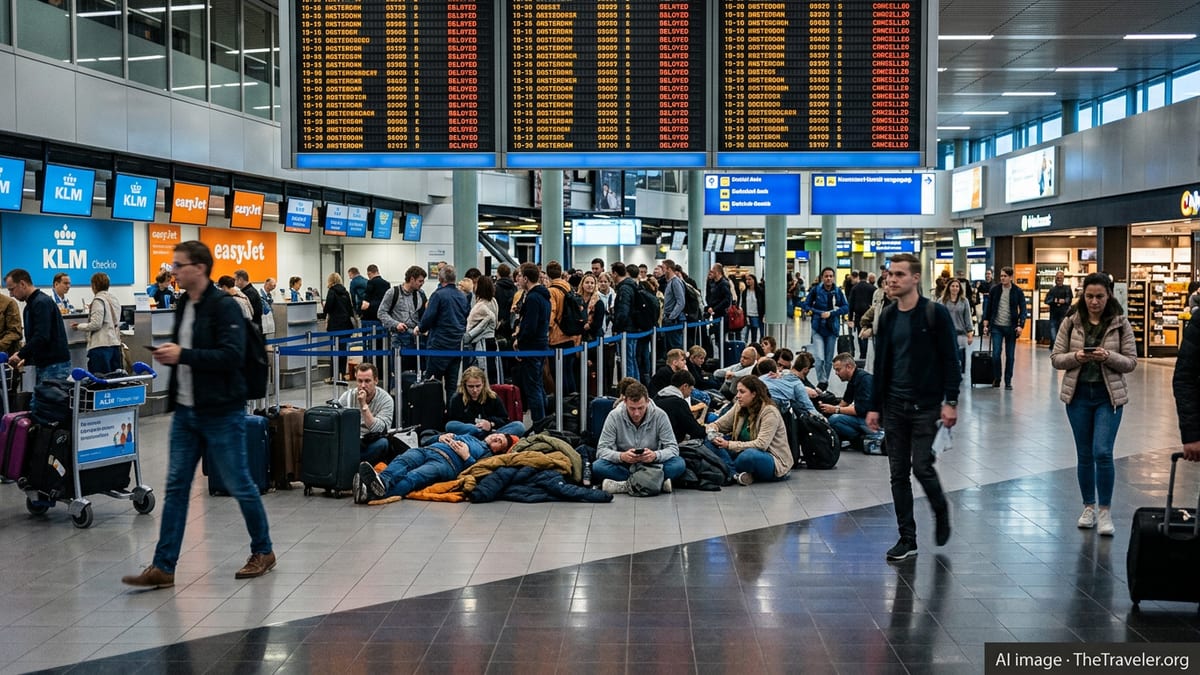
Hundreds of Flights Scrapped and Thousands Delayed
Published data from flight-tracking and airport operations platforms indicates that more than 400 flights were cancelled and well over 2,500 delayed across Europe in a single day, affecting schedules in Spain, Italy, Portugal, France, Switzerland, and several neighboring countries. The disruption hit short haul and medium haul services in particular, with a wave of cancellations crowding departure and arrival boards from early morning into the late evening peak.
Low cost and full service airlines alike saw their operations curtailed. Publicly available schedules show that carriers such as Air France, ITA Airways, Wizz Air Malta, and a number of regional operators scrubbed services at short notice, while many more flights departed hours behind schedule. The pattern of disruption suggests a mix of operational pressures, staffing constraints, and air traffic control restrictions that built through the day.
While some airports reported partial recovery in late evening, the volume of delayed flights created a rolling backlog. Passengers arriving late into hubs often missed onward connections, forcing airlines to rebook travelers on later departures or alternative routings where capacity allowed.
Major Hubs From Milan and Rome to Barcelona and Lisbon Affected
Key southern European hubs were among the most heavily impacted. Operational updates from Italy show Milan and Rome facing a particularly challenging day, with both intercontinental and intra-European services interrupted. Flights linking these cities with northern Europe experienced extended delays, contributing to wider congestion as aircraft and crews fell out of their planned rotations.
In Spain, disruption at Barcelona added additional strain to already busy holiday-season traffic. Reports from airport information boards described consecutive waves of delayed departures and arrivals, especially on popular leisure routes serving Mediterranean and Atlantic coastal destinations. Some domestic routes were consolidated or cancelled outright as airlines attempted to stabilize their networks.
Portugal’s capital Lisbon also experienced a sharp rise in irregular operations. Delayed inbound aircraft from other European hubs translated directly into late departures, with ripple effects lasting well beyond the core disruption window. At several points during the day, ground handling teams faced simultaneous arrival banks that exceeded normal staffing assumptions, further slowing turnarounds.
Air France, ITA Airways, Wizz Air Malta and Others Trim Schedules
Published coverage and airline advisories show that a number of European carriers chose to cancel flights preemptively rather than risk severe on-the-day delays. Air France adjusted parts of its regional network, particularly services connecting French hubs with neighboring countries. ITA Airways implemented targeted cancellations on domestic and intra-European routes, prioritizing frequencies so that at least some departures on key city pairs could operate.
Wizz Air Malta, which operates an extensive low cost network across the region, also featured prominently in cancellation statistics. Its point to point model, often relying on quick aircraft turnarounds, can be particularly sensitive to air traffic control constraints and ground delays. When early services run late, later flights can quickly become unworkable, leading operators to trim rotations and consolidate passenger loads.
Other European airlines, including regional carriers feeding into larger hubs, were drawn into the disruption as shared airspace and slot restrictions limited flexibility. In several cases, aircraft and crews ended the day in different locations from those planned, complicating the following day’s schedules and prompting airlines to warn of potential ongoing disruption.
Air Traffic Control and Staffing Pressures Drive Knock-on Chaos
Analysts of European aviation trends have long highlighted the sensitivity of the regional network to simultaneous pressures in multiple countries. Even modest air traffic control restrictions in one sector can cascade across the continent when combined with storms, high seasonal demand, or labor-related slowdowns. Recent reports have pointed to constrained capacity in certain control centers, leading to flow restrictions that force airlines to accept longer routings or reduced frequencies.
On the ground, airport staffing has also struggled to keep pace with peak summer traffic. Ground handling teams, security checkpoints, and baggage operations all face strain when a wave of delayed flights arrives at once. Publicly available airport performance data often shows that when turnaround times lengthen beyond planned buffers, delays multiply rapidly, affecting aircraft that had not been directly involved in the initial disruption.
These structural factors mean that even when weather conditions are largely favorable, Europe’s tightly interconnected network can experience widespread delays and cancellations if capacity is constrained at just a few key nodes. The latest wave of disruption fits this pattern, with a relatively concentrated set of operational issues translating into delays across multiple countries and carriers.
Passengers Face Missed Connections and Crowded Terminals
For travelers, the operational story translated into long queues, crowded terminals, and uncertain arrival times. Reports from major airports describe passengers forming lines at airline service desks in an effort to secure alternative flights, hotel accommodation, or meal vouchers where eligible. Those traveling on complex itineraries with tight connections were particularly exposed, as missed onward flights often meant overnight stays or rerouting via different hubs.
Public information from passenger rights organizations emphasizes that many travelers on affected flights within or departing from the European Union may be covered by EU261 protections, depending on the cause and length of delay or cancellation. These regulations can entitle passengers to rebooking, refunds, and in some cases financial compensation, though eligibility often depends on whether the disruption is deemed outside the airline’s control.
Travel advisors recommend that passengers keep boarding passes, booking confirmations, and any written notices of disruption, as these documents can support later claims. Many airlines now encourage travelers to use mobile apps and self-service channels to rebook or track baggage, which can reduce time spent in airport queues during widespread disruption.
What Travelers Should Do If Their Flight Is Affected
Industry guidance suggests several practical steps for passengers caught up in large scale disruption of this kind. First, travelers are advised to monitor their flight status through airline apps or departure boards rather than relying solely on original schedules. In periods of heavy congestion, schedules can change multiple times on the day of travel, and early awareness of cancellations or significant delays can open more rebooking options.
Second, passengers may benefit from proactively exploring alternative routings, particularly when traveling through busy hubs like Milan, Rome, Barcelona, Lisbon, Paris, or Zurich. In some cases, accepting an earlier or later connection via a different European city can secure an arrival time that is still broadly in line with original plans.
Finally, those with fixed-time commitments at their destination, such as cruises, tours, or events, are often encouraged to arrive at least a day early during peak disruption periods. Recent patterns in European aviation performance indicate that built in buffers can significantly reduce the risk that a single cancelled or heavily delayed flight will derail an entire trip.