


More news on this day
Flights at Seattle–Tacoma International Airport have faced a new round of weather-related delays in recent days, slowing departures, disrupting connections, and leaving passengers contending with longer-than-usual travel times at one of the Pacific Northwest’s busiest hubs.
Get the latest news straight to your inbox!
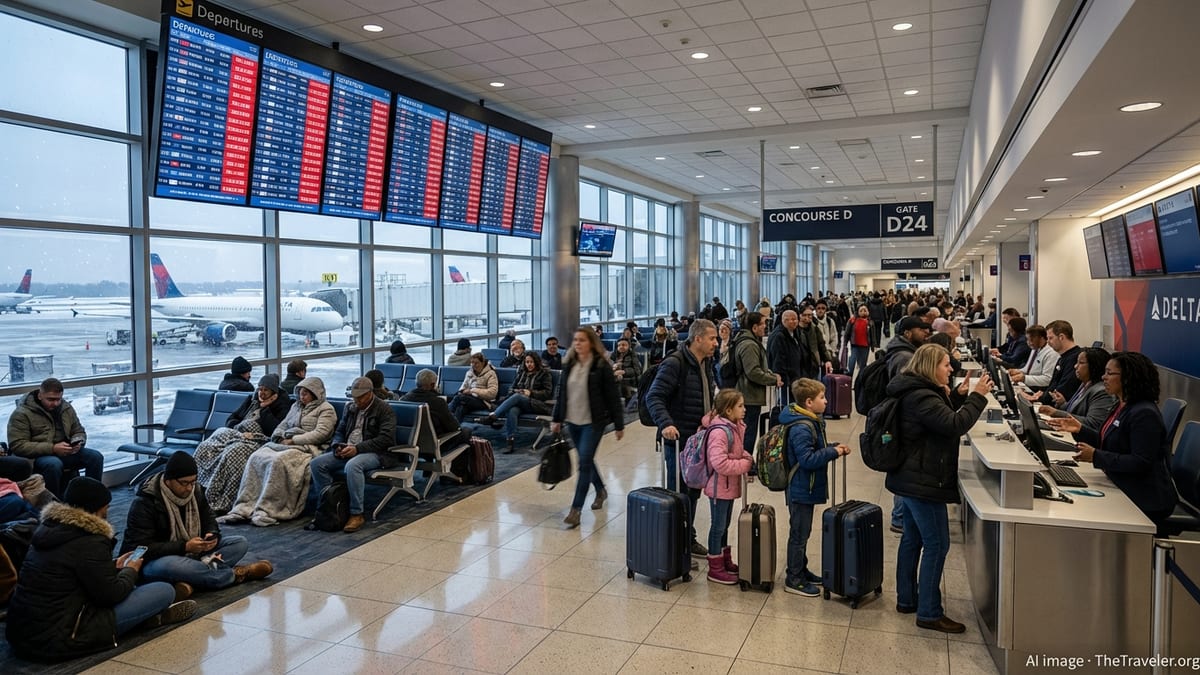
Storm systems disrupt operations at Seattle–Tacoma
Published coverage and traveler reports indicate that a series of passing storm systems around the Puget Sound region has periodically reduced visibility and required additional spacing between aircraft, triggering delays on some routes into and out of Seattle–Tacoma International Airport. While the airport itself often remains open during such conditions, the combination of low clouds, rain, and changing wind patterns can force adjustments to arrival and departure rates.
Data from aviation tracking services shows that when heavier precipitation and lower ceilings move through the area, some flights are placed into holding patterns or pushed to later departure slots while air-traffic controllers sequence aircraft more conservatively. In several recent instances, short-haul services within the western United States have absorbed the longest waits, as airlines reshuffle aircraft and crews to protect longer-haul and international schedules.
Weather-related challenges have not been limited to storms directly over the airport. Published information on route performance suggests that conditions at destination and origin airports across the West Coast and Mountain West have contributed to knock-on impacts in Seattle, particularly when thunderstorms or low visibility affect major partner hubs and force reroutes or ground delays that ripple through connecting networks.
Historical patterns at Seattle–Tacoma show that such disruptions are most acute when poor weather coincides with busy travel periods, such as weekends, holiday getaways, or major events in the region. In those windows, even moderate reductions in airfield capacity can quickly translate into longer queues for departure and arrival slots.
Deicing, low visibility, and tarmac waits add to delays
During colder months, snow, freezing rain, and icy conditions have been a recurring cause of disruptions at Seattle–Tacoma, and recent accounts underscore how quickly operations can slow when runways and taxiways require repeated clearing. When temperatures drop near freezing and wintry precipitation moves through, aircraft often need deicing before departure, adding individual delays that compound across multiple banks of flights.
Publicly shared passenger experiences from earlier this year describe situations in which flights waited extended periods for deicing and gate availability during snow events, with some travelers remaining on board after landing while arrival gates were occupied by aircraft still awaiting clearance to depart. In several cases, aircraft arriving from other cities reported prolonged holds on taxiways because congestion and reduced turnaround speeds left no free gates.
Seattle–Tacoma’s published tarmac delay contingency plans outline how the airport and airlines coordinate when operations slow to a crawl, including use of remote parking stands and priority handling where practical. Even with such planning, heavy precipitation or snowfall can sharply limit the number of usable runways and taxiways, forcing airlines to cancel or consolidate flights once long queues become unsustainable.
Low visibility can also require more conservative spacing between aircraft on final approach and departure, slightly reducing hourly throughput. While such measures are part of standard safety protocol, they lengthen travel times for passengers on affected flights and can create tight or missed connections, particularly for itineraries that rely on short minimum connection times.
Passengers face longer queues and changing itineraries
For travelers, the most visible effects of weather disruptions at Seattle–Tacoma are crowded gate areas, shifting departure times, and longer lines at customer-service desks. Social media posts and travel forums in recent months have highlighted missed connections, late-night arrivals, and unexpected overnight stays when deteriorating weather or prolonged deicing windows pushed departures beyond crew duty limits or airport curfews at downline destinations.
Reports from passengers also point to pressure on baggage handling and ground transport when multiple delayed flights arrive in close succession. Car-rental queues, ride-hailing pickup zones, and nearby hotels can become congested when an evening arrival bank shifts later into the night, concentrating demand into a narrow time frame rather than spreading it across several hours as originally scheduled.
Travelers with complex itineraries, including cruise departures and international connections, appear particularly vulnerable when weather interrupts the flow of flights through Seattle–Tacoma. Accounts from the spring and early summer travel seasons describe cases where delayed arrivals into Seattle left insufficient time to reach onward departures from other ports or cities, forcing last-minute itinerary changes and significant added cost.
Even when flights eventually operate, extended delays can have a cascading impact on work and personal plans, from rescheduled meetings to lost vacation days. The unpredictable nature of weather-related disruptions means that passengers often have limited recourse beyond rebooking on later departures or adjusting their travel dates entirely.
Airlines adjust schedules and advise early arrival
Airlines operating at Seattle–Tacoma have responded to recent and historical weather disruptions by periodically trimming schedules, consolidating lightly booked frequencies, and building slightly longer block times into certain routes during seasons when poor conditions are more likely. Publicly available schedule data shows that carriers increasingly factor in potential holding or deicing windows when planning winter operations in particular.
Travel advisories issued through airline channels often encourage passengers to arrive early at the airport when storms are forecast, in anticipation of longer security and check-in queues. Some carriers have also made use of flexible travel waivers during more severe weather events, allowing customers to move their trips to alternative dates or times without standard change penalties.
Operationally, airlines and the airport have invested in additional deicing capacity and refined runway usage strategies over the past several years, seeking to reduce the length and frequency of delays during snow and ice events. While these efforts can mitigate the worst impacts, they cannot fully eliminate slowdowns when visibility and braking conditions deteriorate across the airfield.
Industry observers note that as overall passenger volumes continue to grow at Seattle–Tacoma, even modest weather disruptions can become more noticeable to travelers. Higher baseline traffic levels mean that any temporary reduction in runway capacity or gate availability has a larger pool of flights to affect, turning short operational challenges into longer lines and fuller waiting areas.
Practical guidance for travelers passing through Seattle
Travel experts and consumer advocates typically recommend that passengers build in extra time and flexibility when planning trips through weather-sensitive hubs such as Seattle–Tacoma, especially in the late fall, winter, and early spring. Booking longer connection windows, particularly for international or cruise-related itineraries, can help reduce the risk of missed onward travel when storms or low visibility slow operations.
Monitoring flight status through airline channels and flight-tracking platforms before leaving for the airport is another key step, as same-day schedule adjustments are common during unsettled weather. When forecasters predict prolonged periods of rain, low clouds, or snow, some passengers opt to shift to earlier flights in the day, which may have a better chance of departing before conditions worsen.
Travelers are also urged to consider contingency plans, including knowledge of later departures on the same route, nearby alternative airports, and lodging options near Seattle–Tacoma in case an overnight stay becomes unavoidable. Having essential items, medications, and chargers in carry-on luggage rather than checked bags can make extended waits in the terminal or on board more manageable.
Although weather-related delays are an enduring feature of air travel in the Pacific Northwest, preparation and realistic expectations can help passengers navigate disruptions at Seattle–Tacoma with less stress. As seasonal patterns and climate variability continue to shape local weather, travelers passing through the region’s primary gateway are likely to see periods of smooth operation punctuated by occasional days of significant slowdown when conditions deteriorate.