


More news on this day
Independence Day air travel across the United States ran into a fresh wave of disruption on Saturday as severe storms and temporary airspace restrictions combined to cancel at least 216 flights and delay more than 670 others, with major hubs at Chicago O’Hare, Atlanta and Newark among the hardest hit.
Get the latest news straight to your inbox!
Weather, Airspace Restrictions Converge on Holiday Weekend
Reports from flight-tracking services and aviation data providers for July 4 indicate that thunderstorms across the Midwest and Northeast, along with short-term federal airspace controls linked to Fourth of July security measures, placed extraordinary pressure on already crowded holiday schedules. Publicly available data show that the total impact nationwide climbed into the hundreds of cancellations and many hundreds of delays, with the core of the disruption centered on the late morning and afternoon peak.
At a national level, the figures remain relatively modest compared with some past meltdown days, but for travelers caught in the middle of the logjam the effect was acute. Airlines were forced to trim flights preemptively, hold departures on the ground while weather cells passed, and meter arrivals into New York and Chicago, creating a chain reaction of late operations across the domestic network.
Independence Day has increasingly become one of the busiest travel periods of the summer, with schedules set months in advance to match demand. That leaves limited room to absorb irregular operations once storms build or airspace capacity is temporarily reduced, making even a few hundred cancellations capable of distorting the experience for tens of thousands of passengers.
O’Hare Leads National Disruptions Once Again
Chicago O’Hare International Airport, one of the country’s busiest hubs, once again emerged as the single largest chokepoint. Published tallies of airport performance on July 4 show O’Hare with some of the highest totals of delayed and canceled flights in the country, reflecting both its sheer traffic volume and its role as a critical connection point for United Airlines and American Airlines, along with their regional partners.
Afternoon storms moving through the Chicago area reduced arrival and departure rates, prompting ground holds for flights bound to O’Hare from other cities and pushing aircraft and crews out of their intended positions. Publicly available airport and airline data indicate that delays at O’Hare were often measured in hours, with a subset of services scrubbed outright when it became clear that they could not be recovered the same day.
Travelers connecting through Chicago faced rolling knock-on effects. Late arriving inbound flights cascaded into missed connections, forcing passengers to be rebooked on later departures or on alternate routings through other hubs. With the airport already handling one of its heaviest Fourth of July traffic periods on record, gate space and crew availability became additional pinch points.
Atlanta and Newark Add to the System Strain
Hartsfield-Jackson Atlanta International Airport and Newark Liberty International Airport added further pressure to the national aviation system. Both operate as vital hubs for major US carriers and sit in regions frequently exposed to summertime thunderstorms and, on this holiday, layers of special-use airspace linked to July 4 commemorations.
Operational summaries from industry trackers show waves of delays at Atlanta as convective weather developed across Georgia and neighboring states, slowing arrivals and departures on several key runway configurations. While cancellation counts at the airport remained below the worst days seen in past years, the volume of delayed flights was enough to ripple through feeder airports across the Southeast.
Newark, serving the New York metropolitan area, faced its own bottlenecks as traffic management initiatives limited the number of arrivals per hour during periods of unstable weather and heavy demand. According to publicly available federal aviation updates, a traffic management program for Newark constrained inbound flows, resulting in extended holding patterns and departure pushes from origin airports as carriers attempted to keep to their holiday schedules.
Travelers Confront Missed Connections and Overflowing Terminals
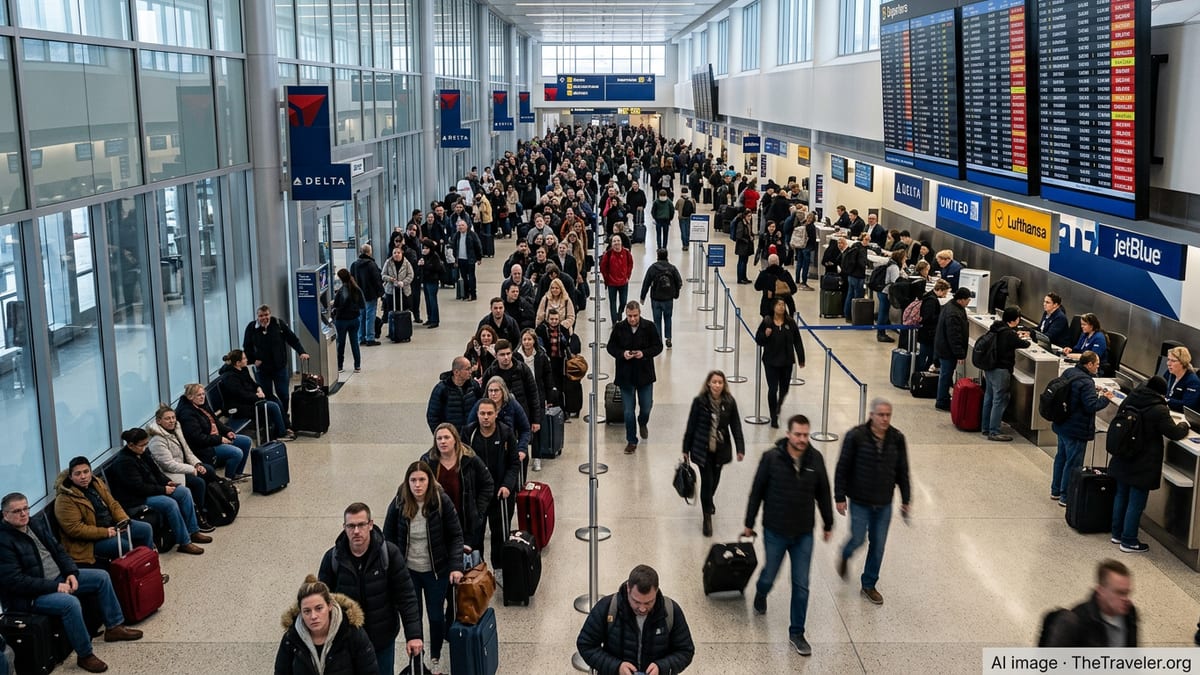
The operational strain at O’Hare, Atlanta and Newark translated into visible crowding inside terminals, with long lines at customer service counters as passengers sought new itineraries. Published coverage across multiple outlets described full gate areas and busy rebooking channels as airlines tried to redistribute passengers around the worst-affected hubs.
Because the disruptions peaked during a prime holiday departure window, travelers heading to family gatherings, vacation destinations and July 4 events were particularly vulnerable to missed connections and overnight delays. Even where flights operated, hours-long hold times and tarmac waits meant some passengers arrived late enough to miss scheduled plans on the ground.
Airports outside the main storm zones were not immune. Secondary hubs and large regional airports reported spillover delays as aircraft scheduled to arrive from Chicago, Atlanta or Newark turned late or were reassigned. This secondary impact translated into broader knock-on disruption across the national grid, even at locations that experienced relatively benign weather.
Broader Context of a Strained Summer Aviation Network
The July 4 disruption fits into a wider pattern of stress in the US aviation system during peak travel periods. Analyses of past years’ performance show that major hubs such as Chicago O’Hare, Atlanta and Newark regularly post high shares of delayed operations, reflecting intense traffic levels, complex airspace and vulnerability to thunderstorms during the summer season.
Industry data compiled for recent years indicate that only a small percentage of flights are fully canceled on an average day, but a far larger share operate behind schedule, particularly during holiday peaks. As carriers continue to run near-record schedules to meet strong demand, any reduction in capacity caused by storms or special airspace restrictions can push the system quickly from manageable congestion into visible disruption.
For travelers, the events of July 4 highlight the importance of planning buffers into itineraries during busy holiday weekends, especially when connecting through weather-prone hubs. Publicly available guidance from airlines and travel analysts consistently emphasizes booking earlier flights in the day, allowing extra time for connections and monitoring flight status tools closely when storms are in the forecast.