


More news on this day
A collision between two passenger trains on a busy rail corridor north of London has left one person dead and scores injured, disrupting travel for thousands on one of Britain’s main routes into the capital.
Get the latest news straight to your inbox!
Crash on key line north of London
Reports indicate that two southbound passenger services collided near Bedford on Friday afternoon, closing all lines between the town and London St Pancras. The incident occurred at the height of the evening rush, on a section of track used both by high speed intercity services and frequent commuter trains.
According to publicly available information from live rail tracking sites and early media coverage, both trains had been heading toward St Pancras when one struck the rear of the other just south of Bedford. One person has been reported dead and close to 90 people injured, with local health services warning that the casualty figures could change as assessments continue.
Rail operators suspended services on the affected section while emergency teams worked around the site, forcing long distance and regional trains to be cancelled or diverted. Passengers heading to and from London along the Midland Main Line corridor faced major disruption as the scale of the collision became clear.
Emergency response and passenger accounts
Publicly available photographs and video from the scene show multiple ambulances, fire appliances and specialist rescue units positioned along the railway embankment and in nearby industrial estates. An air ambulance was also deployed, underscoring the seriousness of the incident.
Passenger descriptions shared with news outlets and on social media describe a sudden, violent impact that threw people forward in their seats, followed by scenes of confusion in the carriages. Several witnesses reported visible injuries including broken bones and heavy bleeding as travelers attempted to help one another before medical crews arrived.
Rail operators have acknowledged significant injuries among those on board, with early figures suggesting dozens of people treated at the scene and in nearby hospitals for trauma ranging from cuts and bruises to more serious fractures. Rail and medical teams set up triage areas close to the tracks to prioritise treatment and coordinate transfers to hospital.
Impact on rail services and weekend travel
The location of the collision on a key artery into London means the incident is already having a substantial effect on rail travel in and out of the city. Services operated by intercity and regional companies on the Midland Main Line were suspended through the area, with some trains turned back short of Bedford and others cancelled outright.
Information released by train operators and network managers warns that disruption is expected to last well into the evening and could continue into the weekend while investigators examine the scene and engineers assess track and signalling damage. Passengers are being advised to delay nonessential journeys or seek alternative routes via other main lines into London, where capacity is already tight.
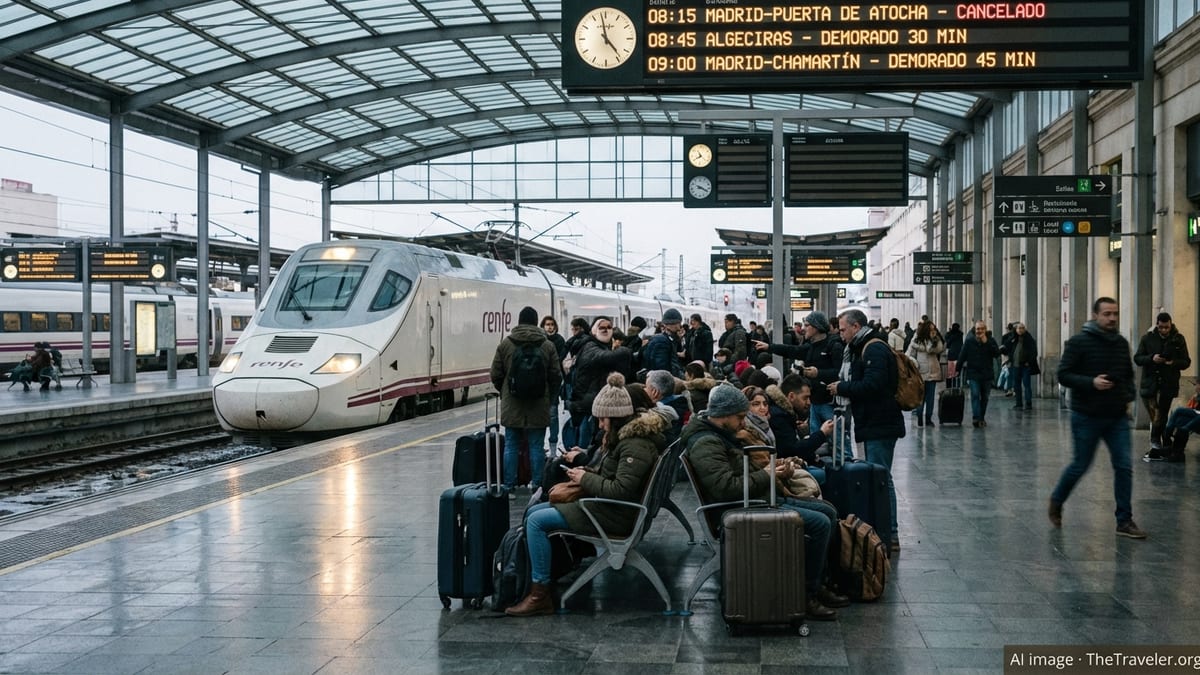
At major London terminals and regional hubs, departure boards quickly filled with cancellations and severe delays, creating difficult conditions for travelers at the start of the summer getaway period. With trains on parallel routes also becoming crowded, those planning onward journeys by air or long distance coach were urged to allow significantly more time.
Early questions over cause and safety systems
Rail accident specialists and industry observers note that collisions between two in-service passenger trains on Britain’s main lines are extremely rare events. Modern rolling stock and signalling systems are designed to prevent trains from occupying the same stretch of track, with multiple layers of protection intended to reduce the risk of high speed impacts.
Initial coverage suggests that one train ran into the rear of another, but it remains unclear whether the collision involved a failure of signalling, a problem with braking or adhesion, or some other technical issue. Investigators will be expected to examine onboard data recorders, signal logs and radio communications, as well as the condition of the trains and track in the minutes before the crash.
In recent years, inquiries into serious rail accidents in the United Kingdom and across Europe have frequently highlighted a combination of human factors and technical shortcomings. Analysts say attention is likely to focus on how train protection systems performed, whether any temporary operating restrictions were in place, and how traffic was being managed on the busy corridor north of London at the time.
Context of rail safety and traveler considerations
The collision near Bedford comes at a time of heightened scrutiny of rail safety across Europe, following several high profile crashes in recent years that involved both derailments and train to train impacts. While rail travel remains statistically one of the safest modes of transportation, each serious incident renews debate over investment in infrastructure, modernisation of signalling, and the rollout of advanced train control systems.
For travelers, the incident is a reminder of the importance of heeding onboard safety information, staying aware of luggage and obstacles in aisles, and following instructions from train crews during emergencies. Travel organisations often recommend keeping essential items such as identification, medication and a charged phone within easy reach when using long distance services.
As the investigation progresses, rail users planning journeys through the Midlands and into London are being encouraged to monitor service information closely and to check the status of trains on the day of travel. Further temporary speed restrictions, diversions or rolling stock substitutions may follow as operators work to restore full service while responding to any interim safety recommendations that emerge from the crash inquiry.