


Local government offices are central to an expat’s experience in Italy. Municipal and provincial administrations manage residency registration, civil status records, local permits, and a wide range of essential certifications. Understanding how these offices function, how long procedures usually take, and what service standards to expect is critical when assessing the practical feasibility of relocating to Italy.
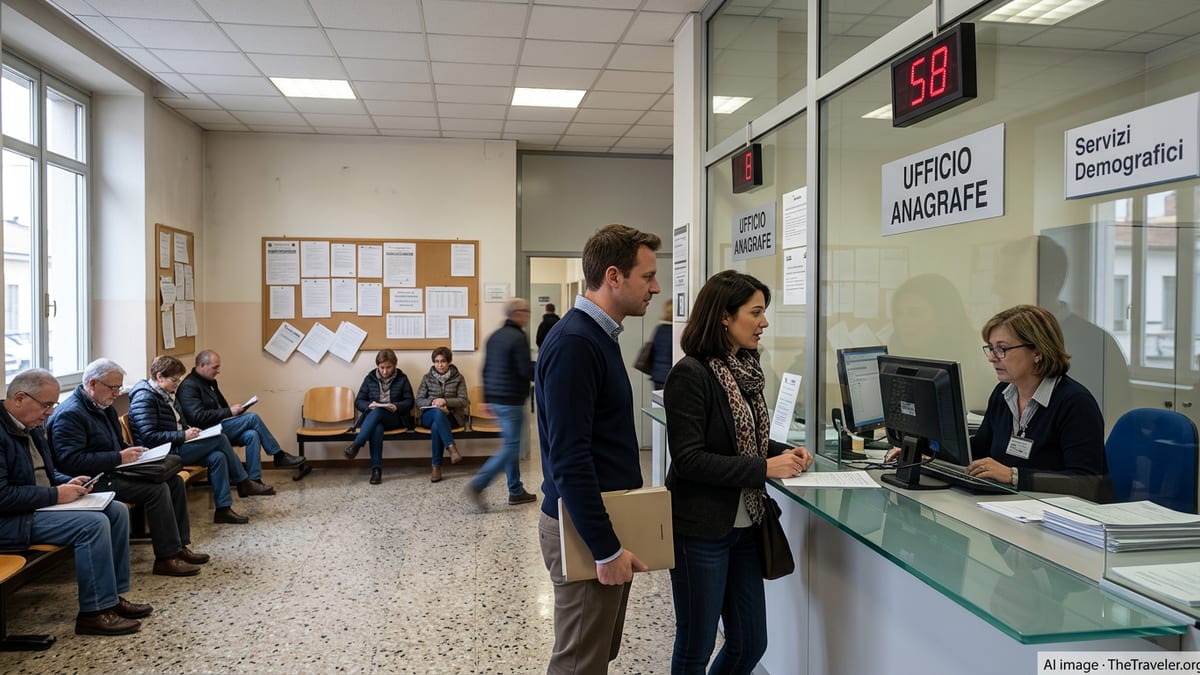
Structure of Local Government Offices Relevant to Expats
Italy’s public administration is highly decentralized, and many interactions that matter to expats occur at the municipal level. The basic unit is the comune (municipality), which can range from small towns with just a few thousand residents to large cities with more than a million inhabitants. Each comune operates town hall offices responsible for local registry data, civil status, population movements, and local services.
Within the comune, expats most often deal with the Ufficio Anagrafe (civil registry office), which maintains local residency records, and the Stato Civile office, which records births, marriages, and deaths. For issues relating to immigration status and certain permits, the questura (provincial police headquarters) and its immigration office may be involved, although these are technically under the Ministry of the Interior rather than the municipality. Larger cities also operate one-stop counters such as Sportello Unico services for coordinating procedures that overlap several administrations.
In recent years, Italy has consolidated local registry data into the Anagrafe Nazionale della Popolazione Residente (ANPR), a national database that now unifies records from all 7,903 municipal registries. This has simplified some inter-municipal processes and made it easier for offices to verify a person’s status electronically, though operational practices and speed of service still vary significantly from one comune to another.
Expats should expect a clear difference in resources and capacity between smaller municipalities and large urban administrations. Smaller comuni may offer more informal, relationship-based assistance but limited English and restricted opening hours, while large cities tend to have more structured procedures, appointment systems, and sometimes multilingual staff, but also higher demand and longer queues.
Key Procedures and Typical Timelines
For expats, the most consequential interactions with local offices often involve residency registration, address changes, and obtaining official certificates. After securing long-term accommodation, foreigners who intend to stay beyond approximately 90 days are generally required to notify their residence at the Ufficio Anagrafe within a defined period, often referenced as 20 to 90 days depending on legal basis and guidance. Once an application is submitted, municipal police usually verify that the applicant actually lives at the declared address, typically through a home visit.
By law, residency applications should be processed promptly, and local practice often refers to a target of around 45 days for confirmation of residency registration. In many cases, especially in smaller municipalities or less busy periods, processing can be faster and take a few weeks. However, in large cities or during peak periods such as late summer and year-end holidays, expats frequently report longer processing times, sometimes extending beyond two months for completion of checks and system updates.
Once residency is registered, expats interact with local offices for additional documents such as ID cards issued by the comune, residency certificates, family status certificates, and in some cases local permits. Production of an electronic ID card may take around one to two weeks from the appointment, depending on demand and central production times. Certificates requested at the counter are often issued on the spot or within a few days, although backlogs can occur when staffing levels are low.
It is important to distinguish between legal deadlines and real-world practice. While there are legal maximum periods for many administrative decisions, local offices are frequently working with high caseloads and limited personnel. Expats should incorporate potential delays of several weeks into relocation planning, especially when subsequent steps such as school enrollment, vehicle registration, or access to other services depend on the outcome of municipal procedures.
Service Culture, Queueing, and Appointments
Service culture in Italian local government offices combines formal procedures with a relatively traditional administrative approach. Many comuni still rely on in-person interactions, numbered ticket systems, and limited daily quotas for certain services. Expats can expect that walking in without an appointment may result in long waits or being asked to return another day, particularly in larger cities or heavily used counters such as registry and civil status offices.
Appointment-based systems are becoming more widespread, especially in metropolitan areas. Municipal websites often require residents to pre-book appointments for registrar services, ID card issuance, or complex procedures. The availability of appointment slots can vary: in some cities, appointments may be available within one or two weeks, while in others, especially after holiday periods, earliest slots may be several weeks away. For time-sensitive matters, securing appointments as early as possible is prudent.
Staffing constraints are a structural factor. Italy has roughly 5 to 6 public employees per 100 inhabitants, which is lower than or comparable to many Western European peers, and public administration unions and studies have repeatedly highlighted an aging workforce and under-resourcing at local levels. This affects counter hours, with many offices opening only in the mornings or on selected afternoons, and sometimes closing or reducing service in August or between Christmas and early January.
For expats, realistic expectations include occasional last-minute changes, such as counters closing early due to staff shortages or strikes, and limited flexibility to deviate from stated procedures. Planning visits earlier in the day, avoiding peak days immediately after public holidays, and checking municipal notices for closures can reduce stress and improve the likelihood of resolving matters on a given visit.
Language, Documentation Standards, and Communication Styles
Most local government offices in Italy operate primarily in Italian. In major cities with significant foreign populations, some staff may speak English or other languages, but this cannot be assumed. Official forms, notices, and digital portals are usually only in Italian. For expats who do not speak the language, this can be a significant operational barrier in completing procedures correctly and efficiently.
Documentation standards are strict. Offices routinely require original documents, certified translations for foreign documents, and evidence that rental contracts or property deeds are properly registered in official systems before applications can proceed. Small discrepancies in names, dates, or addresses can lead to applications being stalled until corrected. For residency and other key registrations, expats should expect that proof of housing, identification, and sometimes proof of sufficient means or employment may be scrutinized carefully.
Communication style in local offices tends to be formal and rule-focused. Clerks are tasked with enforcing procedural requirements and may decline to proceed if any element is missing or unclear. This can feel inflexible to newcomers accustomed to more discretionary customer service environments. However, once requirements are fully met, most offices process applications without bias, and consistent, polite follow-up tends to receive better results than confrontational approaches.
Because of the language and documentation demands, many expats make use of translators, relocation consultants, or Italian-speaking acquaintances to accompany them to initial appointments. This is particularly valuable when discussing complex matters or clarifying ambiguous instructions. Those who do not use assistance should consider preparing key phrases in Italian, bringing printed copies of all relevant documents, and double-checking lists of required papers on municipal portals before visiting.
Digitalization, Online Services, and What Works in Practice
Italy has invested heavily in digitalizing public administration, including local government services. Core national tools such as SPID (Public Digital Identity System) and the electronic identity card (CIE) allow residents to access many online services. By 2022, more than 12,000 public entities were offering at least one service via SPID, and tens of millions of citizens had activated digital identities. Subsequent reports in 2023 and 2024 indicate a continued increase in online services and logins, with thousands of local administrations connecting their portals to these systems.
For expats with residency and a valid Italian ID or SPID, certain interactions with municipal offices can now be done entirely online, such as requesting basic registry certificates, checking personal registry data, or paying local administrative fees through the national payment platform. The national ANPR portal also allows residents in many municipalities to download self-certifications and some official extracts without visiting a town hall counter.
However, digitalization is uneven. Larger cities and more affluent regions typically offer more comprehensive online services, while smaller municipalities may limit digital functions to basic forms or information. In many comuni, initial residency registration, changes that involve foreign documents, or complex civil status events still require a physical visit, presentation of original papers, and sometimes handwritten signatures.
Expats should view digital tools as a complement rather than a replacement for in-person interaction. Online portals can significantly reduce the need for repeat visits and make it easier to obtain simple documents once residency is established, but core life events and first-time registrations will usually still involve at least one visit to the relevant local office. Accessing digital services also presupposes some Italian language proficiency, as interfaces are largely monolingual.
Regional and Municipal Variability in Experience
One of the defining characteristics of dealing with local government offices in Italy is the high variability between municipalities and regions. Even though many rules are set nationally, implementation decisions, staffing levels, office layouts, and unofficial practices are determined locally. As a result, expats in different cities can report very different experiences with the same type of procedure.
In some small and medium-sized towns, expats describe efficient and relatively quick processing of residency registrations and civil certificates, sometimes within a couple of weeks. Direct relationships with staff, lower demand, and shorter queues can compensate for limited digital services. In contrast, large metropolitan comuni may have better-developed online portals but also report backlogs of several weeks to schedule appointments or complete police address checks.
Regional differences in administrative culture also play a role. Northern regions with strong administrative traditions and higher tax bases often have better-resourced offices and more extensive digital offerings. Southern and some central regions may face tighter budget constraints and heavier reliance on paper processes. While these are broad trends and there are exceptions, expats evaluating relocation should be aware that the same national law may feel materially different in practice from one municipality to another.
Because of this heterogeneity, decision-grade planning should not rely only on national-level information. Prospective expats benefit from researching the specific comune they plan to move to, including office hours, available online appointments, published processing times, and informal reports from other residents, in order to calibrate expectations about how quickly key registrations can realistically be completed.
Risk Factors, Bottlenecks, and Mitigation Strategies
Several recurring bottlenecks affect how expats experience local government offices in Italy. The first is incomplete documentation. Many delays stem not from formal backlogs but from missing or incorrectly prepared documents, untranslated foreign records, or housing contracts that are not properly registered. Each of these issues can halt a procedure until resolved, requiring repeat visits and extending the overall timeline.
A second bottleneck is scheduling and seasonal fluctuations. August, the period from mid December to early January, and the weeks immediately after major public holidays often see reduced staffing or office closures combined with higher demand. This can result in appointment calendars filling up quickly, counters operating at reduced capacity, and longer waits for both in-person and back-office processing. Expats who arrive during these windows should anticipate that key procedures may take longer than statutory or advertised timeframes.
Third, coordination between offices can be slow. Residency registration may depend on police checks, which operate under separate schedules. Certain permits may require data from both the comune and provincial or national systems. Even with the ANPR national registry, local offices sometimes have to reconcile paper archives, legacy software, and external databases, leading to additional internal handling time before files are fully updated.
Mitigation strategies for expats include building in generous time buffers, preparing over-complete document sets, using bilingual summaries of foreign documents, and, where feasible, engaging relocation professionals familiar with the specific municipality’s practices. Maintaining polite but persistent follow-up, checking status through online portals when available, and requesting written receipts and protocol numbers for submissions can also provide leverage if deadlines are significantly exceeded.
The Takeaway
Dealing with local government offices in Italy is a central operational aspect of relocation and has a direct impact on how quickly expats can become fully integrated residents. The system combines a dense network of municipal offices, evolving national digital platforms, and locally variable practices that shape the expat experience at the counter and online.
Prospective movers should expect formalism in documentation, predominantly Italian-language interactions, and potential waiting periods of several weeks for core procedures such as residency registration and ID issuance. At the same time, steady progress in digitalization, the consolidation of registry data in a national database, and the growing use of online identity systems are gradually simplifying repeated interactions once initial registration has been completed.
For decision-making, the key variables are the specific municipality chosen, the timing of arrival relative to local holiday cycles, and the expat’s capacity to navigate Italian-language bureaucracy. Those who plan with conservative timeframes, prepare documentation meticulously, and adapt to the local administrative culture generally find the system manageable, if sometimes slower than in more fully digitalized countries. Conversely, those expecting rapid, English-language, one-stop processing are likely to experience friction and delays that affect early months of residence.
FAQ
Q1. How long does residency registration at the Ufficio Anagrafe usually take?
In many municipalities, residency registration is often completed within about 30 to 45 days, but in larger cities or peak periods it can take longer.
Q2. Can expats handle Italian local government procedures entirely online?
No. While many municipalities offer online certificates and some services via national digital identity systems, first-time residency registration and complex cases typically still require in-person visits.
Q3. How much Italian language ability is needed to deal with local offices?
Most forms and interactions are in Italian. Basic language skills or assistance from an Italian speaker are highly advisable, especially for initial procedures.
Q4. Are local government staff in Italy generally willing to speak English?
In major cities some staff may speak English, but this cannot be relied upon. In smaller towns, expats should not expect English to be spoken at the counter.
Q5. Do local offices in Italy work all day, every weekday?
Many offices have limited opening hours, often mornings only and selected afternoons. Service can be reduced in August and around major holidays.
Q6. What documents are most commonly required at municipal offices?
Typical requirements include a valid passport or ID, proof of housing such as a registered rental contract or deed, and, for foreigners, immigration documents or permits where applicable.
Q7. How advanced is digitalization in Italian local government?
Digitalization is significant but uneven. Large cities and wealthier regions tend to offer broader online services, while smaller comuni may remain largely paper based.
Q8. How can expats reduce delays with local offices?
Preparing complete document sets, avoiding peak holiday periods when possible, booking appointments early, and following up politely yet persistently can reduce delays.
Q9. Is there a big difference between municipalities in how procedures are handled?
Yes. Processing speeds, digital tools, and staff practices vary widely between comuni, even under the same national rules, so local research is important.
Q10. Are relocation consultants necessary for dealing with local offices in Italy?
They are not legally required, but for expats with limited Italian or tight timelines, professional assistance can significantly reduce administrative risk and stress.