


Relocating to Portugal requires regular interaction with local government offices, from municipal town halls to national one‑stop shops such as Lojas do Cidadão and the new AIMA immigration stores. Understanding how these offices work in practice is essential for assessing whether day‑to‑day life administration in Portugal will be manageable for a prospective expat household.
Key Local Government Touchpoints for Expats
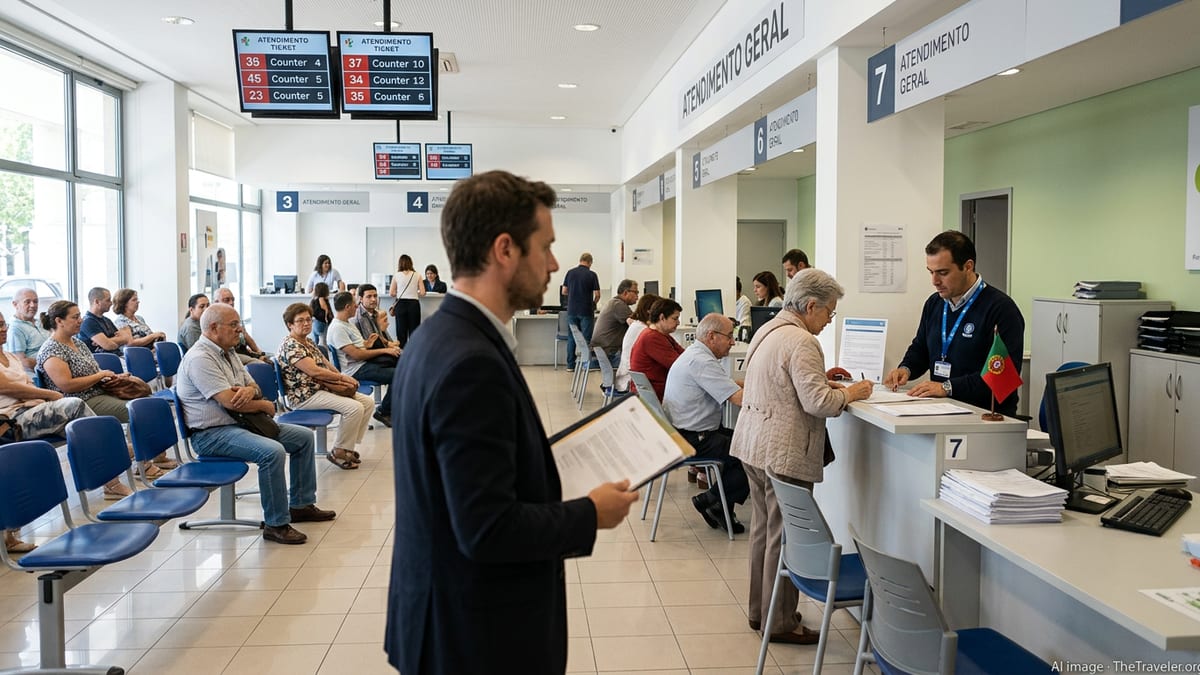
Expats in Portugal primarily deal with three layers of public administration: central government service counters, municipal and parish authorities, and the dedicated immigration agency AIMA. Central government services are heavily concentrated in Lojas do Cidadão (Citizen Shops) and Espaços Cidadão (Citizen Spaces), which co‑locate multiple agencies such as Tax Authority, Social Security, health service desks and civil registry counters in a single facility. These structures are designed to serve both Portuguese citizens and foreign residents, and in practice they are where many foundational registrations are completed.
Municipal councils (Câmaras Municipais) and parish councils (Juntas de Freguesia) are responsible for local certificates, residence confirmations, some licensing, and practical matters such as registering pets or requesting attestations of address. For an expat, they are usually relevant for proof of residence, local permits and certain family documentation, rather than national‑level immigration or tax status itself.
The Agency for Integration, Migration and Asylum (AIMA) replaced SEF as the main immigration authority in October 2023. AIMA operates a network of around 35 AIMA Stores across the country that function as front‑office locations for residence permits, renewals and related integration services. These stores often share buildings or locations with existing Citizen Shops, but they follow their own appointment and queuing systems and are experiencing increased demand and restructuring.
In the autonomous regions, particularly the Azores, there are additional local service networks such as RIAC centers which mirror Loja do Cidadão functionality adapted to archipelago conditions. Expats living on islands may therefore interact with slightly different branded offices, but the underlying processes of ticketing, appointments and document verification are broadly comparable to mainland practice.
Service Models, Opening Hours and Capacity Constraints
Most government counters in Portugal operate standard weekday opening hours, typically between 9:00 and 16:30 or 17:00, with some Citizen Shops opening slightly earlier around 8:00. AIMA Stores commonly publish weekday hours of approximately 8:00 to 17:00 for general information, with specific windows for legal representatives. Evening or weekend public administration services are rare, and expats who are employed locally often need to take time off work to attend in person. Flexibility from employers is therefore relevant for navigating the system effectively.
Service delivery models differ by office type. Many municipal and tax counters use mixed systems that combine same‑day ticketed queues with pre‑booked time slots. In high‑demand locations, same‑day queues can form well before opening, particularly at popular Lojas do Cidadão in Lisbon and Porto, leading to wait times of 1 to 3 hours during peak periods according to both government acknowledgments and user reports. Smaller cities and towns typically see shorter queues and a higher likelihood of same‑day service.
Capacity constraints have been particularly visible in immigration and integration services. When AIMA inherited several hundred thousand pending immigration cases from SEF, reported in late 2023 and 2024, it began its mandate with an application backlog and staffing at under half of planned levels. This has translated into longer processing times and limited appointment availability in major metropolitan areas. In contrast, smaller AIMA posts and certain regional offices have been able to offer appointments within a few weeks for some categories of cases, highlighting the geographic disparity in access.
Recognizing sustained congestion, the Portuguese government has launched modernisation measures and action plans aimed at adding staff, streamlining processes and expanding digital channels. Decision‑makers have publicly acknowledged that core services such as tax numbers, social security registration and health user numbers suffer from “long queues” and under‑capacity, and have announced initiatives to consolidate these into more efficient one‑stop service points by late 2024 and beyond. For expats evaluating relocation, this indicates that short‑term friction can be significant, even while medium‑term improvements are being rolled out.
Appointment Systems, Queues and Waiting Times
In practice, dealing with Portuguese local government offices often means managing two layers of waiting: securing an appointment and then being seen on the day. For some services, walk‑in access remains possible, but for immigration, many tax procedures and civil registry activities, prior booking is either mandatory or strongly recommended.
AIMA relies heavily on online appointment requests for residence permits and renewals, as well as scheduled appointments pre‑assigned as part of some visa types. In metropolitan areas, appointment lead times can extend to several months, with anecdotal accounts of 3 to 6 months between an application and an available time slot for certain categories. Once an appointment occurs, the issuance or renewal of a residence card may take several additional weeks, although newly arrived applicants with pre‑scheduled slots have sometimes received cards within roughly two weeks of biometrics collection when capacity allows.
Citizen Shops and municipal tax counters often use ticket dispensers where visitors select the service required and receive an alphanumeric ticket number. Waits can be under 30 minutes in smaller municipalities but can easily exceed two hours in major urban centers during school holidays, the start of the academic year and pre‑summer periods when more residents seek documentation. Some facilities operate online ticketing or estimated time systems, but coverage is not universal, and these tools do not fully eliminate physical queuing.
For expats, predictable timing is a key concern. While individual experiences vary widely, it is prudent to budget several weeks from first contact to resolution for any procedure requiring an appointment in a major city, and at least half a day of availability for each physical visit. In smaller towns, processes can be considerably faster, but expats relying on public transport should also factor in travel times to the nearest regional center hosting a Citizen Shop or AIMA Store.
Documentation Standards and Language Considerations
Portuguese government offices operate with strict documentation requirements that often assume familiarity with local concepts such as fiscal numbers, digital identity credentials and formal address proofs. Commonly requested items include a valid passport or national ID, residence permit or visa vignette, Portuguese tax number (NIF), social security number (NISS), health service number (SNS), and proof of address such as a formal rental contract or landlord declaration. Incomplete documentation is a frequent reason for rejection or deferral, requiring repeat visits.
For many services, original documents are required and copies may not be accepted unless certified. Offices usually provide a printed receipt or protocol number upon submission of an application, which serves as proof of initiation and can be useful if subsequent delays occur. At AIMA, proof of appointment or a protocol number is particularly important because national guidance indicates that holders of valid receipts and pending appointments should not be penalised for administrative delays beyond their control.
Language is another operational factor. The working language in almost all local government offices is Portuguese, and most forms and online portals are designed primarily in Portuguese. While many front‑office staff in large cities have at least basic English, and some central portals offer limited English interfaces, expats should not assume full English‑language support. The main central government portal has introduced an AI‑based virtual assistant that can answer questions in multiple languages including English and several other major tongues, which can help clarify procedures before a visit.
In smaller municipalities, English proficiency varies more widely. Expats who do not speak Portuguese should consider bringing a Portuguese‑speaking friend, partner or professional interpreter for complex matters. Having forms pre‑filled in Portuguese, even when guidance has been drafted with help from translation tools, can significantly reduce misunderstandings at the counter and improve the likelihood of first‑time approval.
Digital Tools, Online Portals and Authentication
Portugal has invested extensively in digital public services, and expats who can navigate these tools may reduce the number of in‑person visits required. A central building block is the Chave Móvel Digital, a mobile digital key system that provides secure login to government portals and allows digital document signing. Foreign residents can typically enrol for this credential in person at a Citizen Shop or other authorised counter, after which many services can be accessed online.
Key digital channels include the tax authority portal, social security portal, health service portal and the renewed national gov.pt platform. For immigration, AIMA has launched a dedicated online portal for residence permit renewals, allowing eligible residents to submit applications and upload documents remotely. However, the initial collection of biometric data for new residence permits still requires a physical appointment at an AIMA Store, and certain complex cases must continue to be handled in person.
Despite ambitious e‑government objectives, the reality is that some online portals have technical limitations or intermittent availability, and they are not yet fully aligned with the needs of non‑Portuguese speakers. User reports indicate that online forms may reject foreign data entries or require very specific formatting, which can force applicants back to in‑person solutions at Citizen Shops or local offices when digital applications fail. As a result, digital tools should be seen as a complement rather than a guaranteed replacement for direct contact with local government offices.
For expats evaluating relocation, the main implication is that successfully using Portuguese digital government systems often depends on first completing in‑person steps to obtain credentials such as the digital key, NIF and NISS. Once these are in place, routine renewals, tax submissions and health service interactions can be more efficiently managed online, although immigration matters will still involve physical attendance for key milestones.
Regional Variations and Urban vs Small‑Town Experiences
The experience of dealing with local government offices in Portugal is not uniform nationwide. Major urban centers like Lisbon, Porto and the Algarve coastal municipalities experience high demand from both domestic residents and international newcomers, resulting in crowded Citizen Shops and more intense competition for AIMA appointments. Queues before opening time, limited same‑day ticket availability and full appointment schedules weeks or months in advance are much more common in these areas.
In contrast, mid‑sized cities and smaller towns often deliver a more manageable experience. Municipal counters in these locations may have modest queues, and some expats report being able to walk into local tax or social security offices and complete processes in under an hour when visiting outside peak dates. AIMA appointments in less populated districts can also be easier to secure, though travel to these locations may offset the convenience.
The autonomous regions have their own specific administrative networks. For example, the Azores operate RIAC service centers that replicate many Citizen Shop functions on a regional basis. While their geographical dispersion means longer travel times between islands, these centers are designed to avoid the need to deal with multiple separate offices for each task. Expats considering relocation to islands should evaluate the availability and accessibility of these integrated centers compared with mainland alternatives.
Ultimately, the trade‑off is between the lifestyle and economic opportunities of high‑demand regions and the relative administrative simplicity of less congested municipalities. Prospective expats who prioritise smoother interaction with local government may wish to consider secondary cities and inland towns where service demand is lower, subject to the availability of employment or remote work arrangements.
Practical Strategies for Managing Interactions
Within the current structure and capacity constraints of Portuguese local government, expats can take concrete steps to reduce friction. The most effective approach is proactive preparation. This includes verifying required documents in advance through official portals or helplines, preparing translated and correctly formatted documentation, and bringing both originals and multiple copies to each appointment. Having supporting evidence such as rental contracts, utility bills and employment contracts can help address additional questions that arise at the counter.
Time management is another critical element. Arriving before opening hours at busy Citizen Shops can substantially reduce waiting times, as ticket numbers in the early morning are usually processed more quickly. Whenever possible, expats should book appointments rather than relying on walk‑ins, even if appointment dates appear distant. It is also advisable to avoid peak times such as late mornings on Mondays, the first working days after public holidays and the pre‑summer period when many residents seek travel documentation.
Leveraging digital and remote channels where they function reliably can reduce the number of in‑person visits. After obtaining a digital key and registering with relevant portals, expats can often update addresses, download certificates, submit some tax forms and in certain cases renew residence permits online. Monitoring announcements from AIMA and other agencies is important, as eligibility for online procedures and the list of services available digitally have been expanding incrementally.
Finally, expats should maintain realistic expectations about processing times and potential delays. Documented national backlogs in immigration and public administration mean that even correctly submitted applications can take significantly longer than published target times. Building generous lead‑times into planning for renewals, travel and employment transitions will reduce the risk that bureaucratic delays disrupt personal or professional plans.
The Takeaway
For prospective expats, dealing with local government offices in Portugal is likely to be more time‑consuming and procedurally rigid than in many Northern European systems, but broadly comparable to other Southern European administrations undergoing digital transition. The core pattern involves centralised one‑stop shops, strong reliance on appointments, high demand in major cities and evolving digital tools that are still maturing for foreign users.
On the positive side, Portugal offers increasingly integrated service centers that allow multiple procedures to be completed in a single location, and it is actively investing in digital access, multilingual information and structural reforms to reduce backlogs. On the challenging side, current capacity constraints, especially within AIMA, long queues at Citizen Shops and variable English‑language support mean that expats must plan carefully and tolerate administrative uncertainty, particularly during the first 12 to 24 months after arrival.
Whether these conditions are acceptable depends on each expat’s tolerance for bureaucracy, flexibility in work schedules and willingness to engage with the Portuguese language. Those who prepare thoroughly, secure early appointments, develop basic Portuguese skills and use digital tools strategically are more likely to find the system manageable. Those expecting rapid, fully online processing in English may find the current reality misaligned with their expectations.
As reforms continue and backlogs are gradually addressed, the administrative experience for foreign residents in Portugal is likely to improve. For now, however, any relocation decision should factor in the need for repeated, sometimes slow interactions with local government offices as an integral part of settling and maintaining legal status in the country.
FAQ
Q1. How much time should expats typically budget for visits to Portuguese government offices?
Most expats should plan at least half a day for each in‑person visit, including travel and waiting times. In busy Citizen Shops in large cities, queues can stretch to several hours, while smaller municipalities may complete procedures within 30 to 60 minutes outside peak periods.
Q2. Do local government offices in Portugal generally speak English?
In large cities many front‑office staff have basic English, particularly in Citizen Shops and AIMA Stores, but it is not guaranteed and complex explanations are often given only in Portuguese. In smaller towns, English proficiency is more variable, so bringing a Portuguese‑speaking companion is advisable for important procedures.
Q3. Is it possible to handle most administrative tasks online as an expat?
Some tasks such as tax filings, social security queries and certain residence permit renewals can be managed online once a digital key and local identifiers are obtained. However, key steps like initial immigration biometrics, some registrations and complex cases still require physical attendance, and online portals may have technical or language limitations.
Q4. How long are current waiting times for AIMA immigration appointments?
Waiting times vary significantly by region and case type. In major metropolitan areas, new or renewal appointments can take several months to secure, whereas in less populated regions some categories may obtain dates within a few weeks. Processing of residence cards after biometrics often requires several additional weeks, so expats should build generous lead‑times into their plans.
Q5. What documents are most commonly required at local government offices?
Commonly requested documents include a valid passport or national ID, residence permit or visa vignette, Portuguese tax number, social security number, health user number, proof of address and in some cases employment or study contracts. Bringing originals plus multiple copies and translations where relevant helps prevent delays or repeat visits.
Q6. Are walk‑in visits to Citizen Shops still possible for expats?
Walk‑in visits are often possible for certain services, especially in smaller cities or for less complex tasks. However, in busy urban Citizen Shops ticket quotas for walk‑ins can be exhausted quickly, and many services, such as specific tax changes or immigration‑related steps, increasingly require scheduled appointments.
Q7. How do regional differences affect interactions with local offices?
Major cities tend to have longer queues and more congested appointment systems because of higher demand from residents and newcomers. Smaller towns and regional centers often provide faster service, though they may offer a narrower range of specialised counters. Island regions use their own integrated service networks, which can reduce the number of offices needed but may require longer travel.
Q8. What role does the Chave Móvel Digital play for foreign residents?
The Chave Móvel Digital is a mobile digital key that enables secure login to many Portuguese government portals and supports digital signatures. Once obtained, it allows expats to access a range of online services, reducing the need for some in‑person visits. Enrolment usually requires an initial face‑to‑face verification at a Citizen Shop or similar counter.
Q9. How is Portugal addressing current backlogs in public administration services?
The government has launched action plans to increase staffing, digitise more procedures and consolidate services for foreign citizens, particularly around immigration and core identifiers like tax, social security and health numbers. While these reforms are ongoing and not yet fully reflected in day‑to‑day experience, they signal a policy commitment to gradually shorten queues and improve predictability.
Q10. What practical strategies help expats navigate local government more easily?
Effective strategies include booking appointments early, arriving before opening hours at busy offices, double‑checking documentation requirements, using digital portals where reliable, and seeking assistance from Portuguese‑speaking friends or professionals for complex matters. Setting realistic expectations about timelines and potential delays is also critical for avoiding disruption to personal or work plans.