


More news on this day
Passengers flying through London Gatwick on Sunday 24 May are encountering pockets of disruption, with live flight data showing modest cancellations but a higher number of delayed services across the day.
Get the latest news straight to your inbox!
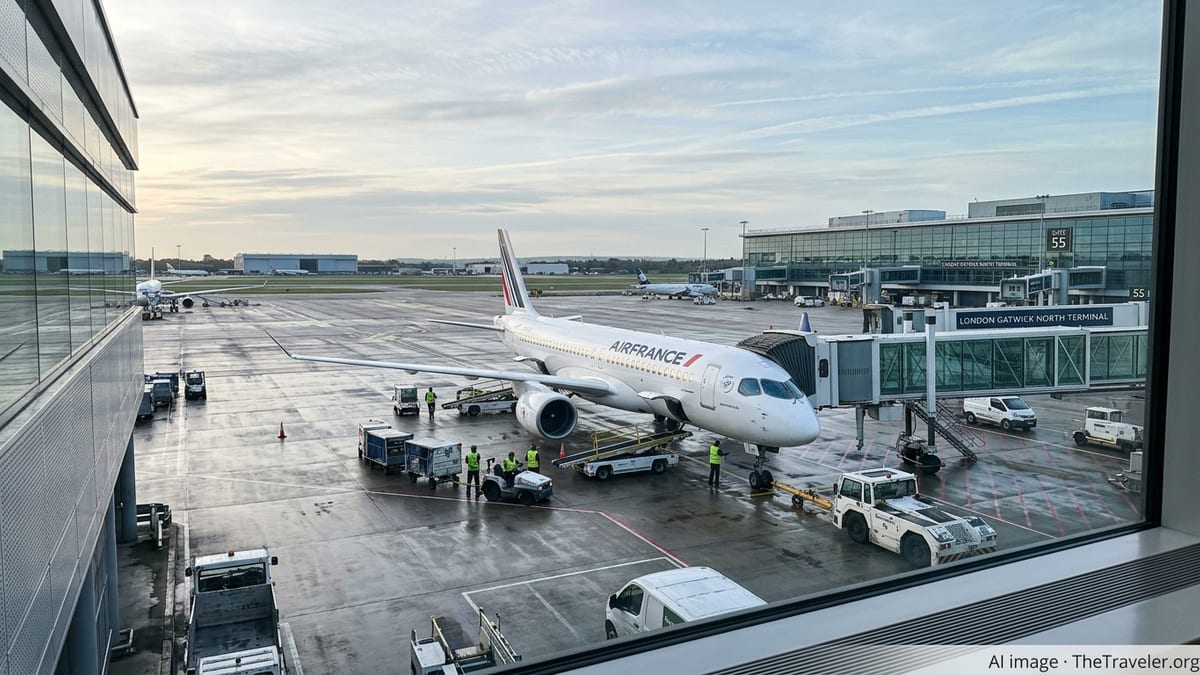
Mixed picture across Sunday’s schedule
Publicly available tracking data for Sunday 24 May indicates that London Gatwick is operating close to its planned schedule, but with a noticeable cluster of delayed departures and arrivals, particularly on short-haul leisure routes. Services to Mediterranean destinations such as Spain, Portugal and the Canary Islands show a pattern of minor to moderate delays as aircraft and crews cycle through busy morning and early afternoon waves.
Live route trackers and independent monitoring platforms list only a small number of outright cancellations so far today, mostly affecting regional links and lower-frequency services. In several cases, airlines appear to have consolidated flights or reassigned aircraft, turning what might have been longer delays into cancelled rotations with rebooked passengers on later departures.
Despite the relatively contained number of cancellations, the cumulative effect of rolling delays means many passengers are arriving at their destinations later than scheduled. Travellers connecting onto trains and coaches from Gatwick are being advised, in published guidance from rail and coach operators, to allow additional buffer time rather than relying on tight connections.
Airport performance reports released in recent months show that Gatwick typically handles several hundred scheduled flights per day at this time of year, so even a modest percentage of delayed services can translate into thousands of affected passengers over the course of a single Sunday.
Knock-on effects from wider UK aviation pressures
Today’s operational picture at Gatwick is unfolding against a backdrop of broader strain across the UK’s aviation network. Reports from other London airports this weekend highlight weather-related flow restrictions, air traffic management constraints and tight aircraft availability, all of which can contribute to late-running rotations feeding into Gatwick-bound schedules.
Industry analysis published over recent weeks has consistently pointed to limited spare capacity in both fleets and crews across European carriers. When aircraft starting their day from other hubs encounter restrictions or technical checks, subsequent flights into and out of Gatwick can lose punctuality minutes that are difficult to recover in a packed timetable.
Civil aviation statistics for early 2026 also show that cancellations across London airports remain above pre-pandemic averages, although still within regulatory tolerances. Gatwick’s own performance reports stress a focus on keeping outright cancellations low, even if that means accepting a higher proportion of departures leaving slightly behind schedule when disruption elsewhere in the network ripples through.
For passengers on multi-leg itineraries, this environment raises the risk of missed onward connections, especially where itineraries involve self-booked combinations of low-cost and full-service airlines. Travel advisers are continuing to recommend longer connection windows and flexible tickets during this early-summer period of elevated demand.
Security queues and ground operations remain manageable
While flight timings are under some pressure, live airport analytics tools suggest that Gatwick’s terminal operations are holding up relatively well so far today. Real-time dashboards that track passenger throughput and average delay levels are currently showing Gatwick as less congested than some other major European hubs, with security wait times characterised as moderate and moving.
These indicators align with Gatwick’s positioning as a high-density but relatively streamlined operation, where a large share of traffic is point-to-point leisure flying rather than complex long-haul connections. This structure can help the airport absorb schedule shocks more smoothly, provided ground handling teams and border controls remain adequately staffed.
Airport documentation and frequently asked questions published by Gatwick highlight measures introduced in recent seasons to smooth passenger flow, including revised security lane layouts and clearer guidance on arrival times before departure. Although today’s data shows some delays at the stands, there are no signs so far of severe terminal crowding or extended security bottlenecks.
For departing passengers, the most significant ground-side risk today appears to be surface transport rather than airport queues. Recent disruption on major roads near Gatwick and periodic rail strike activity in the wider London region have prompted operators to remind travellers to check their route and allow for potential congestion, even on days when the airport itself is operating relatively smoothly.
Short-haul leisure routes most exposed
Operational patterns today suggest that short-haul leisure routes are bearing the brunt of delays at Gatwick. Flight trackers show several departures to popular holiday destinations leaving noticeably behind schedule, often as a result of late inbound aircraft arriving from earlier morning rotations elsewhere in Europe.
Because many low-cost and leisure airlines schedule tight turnarounds at Gatwick during peak travel periods, any early delay can cascade through two or three subsequent flights. This phenomenon is particularly visible on routes linking Gatwick with island and coastal airports that have limited alternative capacity and tightly programmed slot times.
On the other hand, a number of long-haul and higher-yield services appear to be operating closer to schedule, reflecting their strategic importance in airline networks. In some cases, airlines have prioritised these flights for on-time departure by reallocating aircraft or swapping stand positions, a tactic that can leave lower-frequency leisure services more vulnerable to delays or last-minute consolidation.
Travel advice circulating today from consumer groups and itinerary-planning services emphasises the value of monitoring flight status directly with airlines and through official airport channels, especially for passengers heading to time-sensitive events or cruise departures from overseas ports.
What passengers travelling later today should expect
With afternoon and evening waves of departures still to come, there remains potential for further schedule changes at Gatwick as airlines work to recover from earlier disruptions. Historical performance data suggests that late-running aircraft in the middle of the day can either be absorbed through tactical schedule adjustments or, if conditions worsen, lead to additional cancellations in the final wave of departures.
Passengers with flights later this Sunday are being encouraged, in publicly available guidance, to check in online where possible, keep contact details updated with their airline and monitor their flight status frequently in the hours before travel. Airline apps and text alerts are increasingly being used to advise customers of retimings, gate changes or rebooked itineraries.
For those already at the airport, information screens and staffed service desks remain the primary channels for real-time updates, alongside airline social media feeds that are providing broader summaries of today’s operational picture. Where delays are extending beyond published thresholds, travellers may be eligible for care provisions such as meal vouchers or hotel accommodation, subject to the cause of disruption and applicable regulations.
Although Sunday 24 May has so far brought nothing on the scale of the large-scale shutdowns or IT failures seen in previous years, today’s rolling delays at Gatwick underline how quickly a busy schedule can fray when wider network pressures coincide with peak-season passenger demand.