


More news on this day
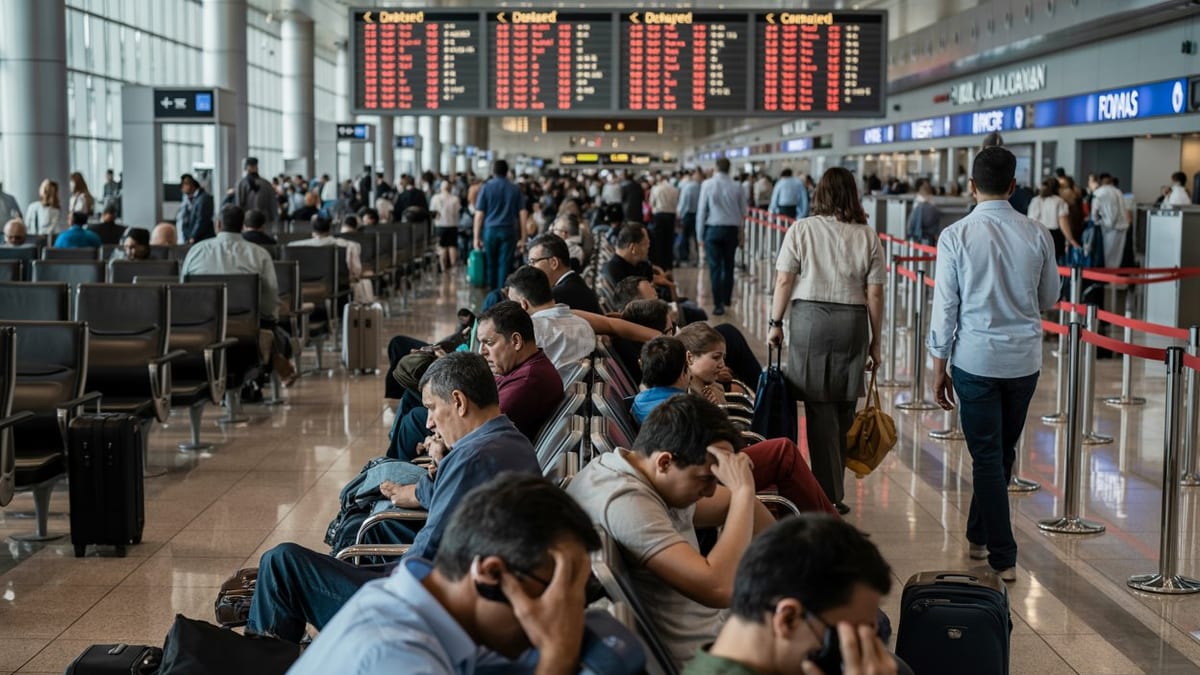
Hundreds of passengers across Brazil’s busiest air corridors faced extended waits and missed connections today, as monitoring data pointed to around 130 delayed flights and at least 10 cancellations affecting major hubs including São Paulo–Guarulhos, Viracopos in Campinas, central São Paulo and Maringá.
Get the latest news straight to your inbox!
Wave of Delays Hits Brazil’s Main Domestic Gateways
Publicly available tracking boards and aviation data platforms on May 27 indicated that disruptions were concentrated on short and medium haul routes, many of them linking São Paulo–Guarulhos International Airport with other Brazilian cities. Services operated by LATAM Brasil, GOL and Azul Brazilian Airlines featured prominently among the delayed departures and arrivals, alongside flights marketed through codeshare partners.
The new snarl-up followed a difficult spell for Brazilian air travel, coming just a day after earlier monitoring snapshots highlighted dozens of delays and several cancellations on routes touching Guarulhos and regional airports. The pattern points to a fragile operating environment in which relatively small schedule disturbances can ripple across the network and affect large numbers of travelers.
Although the total of roughly 130 delays and 10 cancellations represents a fraction of overall daily movements through these airports, the clustering of problems into peak morning and evening banks has magnified the impact. Passengers connecting through São Paulo’s airports and Campinas in particular have faced missed onward flights and the prospect of overnight stays.
Reports from airport displays and flight trackers showed services pushed back by anything from 30 minutes to several hours, with some domestic departures repeatedly rescheduled before eventually taking off or being removed from the boards entirely.
Guarulhos and Campinas Bear the Brunt
São Paulo–Guarulhos, Brazil’s largest international gateway, once again emerged as the main pressure point. Data compiled from live arrivals and departures boards showed a dense cluster of delayed flights on key domestic trunk routes, including services to and from coastal cities and southern regional centers. LATAM Brasil’s operations, which form a major share of the traffic at Guarulhos, appeared particularly exposed as delays in one part of the network fed into knock-on issues elsewhere.
GOL and Azul flights were also affected, with several of their domestic rotations showing late departures from Guarulhos and late arrivals back into the hub. For passengers, this translated into crowded gate areas, long queues at customer service desks and a scramble for available seats on later flights.
Viracopos Airport in Campinas, a vital base for Azul and an important alternative for travelers in the São Paulo region, also saw a noticeable number of delayed services. Monitoring information showed slippages on routes connecting Campinas with other Brazilian cities, adding to the strain on an airport that often acts as a relief valve when São Paulo’s primary hubs experience operational stress.
The combination of delays at both Guarulhos and Campinas narrowed rebooking options for stranded travelers. With seats at a premium on remaining on-time flights, some passengers were left weighing whether to reroute through secondary airports or postpone their trips altogether.
Regional Centers São Paulo and Maringá Also Affected
Beyond the major hub at Guarulhos and the Azul stronghold in Campinas, the current disruption has also touched flights at São Paulo’s city airport and at Maringá in Paraná state. Schedules linking the São Paulo metropolitan area with inland destinations have shown pockets of delays, reflecting how quickly problems at a central node can cascade outward along domestic spokes.
Maringá Regional Airport, which relies heavily on a limited number of daily services from major carriers, is particularly vulnerable to schedule shocks. When flights from São Paulo arrive behind schedule or are canceled outright, the options for same-day alternatives are slim, leaving travelers dependent on last-minute bus journeys or overnight accommodation.
Tracking data on selected routes between São Paulo and Maringá indicated late-running arrivals and departures, as well as individual cancellations that forced aircraft and crews out of their usual rotation. Each of these events adds friction to a system that depends on tight turnaround times and high aircraft utilization.
For leisure travelers heading to or from regional cities, these interruptions can mean lost hotel nights and curtailed itineraries. For business travelers, the knock-on effects range from missed meetings to the need to shift in-person appointments online at short notice.
LATAM Brasil, GOL and Azul Under Operational Pressure
The three dominant carriers in Brazil’s domestic market, LATAM Brasil, GOL and Azul, all faced additional operational pressure as the day unfolded. Publicly accessible flight performance data showed their logos repeatedly on delayed services, a reflection of their sheer scale within Brazil’s air network as well as the challenges of maintaining punctuality in busy airspace.
LATAM Brasil, which operates an extensive network from Guarulhos, has been running high-frequency shuttles between São Paulo and major Brazilian destinations. Any disruption to aircraft rotation at the hub quickly shows up in tailbacks along the route map, as aircraft and crews arrive late for subsequent legs.
GOL, which serves both Guarulhos and other São Paulo airports, has also been juggling intense utilization of its narrowbody fleet. When one flight departs late, the impact can be felt for several sectors, even if each individual delay appears modest on paper. Azul, heavily invested in Campinas and a range of regional links, faces a similar challenge in protecting its schedule on days when conditions are less than ideal.
While no single overarching cause has been identified in publicly available reporting for today’s pattern of disruption, Brazil’s airlines continue to operate amid a mix of high demand, tight staffing and infrastructure constraints. In such an environment, small technical issues, weather shifts or air traffic flow measures can combine to push punctuality statistics down rapidly.
What Today’s Disruptions Mean for Travellers
For the hundreds of passengers caught up in the latest wave of delays and cancellations, the immediate concern has been simply getting where they need to go. With rebooking options limited on some domestic routes, travelers have had to weigh whether to accept longer layovers, transfer to alternate airports or shift trips to another day.
Consumer advocates typically highlight the importance of knowing local passenger rights in cases of significant delay or cancellation. In Brazil, regulations can provide for assistance such as meals, accommodation and communication support in certain circumstances, though the exact entitlements depend on factors including the length and cause of the disruption.
From a broader perspective, today’s events underscore how sensitive Brazil’s domestic aviation network remains to operational shocks. Even when the number of cancellations is relatively low, the clustering of around 130 delays across key hubs is enough to strand travelers and unsettle schedules for an entire day.
As the busy mid-year travel period approaches, the performance of carriers such as LATAM Brasil, GOL and Azul at heavily trafficked airports like Guarulhos and Campinas will remain under close scrutiny from both passengers and industry watchers monitoring how quickly the system can recover from fresh rounds of disruption.