


More news on this day
Travelers passing through Tel Aviv’s Ben Gurion International Airport faced fresh disruption this week as cancellations and delays involving El Al and Aegean Airlines interrupted key connections between Israel, Europe, the Gulf and North America.
Get the latest news straight to your inbox!
Targeted Cancellations Amid Ongoing Operational Strains
Publicly available flight board data and aviation tracking services show that Ben Gurion International Airport has experienced repeated waves of disruption in recent months, with dozens of services scrubbed or significantly delayed on peak days. Recent records indicate that El Al and Aegean Airlines have both canceled selected departures on short notice, including services linking Tel Aviv with major European hubs.
Data compiled by flight disruption monitoring platforms for late winter and early spring 2026 highlight several high-impact days when carriers serving Ben Gurion sharply reduced operations. On those days El Al and Aegean appear among the airlines canceling services, with Athens, Dubai, Zurich, New York and other long haul destinations reported among the affected routes. These patterns provide important context for the latest cancellations and delays that have caught travelers off guard this week.
While the precise operational reasons for the most recent flight cancellations are not detailed in public timetables, earlier disruptions at the airport were attributed in open-source reporting to a combination of security-related airspace restrictions, rapidly changing safety assessments and broader network imbalances across multiple airlines. Industry observers note that once schedules are thinned by such constraints, even isolated operational issues can trigger new cancellations as carriers work with reduced flexibility.
For passengers booked with El Al and Aegean, the practical impact has been abrupt changes to travel plans, with some flights removed from schedules and others subject to rolling delays. Travelers connecting onward to long haul services from European and Gulf hubs face particular uncertainty as missed connections cascade through already busy summer-season networks.
Key Routes Hit Across the UK, UAE, Netherlands, Greece and US
The disruption at Ben Gurion is reverberating across a web of high demand routes linking Israel to major markets in Europe, the Gulf and North America. Flight data and recent disruption summaries identify services touching the United Kingdom, the United Arab Emirates, the Netherlands, Greece and the United States among those affected as airlines adjust schedules at short notice.
Athens stands out as a critical bridge for Israeli travelers. Aegean Airlines operates a dense schedule between Tel Aviv and the Greek capital, while El Al and other carriers also serve the route. When even a small number of these flights are canceled or delayed, passengers connecting in Athens to onward services bound for the UK, continental Europe and the US can find itineraries unraveling, especially on days when alternative seats are limited.
Similarly, flights between Tel Aviv and Gulf hubs such as Dubai and Abu Dhabi have featured prominently in recent disruption tallies. These routes are key for travelers linking Israel with cities across the UAE, wider Asia and Australia, meaning delays or cancellations at Ben Gurion can quickly ripple through multi leg journeys. Services to and from major European gateways including Amsterdam and London connect further on to the United States and Canada, raising the stakes for long haul passengers relying on tight connections.
Reports from consumer-facing compensation and tracking platforms underscore that when Ben Gurion experiences a heavy disruption day, long haul routes to New York and other US cities are often among those impacted. For transatlantic travelers, the combination of long flight times, complex security procedures and ongoing regional uncertainty has created a fragile environment in which a canceled feeder flight can easily turn into a missed overseas departure.
Passengers Confront Crowded Terminals and Limited Rebooking Options
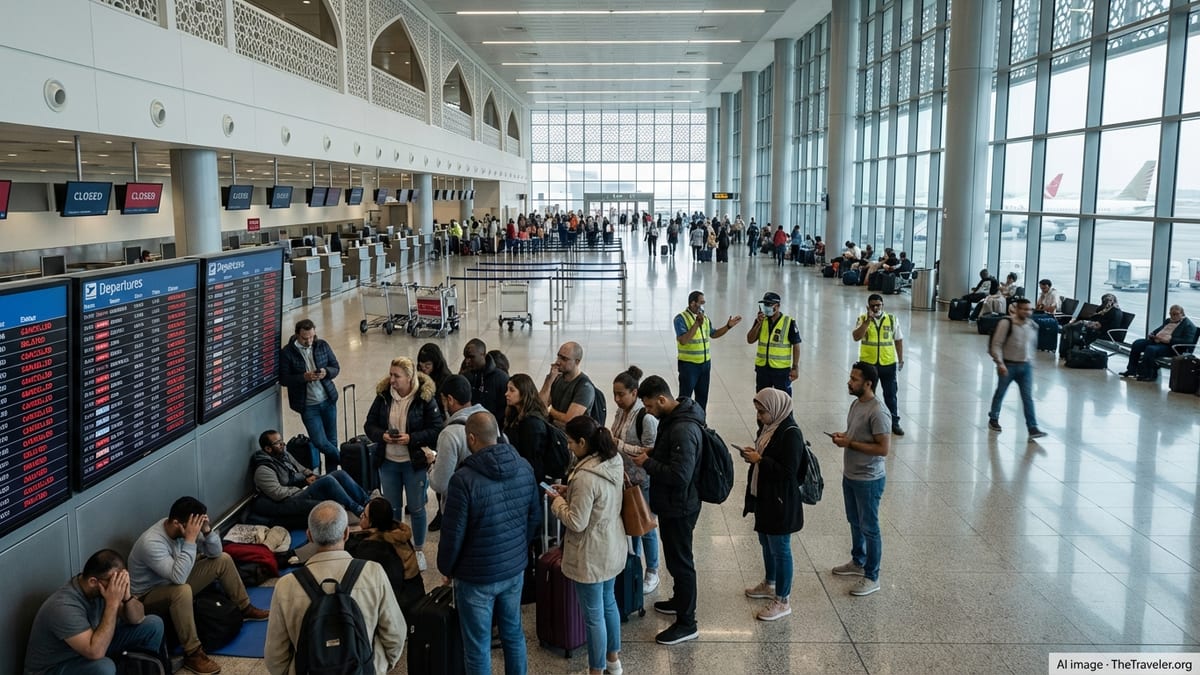
Travelers caught in the latest wave of disturbances at Ben Gurion describe crowded departure halls, long queues at airline counters and limited real time information about revised departure times. Online itineraries and mobile apps have not always updated in step with airport announcements, making it challenging for passengers to determine whether flights are delayed, retimed or fully canceled.
As El Al and Aegean adjust schedules, rebooking options have become constrained on some days, particularly for those traveling to and from popular summer destinations in Europe and North America. With many flights already heavily booked, passengers whose flights are canceled may face extended waits for alternative departures or be routed via unfamiliar airports, lengthening travel times and adding extra border formalities to their journey.
Industry analysts observing the situation at Ben Gurion note that the airport has been operating under an unusual and sometimes fluid security and capacity environment for much of the past year. Under such conditions, airlines can struggle to maintain stable schedules, and passengers are often left bearing the brunt of last minute changes that reflect complex operational and safety calculations behind the scenes.
For families, tour groups and business travelers, the uncertainty has meant additional nights in hotels, unexpected expenses and missed events. Although passenger rights regulations in the European Union, the United Kingdom and other jurisdictions offer protections in some scenarios, the applicability of compensation depends heavily on the specific cause of a cancellation and the airline operating the flight.
Guidance for Travelers Planning Upcoming Journeys via Tel Aviv
With disruptions at Ben Gurion showing little sign of fully stabilizing, travel specialists are urging passengers with upcoming itineraries through Tel Aviv to build in more flexibility and prepare contingency plans. Publicly available advisory notices and consumer guidance emphasize the importance of monitoring flight status frequently in the days and hours before departure, using both airline channels and independent tracking tools.
Travel planners suggest that, where possible, passengers consider longer connection times when routing through European and Gulf hubs, particularly when their journey involves separate tickets or tight transits between different airlines. For those flying from the UK, the Netherlands, Greece, the UAE or the US, choosing itineraries with built in buffers may reduce the risk of misconnecting if an initial leg from Tel Aviv is delayed.
Travel insurance documents should be reviewed carefully before departure to confirm what coverage is available for delays, cancellations and forced overnight stays. Some policies distinguish between disruptions caused by operational issues and those linked to wider security or airspace restrictions, which can affect eligibility for reimbursement.
Passengers already en route are encouraged by consumer advocates to keep digital copies of boarding passes, booking confirmations and receipts for extra expenses, as these records can be important when pursuing refunds, rebooking assistance or statutory compensation afterward. Maintaining direct communication with airlines through official apps and call centers can also help travelers respond quickly if seats open on alternative flights.
Regional Context Keeps Pressure on Airline Schedules
The latest cancellations involving El Al and Aegean come against a backdrop of heightened sensitivity around aviation operations in the Eastern Mediterranean and Middle East. In recent months, publicly accessible reports have documented multiple instances in which security considerations and evolving airspace directives have reduced flight frequencies or prompted carriers to pause selected routes to and from Israel.
Airlines serving Ben Gurion continue to balance strong underlying demand with the need for operational resilience in a volatile environment. For El Al, which remains the primary Israeli flag carrier, and for Aegean, whose Athens hub is a key gateway between Israel and the wider European network, decisions to cancel individual flights can be part of broader efforts to match capacity with what can be reliably operated on a given day.
As the busy summer travel season approaches, the experience of recent disruption days at Ben Gurion suggests that even limited cancellations and clusters of delays can have outsized effects across interconnected route networks touching the UK, UAE, Netherlands, Greece, the US and beyond. Travelers relying on those links are being advised by travel industry commentators to remain vigilant, flexible and prepared for potential last minute changes while conditions remain fluid.