


More news on this day
Jakarta’s Soekarno-Hatta International Airport, Indonesia’s busiest air hub, has reported a fresh bout of operational turbulence, with publicly available data showing 15 flight cancellations and 46 delays in a single day as regional carriers ranging from Batik Air to Malaysia Airlines, Scoot, EVA Air, XiamenAir and Shandong Airlines face mounting reliability questions on key Jakarta routes.
Get the latest news straight to your inbox!
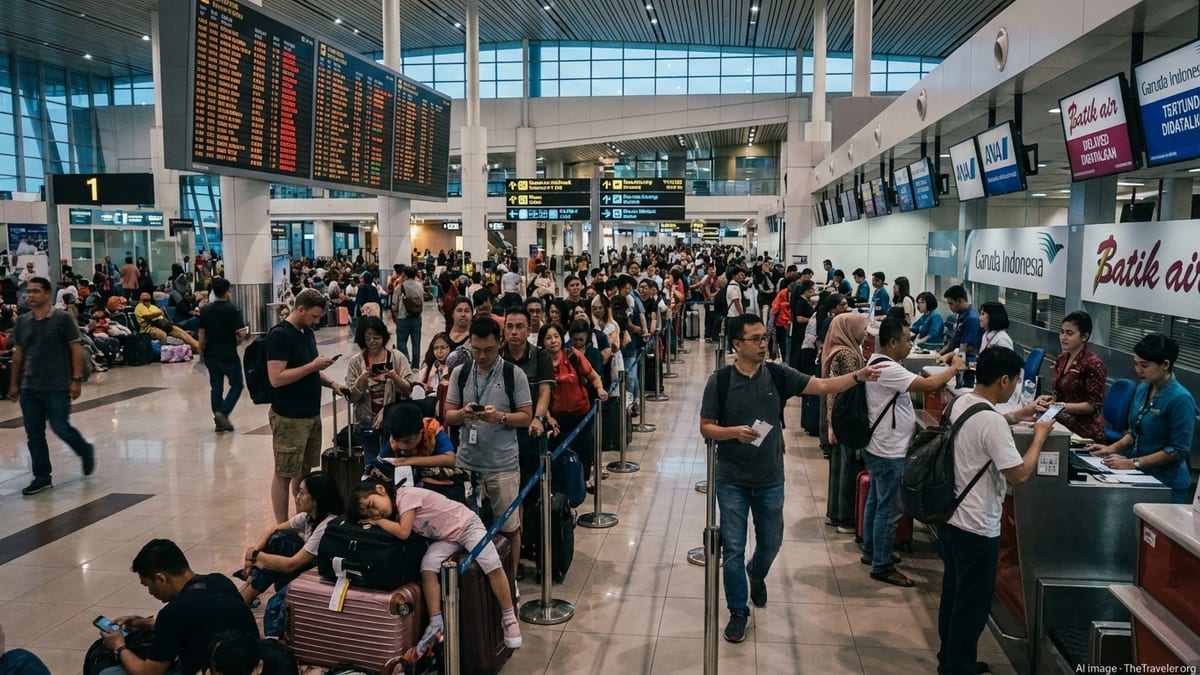
Fresh Disruptions at Indonesia’s Primary Aviation Gateway
Real-time flight tracking and airport schedule portals for Soekarno-Hatta on 9 June 2026 point to a concentrated wave of disruptions affecting both domestic and international services. Across the day, records indicate 15 cancellations alongside 46 delayed departures or arrivals, underscoring the pressure on a hub that routinely ranks among Southeast Asia’s busiest for passenger movements.
The disruption profile is dominated by short and medium-haul regional links that connect Jakarta to Southeast Asian and East Asian markets. Several Indonesia-based operators, including Batik Air and Lion Air Group affiliates, appear prominently across delay and cancellation boards, while international carriers such as Malaysia Airlines, Scoot, EVA Air, XiamenAir and Shandong Airlines also feature on affected Jakarta-linked routes.
While overall traffic at Soekarno-Hatta has largely recovered from pandemic-era lows, irregular operations remain a recurring challenge at peak times. Analysts monitoring publicly accessible data point to a combination of congested airspace, tight aircraft rotations and weather-related constraints that can quickly cascade into delays and missed connections across the region.
For passengers, the latest sequence of disruptions has translated into missed meetings, rebooked holidays and extended airport waits. Consumer forums and social media posts in recent months have repeatedly highlighted Jakarta-related schedule changes and on-the-day cancellations, particularly on lower-cost and hybrid carriers working to optimize fleet utilization across dense regional networks.
Batik Air’s Operational Strain Comes Under the Spotlight
Batik Air, the full-service brand within Indonesia’s Lion Air Group, features heavily in Soekarno-Hatta’s delay statistics, with multiple domestic rotations and regional services flagged as late or cancelled. Flight status trackers show instances of Batik Air and Batik Air Malaysia services to and from Jakarta being scrubbed or landing well behind schedule, including routes linking the Indonesian capital with Penang and Kuala Lumpur.
Over the past year, publicly available performance data and passenger reports have painted a mixed picture of the carrier’s reliability. Online aviation trackers highlight a pattern of significant arrival deviations on some Batik Air Malaysia routes, with certain long-haul and regional services recording on-time performance rates below 50 percent. At the same time, some travelers recount routine, uneventful journeys, underscoring the variability of the experience.
Travel discussion boards have increasingly become a barometer of passenger sentiment toward the brand. Posts from regional travelers in 2025 and 2026 describe long overnight delays, late-notice schedule changes and difficulty securing timely customer service, although other contributors report acceptable punctuality on domestic sectors within Indonesia. The divergence suggests that performance can differ sharply between specific routes and operational bases.
Industry observers note that the airline’s rapid network expansion across Indonesia, Malaysia and Australia has strained resources. A dense schedule with tight turnarounds allows Batik Air to maximize aircraft use, but also leaves little margin when weather, technical checks or air traffic constraints disrupt a rotation. When such issues originate or compound at Soekarno-Hatta, the impact can quickly ripple across the carrier’s network.
Regional Carriers Adjust Jakarta Links Amid Reliability Concerns
Beyond Batik Air, a cluster of regional and international airlines are also navigating a challenging operating environment at Jakarta. Malaysia Airlines continues to serve Soekarno-Hatta from Kuala Lumpur as part of a broader Southeast Asian network, with independent punctuality reports placing the flag carrier in the mid-range for on-time performance in the Asia-Pacific region. While not immune to disruption, Malaysia Airlines is often perceived by regional travelers as a more predictable choice on trunk routes.
Singapore-based Scoot, Taiwan’s EVA Air, China’s XiamenAir and Shandong Airlines also maintain direct links to Jakarta, primarily serving leisure and business traffic as well as onward connections through their home hubs. Publicly accessible flight trackers show these carriers experiencing occasional delays and adjustments on Jakarta sectors in recent weeks, but not at the same frequency highlighted in some accounts of Batik Air operations.
Shandong Airlines’ Jakarta service, typically operated under its own code as well as Air China codeshares, illustrates the role of Soekarno-Hatta as a growing nexus for secondary Chinese city links. Schedules between Jakarta and Xiamen, for example, demonstrate how even a single delayed rotation can knock on to subsequent legs, especially where ground times are short and turnaround processes are complex.
For EVA Air and XiamenAir, Jakarta flights plug Southeast Asia into their long-haul and cross-strait networks, serving as feeders into larger hubs such as Taipei and Xiamen. Industry data suggests that while their global on-time performance fluctuates with seasonal weather patterns and air traffic restrictions, they generally publish more conservative schedules than some low-cost and hybrid competitors, potentially cushioning the impact of Jakarta congestion.
Passengers Face Mounting Risk on Tight Connections
The pattern of 15 cancellations and 46 delays in a single day at Soekarno-Hatta illustrates the growing risk faced by travelers relying on tight connections through Jakarta. With many itineraries constructed independently via online platforms, passengers often combine separate tickets across different airlines, leaving themselves exposed if an inbound leg arrives late and a second carrier declines to accommodate a misconnection.
Recent posts on travel forums show passengers reporting missed onward flights and extended layovers after delayed or cancelled legs involving Batik Air Malaysia, particularly on itineraries linking Australia or Malaysia with secondary destinations in Indonesia and Vietnam. In several cases, travelers describe receiving little proactive communication about schedule changes, prompting calls for clearer disclosure of historical reliability metrics at the point of sale.
Consumer advocates in the region have long argued that fragmented passenger rights regimes complicate the picture. In the European Union and some other jurisdictions, delay and cancellation compensation standards are comparatively well defined, while in much of Southeast Asia recourse depends more heavily on individual airline policies and the regulatory stance of local aviation authorities.
For now, travelers using Soekarno-Hatta as a gateway are increasingly advised in public travel guidance to build generous buffers between connecting flights, consider through-ticketed itineraries on a single carrier or alliance where feasible, and monitor live flight status data closely in the 24 hours before departure.
Capacity Growth Outpaces Operational Resilience
The latest disruptions at Soekarno-Hatta also highlight broader questions about infrastructure and operational resilience at Indonesia’s primary air hub. The airport has invested in additional terminals and runway capacity over the past decade, yet rapid traffic growth and the proliferation of low-cost and hybrid services have kept utilization high, particularly in morning and evening peaks.
Aviation analysts point out that many airlines serving Jakarta, including Batik Air, Malaysia Airlines, Scoot, EVA Air, XiamenAir and Shandong Airlines, are chasing the same time-sensitive business and leisure segments, concentrating departures in narrow time bands to maximize connectivity. When combined with regional weather patterns and increasingly congested airways over the Java Sea and South China Sea, the result can be a fragile operating environment where relatively minor disruptions trigger knock-on effects.
There is ongoing debate within industry circles about how best to strengthen resilience. Options publicly discussed include adjusting slot allocations to smooth peak loads, tightening on-time performance requirements tied to slot usage, and encouraging carriers to add schedule padding on busy regional sectors. However, such steps can reduce aircraft productivity and raise costs, placing them at odds with the competitive pressures driving low fares in the region.
As Indonesia positions itself as a tourism and investment hub, reliable air access through Jakarta remains critical. The day that saw 15 cancellations and 46 delays at Soekarno-Hatta serves as another reminder that capacity expansion alone is not enough; without matching improvements in airline operations, scheduling discipline and passenger protections, the country’s busiest gateway will continue to face bouts of aviation turbulence.