

More news on this day
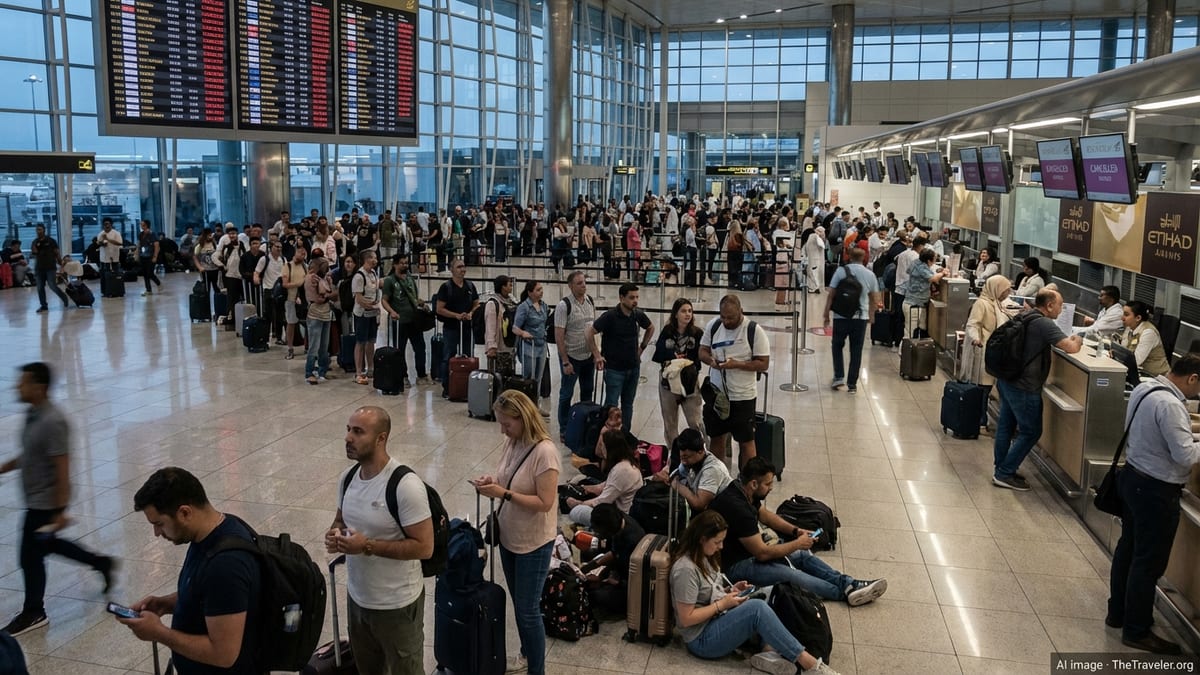
Flights operated by Emirates, Etihad Airways and Air Arabia are experiencing delays and schedule changes as regional airspace restrictions and security concerns linked to the US–Iran escalation continue to ripple through the United Arab Emirates’ key aviation hubs.
Get the latest news straight to your inbox!
Regional tensions trigger fresh disruptions to UAE schedules
Published coverage indicates that the latest bout of flight disruption in the UAE is tied to renewed frictions between the United States and Iran, which have prompted tighter risk assessments for routes crossing or skirting Iranian and adjacent airspace. As security analysts track missile activity, cyber incidents and shifting diplomatic signals, airlines are recalibrating flight paths and timings to keep aircraft away from perceived hotspots.
Reports from regional outlets and aviation intelligence services show that, while airports in Dubai, Abu Dhabi and Sharjah remain open, the operating environment has been volatile at times. Periodic airspace closures and reroutings over Iran, Iraq, Kuwait and parts of the eastern Mediterranean have previously forced carriers to cancel or consolidate services, and similar patterns are again emerging in response to the latest escalation.
Emirates and Etihad, which depend heavily on long-haul traffic between North America, Europe, Asia and Africa, are particularly sensitive to constraints on key overflight corridors. Delays of even 30 to 60 minutes on trunk routes can cascade through their complex hub-and-spoke networks, affecting onward connections to destinations across the Middle East, South Asia and Africa.
Low-cost operator Air Arabia, with its strong focus on short- and medium-haul flights to regional markets such as Kuwait, Saudi Arabia, Lebanon and Jordan, is also exposed when nearby airspace is restricted. Published advisories from the airline in recent months have already highlighted temporary suspensions and schedule tweaks on some of these routes, and similar measures are again in evidence as tensions rise.
What Emirates, Etihad and Air Arabia are changing
According to recent operational updates, the three leading UAE carriers are taking a mix of short-term and flexible steps rather than blanket shutdowns. Emirates has retained most of its departures and arrivals at Dubai International, but selected services are operating with extended flight times due to detours around constrained airspace. This can translate into longer journeys, later arrivals and missed onward connections, even when flights are technically still running.
Etihad Airways, based in Abu Dhabi, has shown a similar pattern, at times suspending or consolidating rotations on specific days before gradually restoring a limited schedule as conditions stabilise. Publicly available information in previous waves of the crisis showed full suspensions to and from Abu Dhabi for defined periods, followed by a phased return of flights using closely managed corridors. Current adjustments appear more targeted, but travellers are still being advised by multiple outlets to treat timings as subject to change at short notice.
For Air Arabia, which operates out of Sharjah and other UAE airports, the impact is most visible on routes that pass near or through particularly sensitive airspace. Earlier advisories this year referenced temporary halts to services on selected days, and recent coverage again points to cancellations and delays for flights to certain regional destinations. Even where outright cancellations are avoided, aircraft may be held on the ground to await safer routings or improved slot availability.
In all three cases, airlines are encouraging passengers, via public statements and website updates, to monitor their booking status and airport departure boards closely. Many have reactivated flexible rebooking policies introduced during previous phases of the crisis, allowing travellers to shift dates or reroute without standard change penalties on affected services.
Passenger experience: longer journeys and tighter connections
For travellers, the most immediate effect of the US–Iran escalation is not necessarily a dramatic shutdown of UAE aviation, but a series of smaller, inconvenient changes that add up. Longer routings around constrained airspace can add 30 minutes to several hours to flight times on some long-haul sectors, particularly those linking the Gulf with Europe and North America.
Those extra minutes in the air can have knock-on effects across busy hub operations. Emirates and Etihad both rely on carefully timed banks of arrivals and departures to maximise connectivity. When inbound flights reach Dubai or Abu Dhabi behind schedule, connecting passengers may face tighter transfer windows, rebookings to later services or forced overnight stays if alternative connections are already full.
Short-haul passengers on Air Arabia and other regional carriers can also feel the strain. If aircraft and crews are delayed arriving from earlier sectors, even flights that do not cross sensitive airspace may push back late. In some cases, carriers have opted to cancel individual rotations entirely to restore resilience to the day’s schedule, leaving travellers to seek alternative options or accept travel on another date.
Airport experiences have generally remained orderly, but travellers may encounter longer queues at rebooking desks and customer service counters during peak disruption windows. Aviation forums and social media posts compiled by independent observers show a mix of relatively smooth journeys, delayed but completed trips via longer routings, and occasional last-minute cancellations as the security picture changes.
Guidance for travellers heading to or via the UAE
Publicly available travel advisories highlight the importance of preparation for anyone planning to fly with Emirates, Etihad or Air Arabia while US–Iran tensions remain high. Travellers are being encouraged by multiple information sources to confirm flight status repeatedly in the 24 hours before departure, rather than relying solely on original booking confirmations issued days or weeks earlier.
Experts who track global airspace risk point out that schedules can remain fluid for as long as regional military posturing and missile activity continue. Carriers may publish a working timetable but then adjust individual flights on the day of operation to account for evolving overflight restrictions or congestion along alternative corridors. Checking for updates via airline apps, airport websites and SMS notifications can help travellers avoid unnecessary early arrivals at the terminal or missed announcements of rebooking options.
Some travel risk analysts recommend building extra buffer time into itineraries that involve tight connections in Dubai, Abu Dhabi or Sharjah. Where possible, booking slightly longer layovers or selecting earlier flights in the day can provide a cushion if earlier sectors are delayed. For business travellers facing fixed meeting schedules, considering virtual participation or flexible meeting times can mitigate the impact of last-minute changes.
In addition, travel insurance policies that cover missed connections and disruption related to security events can be worth reviewing. Policy terms vary significantly, and coverage for geopolitical tensions may be limited, so travellers are advised by consumer advocates to read the fine print before purchase and to keep documentation of any delays or cancellations provided by their airline.
Outlook for UAE aviation as security situation evolves
The broader outlook for Emirates, Etihad and Air Arabia will largely depend on how the US–Iran stand-off develops in the coming weeks. Analysts who follow Gulf aviation note that UAE carriers have shown considerable resilience during earlier phases of the crisis, using controlled corridors, real-time route planning and dynamic scheduling to restore high levels of capacity once the most acute risks eased.
In previous cycles, traffic through Dubai and Abu Dhabi rebounded quickly as soon as regional airspace reopened more fully, underscoring the enduring importance of the UAE as a global transit hub. Reports on airport throughput after earlier escalations indicated that operations at Dubai International and Abu Dhabi International were able to climb back close to pre-crisis levels within weeks once overflight restrictions were relaxed.
However, each fresh flare-up brings renewed uncertainty for both airlines and passengers. Carriers must balance the commercial imperative of maintaining connectivity with the need to uphold stringent safety margins in a complex geopolitical environment. That calculation can shift rapidly in response to new military actions, diplomatic announcements or regulatory advisories from aviation authorities.
For now, travellers can expect UAE airports to remain operational, but with an elevated risk of delays, reroutings and selective cancellations involving Emirates, Etihad and Air Arabia. Close monitoring of schedules, flexible planning and an awareness of the broader geopolitical backdrop will be essential tools for anyone travelling to, from or through the UAE while US–Iran tensions remain unresolved.