


More news on this day
Hundreds of travelers across Europe faced major disruptions today as a wave of operational problems led to 892 delayed flights and 30 cancellations at Paris Charles de Gaulle, Paris Orly, Nice Côte d’Azur, Basel–Mulhouse, and Gustaf III airports, affecting services by Air France, easyJet, Lufthansa, KLM, British Airways, and several smaller carriers.
Get the latest news straight to your inbox!
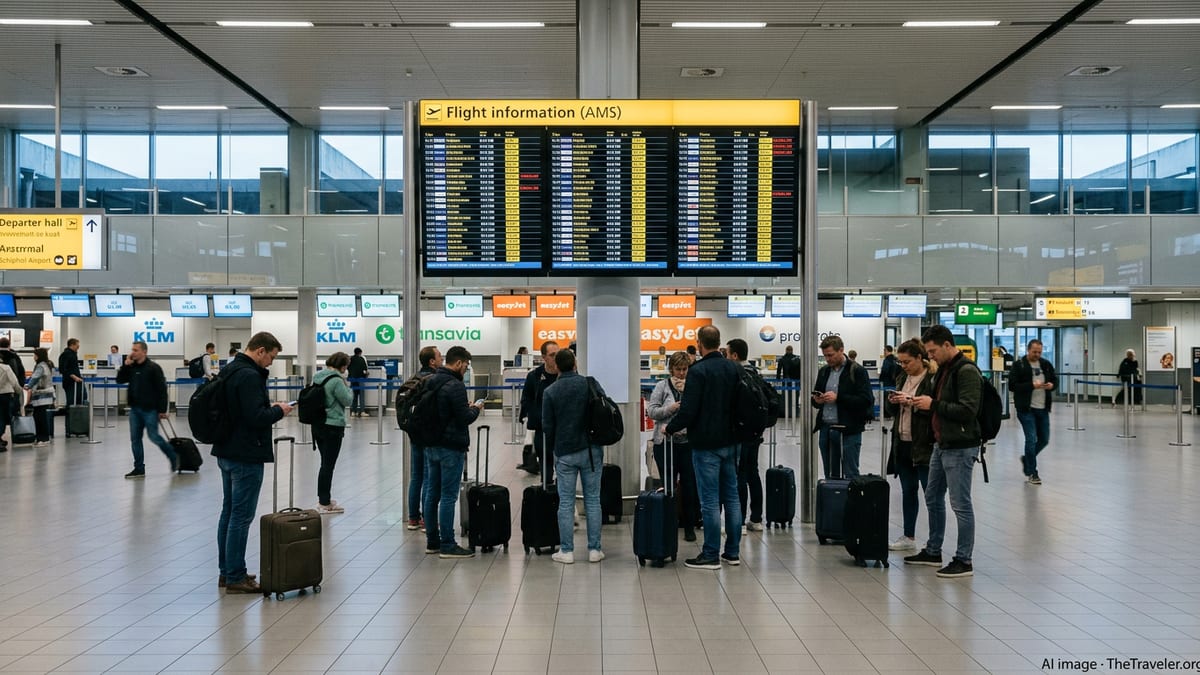
Knock-on Disruptions Across Major French Gateways
Publicly available flight-tracking data shows extensive delays radiating through France’s busiest hubs, with Charles de Gaulle and Paris Orly experiencing the heaviest impact. These airports handle thousands of movements on a typical summer Sunday, so even a relatively small number of cancellations, combined with widespread delays, can quickly translate into long queues at security, crowded departure halls, and missed connections.
Nice Côte d’Azur, a key entry point to the French Riviera, has also reported an elevated number of late departures and arrivals. With the peak holiday season beginning, any capacity squeeze in Nice risks rippling out to leisure routes that link Mediterranean resorts with northern Europe, the UK, and major intercontinental hubs.
Basel–Mulhouse, which serves France, Switzerland, and Germany, has been drawn into the disruption as well, compounding a week of wider operational strain in European airspace. At the smaller Gustaf III Airport in the Caribbean, which is closely tied to long-haul services from Europe, delayed inbound flights have created additional bottlenecks for onward island connections.
Reports indicate that while the overall number of canceled flights remains limited compared with the scale of daily operations at these airports, the clustering of nearly 900 delays in a short time window has significantly stretched ground services and customer support channels.
Air France, easyJet, Lufthansa and Partners Under Pressure
Schedules from major airline groups show that Air France, easyJet, Lufthansa, KLM, and British Airways have all been affected by the latest operational snarl. Flag carriers and low-cost operators alike rely heavily on Charles de Gaulle, Orly, Nice, and Basel–Mulhouse for both point-to-point and connecting traffic, which magnifies the impact of even short-lived disruptions.
Public tools that track individual flight status indicate a pattern of departures pushed back by 20 to 60 minutes on a number of short- and medium-haul routes. On some services, delays have stretched longer as crews and aircraft rotate through congested hubs, while a smaller pool of flights has been canceled outright when operators have deemed late departures likely to cascade through the rest of the day.
For travelers, the distinction between delay and cancellation has been less important than the practical effect: missed onward connections, rebooked itineraries, and extended time spent at crowded terminals. Many passengers on multi-leg journeys through Paris or Nice have been forced to accept later arrivals or overnight stops as airlines reshuffle capacity.
Industry data from recent months highlights that airlines across Europe have been working to rebuild resilience as demand surpasses pre-pandemic levels. However, when several high-traffic hubs encounter strain on the same day, aircraft and crew reserves can be tested quickly, especially during the busy summer period.
Operational and Weather Strains Behind the Latest Wave
Operational reports and recent analyses of European air travel performance point to a combination of factors likely contributing to the latest disruption. Persistent staffing challenges in ground handling and air traffic control, a series of localized technical issues, and weather-related constraints have all been noted as recurring pressure points over the past two summers.
France has been grappling with periods of extreme weather, including episodes of intense heat that can affect both airport infrastructure and air traffic management procedures. High temperatures can require adjustments in aircraft performance calculations and lengthen turnaround times, while thunderstorms and reduced visibility can force reroutings or temporary flow restrictions in crowded airspace corridors.
Basel–Mulhouse and surrounding airspace have been affected this week by broader European traffic-management challenges, with reports of technical issues and flow-control measures in neighboring countries feeding into knock-on delays. When airspace sectors reduce capacity, schedules quickly fall out of alignment, and controllers may prioritize safety by spacing departures and arrivals more conservatively.
Analysts note that while each delay can have a modest individual cause, the cumulative consequences are what passengers feel most sharply. A late inbound aircraft, a shortfall in ramp staff, or a brief systems glitch can, in combination, lead to missed slots and a cascade of timetable changes across several airlines.
Travelers Confront Long Queues and Complex Rebooking
Accounts from passengers shared on social platforms and in local media describe long queues at check-in counters and airline service desks at Charles de Gaulle, Orly, and Nice, with many travelers seeking rerouting options or accommodation vouchers. Families beginning holidays and business travelers with tight schedules have reported particular frustration as they navigate changing departure boards and limited same-day alternatives.
Consumer-rights organizations in Europe routinely advise passengers in such situations to document disruption times carefully, retain boarding passes, and file claims for compensation or reimbursement where regional regulations apply. On heavily disrupted days, processing times for such claims and requests can lengthen as carriers manage a spike in inquiries.
Airport operators have emphasized, in earlier statements about similar events, the importance of arriving early for flights during busy summer weekends and regularly checking digital channels for live updates. The latest round of delays has underlined how rapidly conditions can change, even within the space of a few hours, when a combination of weather, airspace constraints, and operational bottlenecks converge.
Travel insurance providers have also been reminding customers to review policy terms relating to delays, missed connections, and additional accommodation costs. For travelers affected by today’s disruption, those terms can play a significant role in how much of the financial impact is ultimately recovered.
What Passengers Should Watch in the Coming Days
Industry observers expect some residual disruption to continue while airlines work through aircraft and crew repositioning over the next 24 to 48 hours. Even after the immediate wave of delays eases, some early-morning departures and tightly timed connections may remain vulnerable if aircraft do not return to their scheduled rotations overnight.
Travelers with flights booked through the affected airports in the coming days are being encouraged by publicly available guidance to monitor airline apps and airport information displays closely and to allow additional buffer time for transfers. Those transiting through Paris Charles de Gaulle, Paris Orly, Nice, Basel–Mulhouse, or Gustaf III on separate tickets may face particular risk if inbound flights arrive late and minimum connection times are not met.
Airlines have increasingly leaned on digital rebooking tools that allow passengers to change flights without visiting a service desk during disruption events. However, on heavily subscribed routes in the middle of the summer season, spare seats can be limited, especially in higher booking classes, leaving some travelers with restricted options or longer layovers.
With European air traffic expected to remain intense through July and August, aviation analysts suggest that days like today are likely to recur when several localized issues overlap. For passengers planning trips, the events at Charles de Gaulle, Nice, Orly, Basel–Mulhouse, and Gustaf III serve as a fresh reminder of the value of flexible itineraries, longer connection windows, and contingency planning during the peak travel period.